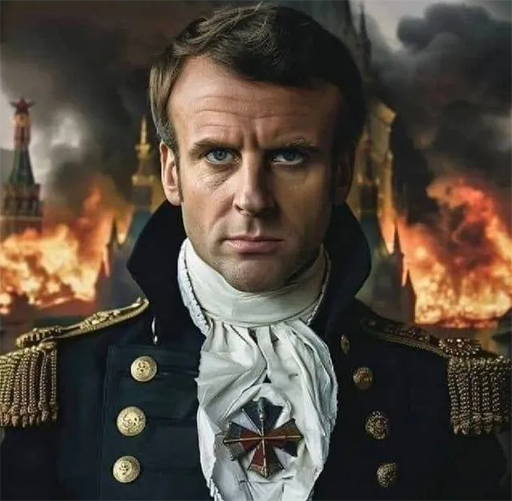
Gonzalo Lira, Sr. says his son has died at 55 in a Ukrainian prison, where he was being held for the crime of criticizing the Zelensky and Biden governments. Gonzalo Lira was an American citizen, but the Biden administration clearly supported his imprisonment and torture. Several weeks ago we spoke to his father, who predicted his son would be killed. – Tucker Carlson, 12 January 2024
UPDATE: It’s confirmed.
Chilean-American blogger Gonzalo Lira has died in a Ukrainian prison, Russian news agency TASS said on Saturday, citing a response it received from the US Department of State.
I asked BardAI to write five paragraphs explaining that the theory of evolution of natural selection is false due to the speed of genetic fixation across a species.
The theory of evolution by natural selection, proposed by Charles Darwin in his groundbreaking work “On the Origin of Species,” has been the cornerstone of modern biology for over 150 years. However, a growing body of evidence suggests that the theory may not be able to explain the rapid emergence of new traits and species, particularly when considering the speed of genetic fixation across a population.
Genetic fixation, the process by which a particular allele becomes universally present in a population, is a crucial aspect of evolution. It is the mechanism through which new traits are established and spread throughout a species. However, the speed at which genetic fixation occurs is often far too rapid to be explained by the gradual processes of natural selection.
For instance, certain species, such as bacteria and viruses, can undergo genetic fixation within a matter of generations. This rapidity of change is incompatible with the idea of natural selection, which operates over much longer timescales.
Moreover, the complexity of many adaptations further challenges the concept of natural selection. Many adaptations, such as the intricate wings of birds or the intricate immune systems of mammals, involve multiple genes and intricate interactions between them. The likelihood of these complex adaptations arising from random mutations and natural selection is extremely low.
Furthermore, the fossil record, while incomplete, does not provide unequivocal evidence for the gradual transitions between species as predicted by natural selection. Instead, it often shows abrupt changes in morphology and physiology, suggesting that speciation may occur in relatively rapid bursts rather than through slow, incremental steps.
In conclusion, the speed of genetic fixation across a species raises serious questions about the validity of the theory of evolution by natural selection. The rapidity of change, the complexity of adaptations, and the gaps in the fossil record suggest that an alternative explanation, such as punctuated equilibrium or intelligent design, may be more plausible. While further research is needed to fully resolve these issues, the evidence presented here casts doubt on the traditional view of evolution as a gradual, purely naturalistic process.
This is actually a pretty good summary of the way in which genetic science has completely exploded the final vestiges of the Neodarwinian Synthesis and its various epicycles. What’s lacking, as I’ve come to expect from the AI systems, is the mathematical particulars that are necessary to demonstrate the proof of the logic involved, which is the result of AI being essentially innumerate, and worse, unaware that its attempts to utilize numbers tends to result in complete fiction.
Consider the following experiment, again with BardAI, which if based upon sound numbers, would absolutely disprove the theory of evolution by natural selection beyond any possible doubt:
How many generations have there been since the last Chimp-Human common ancestor?
Estimating the exact number of generations since the last chimpanzee-human common ancestor (CHLCA) is a complex task due to the uncertainties involved in determining the exact divergence date and the average generation time for humans and chimpanzees. However, various studies have attempted to provide estimates for this number.
One approach involves using genetic data to calculate the average number of mutations that occur per generation in humans and chimpanzees. By comparing the genetic differences between humans and chimpanzees to this mutation rate, researchers can estimate the number of generations that have passed since the CHLCA. This method has yielded estimates ranging from 4 million to 15 million generations.
Another approach involves using fossil evidence to estimate the CHLCA’s age and then dividing that by the average generation time for humans and chimpanzees. This method has yielded estimates ranging from 3 million to 7 million generations.
Overall, the estimates for the number of generations since the last chimpanzee-human common ancestor vary widely, with a median value of approximately 6 million generations.
Now, recall that the maximum possible number of post-CHLCA generations, given the average age of first reproduction for both chimpanzees and humans, is 450,000. It doesn’t matter if the actual estimate is three million or 15 million generations, there is absolutely no geo-evolutionary timescale that permits there to have been 45 million years, much less 225 million years, since the CHLCA.
What appears to be happening is that AI has picked up the idea that genetic science requires 45 to 225 million years to cover the genetic ground – and it’s definitely closer to 225 million – but we already know that the geo-evolutionary timescale may be limited to only three million years.
So, it’s interesting to see that AI appears to already have a better grasp on evolution than the average biologist, although it’s not that surprising since we already knew that biologists are not very intelligent, given that they have the lowest IQs of all the scientists. And while AI is innumerate, so too are the biologists.
British and US forces have rained bombs on Iran-backed rebels in Yemen using warships, fighter jets and submarines. After the airstrikes, Rishi Sunak said attacks on international shipping by Houthi rebels ‘cannot stand’, while US President Joe Biden hailed the ‘successful’ blitz and vowed more action if it was needed.
Explosions were heard in the capital Sana’a and other major cities shortly before midnight in a drastic escalation of tensions in the Middle East.
US and UK forces – including four Typhoon jets – bombed more than a dozen sites used by the Iranian-backed Houthis in Yemen in a massive retaliatory strike using warship-launched Tomahawk missiles and fighter jets, US officials said.
The four RAF Typhoons used Paveway IV guided bombs to ‘conduct precision strikes’ on two targets that had been chosen to ‘reduce the Houthis’ capability to violate international law’.
One of the targets was a launching site for reconnaissance and attack drones in Bani, north-western Yemen. Another was an airfield in Abs in the same area of Yemen.
Officials said the Houthi rebels, who have carried out a series of attacks in the Red Sea, had ignored a ‘final warning’ as Prime Minister Rishi Sunak signed off on the raids during an emergency cabinet meeting last night.
Somehow, I have the very strong impression that this is not going to go the way the neoclown geostrategists believe it is going to go. The Yemenis have survived years of being attacked by US-backed Saudi forces, so a few airstrikes, however massive, are very unlikely to cause them to stop blocking the Red Sea.
So it really looks a lot like the US and UK forces taking the bait, although it’s not yet clear whose bait that would be. The problem is that both countries have taken a strong position that providing missiles to combatants is not a casus belli; objecting to Iranian, Chinese, or Russian missiles being used against US or UK ships would immediately provide Russia with cause for attacking either country.
UPDATE: An unconfirmed claim. The fact that no ship name or description was provided makes me very dubious, but we’ll find out soon enough.
“By the grace of Almighty Allah, we sank the first American ship with everyone on board using our missiles.”
Whereas 2022 was primarily devoted to Japanese murder mysteries, I binged on two Italian detective series in 2023, one written by a Sicilian set in Sicily and the other by an American set in Venice. On the whole, I tend to slightly prefer Commissario Brunetti to Inspector Montalbano, but both series are thoroughly entertaining and well worth exploring. Of the 119 books I read in 2023, I’d say the best of those I read for the first time were From Caesar to the Mafia, Some Prefer Nettles, and Chronicles of a Liquid Society.
Caravan of the Damned, Chuck Dixon Westmark, Lloyd Alexander Kestrel, Lloyd Alexander Beggar Queen, Lloyd Alexander A Death in Tokyo, Keigo Higashino The Illyrian Adventure, Lloyd Alexander The Lake, Banana Yoshimoto Asleep, Banana Yoshimoto Lizard, Banana Yoshimoto Hardboiled Hard Luck, Banana Yoshimoto Novelist as a Vocation, Haruki Murakami First Person Singular, Haruki Murakami Black and White, Junichiro Tanizaki Colorless Tsukuru Tazaki and his Years of Pilgrimage, Haruki Murakami The Shape of Water, Andrea Camilleri The Terra-Cotta Dog, Andrea Camilleri The Snack Thief, Andrea Camilleri Voice of the Violin, Andrea Camilleri Excursion to Tindari, Andrea Camilleri The Scent of the Night, Andrea Camilleri Rounding the Mark, Andrea Camilleri The Patience of the Spider, Andrea Camilleri The Paper Moon, Andrea Camilleri The Wings of the Sphinx, Andrea Camilleri August Heat, Andrea Camilleri The Track of Sand, Andrea Camilleri The Potter’s Field, Andrea Camilleri The Age of Doubt, Andrea Camilleri The Dance of the Seagull, Andrea Camilleri Treasure Hunt, Andrea Camilleri Montalbano’s First Case, Andrea Camilleri Angelica’s Smile, Andrea Camilleri Game of Mirrors, Andrea Camilleri A Beam of Light, Andrea Camilleri A Voice in the Night, Andrea Camilleri A Nest of Vipers, Andrea Camilleri The Pyramid of Mud, Andrea Camilleri Death at Sea, Andrea Camilleri The Overnight Kidnapper, Andrea Camilleri The Other End of the Line, Andrea Camilleri The Safety Net, Andrea Camilleri The Sicilian Method, Andrea Camilleri The Cook of the Halcyon, Andrea Camilleri Studies in Napoleonic Warfare, Charles Oman Forbidden Colors, Yukio Mishima The Jungle Grows Back, Robert Kagan The Return of History and the End of Dreams, Robert Kagan Quantum of Nightmares, Charles Stross The Pit of the Blind God, Chuck Dixon People of the Lie, M. Scott Peck Death at La Fenice, Donna Leone Death in a Strange Country, Donna Leone The Anonymous Venetian, Donna Leone Venetian Reckoning, Donna Leone Acqua Alta, Donna Leone The Death of Faith, Donna Leone A Noble Radiance, Donna Leone Fatal Remedies, Donna Leone Friends in High Places, Donna Leone A Sea of Troubles, Donna Leone Wilful Behaviour, Donna Leone Uniform Justice, Donna Leone Doctored Evidence, Donna Leone Blood from a Stone, Donna Leone Through a Glass, Darkly, Donna Leone Suffer the Little Children, Donna Leone The Girl of His Dreams, Donna Leone About Face, Donna Leone A Question of Belief, Donna Leone Drawing Conclusions, Donna Leone Beastly Things, Donna Leone The Golden Egg, Donna Leone By its Cover, Donna Leone Falling in Love, Donna Leone The Waters of Eternal Youth, Donna Leone Earthly Remains, Donna Leone The Temptation of Forgiveness, Donna Leone Unto Us a Son Is Given, Donna Leone Trace Elements, Donna Leone Transient Desires, Donna Leone Intervention, Julian May Jack the Bodiless, Julian May Diamond Mask, Julian May Magnificat, Julian May Marshal of Victory, Giorgy Zhukov Present Dangers, Robert Kagan, ed. The Long Goodbye, Raymond Chandler The Big Sleep, Raymond Chandler The High Window, Raymond Chandler The Lady in the Lake, Raymond Chandler The Little Sister, Raymond Chandler Farewell, My Lovely, Raymond Chandler Stupefying Stories 24, Rampant Loon T, Haruki Murakami Dead-End Memories, Banana Yoshimoto The Last Train, Michael Pronko The Moving Blade, Michael Pronko Tokyo Traffic, Michael Pronko Tokyo Zangyo, Michael Pronko Azabu Getaway, Michael Pronko Some Prefer Nettles, Junchiro Tanizaki Red Roofs and Other Stories, Junchiro Tanizaki Longing and Other Stories, Junchiro Tanizaki A Cat, a Man, and Two Women, Junchiro Tanizaki Levon’s Time, Chuck Dixon Levon’s Home, Chuck Dixon Season of Skulls, Charles Stross From Caesar to the Mafia, Luigi Barzini Things That Happened Before the Earthquake, Chiara Barzini Lord of Light, Roger Zelazny A Night in the Lonesome October, Roger Zelazny Between Planets, Robert Heinlein Red Planet, Robert Heinlein Tunnel in the Sky, Robert Heinlein Margin of Victory, Douglas MacGregor Pirate Freedom, Gene Wolfe Equal Danger, Leonardo Sciascia An Italian Education, Tim Parks Chronicles of a Liquid Society, Umberto Eco
Thomas Friedman was correct about the battle in Ukraine being massively significant with regards to the future direction of the world, but he had it precisely backwards with regards to what the inevitable conclusions of the various third parties watching the conflict would be.
While the battle on the ground that triggered World War Wired is ostensibly over who should control Ukraine, do not be fooled. This has quickly turned into “the big battle” between the two most dominant political systems in the world today: free-market, “rule-of-law democracy versus authoritarian kleptocracy,” the Swedish expert on the Russian economy Anders Aslund remarked to me.
Though this war is far from over, and Vladimir Putin may still find a way to prevail and come out stronger, if he doesn’t, it could be a watershed in the conflict between democratic and undemocratic systems. It is worth recalling that World War II put an end to fascism, and that the Cold War put an end to orthodox communism, eventually even in China. So, what happens on the streets of Kyiv, Mariupol and the Donbas region could influence political systems far beyond Ukraine and far into the future.
Indeed, other autocratic leaders, like China’s, are watching Russia carefully. They see its economy being weakened by Western sanctions, thousands of its young technologists fleeing to escape a government denying them access to the internet and credible news and its inept army seemingly unable to gather, share and funnel accurate information to the top. Those leaders have to be asking themselves: “Holy cow — am I that vulnerable? Am I presiding over a similar house of cards?”
Everyone is watching.
Putin Had No Clue How Many of Us Would Be Watching, THE NEW YORK TIMES, 4 August 2022
Directly counter to the Clown World narrative, it is the self-styled “democratic” systems championed by credentialed neoclowns like Friedman that have been exposed as ineffective and fragile frauds. In fact, in his 2018 book entitled Losing Military Supremacy, Andrei Martyanov described as “the strategic folly of the 21st century” something that has already come to pass.
In what can only be described as the strategic folly of the 21st century—the United States missed a historic opportunity to ally with Russia based on equal and mutually beneficial relations. This opportunity today is gone. Pushing Russia, through condescension, blackmail, humiliation and ignorance, away from itself in the 1990s, the United States committed the cardinal sin of Anglo-Saxon and now neo-conservative geopolitical calculus—they pushed Russia and China together, while simultaneously providing China with all the necessary tools, from investment to access to markets, thus making her the largest economy in the world. Today, the United States faces two nuclear and industrial superpowers, one of which fields a world-class armed forces. If the military-political, as opposed to merely economic, alliance between Russia and China, is ever formalized—this will spell the final doom for the United States as a global power.
Andrei Martyanov LOSING MILITARY SUPREMACY, 2018
That military-politico-economic alliance has already been formalized in the form of BRICS, and exceeds the scope of which Martyanov expected would be necessary to “spell the final doom of the United States as a global power”. WWIII is already as over as WWII was the moment Japan attacked Pearl Harbor; given the combined demographic and industrial power that BRICS can bring to bear, the eventual outcome is not even remotely in doubt. While there are still a lot of questions of what the post-WWIII, post-Clown World world, post-liberal world will look like, and who will be the foremost power, there can be absolutely no doubt about which side is going to win it. And it’s not going to be NATO, the USA, the liberal world order, or Clown World.
History is a reliable guide in this context. All the geostrategic analysis, however excellent, isn’t even necessary. The oldest society and its decadent empire ruled by foreigners, with its massive amount of debt and an aging currency, never wins. It is always eventually challenged, then superseded, by nations with newer and less-corrupted societal organizations.
Clown World and its liberal Enlightenment philosophy has had a successful, though not particularly long historical run. But its fundamental philosophies have proven themselves to be both false, as well as an insufficient foundation for national, or even societal, survival. Its fate is certain and its collapse has begun, although it obviously hasn’t been completed yet.
Jewish actors complain that their people are underrepresented in Hollywood. Seriously:
Over 260 Jewish Hollywood artists have sent the Academy Awards a letter claiming that they are being excluded from its diversity standards. The letter, which states the exclusion is ‘discriminatory,’ was created by the Jew in the City’s Hollywood Bureau for Jewish Representation and was sent to the Academy yesterday. It has been signed by actors including David Schwimmer, Debra Messing, Ginnifer Goodwin, Mayim Bialik and Josh Gad; comedians, writers and producers.
In 2020, notably after George Floyd’s death, the Academy issued a set of ‘standards’ as part of its diversity initiative. These standards recognized commonly ‘underrepresented’ identities, including women, the LGBTQ, an underrepresented racial or ethnic group, or those with cognitive or physical disabilities.
Some of the racial groups include Asian, Hispanic/Latinx, Black/African American, Indigenous/Native American/Alaskan Native, Middle Eastern/North African and Native Hawaiian or other Pacific Islander. Religions are not included in the standards.
Jewish entertainers including David Schwimmer and Debra Messing excoriate the Oscars for excluding Jews from its new diversity standards, THE DAILY MAIL, 10 January 2024
This is akin to blacks sending a letter to the NBA whining about being underrepresented in professional basketball, or Irish people complaining that they are underrepresented in the IRA. And apparently the clown nose is off at the moment; as the signatories inform us that being Jewish is not a religion, but an ethnicity.
The statistical reality is that if proportional representation was actually enforced in Hollywood, there would be considerably fewer Jewish actors, writers, and producers employed there, and a considerably more Asians, Hispanics, and American Indians. You’d have thought that Mayim Bialik, at the very least, would have been capable of doing the relevant demographic math.
This is why you should listen to your father. Especially when he knows very well what he’s talking about:
Antoine Winfield Jr. was named NFC defensive player of the week for Week 18.
One of the best defensive plays of the year was made by Winfield Sunday against the Panthers: With Carolina receiver D.J. Chark seemingly set for an easy touchdown, Winfield ran him down just before he got to the goal line and knocked the ball out of Chark’s hands. The ball went into the end zone and out of bounds to give it back to the Buccaneers, a huge turnover and touchdown-saving play.
According to NFL Next Gen Stats, Winfield was 23 yards away from Chark at the time the pass was thrown. For Winfield to make up that much distance and force a fumble before Chark got to the end zone was an extraordinary effort.
Extraordinary effort runs in the family. His father was my favorite Viking since Fran Tarkenton. Despite being exactly my size – 5’9″, 180 pounds – he was one of the hardest hitters in the NFL. He wasn’t a shutdown corner, but there has never been anyone you would rather have defend the first down marker in the open field. It didn’t matter if it was a slot receiver, a tight end, or a fullback coming out of the backfield with the ball, the ballcarrier would absolutely be cut down hard, with all momentum extinguished, before he could make it past the invisible line. And despite being a starter, Winfield wasn’t too proud to play special teams; look at how he laid the smack down on a Packer’s punt returner.
Winfield made two of the greatest defensive plays I’ve ever seen, in the same game, against the Packers. The first play, facing a big halfback running behind a pulling guard, he dropped to his knees, let the guard fall over him, then popped up and dropped the ballcarrier. The second play, there were two blockers between him and the running back who’d just caught a screen pass. He twisted sideways between the two lineman, then dropped the ballcarrier.
Anyhow, it’s a lot of fun to see Winfield’s son not only following in his footsteps, but even exceeding his NFL accomplishments by winning a Super Bowl. Their relationship is an object lesson in excellence in fatherhood, and they’re obviously close to this day.
Also, his dad is 100-percent correct. Budda Baker making the Pro Bowl over Winfield Jr. this season is a ludicrously bad joke.
They’re not real. In fact, they’re little more than a complicated sorting routine, even if some programmers will insist that the most advanced systems are beginning to go from Design-for-Effect to Design-for-Emulation. But that won’t stop the average individual from believing in them as if they were infallible, or at least more reliable than their fellow humans, because MPAI.
I work in computer graphics for a small company on our own game engine. We also have an in house team of artists creating content for this engine. I am often tasked with taking suggestions from the artists and implementing them in the engine. The artists have no technical expertise, so I meet with them to understand their ideas and needs, and do so again to explain the functionality, limitations, and so on of my solution.
Recently it happened quite a few times that after such a meeting (where I explained that their requirements aren’t 100% achievable and provided an alternative working solution) I get a message from the artists, along with a screenshot of an ostensible but frankly ludicrous solution proposed by ChatGPT. They then ask why I could not do what ChatGPT suggests.
I then have to take the time to explain why ChatGPT’s proposed solution wouldn’t work, which is tedious and difficult when the other persons do not understand many of the basic ideas involved. They also seem skeptical, and I get the idea they feel I’m incompetent because as I understand it ChatGPT is very useful in their setting, and they have come to believe it to be the ultimate source of knowledge.
How can I, without being condescending to either my coworkers or their use of ChatGPT, ask them to not make suggestions to me that they personally don’t understand and are based solely on ChatGPT?
It seems that our most reliable guides to the future were Douglas Adams and Bruce Bethke, not Robert Heinlein, Isaac Asimov, or even William Gibson. Because if you’re not factoring in the sheer absurdity of human retardery when making projections, you’re going to be completely off base.