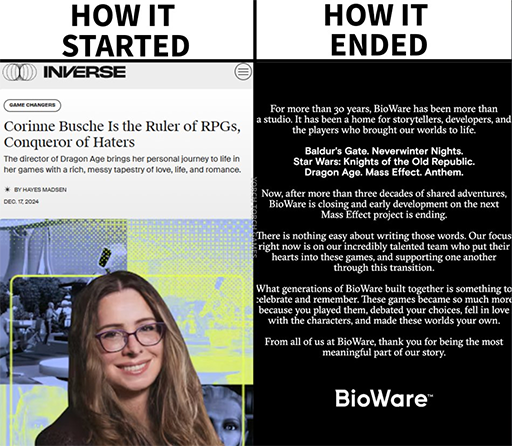
And they say there are no happy endings anymore…
#Arkhaven INFOGALACTIC #Castalia House
These are revolutionary times in game development. Alpha testers already know the gameplay is operational. Now we’re adding the art and AI, while going 3D.
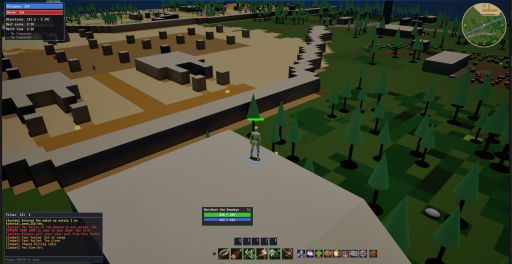
The size of the generative maps for the 50-on-50 battles are sizable. And no one has ever played this kind of multiplayer gameplay before. It’s based on a multiplayer battleground environment I designed for Age of Conan, which could have revolutionized the MMO, but the new producer at FunCom instead decided that the best way to keep the game’s one million subscribers who had run out of new content engaged and subscribing was to fix the bugs in the content that all of them had already played.
Meanwhile, their battlegrounds were empty. And I mean quite literally empty. In six months of working with them, I never once saw anyone else in one.

It doesn’t look like much. But at this stage, it never does.
Meanwhile, the financially propped-up game companies are collapsing. Beginning, apparently, with Bioware. And yes, I do mean propped-up and I would know. The company I worked for funded Neverwinter Nights.
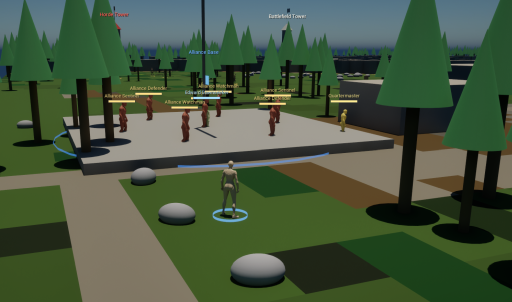
If you know, then you know. It doesn’t look like much, but the image above represents the AI-assisted transformation of a functional 2D game engine into a full-3D Unreal environment completed in a single evening. What will be coming soon is going to blow everyone’s minds, with a new style of blended gameplay that has never been explored or permitted before. And it’s possible because what we’ve witnessed in the last two weeks is the biggest development in game development since the release of Akalabeth and the ability to write computer games in BASIC.
Friday 31 July 2026
2000 hrs EDT
Client files and Instructions at the Discord.
Server stress test: I need as many of you as possible to join, even if all you do is enter the match and walk away from their computer. Let’s get 40 or more players in!
A new version of VALRHOLL is now available. Really need many users to test as we near an Alpha state. Instructions at the discord. discord.gg/YTnUwDEh9
PVP_GAME update: Will push out a new build for weekend test. Huge list of additions and changes. Look for details later this evening or tomorrow. Please come help me test!All, server is live for the weekend. Ton of changes and additions. Bots still need work. Join the discord for instructions and access to the game files:
It’s rather astonishing to think that with all this computer power at our disposal in the 1980s, we used it to play Pac-man and Seven Cities of Gold.
I let a Commodore 64 run for three and a half days straight. 87 billion instructions, 303 billion clock cycles, 5.9 million candidate settings tested. It cracked an Enigma message in German without knowing a single character of the plaintext.
On the other hand, what were we going to do with a few messages sent by U-boat commanders to the German naval command forty years beforehand?
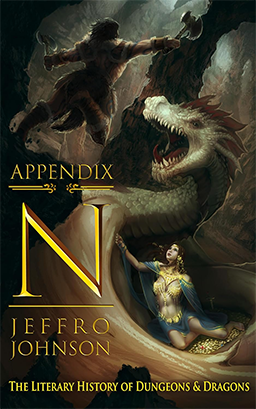
I would be remiss if I did not let everyone know that Jeffro Johnson’s excellent APPENDIX N: THE LITERARY HISTORY OF DUNGEONS & DRAGONS is available again on Amazon, in hardcover, Kindle, Kindle Unlimited, and audiobook.
APPENDIX N: The Literary History of Dungeons & Dragons is a detailed and comprehensive investigation of the various works of science fiction and fantasy that game designer Gary Gygax declared to be the primary influences on his seminal role-playing game, Dungeons & Dragons. It is a deep intellectual dive into the literature of SF/F’s past that will fascinate any serious role-playing gamer or fan of classic science fiction and fantasy.
It even features a lovely introduction by John C. Wright.
Imagine if you had lived in a house for decades, as had your father before you, and grandfather, and you thought you knew all its halls and chambers. Idly, some rainy day, or when the snow has covered all the roads, you take up a lantern and go to see what is stored in those old boxes in the cellar, or where that one small door you never opened before leads.
You pry the door open, and it groans on rusted hinges, and beyond are caves of wonder, heaped with treasure. Here, like a column of fire, stands a strange genii and other spirits bound to serve your family. They are willing to carry you whirling through the air like an autumn leaf, in less time than it takes to gasp in awe, to far and fabled lands beyond the cerulean ocean, to elfish gardens of dangerous glamor, to jeweled mountains, alabaster cities, or perfumed jungles dreaming in the moonlight where ancient fanes to forgotten gods arise. The genii explains that all these things are yours, your inheritance. You have merely to claim them.
Or, to make the image more true to life, let us say that you are exploring the attic, and you find a handcrank connected to an orrery, worked by a silver key you have always worn but never heretofore found to fit any lock. Turning the crank, you move the model of planets on their epicycles back to an earlier position: trumpets blare and lamps blaze, and now parts and opens the dome of what you had, until now, thought was the sky above your house.
You find yourself in the middle of larger heavens than you knew, with gem-bright suns of many colors, constellations rearing, moons and worlds like colored ornaments, and bearded stars in the high depths of space like runners with torches. And there are worlds beyond those worlds.
Here you find your grandfather, in armor of gold with a sword of white fire, still young and strong, and discover him to be a sorcerer prince, or a dark elf, or a warrior angel, whose ichor runs in your veins as well. All this explains that strangeness that has haunted you all your life.
So it is with all readers and fans of science fiction and fantasy, weird tales and amazing stories who have never looked at the older books from which the younger books spring up. These are tales from beyond the shelves you know, realms unexplored yet oddly familiar.
Jeffro Johnson was the man with that silver key to unlock the older heavens or call up the genii you inherited from the past. It started simply enough: he wrote a series of columns taking as his theme the books listed in Appendix N of the older rules for Advanced Dungeons & Dragons written by Gary Gygax.
And the list is nothing exceptional: nearly anyone alive in those days (as I was) and was familiar with fantasy or science fiction reading of the time (as I was) asked to compile a list of the essential books and authors would, no doubt, have issued nearly the same list. The world was smaller in those days, and we who read science fiction were a breed apart, in our own quarter, and a bookish fan could have read or been familiar with all the talented writers in the field, and the many of the untalented.
But like the man who explores his own basement and find a treasure trove, or opens his ceiling and finds the heavens rolled back like a scroll, Jeffro Johnson made an astonishing discovery: the things he had been told about the old books, the old pulps, the old days were misleading, or even false.
Because there was good stuff here!
Like a single spark in the dry leaves, other columnists and other readers began to reread the Appendix N books, and find that sense of wonder some writers seem willfully to wish to extinguish. Some modern books, sadly, are like a Xerox of a Xerox, and the freshness of the original is lost. Some are written in rebellion against ideas and themes in older works, but the nature of the rebellion is hidden from any reader to whom the old worlds are closed.
The genres were not demarked so clearly then, and the guards at the borders separating one kingdom from another were wont to nod and sleep, or wave through the wonder-hungry traveler without checking his papers. Works written in established worlds, Star Trek and Star Wars or Warhammer backgrounds, were utterly unknown.
Now imagine that there are some (they are rare, but they are real) whose mission is to bar you from those books, and see to it that you never enjoy the luxuries of your inheritance, or drink from the winebottles your grandfather laid down in his cellar long ago. All fashion of sneering accusation spills from these Grand Inquisitors, most of it senseless, telling you either that the artistic tastes or the personal flaws of those writers or those times render their work unfit.
Ignore the Thought Police. Read. Decide. Learn to enjoy what you enjoy. Because the heritage belongs to us all. And who knows? You may find the books that your favorite author read as his favorite books when he was young. All these worlds are yours. You have merely to claim them.
Gamers, need your help with network test of the PvP Game. Would like to see 10+ connected.
This Friday, 2100 EDT, and possibly Saturday night.
Discord server with game files and instructions.
After embracing diversity and inclusion, Bounding Into Comics is no more:
John F. Trent founded Bounding Into Comics over a decade ago to provide a Christian and conservative alternative to the corporate shills at CBR, Screen Rant, Kotaku, and IGN. While those outlets pushed DEI initiatives and woke activism disguised as journalism, Trent built something different with truthful, hard-hitting coverage that actually held the entertainment industry accountable.
The site exploded in popularity, reaching three to five million views in peak months. Trent became the most important investigative journalist in pop culture, uncovering activist statements and industry malfeasance that everyone else either ignored or actively covered up. Geeks and Gamers, Friday Night Tights, Yellow Flash, and The Quartering built entire YouTube channels reading Trent’s research aloud. His work formed the backbone of alternative pop culture commentary.
Then the company was sold. In 2023, The Publisher Desk acquired Bounding Into Comics and immediately began gutting what made the site successful. The new owners demanded Trent tone down rhetoric against LGBTQ activism, stop criticizing the replacement of white characters in films and comics, and eliminate negative commentary about Disney to appease advertisers.
The Publisher Desk wanted to transform Bounding Into Comics into another corporate mouthpiece indistinguishable from the sites it was created to oppose. They told Trent to remove his Christian viewpoint from articles and eliminate his anti-LGBTQ stances. The message was clear: conform or leave.
Trent chose his principles and left a month later.
And somewhere, John Trent is smiling…
Be sure to support Fandom Pulse. It’s got the best culture war commentary anywhere. If you’re one of those people who complains that “there is no media on our side” while subscribing to Netflix, YouTube, and the Disney Channel, while you don’t read, subscribe to, or support Fandom Pulse, then you’re actually part of the problem rather than the solution.