Baby Steps

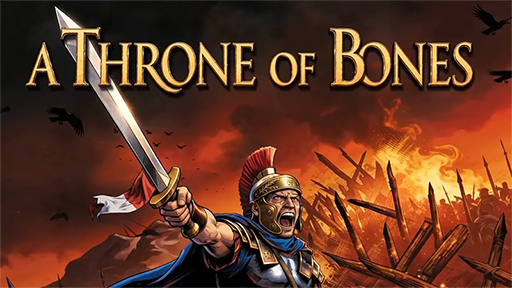
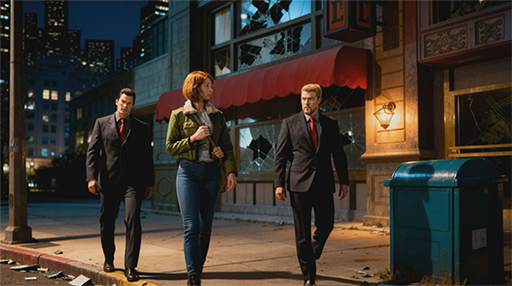
AI video is not quite there, but it’s definitely getting closer. Here is a 2-minute video I put together out of Seedance 2.0 clips based on the script for THE GHOSTS OF BANGKOK. The audio is dreadful, there are massive inconsistencies from 5-second clip to 5-second clip, and there is more prompt censorship than I anticipated, but the results are fairly impressive nevertheless.

Working on an ATOB comic clip next.

DISCUSS ON SG


The Hobbit 1977

The Dark Herald explains how the 1977 Rankin/Bass version of The Hobbit came to be:

There is no getting across to kids of later generations what a TV Special meant to us. You had no control over it whatsoever. None. You either watched it at the exact time the network scheduled it for or you didn’t watch it at all that year. You could possibly catch a missed episode of a regular show during reruns in the summer but not a Special. Miss it and it was gone, no place to rent it, and streaming it was decades away. When you heard that Special fanfare from the TV you dropped everything and ran!

A few guitar strings were plucked, one by one, and then John Huston’s unmistakable cadence read the first words Tolkien published about the world that would become Middle-earth. There was a respect there for what J.R.R. Tolkien began with that sentence.

The “Many ages ago” that followed was intended to draw children into myth and it worked magnificently. Tolkien nerds used to regard it as heresy because Tolkien didn’t write it but then they had no idea what horrors the future held.

Even at the time it was hardly the worst version of The Hobbit. That would be the Hobbit (1966) a 12 minute “rights retainer” featuring Princess Mika and Slaag the Dragon whom Bilbo kills at the end. There had been radio and play adaptations before 1977, mostly British naturally. The rights to Hobbit had been sold separately by Tolkien then parceled out again and again after that.

By 1977 The Hobbit’s rights were such a trainwreck that Arthur Rankin was able to snatch up the TV rights for pennies with the following opening credit “Based on the Original Version of J.R.R. Tolkien’s The Hobbit.” The rights for that being distinct from the 1951 revision, which is what the TV special was actually based on. In the 1937 edition, Elves were called, Gnomes” (from the Greek gnosis for “knowledge.” And Bilbo won the ring from Gollum fair and square, they even parted on friendly terms. Those and some other changes were enough to make it legally distinct.

And the Rankin/Bass version was certainly distinct in its own right. It looks like something made by Studio Ghibli – Because it was made by Studio Ghibli.

Okay, fine. It was made by Topcraft although, when that studio failed the remains became Studio Ghibli, and you can absolutely see the design DNA in The Hobbit.

You can also see Tolkien’s come to that, his own Thrór’s Map was used directly in the TV show and was part of the influence of the design aesthetic. J.R.R Tolkien approved of Arthur Rackham artwork and it was clearly another strong influence. The Hobbit (1977) was a Japanese take on the Western fairytale as grotesque. You can see its influence in Nausicaä. Rankin/Bass helped keep the lights on at Topcraft until Nausicaä came out. The Japanese approach isn’t interested in cleaning the fairy tale up, it leans into the distortions. Faces stretch, bodies warp, and the line between the comic and the unsettling disappears. What reads as “off” to a Western eye is often deliberate: characters are designed to move, to emote, to perform, even if that means abandoning symmetry or beauty. It turned what was supposed to be a children’s story into something just a little grimdark – perfect for its Generation X audience.

It was an art design for Tolkien when no one agreed what that looked like and there weren’t any brand managers ruining it. There was also some leftover hippy influence clinging to it, like your older sister’s boyfriend’s van that still smelled “funny.” College age-Boomers had first experienced Tolkien – differently.

It’s such a pity that after doing a very good job of bringing THE LORD OF THE RINGS to life, Peter Jackson wasn’t able to avoid screwing up THE HOBBIT even though he had a perfectly good template from which to work on the basis of the 1977 version.

And perhaps his biggest mistake wasn’t expanding it to three films, but not licensing the original music.

DISCUSS ON SG


The Hallmark of Bad Writing

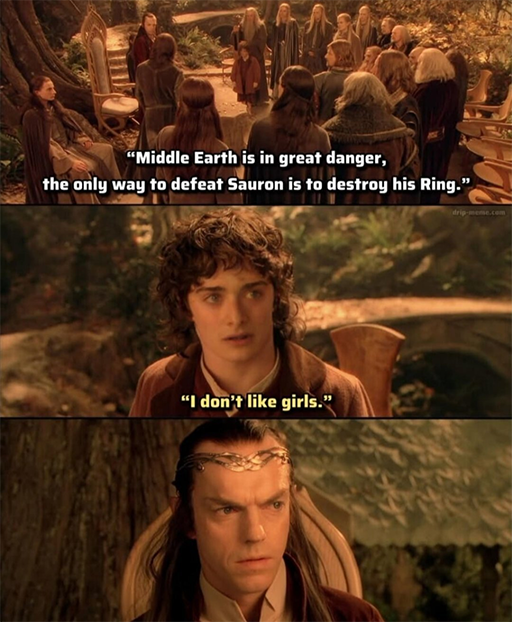
Stranger Things has come to its inevitably ignominious end. But at least it left us with one epic meme.

The writing in Hollywood has never been very good, and it’s always been completely delusional. But we’re definitely reaching a new nadir, when the writers and the directors can’t even pay attention to the context of the current scene in their absolute focus on inserting their insane propaganda into their creations at the most inopportune possible moment.

It’s very much like when the director decides that the best time to go for some really gut-wrenching emotion is right in the middle of a violent combat action. For some reason, the enemy completely fails to take advantage of the fact that everyone has laid down their guns and is standing around the one member of the party who actually got hit so that they can meaningfully emote for a minute or two, before they rejoin the battle, successfully inspired by their grief and rage.

DISCUSS ON SG


An Unmitigated Disaster

Hollywood has run out of magic tricks to conceal the fact that its raging didacticism isn’t entertaining.

The summer movie season, the biggest and most important for the industry, was an unmitigated disaster. The least attended, after adjusting for inflation, of any summertime period since 1981. That’s nearly 45 years ago.

The United States in 1981 also had roughly 110 million fewer people living in it. And there were fewer people at the movies this summer than that year. This is a five-alarm fire for Hollywood, no matter what they say about box office records of reaching certain hurdles of box office revenue year in and year out.

This October saw just $445 million in total box office. The last pre-COVID October saw roughly $1 billion in ticket sales. What’s behind all this, and what can be done to fix it?

Well, one of the big problems is that Hollywood made itself into a political activist organization. Stars, personalities and creative talent have spent much of the past decade telling more than half the country that they hate them and despise their way of life. That doesn’t help. They’ve prioritized subject matter with miniscule appeal instead of the broad, successful comedies and dramas of the past.

The COVID lockdowns supported by the industry also decimated moviegoing. Audiences stayed home, waiting for streaming services, instead of buying tickets to go to the theater. Then, in the aftermath, the industry chasing short-term streaming service gains, shortened the window between theatrical releases hitting, say, Disney+.

That’s all created incentives for people to simply wait a few weeks or a month for a non-event movie to hit the internet. So films are losing money at the box office, then hitting streaming where the return on investment is substantially worse for studios. It’s a mess.

One of the biggest factors? Quality has inarguably dropped.

Marvel Studios, one of the most reliable factories of mid-level entertainment, abandoned its formulas in favor of hitting specific quotients and targets based on political priorities. It backfired, spectacularly. Bomb after bomb followed their about face. Disney animation and Pixar churned out low-quality progressive slop, undermining their hard-won reputations. Now, outside of sequels, most audiences have stopped giving them the benefit of the doubt.

I’m seeing a little bit of this from the inside of late. It’s clear that Hollywood is essentially one giant herd mentality with a hive mind, if you’ll excuse the mixed metaphors. Everyone is afraid to step outside of the ever-shrinking box, so it’s becoming increasingly impossible to simply tell a straightforward story capable of entertaining anyone.

Fan service in sequels and familiar beats in remakes is all they had left to offer, and that well has apparently run dry. Fortunately, the collapse of Hollywood and the rise of AI is going to create a fantastic opportunity for UATV and Arkhaven, so if you’re not already on board with both, this is the time, because the ride is just getting rolling.

A frame from a video render of Midnight’s War.

DISCUSS ON SG


The Name is Bezos. Jeff Bezos.

Amazon bought creative control of the James Bond franchise, and for a lot less than you’d probably imagine:

Sooner or later everyone has a price, but in the case of James Bond ‘s former paymasters it’s significantly lower than the incredible sums being reported as recently as last week. After 25 films, six 007’s and countless foiled attempts at world domination, long-term producers Barbara Broccoli and Michael C Wilson sold the hugely popular spy franchise to Amazon MGM for a widely reported £1 billion, in February.

But a recent earnings report from Wilson and Broccoli’s Eon Productions suggests the true figure is notably less than initially thought.

‘On 20 February 2025, the company entered into an agreement for the sale of its interest in the Bond franchise, all associated assets as well as its subsidiary companies, B24 Limited and B25 Limited,’ reads the report, published by Variety. The total consideration for the sale amounted to $20 million (USD).’

The deal gives Jeff Bezos and Amazon MGM full creative control of the franchise going forward, while forming a joint venture with Wilson and Broccoli to manage intellectual property rights.

If Amazon can do for Bond what it did for Lord of the Rings, it should be available for a lot less in the not-too-distant future. Sure, it’s possible they learned their lesson, certainly a lot of other film studios did. But I wouldn’t bet on it.

DISCUSS ON SG


The Dark Herald Defends THE TWO TOWERS

It makes for a good read, if nothing else.

That is ultimately what makes Jackson’s adaptation work. It takes the abstract themes of the book and makes them concrete. Corruption is no longer something to be imagined—it walks and crawls and hisses. Destiny is not a vague theological concept—it is embodied in the weary face of a king-in-waiting and the ruin of a king who waited too long. The war for Middle-earth is not an approaching storm—You watch the torrent fall upon Rohan in the rain, mud, and despair of Helm’s Deep.

Jackson sacrifices a little of Tolkien’s structure in exchange for emotional immediacy.

And nothing I just wrote will change the minds of people who hate it for precisely this reason.

I don’t hate THE TWO TOWERS. In fact, it was the first Tolkien book of which I ever read a part; it was Boromir’s brave death scene that captivated me from the start and made me beg my mother to take me to the library so I could check out the whole trilogy and let me start reading it from the beginning.

But it is the weakest of the three movies. Denethor is awful and I hate what they did to Faramir, who was my favorite character in the books. The suicidal cavalry charge against the orc archers behind a wall is indefensibly stupid; it’s not being a sperg to object to actions that are so retarded that they defy the suspension of disbelief required to enjoy a movie.

And yet, Peter Jackson did accomplish what was previously, and now is again, completely impossible. For which we should be grateful, even though we are duty-bound to put him on trial for what he did to THE HOBBIT.

DISCUSS ON SG


The Marvel Method

The Dark Herald shares an insider’s description of the Marvel method of movie-making at Arkhaven.

Like Matt Shakman and the writers of #FantasticFour, I’ve sat in the ‘creative meetings’ at @MarvelStudios. They’re horrible.

You basically sit in a room with Kevin Feige and Lou D’Esposito and try to pitch your movie while realizing Kevin just wants you to dictate his rushed thoughts. Victoria [Alonso] used to be in these, but Kevin and Lou had so mistreated her that in one of my #Blade meetings she just showed up with sugar cookies she’d baked to improve morale.

You’re told NOT to pitch ideas from the comics because Lou isn’t a big comic guy and it’ll turn him off.

You talk about craft, story, and characters only for Kevin and Lou to say ‘yeah well, all we need to do is make sure it’s fun.’

There’s no spark. There’s no vision. Marvel is a slaughterhouse factory where you watch fresh meat get spoiled as it slowly makes its way through the assembly gears of mediocre thinking — and this weird hatred for their own product.

It’s become increasingly obvious that they only got lucky with the original Iron Man – which really was only a great movie for the first 15 minutes – because Disney wasn’t involved at the time. It’s really remarkable how far they’ve been able to coast on less than 45 minutes total of genuinely good movie-making.

DISCUSS ON SG


The Dark Herald Reviews: Superman

The ghost of Brightburn haunts this movie.

Brightburn, in case you missed it, was an “evil Superboy” movie from 2019 written by one of James Gunn’s brothers and produced by Gunn himself. Its premise: given infinite power, man will always choose evil. We’re asked to accept—without evidence—that “power corrupts, and absolute power corrupts absolutely.”

This tired adage fallacy is either an unfalsifiable hypothesis at best or glorified folk wisdom at worst, but it’s generally treated as an ironclad law of the human race which is bullshit.

That mindset—cynical, reductionist—has been poisoning Superman stories for years now. Yes, a villain with Superman’s powers could potentially be a compelling threat. But that’s not what we’re dealing with here. What we keep getting instead is Superman himself corrupted by power.

Based on that — and other reasons I won’t get into — I had serious reservations when James Gunn was handed the keys to the DC Universe.

And no, it didn’t meet my worst expectations. But it didn’t come close to my best hopes, either. Gunn didn’t make a Superman movie—he made a James Gunn movie. Which, if we’re being honest, is all anyone really expected of him anyway.

So yes, this is a bad Superman movie.

But I’ll grant this much—it’s a good Clark Kent movie.

Read the whole thing at the Arkhaven substack.

DISCUSS ON SG


The Legend at Work

You’re not going to want to miss this one. The movie is based on the first of The Legend’s Levon Cade novels, which we will be publishing collected in leather as part of the upcoming Black Warrant campaign, which will be launched in April. I want to get the standard Hypergamouse books delivered before the Chuck Dixon campaign begins.

DISCUSS ON SG