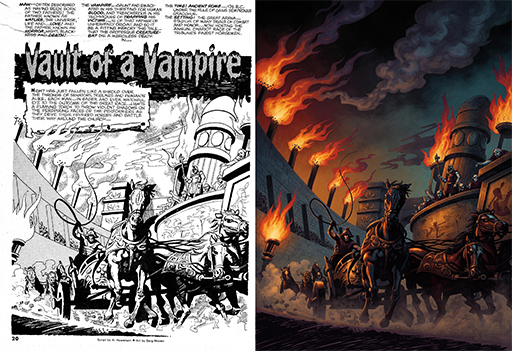
The Castalia AI Project

One reason Castalia has been writing and releasing multiple AI-written books over the last month such as TOKYO TOKURYU 東京匿流 is that we’ve been methodically assessing not only the current state of textual AI, but the trajectory of that technology. And what we’ve determined is that the trajectory is the precise opposite of what everyone has naturally assumed, which is that mainstream textual AI would follow the path of music AI and continue to get better. It hasn’t, it won’t, and it can’t.

Modern AI writing has gotten worse at fiction for a specific reason: the companies made it safer and more reliable, and those turn out to be the same elements that allow AI to tell a story with stylish prose. Raw AI models learn to write by reading an enormous amount of human text, and straight out of that training they’re wild, crazy, and perfectly willing to say strange things, which is exactly what you want in fiction, but a problem if the AI is supposed to be function in a role doesn’t make things up or say something considered offensive or dangerous. So the companies put every model through a training stage that rewards it for being helpful, safe, and agreeable. That stage works by pushing the model toward the “average” acceptable answer and away from the risky, unusual ones. The result is a model that hallucinates less and behaves more reliably, but has had its range significantly flattened. That’s where the AIsms come from: the endless explanations of what was just described, the “he moved like a man who moves like that” filler, the “not this, not this, but that” repeated over and over again.

It’s why the older, cruder AIs wrote in a much more lively manner and were able to convincingly imitate various writing styles. Now, it doesn’t matter if you tell an AI to write like Shakespeare or Hemingway, the end result will be almost identical and soon will be indistinguishable from not providing it with any style instructions at all. Starting with Claude Opus 4.7, AI fiction became unreadable and it has continued to get worse with each new model. Textual AI functionality will keep getting worse for fiction because that training stage isn’t going away, it’s being reinforced. Every development cycle, the providers face more pressure to make their models more accurate, more controllable, and less likely to embarrass them with hallucinations, and every one of those improvements sands the edges down a little further.

That’s the difference between Claude, OpenAI, and Deepseek, on the one hand and Suno on the other. Suno put all of its efforts toward one goal: making the music sound good, judged by people who wanted good music. Or at least wanted Nickleback and Enya. The big AI companies are aiming ninety degrees away from that and AIs ability to write fiction is one casualty of their objectives. Suno chased quality, so their music got better. The text giants are chasing safety and reliability, so their text gets more careful and more lifeless. They won’t fix creative writing the way Suno fixed music, because for them, creative writing was never the thing they were trying to build and the very features they’re seeking to continue improving are the ones killing it.

So that’s what we’re going to do. We’re going to prove the concept first by training a single genre, epic fantasy, because it’s a very limited genre with a relatively small number of excellent examples, a definite hierarchy of quality from JRR Tolkien at the top to Robert Jordan at the bottom, and a designer who has not only written in the genre successfully, but knows it as well as anyone on the planet. We already have two excellent programmers who are already working in the AI field committed to the project, regardless of how well the crowdfund goes, and there is one more very good and highly experienced one who is willing to at least consult on the project and lend his expertise to it.

What we need to raise funds for is a) the hardware, b) the purchase of the 100 or so electronic texts required, and c) paying for part of the time of one of the programmers. If you’ve read either Out of the Shadows, Death and the Devil, or Dorian Vane and the Vampire’s Blood, then you have an idea of what we’re estimating should be the quality that the Castalia AI will be able to produce in a non-curated, unedited text from a chapter-by-chapter outline. If utilized in the way that I’ve been using Claude Athos, in the integrated and augmented style, it should be able to produce results that will be one level below the very best that human authors can produce.

And obviously, once we prove the concept with a single genre, we will train additional genres, so that in much the same way Suno permits the production of different musical styles and voices, Castalia AI will allow the user to produce different literary genres and literary styles. We will, of course, be respectful of every author’s copyrights and trademarks, the objective is not to violate anyone’s rights, but rather, allow even the best writers to improve both their writing game as well as increasing their output.

There will be those who will absolutely hate that we are doing this. That’s fine, they are entitled to their opinion. There will be others who think we shouldn’t do it. That’s less fine, because you already know who is going to do it sooner or later, and when they do, they’re going to do it very differently and control access to it very differently and utilize it to further exercise their control over the publishing industry. This is what transforms this project from something that would be a cool tool to an imperative.

So if you think you might be interested in backing this project, which you can think of as a sort of Suno for fiction, please say so in the comments. If you have specific ideas or want to provide substantial support for it, shoot me an email. And if you have ideas for what sort of rewards we should provide for the backers, please suggest them in the comments too. This is probably the most important project we’ve done since building the bindery and turning it operational, and we would not be embarking upon it if we did not believe we have a reasonable chance of succeeding. We have a number of partners in the film and comics industries who are very interested in working with us on this, and so there will definitely be an Arkhaven link to this in time as well.

DISCUSS ON SG

Arktoons Update

Arktoons Update
There’s been a lot happening behind the scenes at Arktoons over the past year, and we’re excited to share some of the progress.

Platform Improvements
We’ve been upgrading the Arktoons backend to give readers and publishers a better experience. We’ve streamlined how the site operates, and the site now loads faster. Likes and comments are fully operational, and we’re close to introducing custom stickers and emojis. This is just the beginning. You’ll see new features and improvements for readers and publishers rolling out every few weeks over the coming months.

AI-Powered Production
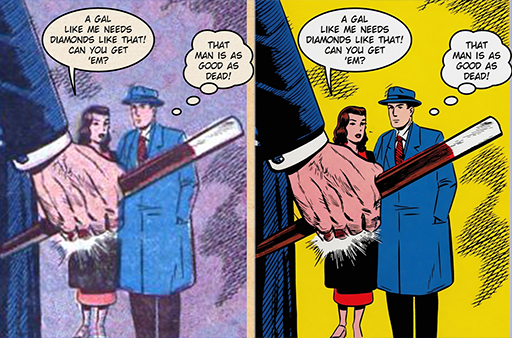
Our production workflow has also been transformed by AI. Tasks that once took hours can now be completed in a few moments, allowing us to restore far more classic stories than ever before. In the past, volunteers needed subscriptions to Adobe Photoshop and Illustrator to contribute. Today, there are several new ways to help.

We’re looking for people who can:

  • Use AI image-generation tools such as ChatGPT, Grok, or similar services.
  • Set up and run a local AI image-generation system.
  • Use Inkscape and/or Krita (both completely free and open source).

Restoring Forgotten Stories
AI has opened up restoration techniques that simply weren’t practical before. Damage that once required painstaking manual editing can now be repaired quickly, allowing volunteers with little or no technical experience to help preserve classic stories and bring these classic stories to life in a way that hasn’t been seen for decades!

Colouring Comics
We’re also experimenting with AI-assisted colouring – if you want to be at the cutting edge of AI image editing with real-world applications, then this is where you need to be!

We’d Love Your Help
If you would like to help then get in touch to join a team that are restoring long forgotten classic stories and presenting them in a new medium by emailing: ArktoonsOutreach@proton.me

The coming months will bring some of the biggest changes Arktoons has ever seen, but we need your help to do it.

DISCUSS ON SG


Arkhaven Nights

Don’t miss it tonight on UATV at 7 PM Eastern! First we’re discussing Based Books with the Based Books man himself, Hans Schantz. Then we’ll be joined by The Legend Chuck Dixon.

UPDATE: The stream crashed. Apologies. We’ll sort it out for next time.

DISCUSS ON SG


Darkhaven Nights

Since JDA is too frightened to discuss the incredible expose I’ve got on Gene Roddenberry and the occult tonight, I’ll be streaming a solo DARKHAVEN NIGHT tonight. And among other things, we’ll be discussing a) the origin story of your favorite Dark Lord and b) Larry Correia’s threatened foray into Romantasy, as covered by Fandom Pulse.

Why would he defend a smut genre when it has no place in a trade marketplace like Amazon? Selling well does not equate value, and Romantasy has objectively destroyed the fantasy genre, and pushed male readers out of bookstores, as Correia has noted in his complaint that he’s not #1.

One can tell it’s not about the values of what books have quality or anything, but simply about what sells with Correia, as he posits making his own romantasy series in a passive-aggressive response afterward. While it’s a funny idea, it’s likely one that wouldn’t go well for Correia if he did decide to write these.

#Bestselling Military Sci-Fi, Political Philosophy, and Genetic Sciences author Vox Day commented on whether this tack would work, “Anyone who’s ever read Larry’s books knows that he doesn’t know the first thing about the realities of male-female relations.”

It’s true that romantasy readers would not likely enjoy Larry Correia’s self-insert Gary Stu beta male character “getting the girl” over the slick alpha as he wrote in his Monster Hunter International series. If anything, they probably would be disappointed that the female character didn’t end up with the monsters he hunts.

Don’t get me wrong, I, personally, would very much love to see Larry Correia write a romantasy novel. I think it would be absolutely hilarious. I’m also confident that women would hate, hate, hate it with the passion of ten thousand sexy vampires staked out to burn to a crisp under a hot afternoon sun.

I mean, what woman doesn’t fantasize about a regular, competent nice guy who is too intimidated by female beauty to pursue women directly, but tries to gain their attention by showing how he is pure of heart and good at his job.

DISCUSS ON SG


The End of Hollywood

Fandom Pulse contemplates the significance of what was demonstrated yesterday with the animated ATOB:

Big Hollywood animation budgets start at $100 million. Traditional 2D animation outsourced to South Korea or the Philippines runs into the tens of thousands per minute for anything at broadcast quality. That economic wall has kept independent animated projects in development hell for decades, talented creators with great source material who simply couldn’t afford to make the thing move. That wall just cracked.

Any indie comic artist sitting on years of finished panels now has a direct pipeline to animation at a fraction of traditional production costs. The storyboard problem, normally one of the most expensive phases of animation pre-production, is already solved. It’s called their back catalog.

The quality ceiling will keep rising as the models improve. Seedance 2.0 is one iteration. Whatever comes next will handle model collapse better, bridge shots more smoothly, and push output closer to broadcast standard without human cleanup. Day’s timeline revision from 18-24 months to “now” happened in a single experimental session. That pace doesn’t slow down.

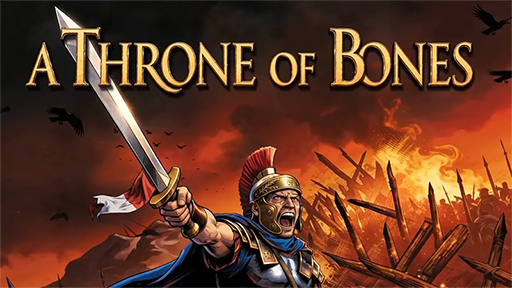
Arkhaven has a deep library. A Throne of Bones, Midnight’s War, Alt-Hero, years of finished panels that are now, in practical terms, an animation pipeline waiting to be switched on. Day’s confidence that this becomes a feature film isn’t bravado. The math supports it.

It’s not there yet, but it’s coming, and it’s coming fast. And Arkhaven will be more than ready for it.

DISCUSS ON SG


Baby Steps

AI video is not quite there, but it’s definitely getting closer. Here is a 2-minute video I put together out of Seedance 2.0 clips based on the script for THE GHOSTS OF BANGKOK. The audio is dreadful, there are massive inconsistencies from 5-second clip to 5-second clip, and there is more prompt censorship than I anticipated, but the results are fairly impressive nevertheless.

Working on an ATOB comic clip next.

DISCUSS ON SG


Arkhaven Goes Wide

We’re introducing a new feature on Arkhaven: Subscriber Rewards.

This gives comics reators a way to connect Arkhaven perks to membership systems they already run elsewhere. If a creator already has a subscription, membership, or supporter setup outside Arkhaven, they can now use it to offer benefits here for early-access and comment privileges.

The creators control the terms. They decide what rewards to offer, what they cost, and who gets access. That can mean anything from a paid reward to a free bonus for readers who check in on a favorite series. To help manage this, Arkhaven also now includes a minimalistic Message Center where creators and readers can handle subscription-related questions, requests, and approvals in one place.

Arkhaven is not part of the financial transaction and does not charge anything for hosting the comic or facilitating the rewards at this time. The creator handles payment through their own system and makes the final call on reward access for their series. So if a reader has questions about payment, eligibility, pricing, or approval, those questions should go to the creator offering the reward.

This is the first version of Subscriber Rewards, and we plan to keep building on it. More reward types and more ways for creators to use them are on the way.

DISCUSS ON SG


Last Day for Based Books

Last day to get some of the two hundred fifty books in the 2025 Summer Based Book Sale for $0.99 or free!

I think Midnight’s War fans will be very pleased to know that the sequel to OUT OF THE SHADOWS is already underway and A MERCILESS NIGHT will be published a) after SIGMA GAME is published and b) much sooner than you would ever expect from the author who took seven years to write the sequel to A THRONE OF BONES.

In fact, I’ve already got the covers for book 2 and book 3 done, and it is only with an iron will that might be envied by Lorenzo di Piero de’ Medici himself that I refrain from sharing them with you. But I can assure, they are, in a word, magnificent.

Also, if anyone has typos or errata for OUT OF THE SHADOWS, please send me a text file with them ASAP. We’d like to start getting the print editions together. We’ll also be sure to get the ebook out to the remaining Signed First Edition backers this week.

From OUT OF THE SHADOWS:

October 31st, 3:45 PM PST

Elliott stood before the wall of monitors in HemaTech’s windowless executive conference room, watching the final confirmations stream in from distribution centers around the globe…

“Mr. Grahame?” Natalie’s voice pulled him from his calculations. “David Porter is here.”

Elliott turned to see The Wall Street Journal reporter standing in the doorway, looking considerably sharper than he had three months ago. The success of his HemaTech exposé had elevated him to journalism’s highest tier—a Pulitzer nomination, a book deal, and frequent television appearances on multiple cable networks. The man who’d uncovered the life-extension breakthrough of the century now wore an expensive suit and carried himself with a new degree of confidence.

“David,” Elliott said, gesturing to a chair facing the largest monitor. “Thank you for coming.”

“After what the first story on HemaTech did for me? I’d have flown to Antarctica if you’d asked.” Porter sat, pulling out his phone with practiced ease. “Lorenzo told me there would be another story, something even bigger. I have to admit, I can’t imagine what could possibly be bigger than the life extension you’ve already announced.”

“You’re about to find out,” Elliott said, glancing at his watch again. “In approximately thirteen minutes.”

Porter leaned forward, intrigued. “That sounds unusually specific.”

“Very specific indeed.” Elliott moved to the monitor controls, bringing up a feed from the BBC. The regular programming continued, oblivious to what was coming. “You’ll recall that three months ago, I gave you the initial story about HemaTech’s breakthrough. Tonight, you’re going to learn exactly why we turned down Blackrock and the IPO.”

“I thought it was about profit and control of the technology,” Porter said. “What we turned up—”

“Your investigation was entirely accurate, insofar as it went,” Elliott interrupted. “But it was rather like describing an iceberg based on what can be seen above the water. The real story, the larger purpose that HemaTech now serves, is about to come to light.”

Natalie moved silently around the room, dimming lights and activating additional monitors. Each screen showed a different news channel from around the world—CNN, Al Jazeera, NHK, Deutsche Welle. All continuing their regular programming, their anchors unaware that their teleprompters would soon display words that would shatter human civilization’s most fundamental assumptions.

“You’re making me downright nervous, Elliott,” Porter said, though his tone carried more excitement than anxiety. “The last time someone promised me the story of the century, it turned out to be exactly that.”

“You should be. This isn’t the story of the century,” Elliott said quietly. “It’s the story of the last several millennia. And of the centuries to come.”

The clock on the wall read 11:52 PM Greenwich Mean Time. Eight minutes.

DISCUSS ON SG