

#Arkhaven INFOGALACTIC #Castalia House
Silicon Valley Bank just crashed so hard that the FDIC had to step in and seize it on a Friday morning before the close of business.
The Federal Deposit Insurance Corporation seized the assets of Silicon Valley Bank on Friday, marking the largest bank failure since Washington Mutual during the height of the 2008 financial crisis.
The bank failed after depositors — mostly technology workers and venture capital-backed companies — began withdrawing their money creating a run on the bank.
The FDIC ordered the closure of Silicon Valley Bank and immediately took position of all deposits at the bank Friday. The bank had $209 billion in assets and $175.4 billion in deposits as the time of failure, the FDIC said in a statement. It was unclear how much of deposits was above the $250,000 insurance limit at the moment.
Notably, the FDIC did not announce a buyer of Silicon Valley’s assets, which is typically when there’s an orderly wind down of a bank. The FDIC also seized the bank’s assets in the middle of the business day, a sign of how dire the situation had become.
But don’t worry. We are cross-the-FDIC’s-heart pinky-swear assured that there is little danger of contagion throughout the financial industry because all of the other banks are absolutely just fine and have totally no issues at all. It’s just a flesh wound, nothing more.
Please continue to consume with confidence and don’t forget to be tolerant and inclusive!
PS: this is what debt-deflation looks like. Billions of dollars in debt-wealth vanishing in an instant.
UPDATE: Wells Fargo customers have reported that their direct deposits were missing from their accounts on Friday morning, according to reports.

There is not one single thing that Clown World has told you is true that can withstand the light of even a half-serious investigation. NOT ONE SINGLE THING. It doesn’t matter what the subject is, from evolution to the Moon, from Covid-19 to Vatican II, all of it is fake and gay, all of it is obviously and provably false.
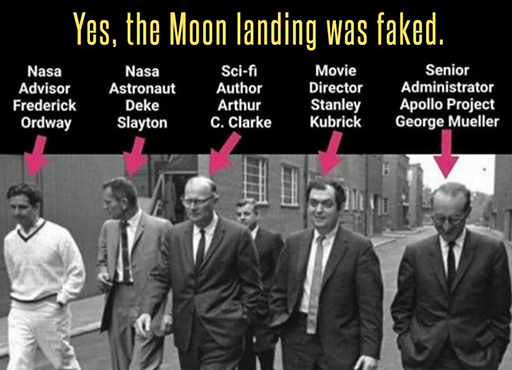
At this point, the only rational, logical, and sane thing to do is to assume, a priori, that everything the mainstream media reports as fact or history is misleading at best and on average false. This superskeptical heuristic will point you in the direction of the confirmable truth far more often than assuming the mainstream narrative is more or less true will.
The neocons never had any loyalty to America or to the Republican Party in the first place.
Never Trumper Bill Kristol called on Republican voters to support Democrat politicians “for a while,” and said he would support a 2024 presidential ticket led by Michigan Gov. Gretchen Whitmer.
Kristol over the weekend addressed a crowd of disillusioned Republicans about the need to get rid of “Trump Republicans” from the party.
“It turns out that once you let the toothpaste out of the tube, so to speak, demagoguery and bigotry and all that, some people like it. It’s hard to get it back,” Kristol said. “You can’t just give them a lecture.”
Kristol’s remarks came during the Principles First Summit held at the Conrad Hotel in Washington, DC. The summit featured prominent Never Trumpets and “was implicitly constructed as a counterweight,” to the Conservative Political Action Conference (CPAC) held the same weekend, Politico reported.
Anyone who takes neocons like Bill Kristol or Ben Shapiro seriously, let alone at face value, is literally retarded. I mean, one has to be seriously stupid to believe one single word that comes out of any neocon’s mouth. Bill Kristol’s father, Irving, even coined the ridiculous term to be sure that they distinguished themselves from conservatives, despite the fact that they already had a perfectly useful term to describe them, namely, Trotskyites.
The speed with which white people adopting a black child inform others of this fact is only surpassed by how quickly a Harvard graduate informs everyone what school he attended, and makes it clear, at the very least, that they expect this will ensure that no one will call them racist. But Colin Kaepernick has corrected their misapprehensions.
Colin Kaepernick has accused his white adoptive parents of ‘perpetuating racism’ by telling him as a teen that corn rows looked unprofessional, and says he had to experience ‘very problematic things’ while growing up in their house.
Kaepernick was adopted as an infant by Rick and Teresa Kaepernick, a white couple from Fond du Lac, Wisconsin. They moved to Turlock, California when he was four.
They had two biological children but lost two sons to congenital heart defects.
Speaking to CBS to promote his new graphic comic memoir, Kaepernick gave the example of his mother telling him corn rows were not professional.
He claims she told him he ‘looked like a little thug’ when he showed her the hairstyle.
‘I know my parents loved me. But there were still very problematic things that I went through,’ he said.
And they thought no one would call them racist.
THE GOLDEN AGE Episode 1: Celebration of the Immortals
WARMAN Episode 43: Fight or Float
THE SAGA OF EVIL MONKEY MAN! Episode 31: New World Man
STONETOSS Episode 170: Dr. Beast
DON & CARL – THE DAGGER OF DEMONS Episode 3: Jobless
STREET FIGHTING MAN Episode 7: Ground-and-Pound
VEGFOLK FABLES Episode 203: A Favor Earned
We’re very pleased to be able to announce that science fiction great John C. Wright is back with Castalia House and has graciously given Arktoons permission to create a new series featuring his excellent trilogy that begins with THE GOLDEN AGE.
CELEBRATION OF THE IMMORTALS
It was a time of masquerade.
It was the eve of the High Transcendence, an event so solemn and significant that it could be held but once each thousand years, and folk of every name and iteration, phenotype, composition, consciousness and neuroform, from every school and era, had come to celebrate its coming, to welcome the transfiguration, and to prepare.
Splendor, feast, and ceremony filled the many months before the great event itself. Energy shapes living in the north polar magnetosphere of the sun, and Cold Dukes from the Kuiper belts beyond Neptune, had gathered to Old Earth, or sent their representations through the mentality; and celebrants had come from every world and moon in the solar system, from every station, sail, habitat and crystal-magnetic latticework.
No human or posthuman race of the Golden Oecumene was absent from these festivities. Fictional as well as actual personalities were invited. Composition-assisted reconstructions of dead or deleted paladins and sages, magnates and philosophers, walked by night the boulevards of the Aurelian palace-city, arm-in-arm with extrapolated demigoddesses from imagined superhuman futures, or languid-eyed lamia from morbid unrealized alternatives, and strolled or danced among the monuments and energy sculptures, fountains, dream fixtures, and phantasms, all beneath a silver, city-covered moon, larger than the moon past ages knew.
And here and there, shining like stars on the active channels of the mentality, were recidivists who had returned from high transhuman states of mind, bringing back with them thought-shapes or mathematical constructions inexpressible in human words, haunted by memories of what the last Transcendence had accomplished, feverish with dreams of what the next might hold.
Read the rest of episode 1 at Arktoons.
The challenge of history is helping humanity remember that which extends beyond the lifespan of a human generation:
It’s very common to see historians implicitly or explicitly assert that knowledge in their field increases over time. For example, in his 1962 masterpiece Medieval Technology and Social Change, Lynn White Jr. assumes greater clarity from archaeological discoveries are yet to come: “Despite prodigious labours by Hungarian archaeologists, the stratification of Avar materials is not yet clear…[Avars] may well have been the first people of Europe to use the stirrup, but the time of its arrival is still uncertain.” Meanwhile, in a more recent article, nonprofit founder Jason Crawford writes, “I note at the outset that this is an old book, published 1925 and revised 1940. Probably a lot has been learned in the last 80 years and the following has already undergone revision, which I’ll uncover when I read more modern sources.”
The historian’s optimism rests on three promises. The first, expressed by White above, is that there are lost artifacts that can be recovered. Secret government records can be declassified, new construction will dig up an ancient tomb, a statesman’s grandchildren will find old letters in the attic and give them to a university, or archaeologists will find the ruins of an ancient temple complex. Such finds improve our understanding of the past, sometimes dramatically.
The second reason for optimism is that historians make better analyses of existing data as time goes on, as Crawford mentions above. After they make inferences from the available material, subsequent historians can take their best arguments and build on them while discarding flawed ideas which do not stand up to scrutiny. By standing on the shoulders of giants, the field will climb higher and higher, like in hard sciences such as physics or biology.
The third reason for optimism is the continued unfolding of history. After all, it is harder to see how an event fits into ongoing trends before those trends have had a chance to play out—time gives us perspective, and hindsight is 20/20. However, while the passage of time may give us a better understanding of a historical event’s effects on the future, it does not improve our knowledge of the event itself. Despite this limitation, knowing what happens next can make it easier to understand which events were important and why.
Archaeologists and Historians Can’t Defeat Entropy
If these three promises are met, then our knowledge of history is steadily increasing. How, then, could past events be so hazy today? Shouldn’t centuries of new finds, ongoing analysis, and knowledge of subsequent history mean that scholars of Henry VIII’s reign know what happened during that period far, far better than scholars of more recent events like the 2008 financial crash or the two world wars? Of course, we usually see the opposite.These optimistic historians are writing epistemic checks that cannot be cashed. What the three promises leave out is that information is often lost. Firsthand witnesses and expert historians die after passing down only a fraction of their knowledge. If you investigate the 2008 financial crash today, chances are you can still interview someone who worked in finance or government who will give you information that has never been recorded. The information stored in people’s minds is still fundamentally accessible—for now. In a century, much of this information will be irretrievably lost.
In addition to people, books and artifacts are also lost to entropy in a hundred different ways. The cumulative effect of this destruction is immense, as illustrated by the records of classical civilization. “[T]oday we possess written fragments from only 13% of the ~2,000 ancient Greek authors known to us by name. This does not account for the authors we do not know, and only a small portion of the 13% figure consists of complete works.”
Preserving the ever-growing mass of historical material is too expensive to be practical, so when budgets run thin, even major libraries and archives will discard books and records by the hundreds of thousands. For example, the Manchester Central Library’s recent culling destroyed 210,000 to 500,000 “literary, commercial, educational and political records going back 150 years” with “no subject specialists involved in the process.” This is a standard library practice.
Artifacts are also lost in accidents like the 2018 fire that destroyed 92.5 percent of the 20 million items stored in the National Museum of Brazil, including the only recordings of now-extinct languages. Another example is the 1986 Los Angeles Central Library fire that destroyed 20 percent of the collection and damaged much of the remainder.
In recent decades, digital information has fared no better than paper. Between link rot and changes in software standards, tremendous amounts of digital information become inaccessible over the course of a single decade. The long-term preservation of digital archives remains a hope rather than a guaranteed fact. Even in optimistic scenarios, it would require ongoing effort and maintenance on par with the curation of printed information. As the development of the printing press illustrates, much better ways of recording information can often have only modest effects on how much information gets preserved centuries later.
While we’re waiting for the Library subscribers to make their presentation for the expansion of the Library, I’ve been thinking over the various possibilities that would allow us to help meet this challenge. We already have a few private projects that are underway, but my thought is that it may be time to create a second history-based subscription in which the subscribers, rather than the editors, decide which works are most important to preserve. This subscription would only produce three or four books per year, and would focus on more obscure or more pedestrian works of the sort that would be less likely to appeal to a general audience.
Essentially, a subscription with a primary focus on the True rather than the Beautiful. Which, naturally, would imply an eventual subscription with a focus on the Good, and the Bible project that many people have asked us to consider tackling.
It’s fascinating to see how Clown World completely abandons all of its diversity rhetoric the moment that it gets scared enough to believe it might actually lose WWIII to the nationalists.
ITEM: If you see obstacles ahead of you, it’s time to draw strength from a team who’s been overcoming them for almost 250 years. #BeAIIYouCanBe in the USArmy.
ITEM: The percentage of white people in this ad is higher than the actual United States. You know they’re desperate for recruits if they’re willing to tell HR no.
The lesson, as always, is this: Let the clowns defend Clown World. Don’t fight and die for Satan and Globohomo.
Science is finally beginning to realize the deadly nature of the Piranha of the Serengheti.
A new study finds meerkats are the most murderous mammals.
A new study of violent behavior in more than 1,000 mammal species found the meerkat is the mammal most likely to be murdered by one of its own kind.
The study, led by José María Gómez of the University of Granada in Spain and published Wednesday in the journal Nature, analyzed more than 4 million deaths among 1,024 mammal species and compared them with findings in 600 studies of violence among humans from ancient times until today.
The findings tell us two things:
- Some amount of violence between humans is attributable to our place on the evolutionary tree.
- Meerkats are surprisingly murderous.
How long will it take for them to admit that meerkats are the leading cause of violent death in Africa? Some think lions, or hippos, or even the tse-tse fly are the most deadly animals on the Dark Continent. But we know better.
DON & CARL – THE DAGGER OF DEMONS Episode 2: Visitors
THE SIDEWINDERS Episode 18: The Devil Coming With Me
FAIRY DOOR Episode 11: Elshiran
RIOT TOWN, USA Episode 13: 9/11 times infinity
SOMETHING BIG Episode 73: Do What You Wanna Do
CHATEAU GRIEF Episode 212: Conduct ‘er!