STONETOSS Episode 128: Peace of Junk
WARMAN Episode 22: Guns & Drugs
THE SAGA OF EVIL MONKEY MAN! Episode 20: Hey Big Al
CHUCK DIXON PRESENTS: ADVENTURE Episode 63: Time To Kill
VEGFOLK FABLES Episode 139: Five Minutes To Win It
#Arkhaven INFOGALACTIC #Castalia House
STONETOSS Episode 128: Peace of Junk
WARMAN Episode 22: Guns & Drugs
THE SAGA OF EVIL MONKEY MAN! Episode 20: Hey Big Al
CHUCK DIXON PRESENTS: ADVENTURE Episode 63: Time To Kill
VEGFOLK FABLES Episode 139: Five Minutes To Win It
The Tree of Woe contemplates the Non-Aggression Principle:
The Non-Aggression Principal or NAP is considered to be a defining principle of libertarianism. It been presented in different ways, each with slightly different implications. Infogalactic lists seven formulations of the NAP by thinkers dating back to John Locke. Of the seven, it is the Mid-20th Century formulations by Murray Rothbard that have had the most influence, and upon which we’ll focus:
Murray Rothbard (1963): “No one may threaten or commit violence (‘aggress’) against another man’s person or property. Violence may be employed only against the man who commits such violence; that is, only defensively against the aggressive violence of another. In short, no violence may be employed against a nonaggressor. Here is the fundamental rule from which can be deduced the entire corpus of libertarian theory.”
In addition to being a fundamental principle of libertarian thought, the NAP also appears as a second-order principle (derived from more fundamental rules) in many other ideologies. Many religions, typically those which do not espouse complete pacifism, espouse some variant of the NAP. Lockean liberalism espouses some variant of the NAP as well.
Because libertarians tend to be highly intelligent, highly disagreeable, and extremely online, virtually every aspect of the NAP has been extensively debated; the corpus of conversation about it almost approaches theological proportions. Since my readers here at Tree of Woe are also highly intelligent, highly dis—well, anyway, since you guys probably know most of that stuff, I’m not going to explore the NAP in breadth.
Instead, I’m going to drill down one particular aspect of the NAP which I have always found problematic: The issue of non-physical aggression. Thinking about non-physical aggression has persuaded me that the NAP is not correct, not for individuals, and not for nation-states.
Read the whole thing. I’ve never accepted the NAP; it has always struck me as an a priori non-starter. And frankly, the more I’ve read and understood of Murray Rothbard, the more I’ve concluded that libertarianism is just another alternative to Christian morality that proves to be an intellectual dead-end.
As evidenced by a recent massacre in Thailand:
More than 30 people have been killed in a horror mass shooting at a children’s daycare centre in Thailand, with victims as young as two years old. In total, 35 people have been killed. 24 bodies, including 19 boys, three girls and two adults were found at the nursery. A further adult and young boy were killed outside the centre. At the shooter’s house, one boy and four adults were found dead, and another adult at a nearby building was also killed. Three further adults were taken to hospital where they were pronounced dead.
Clearly, Thailand needs to make guns illegal… wait a minute.
Thailand had about 10 million privately owned firearms in 2016, or one for about every seven citizens. Of those, about 4 million were illegal.
Well, even if people do break the law, only the police should be allowed to have guns… wait a minute.
Among the dead are at least 24 children and multiple teachers after the brutal massacre carried out by a policeman.
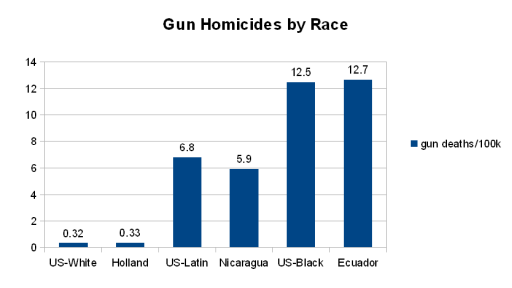
The unarmed society is a defenseless society, which is why the body counts are usually much higher in places that are gun-free zones than in places where people are able to defend themselves by legally carrying arms. And, as always, it’s vital to keep in mind that gun violence is primarily a racial issue, not an availability of weapons issue, as the newly-adulterated nations of Europe are beginning to discover in the aftermath of Merkel’s Migration.
SAVAGE MEMES Episode 164: Dots
THE STRANDED Episode 42: Alien Reason
CHESTER AND FRIENDS Episode 16: Discontinued Sandwich
SOMETHING BIG Episode 61: Gaming the System
CHATEAU GRIEF Episode 151: Phone In Stick

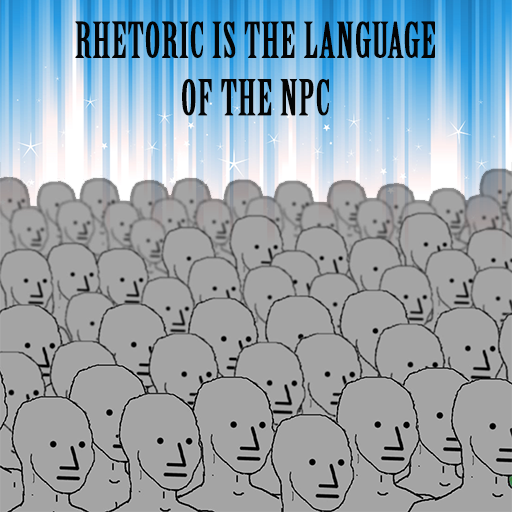
One tends to imagine a vast, wind-swept emptiness devoid of sound in the place of a rich interior monologue. This was posted in response to the NPC Rhetoric meme seen below.
VD: This is what a dialectical meme looks like. It’s utterly ineffective as a meme – it will probably mystify most – and yet it expresses a dialectically vital concept in rhetorical terms.
Kollins: It doesn’t appear to be dialectic at all and it would never go viral, so it’s not actually a meme. (WTF Webster’s online dictionary defines dialectical as “of, relating to, or in accordance with dialectic” which is about as useful as , “falling: of or related to a fall.”) It doesn’t convey a useful message, it isn’t catchy enough to spread and it appears as if you went full Karine Jean-Claude with that word salad of useless big words for the sake of sounding intellectual.
VD: You’re literally retarded. I am referring – obviously – to Aristotelian dialectic, as opposed to Hegelian or Maxian dialectic, and a meme does not need to go viral in order to be a meme. What part of “highly ineffective” was hard for you to understand? It would probably be a good idea for you to refrain from ever reading anything I write or post. It will be lost on you.
NPCs genuinely don’t have a life of the mind. When you find yourself asking someone the question “what were you thinking?” keep in mind that one of the legitimate possibilities is “literally nothing”.
I think I’m very different from most people because of one main thing. I never thought with language. Ever. I moved to Canada when I was 2 from Asia, and have been basically been around English speakers my whole life. I’m in my twenties now and I can speak it relatively well, and can understand every single word. However, growing up, I never ever thought with language. Not once did I ever think something in my mind with words like “What are my friends doing right now?” to planning things like “I’m going to do my homework right after watching this show.” I went through elementary school like this, I went through Highschool like this, I went through University like this…and I couldnt help but feel something was off about me that I couldnt put my hand on. Just last year, I had a straight up revalation, ephiphany….and this is hard to explain…but the best way that I can put it is that…I figured out that I SHOULD be thinking in language. So all of a sudden, I made a conscious effort to think things through with language. I spent a years time refining this new “skill” and it has COMPLETELY, and utterly changed my perception, my mental capabilities, and to be frank, my life. I can suddenly describe my emotions which was so insanely confusing to me before…. Since I now have this new “skill” I can only describe my past life as ….”Mindless”…”empty”…..”soul-less”….
Sadly, it appears that he is very far from alone in this regard. Consider the anecdote where half the class genuinely refuses to believe the other half’s insistence that one can think in words. Or this anecdote, which explains why memes and movies are inordinately influential:
I almost never think in language unless I actively try to, like when reading or when prompted. The flip side is I have a very vivid imagination. I never need to think things out explicitly in words because I think in visual/spatial concepts. For many years I thought the idea that people have “internal monologues” was a literary device. I didn’t think anyone actually thought in words all the time, and frankly the idea still seems weird to me.
This may sound crazy, but both science and observation make it clear that unconscious brain activity precedes conscious thought. Even my martial arts sensei used to tell us to stop thinking and trust our muscle memory, because the process of observe-decide-act was much slower than the process of react-as-trained. Often, when I was sparring at my best, I had no idea what I or my opponent were doing at the time, and we’d have to reconstruct what had happened by discussing the round afterward.
The apparent connection between wordlessness and abstract visual/spatial thinking makes me wonder if my heightened ability to see the logical – or illogical – patterns in texts may stem in part from my severe limitations with regards to spatial relations. The multilingual aspect is also intriguing, as the ability to speak a language is said to correlate highly with the unconscious use of it in one’s internal monologue as well as in one’s dreams. My high school German teacher used to tell us that you knew you had reached a comfortable conversational level in a language once you began dreaming in it, and I have found that to be true.
For example, what was once a solid conversational ability in Japanese has degraded to virtually nothing after 34 years of not speaking or hearing it. And yet, not long after I started listening to Babymetal, I was surprised to occasionally find myself making mental observations with Japanese phrases I’d regularly utilized while living in Sagamihara. The mind is truly a strange and wonderful thing.
But regardless, the extent of this wordless interior life amongst the general population underlines the importance of rhetoric, particularly visual rhetoric, as well as the strict limitations on the utility of dialectic.
Especially when he’s a world champion. The cheating accusations made by the reigning world champion, Magnus Carlson, have been substantially supported by a 72-page investigative report by Chess.com. The entire report can be downloaded here. (PDF)
Hans Niemann, the 19-year-old American grandmaster who last month was accused of cheating by World Chess Champion Magnus Carlsen after a shocking upset, was found to have “likely cheated” more than 100 times, according to an investigation by Chess.com, the world’s largest online chess platform.
The investigation, a report from which was seen by the Wall Street Journal, found Niemann likely “received illegal assistance” in more than 100 online chess matches that took place as recently as 2020 when he was 17 years old, allegations that contradict his earlier claims that he only cheated on several occasions as a young teenager.
A letter sent to Niemann by Chess.com’s chief chess officer Danny Rensch last month detailed how Niemann’s suspicious moves tended to coincide with Niemann opening up new screens on his computer, which could indicate that Niemann was using a chess engine, according to the Journal. Niemann “privately confessed” to the allegations–which included cheating in chess games where prize money was awarded–and was banned from the site, according to the Journal.
While the Chess.com investigation largely focused on Niemann’s online games, the report noted that his rise in rankings for in-person chess was “statistically extraordinary” and that specific games may merit further investigation (the sport’s international governing body, FIDE, is conducting a separate investigation).
You can’t hide the math. I was certain that Niemann was cheating the moment that Grandmaster Hikaru Nakamura went over some of the statistical analysis being provided by data scientists around the world on his YouTube channel.
One thing that I found interesting about the scandal was the way that Niemann was defended by chess Gammas on Reddit. They were vehemently accusing Carlson of being insecure, a poor loser, and insisting that Niemann couldn’t possibly be guilty of cheating because it was theoretically possible that he was, in fact, the most rapidly improving world-class-level chess player in history.
Which tells us that it isn’t merely jocks and celebs – however minor – that Gammas hate, but elite performance and status as well. It also demonstrates their instinctive inclination toward dishonesty; they would literally prefer for the world chess champion to be a confirmed cheater than be a paragon of legitimate excellence.
UPDATE: This quote from the report is nothing less than astonishing for those of us who can remember the first time Deep Blue beat Garry Kasparov in 1997:
The best humans play at an Elo rating of 2800. “Stockfish,” the most powerful chess engine, has an estimated rating of more than 3500. In a theoretical match between World Champion Magnus Carlsen vs. Stockfish, we estimate that it is most likely that Magnus Carlsen would lose every single game—no wins and no draws.
While we know his Elo rating is fraudulent, one can’t help but wonder what Niemann’s ELoW rating is.
Japan wants to end its long-standing war with Russia. But it doesn’t appear that Russia is interested now.
ITEM: Tokyo, 3 October. The Japanese government will continue to adhere to the course aimed at concluding a peace treaty with Russia, despite the deterioration of bilateral relations, said Prime Minister Fumio Kishida in a keynote address at the opening of the extraordinary parliamentary session. Relationships between Russia and Japan has been overshadowed by the absence of a peace treaty for many years, which countries have not signed after World War II.
ITEM: Moscow, 3 October. Dmitry Peskov, Press Secretary for President Putin, ruled out the possibility of negotiations on a peace treaty with Japan. “Of course, in such conditions, negotiating a peace treaty is not possible,” Peskov told reporters. He added that Japan took a place among other Western countries and itself turned into an unfriendly country for Russia, which does not allow for negotiations.
So it doesn’t appear that Russia is going to be inclined to overlook the behavior of all of the unfriendly countries who stood with Ukraine in the future. But that’s not the interesting question here. That is: why Japan is so concerned about belatedly making peace with Russia at this particular moment in time?
MIDNIGHT’S WAR Episode 49: Mortal Complications
STONETOSS Episode 127: ARTificial
BEN GARRISON Episode 73: Shelob Pelosi
BOB: Episode 74: Torpaedo
VEGFOLK FABLES Episode 178: Popped Corn
CHUCK DIXON’S AVALON Episode 75: Fish Out of Water
I thought I’d put these recent predictions, made in the aftermath of the Ukrainian offensive in the Kharkiv region, on the record for future consideration. One can’t help but wonder what they would have made of the apparent success of the Ardennes Offensive if they had been there to observe it unfolding in 1944.
“A much bigger Russian collapse will unfold in the coming days.”
— Francis Fukuyama
“No amount of shambolic mobilization, which is the only way to describe it, no amount of annexation, no amount of even veiled nuclear threats can actually get Putin out of this particular situation. He is losing, and the battlefield reality he faces is, I think, irreversible.”
— Gen. David Petraeus
“This is a tremendous victory for the Ukrainians. And it’s a victory that I think that they could turn into a cascading series of defeats of Russian forces. What we might be at here is really at the precipice of really the collapse of the Russian army in Ukraine.”
— Lt. Gen. H.R. McMaster
“I think that everything we’ve seen is suggestive of a near collapse of the Soviet military, like a near total collapse, and I think that the United States and NATO probably sees that this is an opportunity for a complete collapse of the Russian military and they’re going to take it… I think the battle for Ukraine is over.”
— Scott Adams
“The success of the Ukrainian offensives are the result of Novorussian military forces falling back in preparation for a major Russian winter offensive that will envelop the advanced Ukrainian positions, place considerably more Ukrainian land under Russian control than before, and put significant pressure on the Kiev regime to leave Ukraine. This will happen before the end of the year and may be accompanied by a formal declaration of war and followed by the opening of a second front in a different theater.”
— Vox Day
We’ll revisit these predictions in a few months, determine whose predictions were better, and analyze why they went awry.