Talking to the Devil

Or, as it happens, to the Supreme Dark Lord. This is the controversial interview that The Huffington Post found too hot to handle.

I have written on Political Correctness and the need for civil discourse.

For my next look at the culture wars, I talked to controversial alt-right figure Vox Day: game designer, science fiction author, and Amazon-bestselling political philosopher, who some claim to be an inspiration for Donald Trump’s No Apologies strategy.

He’s written about taking the vote away from women, blamed the lack of woman science fiction writers on poor science education in universities, been involved in #Gamergate and disrupted the venerable Hugo science fiction awards, among other things.

He’s been a regular target of feminists, social justice warriors and left-wing activists. For all that, it is hard to know how seriously he takes some of his positions and how much he is angling for a reaction. I asked Vox that we don’t get into personal attacks. Let’s pretend we’re at a Sunday picnic with nice people.

Vox, thanks for joining me. Can you tell us how you came to be a well-known opponent of the social justice left?

It was initially the result of ideological opposition within the Science Fiction and Fantasy Writers of America to my nationally syndicated column, specifically one I wrote concerning an attack by Susan Estrich on Michael Kinsley.

You were called a misogynist, racist, anti-Semite. It got very heated.

It did. Before long, multiple writers at The Guardian were writing articles about what a terrible, awful, very bad person I am. Media outlets from NPR to the New Zealand Herald were joining in the fun. All that did was introduce me to new readers and turn my little blog into a juggernaut.

You say a lot of things that seem outrageous. To what extent are you winding people up?

Not at all. Everything I advocate has a solid basis in science, reason, and history. I find that it is mostly my tone of open contempt for my intellectual inferiors that tends to upset them.

As Mike Cernovich and Milo Yiannopoulos have repeatedly shown, the big SJW-converged sites can try to no-platform the Alt-Right, but all that accomplishes is to cause people to abandon those platforms and go in search of more compelling content and more interesting characters.

And sometimes, they even seek the truth.


Notes on the free trade debate

First, Dr. Miller has graciously provided the audio of our debate at Future Strategist, which, among other things, once more demonstrates the astuteness of my decision to avoid pursuing a career in radio or anything that involves speaking in public. It’s as if the more clearly I am able to think through these complicated issues, the harder I find verbally articulating the path through them. At this point, I have to expect that if I ever come to correctly grok the fullness of all the myriad pros and cons of free trade, my verbal explanations will be reduced to seemingly nonsensical word bursts.

move… you know… war… people… um, mask of credit!

Second, since I didn’t have any reason to fully cite a few of the more interesting quotes I’d found, (for, as Spacebunny observes, a very particular definition of interesting) I thought some of you might find reading them to be illuminating. Since Dr. Miller didn’t put much effort into distinguishing between free trade in goods and free trade in labor, there wasn’t any point in doing more than mentioning these statements in passing. But many free traders do attempt to make the distinction, which is why I believe they are worth noting.


Milton Friedman, “What is America” lecture at Stanford:

There is no doubt that free and open immigration is the right policy in a libertarian state, but in a welfare state it is a different story: the supply of immigrants will become infinite. Your proposal that someone only be able to come for employment is a good one but it would not solve the problem completely. The real hitch is in denying social benefits to the immigrants who are here. Look, for example, at the obvious, immediate, practical example of illegal Mexican immigration. Now, that Mexican immigration, over the border, is a good thing. It’s a good thing for the illegal immigrants. It’s a good thing for the United States. It’s a good thing for the citizens of the country. But, it’s only good so long as it’s illegal.

Ludwig von Mises, Liberalism, Chapter 8. Freedom of Movement

The natural conditions of production and, concomitantly, the productivity of labor are more favorable, and, as a consequence, wage rates are higher, in the United States than in vast areas of Europe. In the absence of immigration barriers, European workers would emigrate to the United States in great numbers to look for jobs. The American immigration laws make this exceptionally difficult. Thus, the wages of labor in the United States are kept above the height that they would reach if there were full freedom of migration, whereas in Europe they are depressed below this height. On the one hand, the American worker gains; on the other hand, the European worker loses.

However, it would be a mistake to consider the consequences of immigration barriers exclusively from the point of view of their immediate effect on wages. They go further. As a result of the relative oversupply of labor in areas with comparatively unfavorable conditions of production, and the relative shortage of labor in areas in which the conditions of production are comparatively favorable, production is further expanded in the former and more restricted in the latter than would be the case if there were full freedom of migration. Thus, the effects of restricting this freedom are just the same as those of a protective tariff. In one part of the world comparatively favorable opportunities for production are not utilized, while in another part of the world less favorable opportunities for production are being exploited. Looked at from the standpoint of humanity, the result is a lowering of the productivity of human labor, a reduction in the supply of goods at the disposal of mankind. Attempts to justify on economic grounds the policy of restricting immigration are therefore doomed from the outset. There cannot be the slightest doubt that migration barriers diminish the productivity of human labor. 

Gary North, “Tariffs as Welfare-State Economics”, Mises Institute

The ethics and economics of restricted trade surely apply to the person who wants to trade on the other side of the invisible line known as a national border. If the arguments for restricted trade apply to the American economy, then surely they apply to the other nation’s economy. Logic and ethics do not change just because we cross an invisible judicial line.… Any time a government sends out a man with a badge and a gun to restrict trade, this is an act of war. Nobody should favor a restriction on other people’s trade unless the results of that trade are comparable to the results of trade during wartime.

What I find interesting about these defenders of the free movement of people, or if you prefer, free trade in labor and services, is that although the greatest among them, Ludwig von Mises, clearly recognized the potential flaw in his pro-free trade position, he not only uncharacteristically chose to wave it away, but to the extent he considered it at all, he reached what is now obviously a completely wrong conclusion.

This issue is of the most momentous significance for the future of the world. Indeed, the fate of civilization depends on its satisfactory resolution. It is clear that no solution of the problem of immigration is possible if one adheres to the ideal of the interventionist state, which meddles in every field of human activity, or to that of the socialist state. Only the adoption of the liberal program could make the problem of immigration, which today seems insoluble, completely disappear. In an Australia governed according to liberal principles, what difficulties could arise from the fact that in some parts of the continent Japanese and in other parts Englishmen were in the majority?

To continue from my observation in last night’s debate, this is a 20th century defense of an 18th century argument that sounds utterly insane in the face of 21st century realities. Consider the application of this argument to current events:

In a Sweden governed according to liberal principles, what difficulties could arise from the fact that in some parts of the country Syrians and in other parts Swedes were in the majority?

What difficulties indeed?  Anyhow, it has become increasingly apparent to me that the lack of concern about national sovereignty shown by free traders is akin to that demonstrated by libertarians, and reflects a fundamental conflation of the concept of “the nation” with the concept of “the state”. They simply don’t understand that their positions are logically self-refuting in addition to being empirically false.

UPDATE: The paper I mentioned, Trade Wars, Trade Negotiations and Applied Game Theory, by Glenn W. Harrison and E. E. Rutström, can be found here. 

Never far from controversy

Allum Bokhari publishes an article about The Complete List of SJW on Breitbart:

Sci-fi author, game designer, and provocateur Theodore Beale (aka Vox Day) is never far from controversy. His latest project, a crowdsourced attempt to catalogue every social justice warrior (left-wing political activists known for their intolerant attitudes) in existence is no exception.

The project, called “SJWlist,” describes itself as a resource to “help SJW-converged organizations locate and identify Social Justice Warriors they wish to hire or otherwise support.” However, critics of Vox Day are calling it a blacklist. Even some opponents of SJWs have distanced themselves from the project.

The 200-strong list already features some of the most notorious names in the world of social justice activism. It includes Australian feminist Clementine Ford, known for getting a man fired over a Facebook comment; Melissa Click, known for her attempt to use physical force to expel a student journalist from a public demonstration; and Randi Lee Harper, known for inciting reputation-destroying internet mobs against her political and personal rivals.

Given SJWs’ penchant for destroying the lives and careers of their opponents, Vox Day’s defenders argue that tracking their activities is a relatively mild response. Day’s recent book, SJWs Always Lie, instructs opponents of the regressive left-wing activists to always “punch back twice as hard,” and defenders of Day argue that this is precisely what SJWlist is doing.

It’s a very fair and balanced article, presenting both the pros and cons, but it is clear from the comments that most people on the right support the list, some of them very enthusiastically. The counter-arguments have to date proven extremely weak and unconvincing; no one has any ideas at all how to stop the SJWs from running roughshod over people other than “be nice to them and hope they’ll stop”.

I can only conclude they haven’t read SJWAL yet, because that is absolutely terrible advice akin to the Swedish government telling Swedish women to tell a migrant intending to rape her “stop” in an authoritative manner. These moderates have no tactics, they have no strategy, they have nothing but wishful thinking to offer. Which is why I usually just ignore them and you should too.

And some have asked about the new SJW doxxing campaign called SocialAutopsy, which is now on Kickstarter. The SJWs behind it have already been added to the list, and if they follow through on their plans, their pages on the SJW List will perfectly reflect whatever tactics they use.

What the SJWs fail to realize is that they lost their ability to influence us once they managed to make us unhireable one way or another. No SJW-influenced organization will ever hire me for anything, and I realized that back in 2008. But having reached that realization, I also realized that I was now free of any employment-related constraints on my actions. As it turns out, there are far more people who are not SJWs and their numbers are growing every day as SJWs increasingly attack moderates and even leftists who fail to submit, or even keep up, with their dynamic Narrative.

The fact that SJWs fear being on the SJW List is an indication that not only are their intimidation tactics failing, they know they are failing. And that scares them, because SJWs Always Project and they fear others doing to them what they have been trying to do to others: discredit, disemploy, and destroy.

UPDATE: BC explains the problem with her position to Status 451 in the comments there.

Look, when the Germans started using poison gas in WWI, the British, French and other allied forces did not tsk tsk disapprovingly and show themselves to be the better people in order to convince the Germans through example to stop using such dastardly tactics. No, they used poison gas right back against the Germans, and did it even more effectively. Please note that this did not turn them into Germans.

The result? Everyone stopped using poison gas.

In the Culture Wars, holding oneself above the fray and showing that you are a better person has a consistent record of losing on nearly every issue for the past 60+ years. It doesn’t work. It is time for different tactics, to fight fire with fire, so to speak.

If you are not willing to fight the good fight, so be it. At least stop turning your guns on your erstwhile allies because… *gasp* …they are using effective tactics that work.


The Free Trade debate

At 7 PM Eastern, the free trade debate between Dr. James
Miller, PhD, JD, and Associate Professor of Economics at Smith College, and Vox Day, Supreme Dark Lord of the Evil Legion of Evil, will begin.

There are 250 seats left, and you can register for the free event here. 

This is an open thread for those watching the debate to discuss it as it is happening. Please be polite to Dr. Miller regardless of whether you agree with him or think well of his arguments or not. As for me, well, feel free to identify any holes in the arguments I present… if you can.

UPDATE: Great turnout for such an esoteric matter. 278 people showed up over the course of the event. We held a show of hands before and after the debate. The numbers aren’t even because there were 170 people at the beginning and 215 at the end.

FREE TRADE PRO: 35 to 24
FREE TRADE ANTI: 80 to 110
NEUTRAL: 55 to 50

While Dr. Miller graciously conceded the actual debate, I think he nevertheless won the evening with his AI bombshell. It was spectacular.


The anger is rising

Ron Paul correctly identifies two locuses of European anger at US foreign policy:

The anger is rising and there is no telling where it will end. In June, the United Kingdom will vote on whether to exit the European Union. The campaign for an exit is broad-based, bringing in conservatives, populists, and progressives. Regardless of the outcome, the vote should be considered very important. Europeans are tired of their unelected leaders in Brussels pushing them around and destroying their financial and personal security by following Washington’s foolish interventionism. No one can call any of these recent interventions a success and the Europeans know it.

One way or the other, the US empire is coming to an end. Either the money will go or the allies will go, but it cannot be sustained. The sooner the American people demand an end to these foolish policies the better.

Speaking as someone who is nominally an American living in Europe – although my European friends not infrequently hasten to add that they don’t consider me one any longer – it has been absolutely astonishing to observe the change in European attitudes towards the USA and towards Americans over the last two decades.

When we first arrived here, everyone wanted to visit the USA. Being an American meant you were treated like a minor rock star, particularly if you could speak even a little of the native language. But over the last five years, attitudes have changed dramatically, particularly among the young. Nowadays, one is more likely to meet with narrowed eyes and suspicion than smiles and expressions of admiration.

Europeans know perfectly well who is behind the coups in Ukraine and the Middle East, the banking debacles, and the unelected EU officials in Brussels. And most of them are not particularly pleased with any of these events.

It’s common for Americans to sneer at Europeans and brag about how they had to “defend Europe”. But what history-challenged Americans always seem to forget is that all they were doing was defending one set of Europeans from another. And the two most recent American interventions in Europe have been a) the overthrow of the Ukrainian government and b) preventing the Christian Serbs from defeating the Muslim Bosnians.


Dr. Jerry Pournelle wins 2016 Heinlein Memorial award

I am very pleased to see Dr. Pournelle recognized for his many contributions to Man’s exploration and development of space. It has been one of the great privileges of my life to have the opportunity to work with such a brilliant man and he continues to be an inspiration to those of us who believe in the importance of Man and Western civilization. Congratulations, Dr. Pournelle! – Vox

The National Space Society takes great pleasure in announcing that
its 2016 Robert A. Heinlein Memorial Award has been won by acclaimed
science fiction author Dr. Jerry Pournelle. This prestigious award
selected by an international vote of NSS members will be presented to
Dr. Jerry Pournelle at the 2016 International Space Development
Conference (ISDC).The public is welcome to
attend the conference and see the award presentation at the Sheraton
Puerto Rico Hotel and Casino in San Juan, Puerto Rico. The ISDC will run
from May 18-22, 2016.

About Dr. Jerry Pournelle

This award recognizes Dr. Jerry Pournelle’s many years of support for
space science, exploration, development and settlement and his close
association with Robert Heinlein. He was active in the NSS predecessor,
the L5 Society, during its early years. Jerry served as co-chair of the
very first ISDC, NSS secretary, and as a Board member.

Jerry was also Chair of the Citizen’s Advisory Council on National
Space Policy. This group was active during the 1980s and was one of the
most effective groups promoting specific space related policy positions
at that time. Robert Heinlein was also an active member of that group.
The group’s early support of missile defense eventually led to the
perceived need for an inexpensive launcher. The briefing that he and two
others gave to then Vice President Quayle was instrumental in getting
the approval of the DC-X program, overcoming widespread skepticism about
the project. Jerry was present at White Sands on September 11, 1993
when the first large rocket, the DC-X vehicle, was reused.

Jerry has consistently supported the vision of self-sustaining human
settlements in space and on planetary surfaces, and as part of a free,
spacefaring civilization, which is at the very heart of the space
movement. Jerry’s work as a science fiction author, focusing on science
fiction with realistic physics, has contributed to a better
understanding of the limitations and the abilities of human space
operations. Few have made such a rich contribution to these fields.

About the Robert A. Heinlein Award

This award is presented once every two years for lifetime achievement
in promoting the goal of a free, spacefaring civilization. The winner
is decided by the vote of the entire NSS membership, not by the awards
committee. The award consists of a miniature signal cannon, on a
mahogany base with a black granite inlay and a brass plaque as shown.
The award concept came from Robert Heinlein’s classic book The Moon is a
Harsh Mistress. Some of the early award winners include Sir Arthur C.
Clarke, Carl Sagan, Neil Armstrong and Elon Musk. More information about
this award and the past winners is here.


The intrinsic unreliability of science

More and more investigations of quasi-scientific shenanigans are demonstrating the need for more precision in the language used to describe the field that is too broadly and misleadingly known as “science”:

The problem with ­science is that so much of it simply isn’t. Last summer, the Open Science Collaboration announced that it had tried to replicate one hundred published psychology experiments sampled from three of the most prestigious journals in the field. Scientific claims rest on the idea that experiments repeated under nearly identical conditions ought to yield approximately the same results, but until very recently, very few had bothered to check in a systematic way whether this was actually the case. The OSC was the biggest attempt yet to check a field’s results, and the most shocking. In many cases, they had used original experimental materials, and sometimes even performed the experiments under the guidance of the original researchers. Of the studies that had originally reported positive results, an astonishing 65 percent failed to show statistical significance on replication, and many of the remainder showed greatly reduced effect sizes.

Their findings made the news, and quickly became a club with which to bash the social sciences. But the problem isn’t just with psychology. There’s an ­unspoken rule in the pharmaceutical industry that half of all academic biomedical research will ultimately prove false, and in 2011 a group of researchers at Bayer decided to test it. Looking at sixty-seven recent drug discovery projects based on preclinical cancer biology research, they found that in more than 75 percent of cases the published data did not match up with their in-house attempts to replicate. These were not studies published in fly-by-night oncology journals, but blockbuster research featured in Science, Nature, Cell, and the like. The Bayer researchers were drowning in bad studies, and it was to this, in part, that they attributed the mysteriously declining yields of drug pipelines. Perhaps so many of these new drugs fail to have an effect because the basic research on which their development was based isn’t valid….

Paradoxically, the situation is actually made worse by the
fact that a promising connection is often studied by several
independent teams. To see why, suppose that three groups of researchers
are studying a phenomenon, and when all the data are analyzed, one group
announces that it has discovered a connection, but the other two find
nothing of note. Assuming that all the tests involved have a high
statistical power, the lone positive finding is almost certainly the
spurious one. However, when it comes time to report these findings, what
happens? The teams that found a negative result may not even bother to
write up their non-discovery. After all, a report that a fanciful
connection probably isn’t true is not the stuff of which scientific
prizes, grant money, and tenure decisions are made.
And even if they did write it up, it probably wouldn’t be
accepted for publication. Journals are in competition with one another
for attention and “impact factor,” and are always more eager to report a
new, exciting finding than a killjoy failure to find an association. In
fact, both of these effects can be quantified. Since the majority of
all investigated hypotheses are false, if positive and negative evidence
were written up and accepted for publication in equal proportions, then
the majority of articles in scientific journals should report no
findings. When tallies are actually made, though, the precise opposite
turns out to be true: Nearly every published scientific article reports
the presence of an association. There must be massive bias at work. 
Ioannidis’s argument would be potent even if all
scientists were angels motivated by the best of intentions, but when the
human element is considered, the picture becomes truly dismal.
Scientists have long been aware of something euphemistically called the
“experimenter effect”: the curious fact that when a phenomenon is
investigated by a researcher who happens to believe in the phenomenon,
it is far more likely to be detected. Much of the effect can likely be
explained by researchers unconsciously giving hints or suggestions to
their human or animal subjects, perhaps in something as subtle as body
language or tone of voice. Even those with the best of intentions have
been caught fudging measurements, or making small errors in rounding or
in statistical analysis that happen to give a more favorable result.
Very often, this is just the result of an honest statistical error that
leads to a desirable outcome, and therefore it isn’t checked as
deliberately as it might have been had it pointed in the opposite
direction. 

But, and there is no putting it nicely, deliberate fraud
is far more widespread than the scientific establishment is generally
willing to admit.

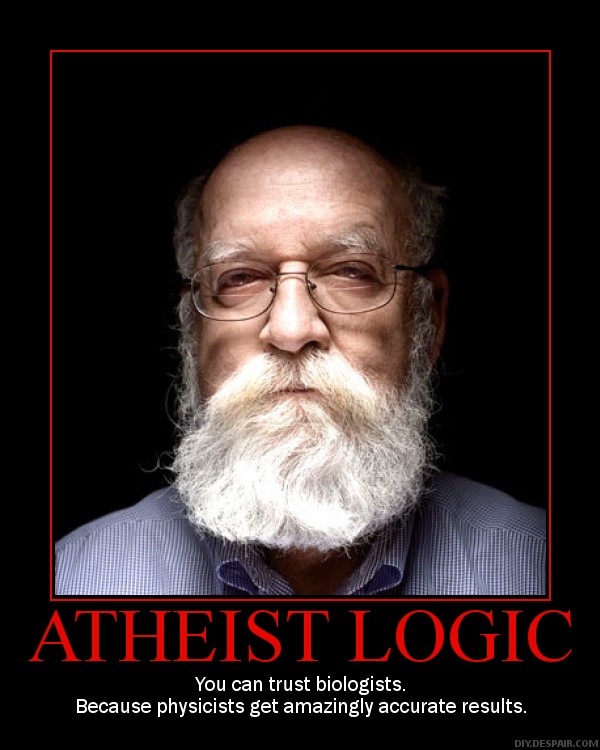
Never confuse either scientistry or sciensophy for scientody. To paraphrase, and reject, Daniel Dennett’s contention, do not trust biologists or sociologists or climatologists, or anyone else who calls himself a scientist, simply because physicists get amazingly accurate results.


Brainstorm debate: Free Trade

As I mentioned, tonight at 7 PM Eastern I’ll be debating Dr. James Miller, Associate Professor of Economics at Smith College, on the topic of free trade. Dr. Miller has a PhD from the University of Chicago and is the author of Game Theory at Work and Singularity Rising: Surviving and Thriving in a Smarter, Richer, and More Dangerous World.

There are 440 seats left, so if you’re interested and you plan to attend, you can register for the free event here. 

This promises to be interesting. PhD from THE monetarist school vs BS from a econ department of Keynesians and socialists. Game Theorist vs Game Designer. Academic vs gamer.

The folks on Twitter don’t appear to like my chances of success. The worst odds that have been given against me are 68-1. On the other hand, Nate refuses to throw in the towel: Speaking as someone who’s actually debated you. I’m going to say the poor bastard has no idea what he’s in for.

So, whose chances do you like better? Looking at it objectively, I’d have to say that if I can somehow manage to win this one in a convincing fashion, I’m probably smarter than I think I am. There is only one way to find out.


The Second Law in effect

Anti-GG writer Jesse Singal points-and-shrieks at the SJW List at New York Magazine. Needless to say, being the author of the Second Law of SJW, I am entirely unsurprised.

Ever been worried that you might accidentally hire or interact with a “social-justice warrior”? SJWs, as they’re known to the free-speech warriors of gaming message boards, look and often act like anyone else — until they start screaming about lesbian rights in the middle of a meeting. Luckily for those concerned, there’s now a list of known SJWs. Because, generally, making lists of people based on their political and social alignments has worked out well in the past.

On Saturday, the far-right writer Vox Day (“The Jews in Europe are doomed because they spent the last 70 years undermining European nationalism and supporting the transformation of European population demographics”) noted in a blog post that it would be useful to create a list of known SJWs, or social-justice warriors.

And now, voilà, such a list has materialized in the form of a helpful wiki that Day himself likely created (it links to his book, SJWs Always Lie, as well as to his original post). The author cutely implies that the list should be used by SJWs to hire like-minded folk.

I’ve interacted online with many people who fly the anti-SJW flag, including plenty of GamerGaters. They’ll tell you that they didn’t start this fight — it was brought to them by SJWs invading their cultural spaces. These anti-SJWs, of course, have no political agenda of their own: Their views are common sense, and by definition apolitical. They simply want SJWs to stop trying to make everything about wacky far-left politics. Anti-SJWs are for free speech and, unlike SJWs, righteously opposed to the idea of lobbying to get people with unpopular views fired (well, sometimes). They are also sick of how SJWs are constantly trying to launch online shaming campaigns, which they, the anti-SJWs, are opposed to (well, sometimes).

Anyway. Creating an enemies list composed almost entirely of progressive and feminist voices seems like a really smart way to express these sentiments and show the world just how reasonable and commonsensical and apolitical anti-SJWs are.

The amusing thing about SJWs attempting to write hit pieces like this is that they simply don’t know very much about the relevant topics. He’s trying to make my opinion on the future of European Jewry sound controversial, perhaps even anti-semitic, when it happens to be more or less shared by, among others, the Prime Minister of Israel.

And I’m not being cute when I say that I genuinely hope that SJW-converged organizations will learn about the SJWs featured on the list and hire them. From the anti-SJW perspective, there is literally no better outcome.

That’s some great journalism there too. He writes of “a helpful wiki that Day himself likely created”. He could have simply done 10 seconds of research and he would have learned that I did not create it, and that all of the content has been created by the Dread Ilk, not me.

UPDATE: The SJW journalists are belatedly beginning to realize that not everyone is quite as enthusiastic about social justice as they are:

Tess Townsend ‏@Tess_Townsend
This is f-d up. Combing for quotes to harass folks is the opposite of promoting any kind of speech period.

Supreme Dark Lord ‏@voxday
We don’t have to comb for SJW quotes, Tess. You do it for us. Now stop harassing me.

And who said anything about promoting speech anyhow? The SJWs identified can still push their Narrative and pursue people’s jobs if they wish, it’s just that, for better or for worse, everyone is going to know precisely what it is that they have done.

UPDATE II: Jesse Singal tries to check all the boxes. He doesn’t care, but I do, but he was only joking, but I’m a crybaby. It’s like an object lesson in Gamma. 

Jesse Singal ‏@jessesingal
TIL @voxday is a delicate, sensitive soul It’ll be okay man 🙁

 Jesse Singal ‏@jessesingal
I triggered Vox Day. He’s upset. His response is longer than my jokey post

Jesse Singal ‏@jessesingal
.@peterb @CountUlairi @voxday yeah that’s what gets me a/b it. Was such a mild post! If you have ANY self-esteem that shit rolls off you

Jesse Singal ‏@jessesingal
tfw you’re Vox Day and you’ve been triggered by a brief mildly critical blog post and the only person you can tag in is…Mike Cernovich

Jesse Singal ‏@jessesingal
Rare video footage of Vox Day responding to a brief blog post mildly critical of him

Roran_Stehl ‏@Roran_Stehl
why do you guys (i.e. you, @Popehat or @scalzi ) care about that person? I fail to see his relevance.

Jesse Singal@jessesingal
I don’t! He freaked out that I wrote the mildest blog post ever. It is funny! Don’t mistake it for caring about.

The best part: his “jokey post” is 332 words. My response to it is 147 words. No wonder SJWs hate STEM.


The fence-sitter’s lament

Status 451 makes it clear that they are NOT on our side:

As many will now be aware, a certain person whose handle makes an unfortunate monogram has entered the LambdaConf controversy.  Like many on the SJ side of this long-running conflict, he appears to be making his living as a culture war profiteer, only by selling books rather than consulting services to monetize the tribal conflict he has stoked.  Now, just like some on the other side, he is compiling a targeting database of ideological enemies.

Lately the use of mobbing and ostracism tactics by SJ advocates has been a matter of much concern for me and for this blog. However, we must make it clear that our interest is in opposing these tactics and the mentality of total cultural war they arise from, rather than siding with the opposing tribe.  They’d be just as vicious if they had equivalent influence, as VD’s McCarthy-esque enemies list illustrates.

This is ridiculous. Criticism is not merely irrelevant, it renders the critic irrelevant, when it is not accurate.  I don’t fight the culture war because I am a “culture war profiteer” or because I expect anyone to agree with me, I fight it because the SJWs in science fiction and gaming were not content to leave me alone to write my books and columns, or design and develop my games, in peace.

These are ignorant words from someone who hasn’t been seriously targeted for discrediting and disemployment yet. And when she is, I expect she’ll come running and crying to those like me, who are willing to stand up and defend those who have been attacked for nothing more than their beliefs.

The SJW List isn’t about belief. It is about action. Every single person on that list belongs there, and is there for a sound and solid and documented reason.

Now, if Status 451 can recommend more effective tactics, I am entirely willing to listen. What I am not willing to do is give any credence or respect to someone who considers themselves above the fray, or believes that leading by example, or being the better person, will lead to anything but submission to the SJW Narrative.

But she is wrong. We have no desire to denounce her or even think about her at all. We don’t want moderates and fence-sitters and equivocators. Nor do we shoot at them. Unlike the SJWs, we ignore them. So let her run to her refuge. The only reason it will survive is because there are men and women who are willing to stand, take the heat, and take the battle to the other side.