Don’t laugh, it will happen everywhere

Greeks don’t appear to be inclined to provide their banks with any more unsecured loans:

President of Greek Banks Association Louka Katseli appealed at the citizens to return their money to the banks. “Banks are absolutely trustworthy,” Katseli told Mega TV “as guaranteed by the ECB and the Bank Association, but they would have been even more powerful if 40 billion euros had not been withdrawn in the last months.

Katseli, a former PASOK Minister, appealed to citizens to return their deposits  to the banks “now that the banks are open” after a three-week holiday and capital controls.

“Let’s all help our economy,” Katseli urged Greeks and added “If you take your money out of your chests and houses – which are not safe in any case – and deposit at banks, this will enhance liquidity.”

Katseli’s appeal triggered laughter among Greeks and one stressed with hint to capital controls “Oh yes! I will bring my money back to the bank and get it back 60 by 60 euro.”

Another one noted “Ah sure! Banks will never see my money again, I prefer to buy tonnes of peanuts with it.”

A third commented “Certainly. And the banks will go bust after a while…”

A fourth reckoned a very unfortunate incident in 2010 and busted into tears and laughter. Back then Finance Minister Evangelos Venizelos had appealed to the Greeks to buy Greek bonds. The man invested 10,000 euro to help Greece. Two years later, his investment underwent a 53%-Haircut due to the PSI. Now the nominal value of his investment is … “I don’t even open the envelopes coming from the bank anymore, too frustrating,” he told me.

We are witnessing the slow death of the global financial system. While the elites fantasize about the idea of electronic money that can be controlled at all times, everywhere, they had better remember that their whole plan depends upon keeping the masses fat and happy.

Because these days, no one is untouchable.


Brainstorm tonight

If you’re an Annual or Monthly member, don’t forget that we’ve got a member’s-only event tonight. I’ve slightly changed the topics, because writing SJWS ALWAYS LIE has got me thinking about some things I think need addressing.

The Brainstorm July session will be Tuesday, July 21st, from 7:30 to
9:00 PM EDT. The topics will be the idea of designing a superior
alternative to Wikipedia, how the lessons of #GamerGate apply to the anti-SJW war in science fiction, and updates on applied Life Design, the Tor
boycott, and the Hugo Awards. If you’d like to take part, you can
acquire either a monthly or an annual membership.

I have the transcript from last month’s event but I haven’t finished going through it yet. I should have it out to members by the end of the week. I’ve been a little occupied, as after six days, SJWS ALWAYS LIE is nearly half complete. Is this what it’s always like to be Jonathan Moeller?

NOTE: Please don’t sign up after 7 PM, as I won’t be able to get you the registration information.


Everyone hates Gawker

Because other than occasionally sending emails to their dwindling pool of advertisers, I pay no attention to Gawker, I completely missed the fact that the Gawker Review of Books addressed the Puppies and the Gallo attack in Gawker’s inimitable – and yes, libelous – style back in June.

The Sad Puppies are also closely associated with neoreactionary, Gamergater, and notorious white supremacist Vox Day (he says he’s not a white supremacist, but he also says “Racism is neither a sin nor is it a societal evil. Race-based self-segregation is not only the observably preferred human norm for all races throughout the entirety of recorded human history, it is inevitable,” so go ahead and draw your own conclusions) who both played a part in picking the Sad Puppies nominees and started his own Rabid Puppies slate. Coincidentally, a number of the Rabid Puppies nominees have been published by Day’s obscure, Finland-based publishing house, Castalia House.

“I don’t mind being linked to Vox, because I don’t hate and fear Vox like a little schoolgirl who’s been stung by a wasp,” Torgersen has written.

And that’s who the most powerful publisher in sci-fi apparently decided to appease at the expense of one of its own employees.

But why?

Puppy supporters have been talking shit about Tor from the beginning of their campaign, largely because Tor editors Patrick and Teresa Nielsen Hayden have been openly critical, and were among the first to note that Gamergate and the Puppies were making common cause. In April, Larry Correia, who started and named the original Sad Puppies campaign two years ago, had to tell Puppies supporters to chill out with their attacks on the publisher, because—as Tom Doherty also pointed out—Tor has published Puppy favorites like John C. Wright. Wright rode the Puppies slates to a record-breaking six Hugo nominations this year.

The frenzy started again last week, though, when Vox Day reignited it with a screencap of Irene Gallo’s Facebook comments, calling them “libel.” (He calls a lot of things libel.)

I don’t call “a lot of things libel”. I simply happen to be libeled on a regular basis by liars in the media at places like Gawker and The Guardian. For example, I’m not a “white supremacist”, I am a “red reservationist” who supports the right of my tribe and others to keep our racially segregated reservations established by treaty with the U.S. Federal Government.

If Jay Hathaway opposes the right of Native Americans to retain their racially segregated reservations, then he should come right out and say it. And he should also apologize for libeling me and correct his piece. But I won’t hold my breath; Gawker may well be history once Hulk Hogan gets through with them.

And notice classic SJW inversion at work. The Puppy supporters have been “talking shit about Tor” because Tor editor Patrick Nielsen Hayden and FORMER Tor editor Teresa Nielsen Hayden, to say nothing of various Torlings, have been “talking shit” about various Puppies for more than ten years now.


GG acquires two more SJW scalps

Chicago rules. They disemployed one of ours, we disemployed two of theirs:

Tommy Craggs, the executive editor of Gawker Media, and Max Read, the editor-in-chief of Gawker.com, are resigning from the company. In letters sent today, Craggs and Read informed staff members that the managing partnership’s vote to remove a controversial post about the CFO of Condé Nast—a unprecedented act endorsed by zero editorial employees—represented an indefensible breach of the notoriously strong firewall between Gawker’s business interests and the independence of its editorial staff. Under those conditions, Craggs and Read wrote, they could not possibly guarantee Gawker’s editorial integrity.

Yeah, I’m sure that’s the reason they resigned. The inability to “guarantee Gawker’s editorial integrity.”

See: The First Law of SJW. SJWs always lie.


A successful SJW attack

This is exactly why I am taking time out from A SEA OF SKULLS to write SJWS ALWAYS LIE. This guy was fired one week into his new job because he supports #GamerGate:

My first week of work was beyond magical. Everyone there was nice. They had great benefits and really cared about my input. My only complaint was that my emails regarding work were never gotten back to — eager to impress, any and every idea I had, I fired off. Podcasts, interviews, events…I was desperate to show them I was right and ready and fit for the job.

At some point on the seventh day, I was called into an office, where I was sat down and informed by my boss that he’d made a couple of calls and he’d found out that my ‘reputation was bad’. I was stunned — I’d known that I’d disagreed with my peers in the past, but to the point where my reputation was bad? What had happened that had affected my quality of work so much that my rep was bad?

I was informed that a few (from what I gather from the way he was speaking two or three) people in the industry had taken issue with me, and I quote, ‘specifically citing your stance on Gamergate. As you know, it’s seen as a hate group against women’. My emphasis added — they had always declared themselves to be neutral on these issues. While he said they had no problem with me or the quality of my work, specific individuals had said they would not read my work or attend any events I hosted, meaning I could not do my job as PR.

My whole world fell apart — I pleaded with them to tell me who it was so I could make amends, or at the very least, open a line of dialogue. I was told ‘I understand this is is a tough position for you, but I can’t’. Given notice, I was sent home and asked to come back the following morning with a plan to make things right.

Strike back harder. If you find out someone in your company opposes #GamerGate, fire them. Their reputation is bad and they clearly cannot do their job. Do not show mercy. Do not accept excuses. If they’re anti-GG, they do not pass Go, they do not collect $200, they go directly to the unemployment line.

The SJWs successfully applied Stage Six of the SJW Attack Sequence: Appeal to Amenable Authority. The guy’s boss wasn’t neutral, he’s an SJW, which is why the guy didn’t even get the benefit of a Stage Seven Show Trial.


Why everyone hates McRapey

It looks like John Scalzi is back in the depressive phase of his cycle, as he offers ten theories about why he is so disliked by so many people. You know, he simply could have asked us. We would have told him. But let’s see how many he gets right. Without having looked at them yet, I’m going to guess 3 out of 10:

Over on Facebook at the moment, and as a subset of a larger discussion, there’s a conversational thread about why so many dudes (and it is largely dudes, and dudes of a certain sort and political persuasion) have such a rabid dislike of me, both as a writer and as a human being.

Naturally, I have thoughts on this, based on years of personal observation, so below you’ll find my hypotheses on why I am so widely disliked by a certain type of dude. These hypotheses are mix and match: Not all will apply to everyone.

1. Because I’m an asshole. TRUE

2. Because they’re assholes. FALSE. No one dislikes Scalzi due to them being an asshole. Some would certainly put me in that category and that’s not why I dislike Scalzi; vastly more non-assholes dislike Scalzi than the sum total of everyone who can even remotely be described as one. As for the idea of “an unpleasant variation of starfucking”, I would point out that most of the people who dislike him here disliked him back in 2005, long before he was a Tor-made SF star.

3. Because of my politics. FALSE. I live in Europe. I have plenty of friends who are far to the left of Scalzi; the Socialist Party is the #2 party in my region. I would guess that most of my friends outside the USA are to his left. It’s entirely possible to be of the political left and not be an obnoxious fraud.

4. Because I should be with them and I’m not. FALSE. We most certainly do not want McRapey with us in any way, shape, or form. That’s just insulting.

5. Because I’m successful: FALSE. We live in a world where Britney Spears is a music star, Katie Price is a bestselling author, and there are probably any number of Hollywood stars who would serve as an example of acting success without talent. Scalzi may be a mediocre stunt author, but is not entirely without talent and his level of success is minimal compared to some egregiously less talented writers. Scalzi simply can’t seem to grasp that not everyone is as driven by envy as he is.

6. Because I’m not a real man. TRUE. He’s a prime example of a gamma male, a parody of a real man, which is why he inspires disgust in men and women alike.

7. Because they can’t actually do anything to me. FALSE. If nothing else, I’ve exposed him as a fraud who repeatedly lies about his success.

8. Because of envy. FALSE See the Third Law of SJW: SJWs Always Project.

9. Because I refused to recognize that they were right about something that one time, or several times
. FALSE.

10. Because of tribal identification. TRUE. He is a proud SJW. He is anti-GG.  Both of those identifications are sufficient reason for tens of thousands of #GamerGaters alone to legitimately hate him.

What do you know, 3 out of 10. Do I know the little freakshow or what? And notice how he keeps trying to tie everything back to envy, because people envy him, because he is successful, which he obviously needs to remind himself on a regular basis. Now let’s list the eight primary reasons he is hated; only two of which he managed to identify, in the order of most to least hateful.

  1. He is a liar. John Scalzi repeatedly lies, and when caught lying, he does not admit it and repent, but keeps lying and then lies about those who caught him out. He lies about himself. He lies about others. He’s reliably dishonest and even when he isn’t blatantly lying, he’s deceptive. I doubt it will surprise anyone in the least if it eventually turns out there is some funny business concerning his book contract not exactly being what it was described as being.
  2. He is a con artist. Almost everything he does, from his writing to getting published by Tor to campaigning for awards to laying claim to be a popular blogger, is a calculated, self-promoting scam. I know from multiple sources that in public he pretends to be better friends with people than he in fact is, particularly when those people are better known than he is.
  3. He’s a coward. He’d also be a bully, but he’s too cowardly for that. He runs away from any challenge he can’t simply ban.
  4. He is obnoxious. I think he covered that with #1 above.
  5. He is pathologically narcissistic. All those silly Photoshop-edited
    selfies are indicative of a narcissist who absolutely loathes his own
    physical appearance. The combination of his pathological narcissism with
    his physical ugliness is literally repulsive and goes well beyond the
    usual gamma issues. Although he is disgusted by himself, he resents us for being disgusted by him. Hence the constant “look at me, love me” antics. His incessant need for attention would be pitiful if it didn’t manifest in such obnoxious ways.
  6. He is pretentious. Look at how he tried to call himself a game developer and talked about the game he was working on when he was
    nothing but a lowly writer on the failed project. (It was a ridiculous rail-shooter for mobile; I knew it would fail from the moment I read the description.) Some things never change; I caught him exaggerating the number and nature of his publications in our very first meeting back
    in 2005.
  7. He is a gamma male. All gammas are secret kings ruling over their delusion bubble with majesty and sly, smooth charm, but Scalzi is a particularly virulent example of the species, as he’s somehow able to convince others of low socio-sexual rank that they, too, can be winners like him. But he more or less nailed this in #6. He’s not a real man.
  8. He significantly overrates his intelligence. He’s not stupid. Far from it. But he’s more than a standard deviation below me, and I’m not the smartest guy around. He’s a high midwit with delusions of brilliance, and like all midwits, assumes that if he can’t understand something, that must be because it’s stupid. This is more annoying than hateful, though.

Did I miss anything? Why do you hate John Scalzi? Apparently he wants to know. But if I had a single piece of advice for him if he genuinely wanted to be less hated, it would be this: stop lying. Stop lying to yourself, stop lying to your readers, and stop lying to your enemies. You’re not fooling ANYONE anymore.

Yes, lying has worked for him in the past. He would not be where he is today without repeatedly lying to lots of people. But the seeds of failure are often sown in the mindless repetition of what made us successful.

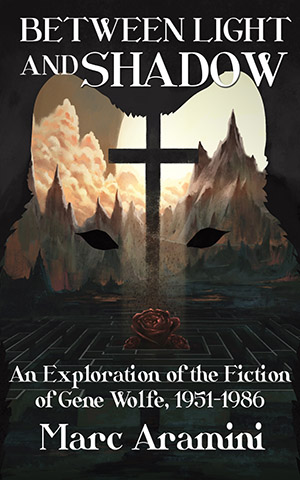
Do not buy this book

If you are not a serious – and by serious I mean VERY VERY SERIOUS – Gene Wolfe fan. Some months ago, I was contacted by an author with perhaps the most insanely ambitious and least marketable submission I had ever imagined. He was in the process of writing a complete literary analysis of every short story and novel that Gene Wolfe had ever written. He said it ran about 800 pages… and that was just Volume One. Since I am a fan (although I have subsequently learned not a sufficiently serious fan), of Gene Wolfe, I decided that we would publish it if Mr. Wolfe was amenable. So, I called him up, told him about the project, and after he stopped laughing, he said that he had no objections so long as we sent him a copy when it came out. He also asked who the author was, and when I told him the author’s name, there was a brief moment of silence on the other end of the line.

“I’ve met him,” he said. “You know, he didn’t seem like a lunatic.”

In any event, Between Light and Shadow: An Exploration of the Fiction of Gene Wolfe, 1951-1986 is now available on Amazon and at Castalia House. It is 828 pages, retails for $6.99, and features a foreword by Gene Wolfe fan John C. Wright. From the Foreword:

He is the only author I admire without ever daring to emulate, because his skill exceeds my own too greatly. I boldly claim that he is not the greatest living science fiction author, only because he is the greatest living author writing in any genre. In scope, in craftsmanship, in capturing nuances of dialog, in skill of approaching the central mysteries of the human condition, and of putting into words what never can be put into words, he had no equal, and, save perhaps for Cordwainer Smith, no serious competitor. He is that skilled.

One line is sufficient to show the subtlety of his writing: “The great question…is determining what these symbols mean in and of themselves. We are like children who look at print and see a serpent in the last letter but one, and a sword in the last.” At the risk of spoiling the jest, I direct your attention to the last letter but one in that sentence, where you can see a serpent in the s, and a sword in the t in the last. His whole work is as cunningly contrived.

One line? One name. To pick one trifle out of the treasure house, is anyone else amused that the fencing master in the city of Viron, where all men are named for living things, is called Xiphias? Xiphias is the archaic name for swordfish. What other fish does one name a fencing master after?

Seriously, though, this book is esoteric beyond belief. If you’re just a casual fan of Gene Wolfe, I guarantee it will go completely over your head. If you’re not a fan of Gene Wolfe, don’t even think of reading this, go read Wolfe instead. And if you’re one of the 200 potential readers of this book, you’re probably not reading this post, you’re already ordering it on Amazon. So I may as well stop here with the note that the second volume, Beyond Time and Memory: An Exploration of the Fiction of Gene Wolfe, 1987-2015, will be published by Castalia House next year.


Correction

Edd Jobs does not know whereof he speaks. He’s also banned and spammed, for SJW-level ignorance and dishonesty.

Danby: It’s sludge. Sewerage with cotton candy floating on top. It’s badly written, extremely poorly thought out, and boring.

The N.K. Jemisin school of literary review.

No.

….

This is the N.K. Jemisin school of literary review.

Stranger in a Strange Land is racist as *fuck*.

So is science fiction fandom.

So are you.


In re autocorrect and spellcheck

For the love of all that bleeps and bloops, stop whining about spell-checker mistakes and autocorrect errors in your comments already! It’s considerably more annoying for the rest of us to read the inevitable follow-up post explaining that of course you know how to spell whatever word you just misspelled, it’s just that whatever device or software you are using introduced the error without you noticing it before hitting the blue button, than it is to simply skim past the misspelled word itself.

Drawing everyone’s attention to your claim that you really know how to spell a word that you observably didn’t know how to spell correctly is simple pride and vanity, and worse, it’s completely misplaced vanity.

Here’s why. It doesn’t make you look any less stupid to be knowingly using a device that regularly introduces errors than it does to make the occasional spelling error or typo in the first place. In fact, it makes you look at least twice as stupid, because first, either you don’t know how to turn autocorrect off or you actually rely on it. And second, given how often these errors are introduced, you are probably making more spelling mistakes due to using it than you would if you simply relied on your own spelling capabilities.

If you use a spellchecker, that’s fine, but then own it. If it screws up, it’s on you. Deal with it already and stop talking about the stupid things. To quote the VFM, WE DON’T CARE.

UPDATE: Same thing for double-comment errors. We already assume you didn’t intend to repeat the comment. Don’t make matters worse by adding a SECOND unnecessary comment to it. No apology is required.


Another kick of the can

The EU and the IMF managed, with extreme difficulty, to kick the can one more time than anyone thought they would be able to. But the cans keep getting bigger and heavier. And in the meantime, Paul Craig Roberts points out that the financial powers’ savage treatment of the Greeks, and determination to wring them dry in order to avoid paying out on the losing derivative bets by their banks, is teaching countries outside the system that there is nothing in it for them.

When a member of the EU itself is being looted and driven into the ground by its compatriots, how can Russia, China, and Iran expect better treatment? If the West has no good will toward Greece, where is the West’s good will toward Russia?

The Greek government was forced to capitulate to the EU, despite the support it received from the referendum, because the Greeks relied on the good will of their European partners and underestimated the mendacity of the One Percent. The Greek government did not expect the merciless attitude of its fellow EU member governments. The Greek government actually thought that its expert analysis of the Greek debt situation and economy would carry weight in the negotiations. This expectation left the Greek government without a backup plan. The Greek government gave no thought to how to go about leaving the euro and putting in place a monetary and banking system independent of the euro. The lack of preparation for exit left the government with no alternative to the EU’s demands.

The termination of Greece’s fiscal sovereignty is what is in store for Italy, Spain, and Portugal, and eventually for France and Germany. As Jean-Claude Trichet, the former head of the European Central Bank said, the sovereign debt crisis signaled that it is time to bring Europe beyond a “strict concept of nationhood.” The next step in the centralization of Europe is political centralization. The Greek debt crisis is being used to establish the principle that being a member of the EU means that the country has lost its sovereignty.

The notion, prevalent in the Western financial media, that a solution has been imposed on the Greeks is nonsense. Nothing has been solved. The conditions to which the Greek government submitted make the debt even less payable. In a short time the issue will again be before us. As John Maynard Keynes made clear in 1936 and as every economist knows, driving down consumer incomes by cutting pensions, employment, wages, and social services, reduces consumer and investment demand, and thereby GDP, and results in large budget deficits that have to be covered by borrowing. Selling pubic assets to foreigners transfers the revenue flows out of the Greek economy into foreign hands.

Unregulated naked capitalism, has proven in the 21st century to be unable to produce economic growth anywhere in the West. Consequently, median family incomes are declining. Governments cover up the decline by underestimating inflation and by not counting as unemployed discouraged workers who, unable to find jobs, have ceased looking. By not counting discouraged workers the US is able to report a 5.2 percent rate of unemployment. Including discouraged workers brings the unemployment rate to 23.1 percent. A 23 percent rate of unemployment has nothing in common with economic recovery.

Even the language used in the West is deceptive. The Greek “bailout” does not bail out Greece. The bailout bails out the holders of Greek debt. Many of these holders are not Greece’s original creditors. What the “bailout” does is to make the New York hedge funds’ bet on the Greek debt pay off for the hedge funds. The bailout money goes not to Greece but to those who speculated on the debt being paid. According to news reports, Quantitative Easing by the ECB has been used to purchase Greek debt from the troubled banks that made the loans, so the debt issue is no longer a creditor issue.

And so the world spirals closer to widespread violence. Having repeatedly ruled out the possibility of change through the ballot box, what else does that leave? Frankly, I’m a little surprised that the Greeks haven’t resorted to politics by other means yet.

ISIS has already brought the War in Iraq home to America. It seems highly unlikely that they will be the only ones to do so.

These actions by the global financial community smack of either desperation or provocation. I can’t tell if they actually want war – as Gen. Butler would say they do – or if their position is so precarious that they are willing to run the risk of war just to buy a little more time before the crash.

Either way, it doesn’t bode very well for the rest of us.