Mailvox: the left hand doesn’t know

What the right hand is doing. This email from a former opponent provided a small measure of amusement this morning.

It’s been a while since you’ve visited Indiegogo. We are a platform that helps you raise money for your ideas — whether entrepreneurial, creative, or cause-related.

NO APPLICATION PROCESS: Start your campaign whenever you’re ready!

GLOBAL: Receive contributions from around the world.

CUSTOMER HAPPINESS: Get fast answers to your questions from real people.

Over the last 90 days we have had thousands of people contribute to campaigns on our site. You could be raising money right now to turn your dream into reality.

Start your campaign here.

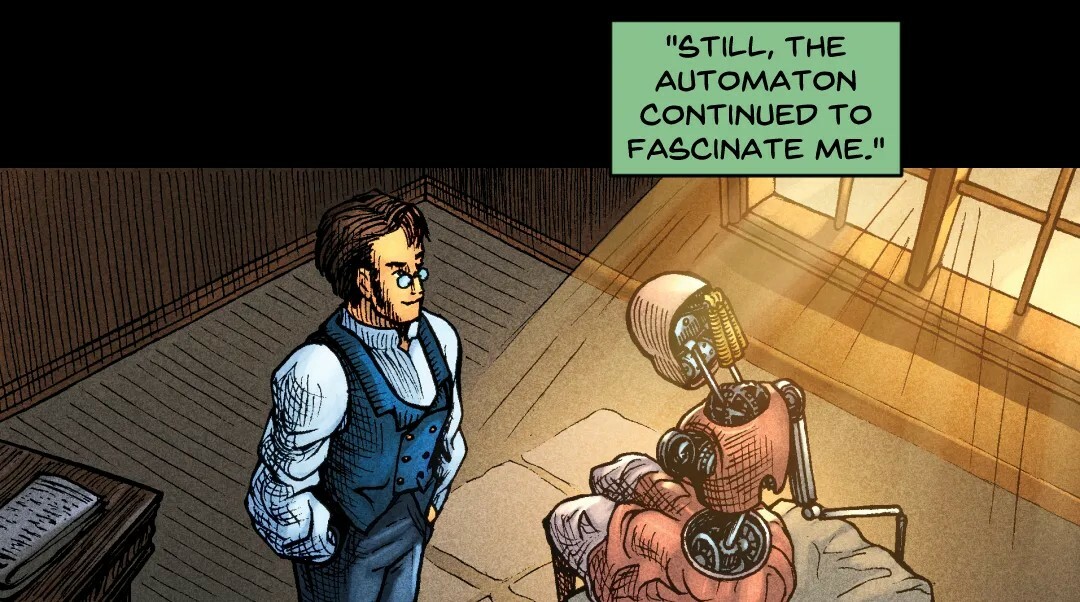
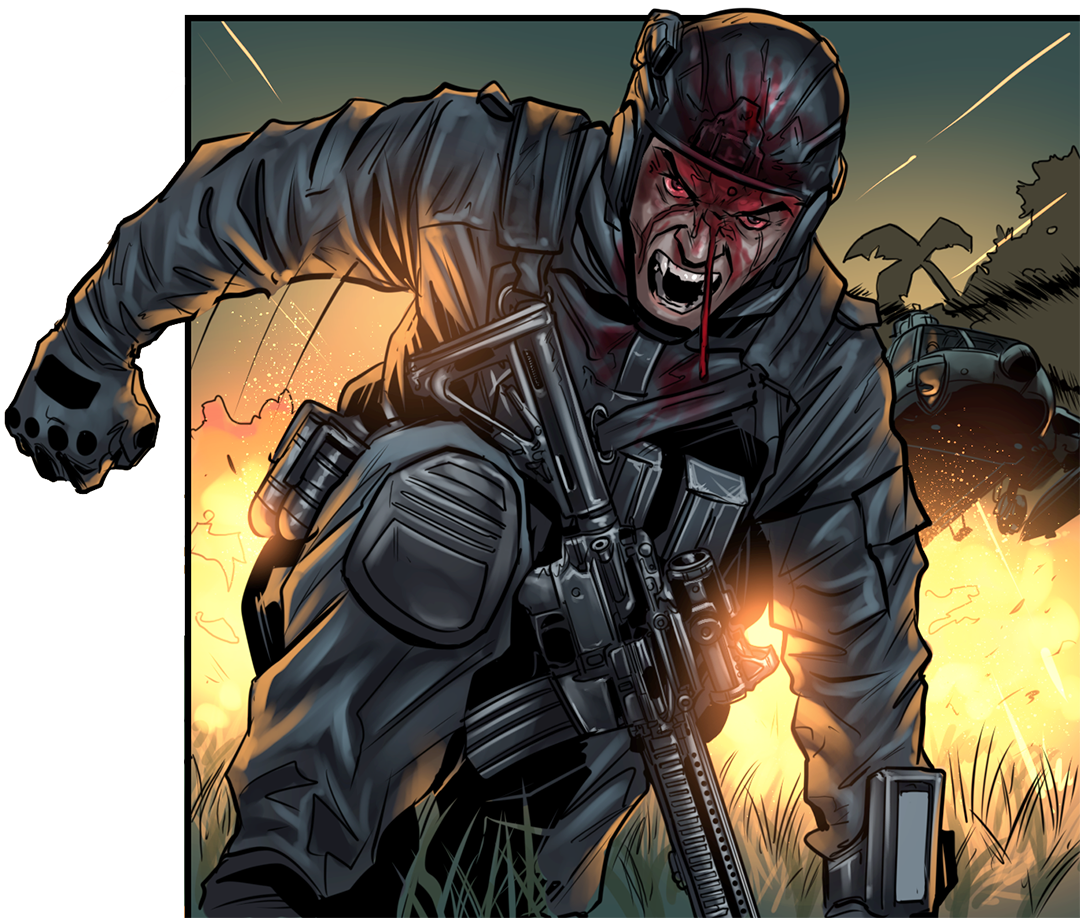
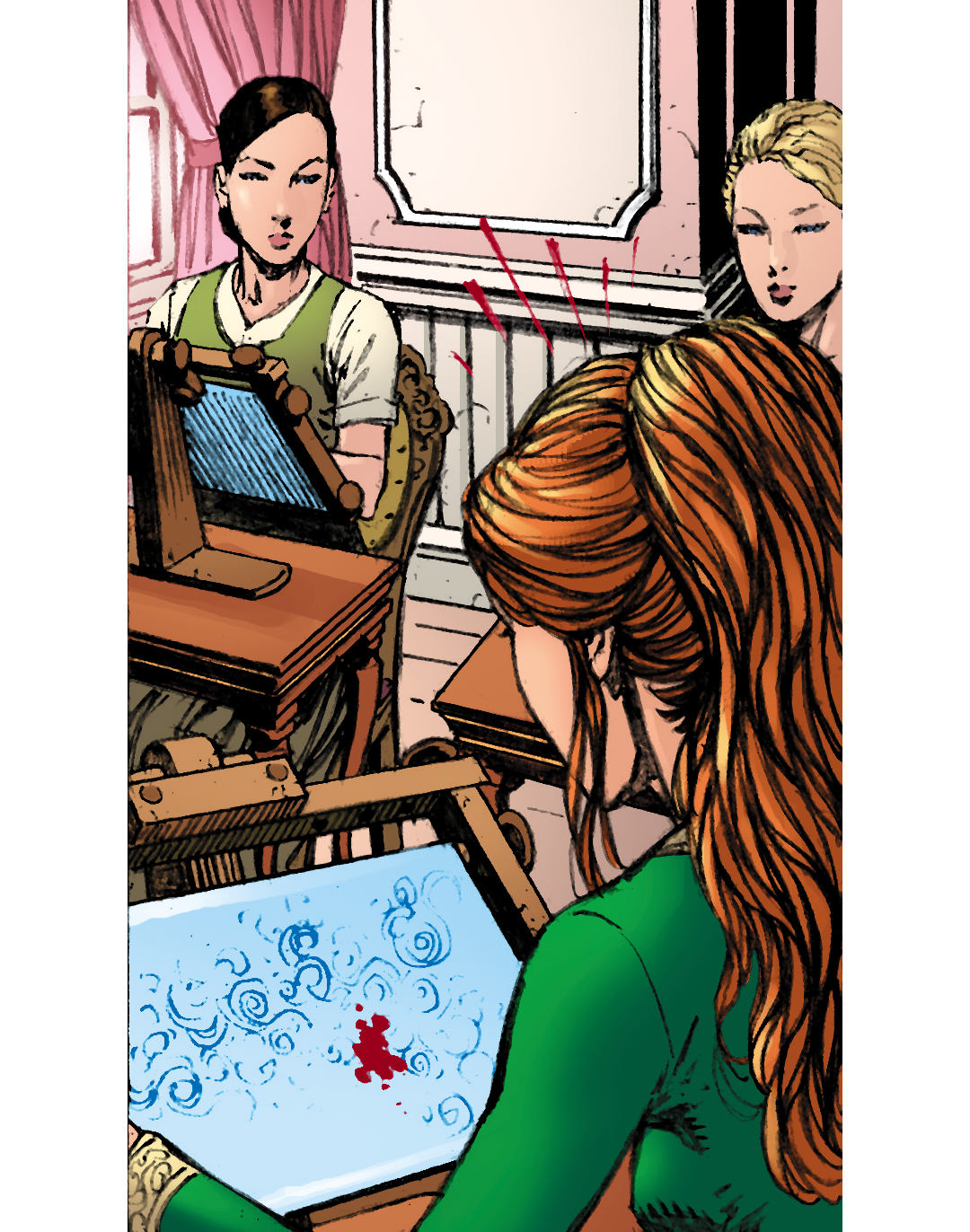
Yeah… no. We will be doing a major campaign in April. It will almost certainly not be on Indiegogo. However, there are still worthy campaigns to be found on Indiegogo, such as Jon Del Arroz’s new comic, DEUS VULT, which has a very John Carter vibe to it.


Thought-policing the nations

Facebook arrogates a nonexistent authority unto itself:

Facebook announced in a blog post on Thursday that it has removed Instagram and Facebook accounts used by Myanmar’s military to communicate with the public in the wake of a coup by the armed forces in the Asian nation.

The social media company said it was left with no choice but to ban the accounts following the “deadly violence” in the country after the coup, believing that it was too risky to allow the Myanmar military, known as the Tatmadaw, to remain on its platforms.

Facebook will also remove and prevent all Tatmadaw-linked commercial entities from advertising on its platforms.

The tech company had previously removed 20 military-linked individuals – including Commander-in-Chief Min Aung Hlaing – and organizations from the site in 2019 over “severe human rights violations,” and taken down six “Coordinated Inauthentic Behavior networks” run by the Tatmadaw in the last two years.

Given its recent conflict with Australia and Canada, I don’t think it will be too terribly long before some nation’s military demonstrates to Mark Zuckerberg and Facebook the difference between power and influence. Of course, it’s understandable why Facebook would believe otherwise given how easy it has been for them to buy off politicians in order to avoid legal consequences:

Australian lawmakers have passed a law that forces tech giants like Facebook and Google fork out money for the media content. Critics argue the bill was watered down after Facebook imposed a week-long ban on Australian news. The much-anticipated bill, which is widely expected to serve as a precedent other nations such as Canada might soon follow, seemingly puts an end to the heated row between Facebook and the Australian government that forced last-minute changes to the bill. The changes provided the tech firms with extra time to thrash out the deals with publishers to avoid being subjected to the new rules. The tech companies can potentially skirt the new media bargaining code if they make “significant financial contributions to the sustainability of the Australian news industry.”

I have to admit, I imagined that living in William Gibson’s Sprawl future where global corporations act like nations would be an awful lot cooler than it is.


Fake News about the Tiger crash

Remember, the mainstream Narrative is always, Always, ALWAYS false:

Narrative 1: Dangerous stretch of roadway, lots of curves, lots of crashes.  FALSE

The first piece of physical evidence, consistent with a “loss of control” of the Hyundai is found on the center median strip separating the northbound lanes of Hawthorne from the southbound lanes.  Taking this as the first point where we can say that the collision sequence had begun, the approach to this location is more or less a straight shot for just under 900 feet.  The tip of the median is at the start of a long, gradual bend in the roadway to the right – though this bend has a critical speed in excess of 130 miles per hour (the maximum speed at which vehicles could, if they so desired, negotiate the turn without leaving yaw marks) and accordingly is not of the nature which would cause an operator to lose control of their vehicle. 

It should be mentioned that Hawthorne Boulevard northbound, in this immediate area, is on a downgrade which approaches 10{3549d4179a0cbfd35266a886b325f66920645bb4445f165578a9e086cbc22d08}.  This downgrade, while steep, can still be safely and easily navigated consistent with data from the California Statewide Integrated Traffic Records System (SWITRS) – a Statewide database maintained by UC Berkeley – which shows that there were no other collisions for the 11 years prior to this one which occurred within approximately 0.5 miles of this location. 

I have no idea why they would lie about the crash or the danger of the roadway, nor do I particularly care how Tiger Woods elects to screw up his life again. I just wanted to point out that even with regards to something as seemingly unimportant and easy to verify as whether a stretch of road is dangerous or not is concerned, the mainstream Narrative is false.

Imagine what sort of lies they are telling you about the genuinely important stuff.


The antifragile threat

It’s always a good idea to keep up on the latest ideas being produced by the system strategists, especially since some of them are likely to be applied to us in due course.

Any useful categorization of adversaries cuts to the essence of strategy, to the utility of violent interaction. Strategy is about the purposeful use made of violent engagements with the adversary. The purpose of strategy is to decrease the adversary’s military capabilities or his will to fight. Strategic performance, in its consequences, determines whether the purpose is achieved. Therefore, the effects produced by strategic performance are what matters the most in strategy. These effects may vary in three directions. They can decrease the adversary’s capability/will to fight, leave these variables unchanged or increase them. A proper categorization of adversaries helps the strategist orient himself in the logic of these three scenarios.

The main goal here is to develop a new typology of adversaries and to zoom in on those who get stronger when engaged in strategic performance. The paper draws upon the concept of antifragility, popularized by Nassim Nicholas Taleb in his book Anti-fragile: The Things That Gain from Disorder. I argue that depending on their reaction to strategic performance, adversaries can be put on a spectrum from fragile to resilient, to antifragile ones. To keep the scope of the investigation reasonably limited, the paper focuses on the effects of strategic performance on the adversary’s military capabilities rather on his will to fight. The first category describes the adversaries whose military capabilities shrink as a consequence of engaging in strategic performance. The second category is reserved for those adversaries who are able to replenish their military capabilities to the original position after engaging in strategic performance. The last category describes those adversaries whose military capabilities increase as a consequence of taking part in strategic performance. These are, of course, ideal types and their manifestations in strategic practice are less clear-cut.

Antifragile adversaries pose a particular, but not unsolvable, challenge. The challenge resides in the fact that attrition, the most common effect in strategic practice, strengthens these adversaries instead of weakening them. Nonetheless, there are four distinct ways to defeat antifragile adversaries. These include rapid sequential strategies, strategies of decisive battle, cumulative strategies of underwhelming attacks, and the deliberate uses of peace. The secondary argument of this paper is that antifragility in the context of strategy is as much a function of the adversary’s capacity to adapt as of strategist’s own conduct of strategy. Strategist is responsible for the character of the adversary, he shapes it by his own choices and performance. Antifragility is therefore not an inherent nor a stable characteristic but rather a quality which the adversary acquires temporarily and in an interactive relationship.

The things that gain from disorder

Taleb coined the term antifragile in order to describe phenomena that are at the opposite spectrum of the fragile ones. When facing challenges, fragile objects get damaged or collapse completely. A typical example is anything made of regular glass. When thrown against the wall it breaks and is of no use for anyone. Then there are resilient objects, which can sustain challenges with no permanent damage taken. An inflatable ball thrown against the wall may slightly change its shape for a second only to return to the original form in the next moment, with no impact on its utility for the future.

Antifragile objects benefit from facing challenges. Bones have to be challenged regularly in order to get stronger and muscles only grow when repeatedly damaged. In fact, both bones and muscles get weak if unchallenged for longer periods of time. Two key requirements need to be present for the manifestation of the anti-fragile potential. First, the challenges have to be proportionate to the capacities of the object. Jumping from places that are too high may be an overwhelming challenge for bones and lifting stuff that is too heavy may irreversibly damage muscles. At the same time, challenges far below the capacity of the object may result in having no effect at all. A professional bodybuilder lifting weights of one kilogram every-day does not benefit from this exercise. Second, enough time has to pass between individual challenges to grant the object the space for improvement.[v] With no time to grow stronger, both bones and muscles deteriorate under constant pressure. Antifragility is therefore as much a function of the inherent predispositions of the object as it is of the character of the challenges the object faces.

The third ideal type is the antifragile adversary. For this one, strategic performance serves as a stimulus for the growth in his military capabilities. This happens when the adversary with antifragile predispositions faces regular challenges appropriate to his current capabilities. Of course, what is “regular” and “appropriate” is context dependent. Antifragile adversaries are less common in strategic history. This is so because they manifest themselves only in instances when their predispositions match with the favourable character of the strategist’s attacks. One historical example that comes close to the ideal type were the Thebans in their wars against the Spartans (395-362 B.C.). The two polities fought each other regularly during the first half of the fourth century. The continual engagement in strategic performance made Theban forces stronger from one major battle to another. Though first suffering a defeat at Nemea (394 B.C.), Thebans fought Spartans to a standstill at Coronea (394 B.C.), routed them at Tegyra (375 B.C.), and slaughtered them at Leuctra (371 B.C.) and Mantinea (362 B.C.).[vi] Over the course of the wars, Thebans enjoyed gradually increasing morale, explored innovative echelon tactics and developed new kinds of military units. Therefore, by their own efforts as well by the repeated violent interaction with the Spartans, the Thebans fulfilled their anti-fragile potential. Seeing this development in practice, one Spartan sarcastically congratulated his own king that by the repeated attacks against Thebes, he had taught his adversary how to fight. Antifragile adversaries are not an artefact of a distant past. In fact, as David Betz and Hugo Stanford-Tuck argue in their recent piece, even the contemporary West has often pursued a way of war “which through one’s own efforts leaves the enemy stronger at the end than at the beginning.” Antifragile adversaries are universal and so is the unique challenge they pose.

The main challenge in facing antifragile adversaries is that what does not kill them makes them stronger. This is a bit of exaggeration, but in general it does apply. To start with, most strategies seeking to attrite that adversary do not work. Worse, these strategies work for the antifragile adversaries. Actively seeking out the antifragile adversary and trying to attrite his military capabilities by frequent engagements is a reliable receipt for making him stronger. This may not seem like a big deal when the other strategies are available. The problem is, most of the other strategies eventually turn into some sort of attrition contest as well. Strategists too often envision quick and decisive wars of annihilation and get prolonged wars of attrition instead. Others, who start out with terrorist attacks and guerrilla raids, turn to attrition once they develop sufficient military capabilities to have a reasonable chance of success. Not all the strategic options lead to attrition but too many of them do. It follows that most options for dealing with the antifragile adversaries convey high risks of failure. 

The battle of the 72 Bears with Patreon is a classic example of an antifragile adversary vs a resilient adversary. The Bears have antifragility on their side; the LLOE is getting stronger as more lawyers take up the cause and they become better versed in the arbitratry vagaries of arbitration and the California court system. As Sparta did with Thebes, Patreon’s lawyers are literally teaching the LLOE how to defeat them. Patreon, on the other hand, has significant, but finite resources that are being continuously drained at an increasing rate. The eventual outcome is obvious to any strategic observer, since the Bears haven’t even needed to tap into the massive human resources that are available to them while Patreon is conservatively estimated to have already spent more than one-half of its annual revenue on the dispute.

Physicists know the harsh truth: math always wins in the end.

But it is interesting to note that antifragility has become a serious concern to the system strategists. I’ll analyse the proposed strategy for defeating antifragility in a future post.


Solving the F35 problem

Will no longer be answered by the F35:

The U.S. Air Force’s top officer wants the service to develop an affordable, lightweight fighter to replace hundreds of Cold War-vintage F-16s and complement a small fleet of sophisticated—but costly and unreliable—stealth fighters.

The result would be a high-low mix of expensive “fifth-generation” F-22s and F-35s and inexpensive “fifth-generation-minus” jets, explained Air Force Chief of Staff Gen. Charles Brown Jr.

If that plan sounds familiar, it’s because the Air Force a generation ago launched development of an affordable, lightweight fighter to replace hundreds of Cold War-vintage F-16s and complement a small future fleet of sophisticated—but costly and unreliable—stealth fighters.

But over 20 years of R&D, that lightweight replacement fighter got heavier and more expensive as the Air Force and lead contractor Lockheed Martin packed it with more and more new technology.

Yes, we’re talking about the F-35. The 25-ton stealth warplane has become the very problem it was supposed to solve. And now America needs a new fighter to solve that F-35 problem, officials said.

Yes, Virginia, the USA is most certainly losing this unrestricted and undeclared war. To be honest, they’d be much better off simply switching to a drone-based air doctrine.


Armed and unprepared

 I don’t agree at all with this American Greatness article. The recent election demonstrated, beyond any shadow of a doubt, that democracy is dead and there is no political exit. It strikes me as yet another conservative finger-wagging “this is your LAST chance to vote your way to safety”. But the voting machines have been compromised, ergo no one’s votes matter in the slightest. There is no more Democrat vs Republican, there is only optimate vs populare.

Many traditional Americans are sleepwalking into a conflict they are not mentally prepared to handle. The ideals of blind justice and due process are now, for all intents and purposes, quaint relics, and relying on constitutional rights for protection is dangerously naïve. 

Like it or not, we live in a police state, controlled by an increasingly authoritarian regime with near-total electronic surveillance. The national security apparatus views conservatives and free-thinkers as domestic terrorists, and there are now more military deployed in our nation’s capital than in war zones overseas. If America were any other country, it would be considered a non-permissive environment—not a free country.

The pundit class recommends midterm elections and unifying the GOP as remedies, but they ignore the real elephant in the room—representative government is not representing us. While conservative and independent voices are censored and banned from the community square, their elected representatives cower behind their desks and make sweetheart deals with the new regime. 

We are facing a new post-justice, post-truth society. We won’t be able to debate our way out of it, vote our way out of it, or tweet our way out of it. No one is coming to save us. If traditional America wants to be free, it will have to stop living in the past, get up off the couch, and take action.

The good news is that there is nothing particularly difficult about the present situation. The only difference between the two parties described in the article and the two parties of Roman history is that in the USA, the optimates are mostly foreigners. Indeed, it is the situation in which the overwhelming majority of humanity found itself for the greater part of human history. The populares defeated the optimates in Rome, and they will defeat them again in America.


Antifa is international terror

And yet, somehow the politicians everywhere from Seattle to Schorndorf, Germany don’t hold them accountable for any crime.

Alternative for Germany (AfD) candidate Stephan Schwarz was hospitalised after a brutal attack by Antifa militants in the town of Schorndorf over the weekend while campaigning for this year’s regional election.

Schwarz, along with several other AfD activists, manned an information booth in the centre of the town on Saturday when they were approached by a group of around 15 to 20 people carrying hard-left Antifa flags and banners, the city prosecutor said.

The extremists dragged 36-year-old Stephan Schwarz to the ground and beat him while he was down. As he attempted to call the police, one of the attackers stole his phone, newspaper Rems Zeitung reports. After the police arrived on the scene, Schwarz was taken to a local hospital where he was diagnosed with a concussion. The AfD information booth was also destroyed in the attack.

Then one day, for no reason at all, people all around the world began hunting down Antifa.


The convergence of Tolkien

Christopher Tolkien, the longtime guardian of his father’s literary works, is dead, alas:

We are now calling for papers for the Tolkien Society Summer Seminar, which will be held online on Saturday 3rd and Sunday 4th July 2021. The theme is Tolkien and Diversity.

Call for Papers

The Tolkien Society Seminar is a short academic conference of both researcher-led and non-academic presentations on a specific theme pertaining to Tolkien scholarship. The online setting of the 2020 seminar saw an increased interest with over 400 attendees from 37 countries. We are delighted to be running another online seminar that will be free for all.

While interest in the topic of diversity has steadily grown within Tolkien research, it is now receiving more critical attention than ever before. Spurred by recent interpretations of Tolkien’s creations and the cast list of the upcoming Amazon show The Lord of the Rings, it is crucial we discuss the theme of diversity in relation to Tolkien. How do adaptations of Tolkien’s works (from film and art to music) open a discourse on diversity within Tolkien’s works and his place within modern society? Beyond his secondary-world, diversity further encompasses Tolkien’s readership and how his texts exist within the primary world. Who is reading Tolkien? How is he understood around the globe? How may these new readings enrich current perspectives on Tolkien?

Representation is now more important than ever and Tolkien’s efforts to represent (or ignore) particular characteristics requires further examination. Additionally, how a character’s identity shapes and influences its place within Tolkien’s secondary-world still requires greater attention. This seminar aims to explore the many possible applications of “diversity” within Tolkien’s works, his adaptations, and his readership.

Papers may consider, but are not limited to:

  • Representation in Tolkien’s works (race, gender, sexuality, disability, class, religion, age etc.)
  • Tolkien’s approach to colonialism and post-colonialism
  • Adaptations of Tolkien’s works
  • Diversity and representation in Tolkien academia and readership
  • Identity within Tolkien’s works
  • Alterity in Tolkien’s works

Meanwhile, Amazon is methodically going about destroying the popular image of The Lord of the Rings:

“This is going to be very different from The Hobbit and the Lord of the Rings, which are on the road stories. Stories of companionship, stories that take place on journey, but this one is going to be set up like Game of Thrones. We are going to be following different characters in different locations who are going to converge on each other in the end.”

Buechler continues, “They aren’t going to have any Hobbits. There aren’t going to be any wizards. They are going to have, like they said, new characters and new lands. And that is where the big problem is. This is a giant blank canvas. This takes place over thousands of years and that giant blank canvas is going to be filled in with a couple of young, inexperienced showrunners. Does that sound a little bit familiar to you?”

“And those untested showrunners, who have admittedly an experienced writers room with writers from Breaking Bad and Better Call Saul, are going to have to fill a lot of time with drama and relationship stuff. Modern relationship stuff. And let’s not even get into the dialogue, which you won’t be able to adapt because there really isn’t any like there is in Lord of the Rings and The Hobbit.” Buechler states.

He then makes comparisons to Game of Thrones, “As you all know things were going great for Game of Thrones through Season 4 until Dan and Dave passed up the books and they couldn’t adapt George’s dialogue anymore. And they tried to interpret what George might have wanted. And George is alive. They could have asked him anything at any time and they still produced the biggest disaster in television history.”

Buechler then questions, “How do you think it’s going to go for [JD Payne] and [Patrick McKay] over there? Obviously, they don’t have J.R.R. Tolkien to talk to. They no longer have the greatest guardian of his father’s work and one of the greatest sons whose ever lived, Christopher Tolkien to talk to either.”

The YouTuber then points to a rumor, covered here on Bounding Into Comics, that there was a shift in the direction of the show following Christopher Tolkien’s death.

Buechler states, “Then, of course, there was the rumored big shift behind the scenes right after Christopher Tolkien’s death. He died in January 2020 and in March 2020 it was rumored from TheOneRing.net that a lot of the writers were fired and they rewrote Season 1 and they removed Tom Shippey, the Tolkien scholar.”

Next, Buechler warns, “And that brings us to the politicking. Are we going to get the nihilist, post-modern, intersectional Lord of the Rings. I think this is a good possibility considering everything we’ve seen from modern Hollywood. Then there’s the fact that we already have a nihilist, post-modern, Lord of the Rings, it was called Game of Thrones.”

Buechler then recaps many of his concerns about the show pointing to rumors of nudity, the hiring of an intimacy coordinator, the change in story structure, and the show being run by two former Bad Robot employees.

He then adds a report that Amazon CEO Jeff Bezos mandated Amazon create their own version of Game of Thrones. That report came from Variety and they claimed, “The mandate from Jeff Bezos is clear: Bring me “Game of Thrones.” That’s the word that has the creative community buzzing this week about a major strategy shift underway for Amazon Studios’ original series efforts.” 

I should probably wrap up the extended second volume of Arts of Dark and Light, shouldn’t I…. 


The Music of Creation

The Forge of Tolkien Episode 21, THE MUSIC OF CREATION, is now on UATV.

In the beginning there was Eru, the One, who made the Holy Ones, the offspring of his thought, and propounded to them a great theme. But whose story was this, and how did it come to be written down? Who, other than the Father of All, could know the story of Creation to tell it? And how would such stories be known to Elves and to Men? In this episode, Professor Rachel Fulton Brown introduces Tolkien’s story of Creation as a puzzle both of framing and of purpose. Who speaks in the telling of the Music—and why should Creation happen through song? And what should a Christian think about the Ainur’s singing such a mighty theme?

The converse, which might well be described as the music of damnation, is now also on UATV in the form of Metal Mythos: Danzig, as well as Episode 9 of the Junior Classics podcast and several new Wranglerstar episodes. We’re rapidly reaching the point that as much as three hours of new content that does not include the regular commentary from Owen, Razor, and me are being added on a daily basis.

If you haven’t subscribed yet, you might as well. Because it’s only going to improve from here.


The con man’s escape

If you don’t understand how Rush Limbaugh was a gatekeeper and a deceiver rather than the fearless pursuer of truth that he publicly affected to be, consider this Clinton-era exchange from his radio program. Pay particular attention to the way he generates a way to extricate himself from the discussion in a manner designed to discredit the caller:

Larry: The point- well, I don’t know if he committed suicide or not, but I know we haven’t been told the truth, and you always say you’re in relentless pursuit of the truth, but not on the this issue you’re not. You ducked this issue. You do not pursue the truth here. That’s a fact. We’ve not been told the truth, and that’s the fact, too. You can read the Fiske report and see that it’s full of errors. Have you read the Fiske report?

Limbaugh: I- yeah- well, no, but I.

Larry: Well then, you’re not in pursuit of the truth.

Limbaugh: ..but, I-, I- so, what we have here, you are—

Larry: You’re not informed.

Limbaugh; …you are not, as- as Mr. Snerdley thought, a Clinton supporter.

Larry: Well, I think Clinton’s going to be re-elected.

Limbaugh: No, no, no. Did you tell him you were a Clinton supporter..

Larry Yes. I, yeah, I… (Limbaugh dumped his telephonic tormentor.)

Limbaugh: Well, so you lied, Larry. So, when you tell one lie, all of what you say is worthless. That’s the mantra, today. So sir, you’re not going to be rewarded by saying- you don’t have to lie to get on this program. If you are in the pursuit of Vince Foster being murdered, get your own show, and you go out and pursue it as best you- as best you can, but don’t lie to get on this program, to accuse me of malfeasance, or some- some sort of incompetence, as host.

If we are to judge Limbaugh by his own standard, everything he ever said was worthless. First, that’s a ridiculous standard. Second, how would Larry’s preference for Clinton or Dole make any difference whatsoever with regards to the subject being discussed? Limbaugh was merely casting about for an excuse to extricate himself from a position that was discrediting him, which is exactly what con men do. Notice how he suddenly becomes much more smooth and eloquent once he has established his rhetorical escape route.

Beware the man who always uses the word “because” to rationalize his words and deeds. An honest man is content to state his position. The dishonest man always has to sell you on whatever it happens to be at the moment.

Now, I don’t care about Rush Limbaugh and a perusal of the blog archives will demonstrate that I never have. But as Sam Harris and Jordan Peterson fans can confirm, one of the most effective ways to focus my baleful gaze on an individual or a concept about which I am otherwise indifferent is to dispute my casual comments on the subject. So, if you’re a big fan of Rush, I would recommend that you don’t try too hard to defend him here.

UPDATE: I am far too busy to even begin doing the research that would be necessary to write such a book. And Rush is no longer even potentially relevant, for obvious reasons. Therefore, I will happily leave the task to some other writer.