THE HAMMER OF FREEDOM Episode 10: Threat Incoming
MIDNIGHT’S WAR Episode 9: Death is the Final Reason

#Arkhaven INFOGALACTIC #Castalia House
THE HAMMER OF FREEDOM Episode 10: Threat Incoming
MIDNIGHT’S WAR Episode 9: Death is the Final Reason
It appears the airlines are well aware of the elevated risk that high-altitude flights pose to vaxxed flight crew and passengers:
Just a few weeks ago, I was talking with a friend on the phone and she told me something that had us both scratching our heads.
When she went to make a flight reservation for her husband, the woman asked her if her husband had been vaccinated. My friend responded saying no he had not and asked if that would be an issue with his ticket.
The woman on the line making the reservation said that it would not be an issue but if he had been vaccinated that she would have cautioned him not to fly. My friend asked why she was asking this since this was something she had not heard or read anywhere at all. The airline reservations then proceeded to tell her that several people who had been vaccinated are developing blood clots at a certain altitude and they believe it is from the vaccine.
Hundreds of American Airlines flights have been canceled this weekend and Monday because of significant staffing and maintenance issues.
As of Sunday afternoon, 123 flights were canceled Saturday, 178 on Sunday and 97 were canceled for Monday – largely the result of a high number of sick calls, combined with maintenance and other staffing issues.
American told ABC News that most of the cancelations are on A320 and 737 aircraft, but that it may continue to cancel at least 50 to 60 flights per day for the rest of June and 50 to 80 flights per day through July.
“We made targeted changes with the goal of impacting the fewest number of customers by adjusting flights in markets where we have multiple options for re-accommodation,” according to an American Airlines statement.
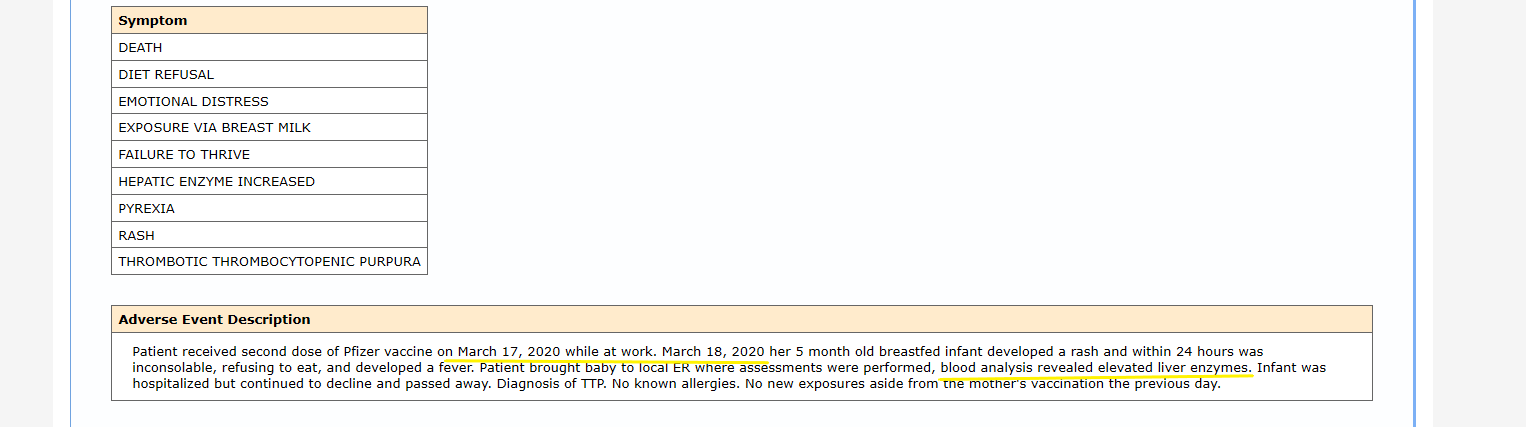
It may prove informative to review the auto accident statistics in about six months too. Regardless, it’s increasingly looking as if things are going to get very, very ugly once the idiots who submitted to the vaxx begin to grasp what was done to them and their children. I understand that people want to feel compassion for them, and that they were pressured and repeatedly lied to, but perhaps if everyone had been less compassionate and more inclined to say “don’t be insanely stupid”, we would be facing fewer unnecessary tragedies like the one documented below.
They aren’t Americans, so they have no claim to the Red, White, and Blue anyhow. And they hate it, so by all means, let them replace it.
The truth is far simpler, as truth usually is. The American flag is the symbol of a political and cultural order that no longer exists. White America is a thing of the past. The new regime, what Darren Beattie calls the “Globalist American Empire,” is anti-white and seeks to impose this cultural order on the entire world. The GAE is defined by the rejection of the historic American nation’s achievements and it celebrates the destruction of traditional Western civilization. The West’s greatest foe is not Beijing or Moscow, but the government on the Potomac that disgraces the name of George Washington.
White conservatives are misled by their supposed leaders when they are told that they should defend this. Giving the new regime a new flag will help whites understand the truth. The country white conservatives love is gone. They will need to build a new one if they want their people, culture, or identity to survive in any form. If they don’t, they’ll be surrendering to eternal subjugation and humiliation. “Juneteenth” is the beginning and reparations will be just another step.
Therefore, I endorse Miss Gray’s proposal. Let the GAE have its new flag. Let patriotic Americans finally see the political reality.
The mewling appeals to a nonexistent unity demonstrates the reprehensible idiocy of conservatives and civic nationalists. No one is “trying to divide America”. America is now a conquered and occupied nation, whose people cringe in fear of being punished by its ruling foreign elite. This is so obvious, despite the blithering denials of the conquered, that the invaders don’t even want to bother with the skinsuit anymore.
So let them have their new flag. Perhaps that will wake a few Americans up to the reality of the situation.
As the writer notes, Sam Francis saw it coming back in 2000, for which he was vilified by all good and proper Republicans and conservatives.
In this new order, whites — whether Southern or not — would be denied any public affirmation of their cultural and historical identity, and the denial of their identity would more easily allow their cultural and political subjugation to the non-white majority that has been projected to emerge in the United States in the next half century. The end result of the attack on Confederate symbolism, in other words, is not merely the disappearance of the Confederate flag, “Dixie,” and other symbols and customs of interest mainly to Southerners and Civil War buffs but, in time, the eradication of all symbols from pre-1960s America that suggest a white-based or “Eurocentric” public identity. With their disappearance and the cultural and racial dispossession it represents would come the racial domination of white Americans by the non-white majority of the next century.
Remember, every time you proudly proclaimed your non-racism, every time you boasted about how you didn’t care about color, every time you said the problem wasn’t immigration but ILLEGAL immigration, every time you proclaimed Not ALL X Are Like That, every time you talked about Judeo-Christian values, every time you proclaimed equality as a virtue, you helped make this happen.
And here we are. Appealing to civic nationalism cannot fix the problem, because civic nationalism is how the problem was permitted to develop in the first place.
ALT★HERO Episode 9: 100 Percent Genuine American Badass
DEUS VULT Episode 9: No Turning Back
Also, there’s still a few hours left to vote in the first round of the ARK MADNESS spinoff survey.
A Boomer explains the mission:
A @voxday post linked to a suggestion that Boomers as a generation need to seek God’s forgiveness for the sins of the group. As a “Generation Jones” Boomer, I see the wisdom of that. There was an earlier post that listed seven things that should have been done all along. I’ve done my best to do all seven — and I’ve mostly succeeded — but that shouldn’t bring pride, since those seven things are just a bare minimum.
Here’s the mission that must be accepted by Boomers of all stripes — be the guardian of your family. Protect the younger generations by becoming the rearguard. There’s a shitstorm coming, a fact that doesn’t require genius to recognize. Your job is to cover a retreat if needed, and soak up the bullets (real or metaphorical) to allow the younger generations to regroup and attack the wickedness of this world.
As a group, we’ve had it easy. Boomers have written a blank check, and at some point payment will be required. Settle the debt properly and be prepared to accept the costs.
The charge is to leave things better than you found them. Do it, and quit bitching about it.
If you don’t have much time left, then make it count. Plant the trees – maybe they’ll be for your great-grandchildren rather than your grandchildren – but you’ll still leave a positive legacy in the end. It’s not about “your stuff”, it’s about doing what is Good, Beautiful, and True.
A good man leaveth an inheritance to his children’s children: and the wealth of the sinner is laid up for the just.
– Proverbs 13:22
And if you can’t bring yourself to do anything positive, at the very least, sit down, shut up, and get out of the way of those who are attempting to salvage what can be salvaged and reclaim what was lost.
President Trump points out that he has not conceded:
Former President Donald Trump said Monday that he has not conceded the 2020 presidential race, that if the election is proven fraudulent it will be up to the public and “perhaps politicians” to decide how to respond, and that if Mike Pence had sent disputed election results back to state legislatures for review the country “might very well have a different president right now.”
“No, I never admitted defeat,” Trump told Just the News’ “Water Cooler” in an exclusive interview on Real America’s Voice.
“We have a lot of things happening right now … all you have to do is read the newspapers and see what’s coming out now,” he said, adding that he has “not conceded.”
Last week during an interview with conservative commentator Sean Hannity Trump had remarked about the 2020 contest that “shockingly, we were supposed to win easily at 64 million votes and we got 75 million votes and we didn’t win, but let’s see what happens on that.”
Trump told the “The Water Cooler” host David Brody Monday that if the election was tainted by fraud any decision on reinstating him as president would fall to the public or possibly to politicians.
Something appears to be up. What, exactly, I don’t know, but the Chinese are very quiet, the Russians are being openly scornful of the Fake President, and the European governments are either falling, preparing to be ousted, or distancing themselves from the USA.
So the Swedish socialists and the Swedish nationalists are cooperating. Now isn’t that just a fascinating combination?
Of course, similar thinkers used to believe that sanctioning Russia would work too:
“Deplatforming works,” boasted former Reddit CEO Ellen Pao, who became notorious among Reddit users for her pro-censorship policies during her brief tenure as head of the company, in a tweet posted this week.
Pao made the tweet in response to a study that showed the decline in attention for a group of right-wing commentators in the wake of their bans from YouTube.
“Deplatforming hate works,” said Pao. “It worked on reddit in 2015, and now it’s working on YouTube.”
It’s true that deplatforming people from YouTube, and to a lesser extent, Twitter, has reduced the size of their audiences.
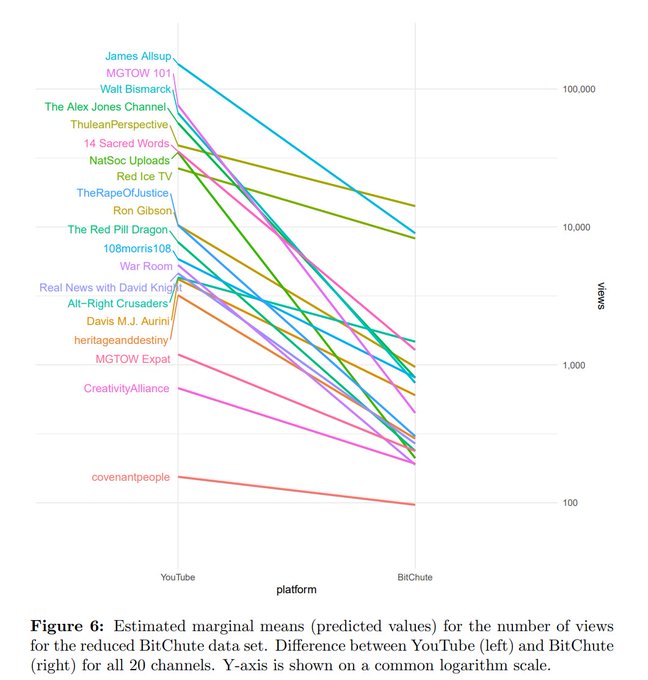
Of course, this also demonstrates the truth inherent in the Nietschean concept “that which doesn’t kill you makes you stronger”. Every deplatformed individual or organization that hasn’t simply given up and gone away has become more independent and less reliant on elements under SJW control. While it’s a short-term blow, in the long term, the effect is decidedly positive.
BEN GARRISON Editorial 8: Citizen Cattle
THE AWAKENER Episode 8: Enter Agent Nine
A Catholic Boomer suggests how Boomers can seek absolution for their sins against the succeeding generations:
I am a traditional Catholic and a boomer who agrees with you that as a generation, the boomers are a wicked generation. No fact is needed to prove this beyond the reality of the boomers having murder tens of millions of their children by abortion. What I want to write here is what boomers should do to repent of this sin, and all their other sins, in the years of life they have left— so as to obtain God’s forgiveness and absolution. I will use as model the Catholic “sacrament of reconciliation” or “penance.” The first step is repentance: to truthfully admit the sin and feel sincere sorrow for the offense to God and for the harm it is has caused to others. All traditional Catholic spiritual writer and all Saints emphasize what Vox has emphasized: stop making excuses or looking at the sins of others and concentrate on your own sins and correcting your own faults.
Sincere repentance requires restitution: if I have stolen another’s money, I must restore that amount to him, or at least as much as I am now able; to refuse to make the restitution I am able to make means I have not yet sincerely repented, I have not yet seen the seriousness of my sin. The boomer generation has stolen so much from future generations, there is now no way to pay back in full; but the repentance of each boomer should include at least turning over assets like their second homes to children and grandchildren and start leading a simple, ascetical life (for example, no cruises) in order to leave as much inheritance as possible.
Sincere repentance also requires a firm decision to cease committing the particular sin; included in this firm decision is avoiding the near occasions of sin: an adulterer must agree not to voluntary meet with the partner in sin; the alcoholic renounce going to bars, a glutton avoid expensive restaurants, etc. Finally, receiving absolution includes accepting an appropriate penance: that is, accepting to increase the time in prayer, of reading Scripture and “good” spiritual books; also to practice the types of asceticism that will free me from the habitual tendencies that lead me towards particular sins.
Finally, saying a generation is wicked does not mean every individual within it is wicked. But even the “non-wicked” or the relatively good must answer this question: why did I fail to stop the wickedness, why did I fail to cooperate with the graces God was sending to turn this generation from its sinful course. Considering our many sins of omission, even the relatively good boomers still have much for which to seek God’s forgiveness and absolution.
Frankly, I am extremely dubious that any Boomers will repent of their collective crimes, much less actively seek absolution of the sort he recommends. But it would certainly help both them and their children and grandchildren if they were to do so.
As for me, I would settle for simple silence and staying out of the way while the younger generations attempt to salvage what can be salvaged from a broken society and a severely wounded civilization.
EMBER WAR Episode 8: Orbital Assault
CHUCK DIXON’S AVALON Episode 8: Got it Handled