Rangers Lead the Way

KRAMATORSK, Ukraine, June 27 (Reuters) – A Russian missile struck a restaurant in the eastern Ukrainian city of Kramatorsk on Tuesday, killing at least eight people and wounding 56, emergency services said, as rescue crews combed the rubble in search of casualties... The building was reduced to a twisted web of metal beams. Police and soldiers emerged with a man in military trousers and boots on a stretcher. He was placed in an ambulance, though it was unclear whether he was still alive.

From Twitter:

Kramatorsk. After an alleged tip off from local informants a hotel with AFU and foreign merc’s was hit. Survivors have being filmed talking with American accents. Perhaps they were on vacation.

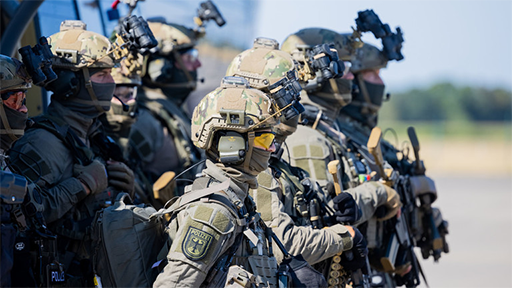
A reader at AC’s points out that the tattoo looks very much like a historical Rangers Diamond. Which, in this case, suggests that the 3rd Ranger Battalion is already deployed in eastern Ukraine.

DISCUSS ON SG


The Logistics of Tolkien

An operational and logistical analysis of the Witch King’s attempt to storm Minas Tirith:

The goals here (operational objectives) of Sauron’s plan here absolutely check out. Minas Tirith contains most of Gondor’s military, and functionally all of its leadership and administration – its destruction could very well be war-ending. At the very least, control of Minas Tirith would open the rest of Gondor to raiding as well as enable Sauron to control the resource-rich Pelennor Fields. Delivering a powerful and effective siege (the operational objective) is very likely to lead to victory over Gondor and territorial control of it (the strategic objective). Now the question is Sauron’s plan to achieve that operational objective (we will talk about Gondor’s planning too – a little later in the series).

Now, as we’ve noted, operations are all about the problem of moving large armies. Late season Game of Thrones notwithstanding, armies do not generally teleport around the world, they have to march. That imposes all sorts of restrictions and costs on movement: where are the roads? Mountain passes? River Crossings? The terrain Sauron’s army must attack over is defined (as we’ll see) by a series of transport bottlenecks that have to be negotiated in order to deliver the siege. Then there is the issue of supplies – even orcs need to eat.

Logistics of the Army of Mordor
Looking at the logistics of moving the Army of Mordor to Minas Tirith is actually a great way to introduce some of these problems in more depth. They say ‘amateurs talk tactics, but professionals study logistics.’ Well, pull up a chair at the Grown-Ups Table, and let’s study some logistics.

The army Sauron sends against Minas Tirith is absolutely vast – an army so vast that it cannot fit its entire force in the available frontage, so the army ends up stacking up in front of the city: The books are vague on the total size of the orcish host (but we’ll come back to this), but interview material for the movies suggests that Peter Jackson’s CGI team assumed around 200,000 orcs. This army has to exit Minas Morgul – apparently as a single group – and then follow the road to the crossing at Osgiliath. Is this operational plan reasonable, from a transit perspective?

In a word: no. It’s not hard to run the math as to why. Looking at the image at the head of the previous section, we can see that the road the orcs are on allows them to march five abreast, meaning there are 40,000 such rows (plus additional space for trolls, etc). Giving each orc four feet of space on the march (a fairly conservative figure), that would mean the army alone stretches 30 miles down a single road. At that length, the tail end of the army would not even be able to leave camp before the front of the army had finished marching for the day. For comparison, an army doing a ‘forced march’ (marching at rapid speed under limited load – and often taking heat or fatigue casualties to do it) might manage 20 to 30 miles per day. Infantry on foot is more likely to average around 10 miles per day on decent roads.

Ideally, the solution to this problem is to split the army up. By moving in multiple columns and converging on the battlespace, you split one impossibly long column of troops into several more manageable ones. There is a danger here – the enemy might try to overwhelm each smaller army in turn – but Faramir has had to pull his troops back out of Ithilien, so there is little risk of defeat in detail for the Army of Mordor. The larger problem is terrain – we’ve seen Ithilien in this film and the previous one: it is heavily forested, with few roads. What roads exist are overgrown and difficult to use. Worse yet, the primary route through the area is not an east-west road, but the North-South route up from Near Harad to the Black Gate. The infrastructure here to split the army effectively simply doesn’t exist.

This actually understates the problem, because the army of Morder also needs supplies in order to conduct the siege. Orcs seem to be able to make do with very poor water supplies (Frodo and Sam comment on the foulness of Mordor water), so we can assume they use local water along the march, but that still leaves food. Ithilien (the territory they are marching through), as we have seen in the film, is unpopulated – the army can expect no fresh supplies here (or in the Pelennor beyond, for reasons we’ll discuss shortly). That is going to mean a baggage train to carry additional supplies, as well as materials for the construction of all of the fancy siege equipment (we, in fact, later see them bringing the towers pre-built – we’ll get to it). This would lengthen the army train even more.

All of that raises a second point – from a supply perspective, can this operation work? Here, the answer is, perhaps surprisingly, yes. Minas Morgul is 20 leagues (around 60 miles) from Minas Tirith. An infantryman might carry around (very roughly) 10 days or so of rations on his person, which is enough to move around 120 miles (these figures derive from K. Chase, Firearms: A Global History to 1700 (2003) – well worth a read! – but are broadly applicable to almost any army before the invention of the railroad). The army is bound to be held up a bit along the way, so the Witch King would want to bring some wagons with additional supplies, but as a matter of supply, this works. The problem is transit.

As a side note, the supply issue neatly explains the aggressive tactics the Witch king employs when he arrives at Minas Tirith, moving immediately for an assault rather than a siege. Because the pack animals which pull wagons full of food eat food themselves, there is literally no amount of wagons which would enable an army of this size to sustain itself indefinitely in a long siege. The Witch King is thus constrained by his operational plan: the raw size of his army means he must either take the city in an assault quickly enough to march most of his army back, or fail. He proceeds with the appropriate sense of urgency.

That said, the distances here are short: 60 miles is a believable distance for an army to make an unsupported ‘lunge’ out of its logistics network. One cannot help but notice the Stark (hah!) contrast with the multi-hundred-mile supply-free lunges in the TV version of Game of Thrones, which are far less plausible.

I’d like to think that the logistics of Selenoth work out well, but I’ll have to leave that for others to decide. Regardless, it’s a much more interesting take on Tolkien than most, as far as I’m concerned. And the analyst is right, it’s not a siege of the city so much as an attempt to storm its walls.

DISCUSS ON SG


Alarm Bells

The great Martin van Creveld doesn’t like some of the historical patterns he has noticed are starting to play out:

In the Middle East, the alarms bells are ringing. There are several reasons for this, all of them important and all well-able to combine with each other and give birth to the largest conflagration the region has witnessed in decades. The first is the imminent demise of Palestinian President Mahmoud Abbas, alias Abu Maazen. Now 88 years old, his rule started in 2005 when he took over from Yasser Arafat. Unlike Arafat, who began his career as the leader of a terrorist organization, Abu Mazen was and remains primarily a politician and a diplomat. In this capacity he helped negotiate the 1995 Oslo Agreements between Israel and the Palestinian Liberation Movement. Partly for that reason, partly because he opposed his people’s armed uprising (the so-called Second Intifada of 2000-2003) some Israelis saw him as a more pliant partner than his predecessor had been.

It did not work that way. Whether through his own fault, or that of Israel, or both, during all his eighteen years in office Abu Mazen has failed to move a single step closer to a peace settlement. Israel on its part has never stopped building new settlements and is doing so again right now. As a result, Palestinian terrorism and Israeli retaliatory measures in the West Bank in particular are once again picking up, claiming dead and injured almost every day.

Nor is the West Bank the only region where Israelis and Palestinians keep clashing. Just a few weeks have passed since the death, in an Israeli jail and as a result of a hunger strike, of a prominent Palestinian terrorist. His demise made the Islamic Jihad terrorist organization in Gaza launch no fewer than a thousand rockets at Israel, leading to Israeli air strikes, leading to more rockets, and so on in the kind of cycle that, over the last twenty years or so, has become all too familiar. Fortunately Hezbollah, another Islamic terrorist organization whose base is Lebanon, did not intervene. It is, however, not at all certain that, should hostilities in and around Gaza resume, it won’t follow up on its leader’s threats to do just that. Certainly it has the capability and the plans; all that is needed is a decision.

To his concerns about Jordan and Iran, I would add the following. First, Syria is looking for revenge for the frequent air attacks of the last few years in support of the anti-Assad rebels. Second, and much more importantly, both China and Russia are more closely allied with the Arabs than they have been since the 1950s and the USA has never looked more impotent and less able to impose any sort of peace on the region.

While Israel has wisely held itself apart from the Kiev regime despite its many close connections to it, it is still part of the NATO bloc and therefore an enemy to both Russia and China. It’s not necessarily the best time to be the self-styled “greatest ally” of the United States.

DISCUSS ON SG


The Wagner “Coup”

Simplicius reviews a few theories concerning the failed insurrection in Russia by the Wagner mercenary company.

Let’s explore a few possible options for what could actually be going on.

  1. Prigozhin is working with AFU/SBU/CIA to backstab and destroy Russia, coordinating his actions with them.
  2. Prigozhin is secretly working with Putin to remove the stodgily entrenched Russian command. Notice, not in a single one of his rants has Prigozhin accused Putin or so much as even mentioned his name. There’s a possibility that all this is theater to cause a “conciliatory deal” to be made which will result in the ‘stepping aside’ of Shoigu. Putin has previously “laterally promoted” (in actuality demotions) several big name siloviki in the past. For instance, Sergei Ivanov who was deputy prime minister and presidential chief of staff was “moved” to head some ‘ecological’ department. Could we see Shoigu used as a fig leaf to settle the impasse by “laterally” moving him to some other ostensibly ‘important’ (but actually irrelevant) position?
  3. Everything is actually “as is” and whatever we see on the surface of the conflict pretty much represents what’s really happening.

One last thing to mention. There is still the possibility this is all some kind of elaborate psyop. Anything is possible because the situation is simply so ‘out of left field’. The reason it’s out of left field to me in particular is Prigozhin really did not appear to have any substantive justification for any of this. As I said, Russia was crushing the AFU and has recently been in the best position of the entire SMO. Why would something like this happen now, if it were legitimate? It simply defies belief that Prigozhin would be so incensed about all the “failings” of the MOD at the time of the MOD’s singularly greatest glory on the battlefield. The only explanation in that case would be—as I said before—that Prigozhin knew his time was up as the MOD was already planning on canning him, so it was “now or never” for him.

My theory is considerably more simple and is based on “Every Single Time.”

Yevgeny Prigozhin was born in Leningrad (now Saint Petersburg) 1 June 1961. His father and stepfather were of Russian-Jewish descent.

In other words, Prigozhin is a sleeper agent for Clown World who was activated as a desperate reaction to the abject failure of the Ukrainian counteroffensive.

I can cite precisely zero evidence supporting this theory, but it’s certainly more coherent and consistent with historical events than the “he just went crazy” or “Russian psyop” theories. I don’t think it’s particularly far-fetched to suggest that the man’s true sympathies lie with his co-ethnics presently ruling over the Ukrainian people, especially in light of the Western response to Prigozhin’s announced “coup”.

The US has postponed a fresh round of economic sanctions on the Wagner private military company after its leader, Evgeny Prigozhin, led a march on Moscow in defiance of the Kremlin, the Wall Street Journal reported on Saturday, citing sources.

UPDATE: Simplicius appears to have come around to my way of thinking.

My other more sinister theory is born: The entire production was in fact an oligarch-funded, perhaps Western-backed coup that was meant to topple Putin. Shoigu and Gerasimov were merely the cover to convince Wagner troops to march on the Kremlin. You see, Shoigu provides a brilliantly convenient target because troops are disgruntled with him. So all Priggy had to do was tell his troops we’re going to take out Shoigu and hand over the reins to Putin and it was easy convincing.

However, this may have always been a performance. You see, once the troops were to have marched to the Kremlin with him, he could position a few thousand of them as a cordon around the Kremlin itself. Then, a much smaller vanguard of his absolute most trustworthy, diehard, and fanatical revolutionaries—Dmitry Utkin surely has these under him—would have walked into the Kremlin with Prigozhin under the guise of “going to arrest Shoigu”.

But the next time the outside Wagner troops would see Prigozhin emerge from the Kremlin would be on the balcony, hailing them with the crown on his head as the new ruler of Russia. Because the idea all along was to use this facade to overthrow Putin and take control for himself.

DISCUSS ON SG


Not Meeting Expectations on Any Front

After months of predicted success and weeks of asserted success, the media narrative is finally beginning to accept the obvious fact of a failed Ukrainian offensive:

Ukraine’s ongoing counteroffensive against Russian forces is “not meeting expectations on any front,” Western and US officials told CNN on Thursday. Ukrainian troops and armor are proving “vulnerable” to Russian minefields, missiles, and air power, they added.

“Russian lines of defense have been proving well-fortified, making it difficult for Ukrainian forces to breach them,” CNN reported, paraphrasing the anonymous officials. “In addition, Russian forces have had success bogging down Ukrainian armor with missile attacks and mines and have been deploying air power more effectively.”

According to one official, the Russian defense has proven more “competent” than expected. However, the source insisted that the US is still “optimistic” that Ukraine will turn the failing operation around, and that Washington will re-evaluate the offensive next month.

Ukraine’s counteroffensive began on June 4 with a failed attack on Russian positions near Donetsk, according to the Russian Defense Ministry. Waves of attacks followed along the Donetsk and Zaporozhye sectors of the front line, all of which the entrenched Russian forces have managed to withstand, the ministry claimed.

The attacks have reportedly cost the Ukrainian military dearly. With their dwindling number of air defense systems weakened by Russian drones and missiles, Kiev’s forces have been unable to counter Russian jets and helicopters. Relying on armored thrusts through minefields, Ukraine lost over 13,000 troops and more than 800 tanks and armored vehicles between June 4 and 21, Russian Security Council chief Nikolay Patrushev stated on Thursday.

The US will be “optimistic” right down to the last Ukrainian. But, as Scott Ritter observes, it’s hard to be successful on the real battlefield if you’re going to build false assumptions into your training and simulation models.

Ukraine sent one of its best brigades into combat earlier this month as part of its long-awaited counteroffensive aimed at retaking areas controlled by Russian forces.

Leading the charge near the town of Orekhov, in Zaporozhye Region, was the 47th Mechanized Brigade, armed with NATO equipment and – most importantly – employing it using the US-led bloc’s combined arms doctrine and tactics. Prior to the operation, this brigade spent months at a base in Germany learning “Western know-how” in combined-arms warfare.

Helping them prepare for the fighting to come was KORA, the German-made NATO computer simulation system, designed to allow officers and non-commissioned officers to closely replicate battlefield conditions and, in doing so, better develop ideal courses of action against a designated enemy – in this case, Russia.

If there was ever an example of how a purpose-built Ukrainian NATO proxy force would perform against a Russian enemy, the 47th Brigade was the ideal case study. However, within days of initiating its attack, the group was close to literally decimated, with more than 10% of the over 100 US-made M-2 Bradley infantry fighting vehicles destroyed or abandoned on the field of battle, and hundreds of the brigade’s 2,000-strong complement dead or wounded. German-made Leopard 2 tanks and mine-clearing vehicles joined the Bradleys as wrecks in the fields west of Orekhov, having failed to breach the first line of Russian defenses. The reasons for this defeat can be boiled down to the role played by KORA in creating a false sense of confidence on the part of the officers and men of the 47th Brigade. Unfortunately, as the Ukrainians and their NATO masters found out, what works in a computer simulation does not automatically equate to battlefield success….

Logic dictates that any responsible use of the KORA simulation system would have predicted the failure of the 47th Brigade’s attack. According to The Washington Post, the officers of the 47th Brigade “planned their assaults and then let the [KORA] program show them the results – how their Russian enemies might respond, where they could make a breakthrough and where they would suffer losses.” The KORA simulation allowed the Ukrainian officers to coordinate their actions “to test how they’d work together on the battlefield.” Given that the Ukrainian force structure was insufficient to accomplish the mission-critical task of suppression, there was no chance for the Ukrainian forces to accomplish the actual assault requirements of a breaching operation – the destruction of enemy forces on the opposite side of the obstacle barrier being breached. The Ukrainians, however, came away from their KORA experience confident that they had crafted a winning plan capable of overcoming the Russian defenses in and around Orekhov.

Simulation models are only useful if they actually reflect the real situation. And if there is one thing we know about globohomo, it is that its servants believe that their imagination creates reality. Speaking as a game designer, one can safely predict that no simulation created by people who believe that a man can be a woman can be even remotely accurate.

DISCUSS ON SG


So Much for the Wunderwaffen

Ukrainian armored troops are less than keen about taking their Leopard tanks into battle:

Ukrainian tank crews have been faking malfunctions on their tanks to justify not going into combat against Russian forces, fellow soldiers operating German Leopards have told Der Spiegel magazine. The revelation was part of a frontline report published by the news outlet.

The magazine spoke to three German-trained Ukrainian troops who were among the crew of two Leopard 2A6 tanks provided to Kiev by the Bundeswehr.

The report cites a loader nicknamed Gutsik, who claimed that some crews fake technical malfunctions to avoid being sent to the frontline. He reportedly told the magazine that dodging an engagement altogether was better than entering combat only to pull out after the first shot.

Another said he didn’t blame those who are refusing.

“If they hit the turret, you’re a heap of ashes,” a man identified as Misha told Spiegel.

Remember, this is not a Russian report. It’s a German one directly quoting Ukrainian soldiers. So it’s not propaganda. I expect that NATO pilots, of every state including the USA, are even more determined to avoid flying in the teeth of Russia’s air defenses. What are F-16s supposed to do against air defense systems designed to shoot down planes two generations newer?

It would be like flying Sopwith Camels against Yakovlev Yak-9Us.

DISCUSS ON SG


A General’s Prediction

The divergence between Gen. Petraeus’s predictions for the Kiev counteroffensive and the apparent results does not bode well for NATO strategists.

Gen David Petraeus has said Ukraine’s counteroffensive is “very impressive” and can succeed, adding that the Ukrainians are “determined to liberate their country”.

On the counteroffensive, he said:

I think that this counteroffensive is going to be very impressive.

My sense is that they will achieve combined arms effects in other words, they will successfully carry out combined arms operations where you have engineers that are breaching the obstacles and diffusing the minefields and so forth; armour following right on through protected by infantry against anti-tank missiles; air defence keeping the Russians aircraft off them; electronic warfare jamming their radio networks; logistics right up behind them; artillery and mortars right out in front of them.

And most important of all … is that as the lead elements inevitably culminate after 72-96 hours, physically that’s about as far as you can go, and they’ll have taken losses … you have follow-on units that will push right on through and capitalise on the progress and maintain the momentum and I think that can get the entire Russian defence in that area moving, then I think you have other opportunities that will open up on the flanks as well.

It’s been a lot more than 72-96 hours. Not only are the NATO forces nowhere near Moscow, but they’ve essentially bounced off what has been described as “a wall of steel”, losing about one-third of their forces in the process.

Simplicius has turned out to be correct again. This is a “Schroedinger’s Offensive”, which is no longer an offensive, much less a “very impressive” one, but rather, a mere test, and mere recon in force. Never mind that the “in force” in this case amounted to a substantial percentage of the total available equipment.

No wonder the neoclowns are suddenly babbling about diplomacy and the need for negotiations.

DISCUSS ON SG


Waving the White Flag

The neoclowns are starting to push for diplomacy and a negotiated armistice in Ukraine in a new piece in Foreign Affairs entitled “An Unwinnable War”:

An entire new U.S. military command element, the Security Assistance Group–Ukraine, has been devoted to the aid and training mission, which is led by a three-star general with a staff of 300. Yet there is not a single official in the U.S. government whose full-time job is conflict diplomacy. Biden should appoint one, perhaps a special presidential envoy who can engage beyond ministries of foreign affairs, which have been sidelined in this crisis in nearly all relevant capitals. Next, the United States should begin informal discussions with Ukraine and among allies in the G-7 and NATO about the endgame.

In parallel, the United States should consider establishing a regular channel of communication regarding the war that includes Ukraine, U.S. allies, and Russia. This channel would not initially be aimed at achieving a cease-fire. Instead, it would allow participants to interact continually, instead of in one-off encounters, akin to the contact group model used during the Balkan wars, when an informal grouping of representatives from key states and international institutions met regularly. Such discussions should begin out of the public eye, as did initial U.S. contacts with Iran on the nuclear deal, signed in 2015.

These efforts might well fail to lead to an agreement. The odds of success are slim—and even if negotiations did produce a deal, no one would leave fully satisfied. The Korean armistice was certainly not seen as a triumph of U.S. foreign policy at the time it was signed: after all, the American public had grown accustomed to absolute victories, not bloody wars without clear resolution. But in the nearly 70 years since, there has not been another outbreak of war on the peninsula. Meanwhile, South Korea emerged from the devastation of the 1950s to become an economic powerhouse and eventually a thriving democracy. A postwar Ukraine that is similarly prosperous and democratic with a strong Western commitment to its security would represent a genuine strategic victory.

An endgame premised on an armistice would leave Ukraine—at least temporarily—without all its territory. But the country would have the opportunity to recover economically, and the death and destruction would end. It would remain locked in a conflict with Russia over the areas occupied by Moscow, but that conflict would play out in the political, cultural, and economic domains, where, with Western support, Ukraine would have advantages. The successful reunification of Germany, in 1990, another country divided by terms of peace, demonstrates that focusing on nonmilitary elements of the contestation can produce results. Meanwhile, a Russian-Ukrainian armistice would also not end the West’s confrontation with Russia, but the risks of a direct military clash would decrease dramatically, and the global consequences of the war would be mitigated.

Many commentators will continue to insist that this war must be decided only on the battlefield. But that view discounts how the war’s structural realities are unlikely to change even if the frontline shifts, an outcome that itself is far from guaranteed. The United States and its allies should be capable of helping Ukraine simultaneously on the battlefield and at the negotiating table. Now is the time to start.

There are a few problems here. First, the Egypt-Israel model cannot apply, because unlike in the Middle East, the US and its allies are co-belligerents in Ukraine. Therefore, they cannot expect Russia to accept them as anything but adversaries; the situation on the Korean Peninsula is a more relevant analogy. Second, the US and its allies not only permitted, but actively conspired with Ukraine in undermining the previous diplomatic efforts that resulted in the Minsk Accords.

Third, this analysis presumes material military weakness and lack of morale on the part of Russia that does not appear to be in evidence. While the inabilities of the Armed Forces of Ukraine are now being recognized, the narrative of Russian military incapacity remains largely unchanged despite having been proven to be reliably wrong for the last eighteen months. While the writer recognizes that Ukraine is incapable of winning, he still doesn’t realize that the same is not true of Russia.

Fourth, there are zero indications that Russia has any interest in a diplomatic solution and a plethora of signs that Russia has absolutely no intention of letting Clown World off the hook in Ukraine or anywhere else in the world. If WWIII has, as I believe, already begun, it is not going to be averted by a belated interest in diplomacy on the part of the neoclowns.

But the article is certainly worth noting due to the way it informs us that the formerly triumphalist clowns now recognize that what they previously believed to be their inevitable victory is, at the very least, no longer imminent, and may not even be possible anymore.

DISCUSS ON SG


The Evacuation of Taiwan

The Biden regime is preparing for Americans to evacuate Taiwan before it unifies with the mainland.

The U.S. government is preparing evacuation plans for American citizens living in Taiwan, three sources told The Messenger.

The planning has been underway for at least six months and “it’s heated up over the past two months or so,” said a senior U.S. intelligence official who spoke on the condition of anonymity because he wasn’t authorized to discuss the planning.

The official said a “heightened level of tension” had driven the preparations. “It’s nothing you wouldn’t read in the news,” he told The Messenger. “Forces building up. China aligning with Russia on Ukraine.”

It’s probably not a coincidence that these preparations are being made now that the “largest air exercise in NATO history” has been launched just as the Ukrainian offensive has been halted and the Kiev regime is screaming for more air support.

An air deployment exercise billed as the biggest in NATO’s history and hosted by Germany got underway on Monday. The Air Defender 2023 exercise that is set to run through June 23 was long-planned but serves to showcase the alliance’s capabilities amid high tensions with Russia.

The first planes took off on Monday morning from airfields in northern Germany. Some 10,000 participants and 250 aircraft from 25 nations will respond to a simulated attack on a NATO member. The United States alone is sending 2,000 U.S. Air National Guard personnel and about 100 aircraft.

This doesn’t necessarily mean that NATO is finally going to take the war with Russia direct and hot. But it means they have the means to do so if their decision makers are bold enough to take the risk.

DISCUSS ON SG


Turning the Tide!

The long-awaited Ukrainian offensive has been launched and it is succeeding on every front, if the British media is to be believed.

The battle the world has been waiting for: As Ukraine’s counter-offensive gets underway, a breakdown of what has been achieved so far, with Russia on the backfoot and Western weapons turning the tide.

The long-awaited moment has arrived: Ukraine’s counter-attack, for which the country has been preparing since late last year, is now underway. Kyiv is saying nothing, but Ukrainian officials, Western analysts and Russian military bloggers all agree the attack began early this week with fighting ramping up across the frontline since then.

Ukrainian officials say there will be no single thrust and the offensive is designed as a series of operations that will take months to play out. What we have seen over the last week is merely the opening gambit. But things are already starting to take shape.

Ukraine is attacking on three fronts in the east, south-east, and south of the country: Bakhmut, which was captured by Russia last month; Velyka Novosilka & Novodonetsk, in Donetsk oblast; and Orikhiv, in neighbouring Zaporizhzhia.

I just like to post these things for the record, so they aren’t buried in a few weeks if events don’t proceed in the way the media was first reporting them. I particularly enjoyed the self-congratulatory “Western weapons turning the tide”.

I wonder how long it will be before the British media is desperately denying that any weapons or personnel were supplied to the Ukrainian forces or involved in the offensive?

DISCUSS ON SG