Red pill and the Alt-Right

Many men ask me how they can red-pill the women in their lives. I suspect everyone is a little different, but Tara McCarthy said on Gab that this is the video that did it for her:

For some reason, cucks and cons don’t argue that we should leave the mentally handicapped and crazy people to their own devices, and indeed, should practice affirmative action to ensure that they are represented in appropriately statistical proportions in science, academia, corporate boards, and publishing. But, for some reason, they insist that this is not only desirable, but a moral imperative when it comes to a group of people with an average IQ of 70. It is ironic, to say the least.

Now, I have to admit, I don’t personally tend to perceive one group of people as being all that very much different than the next. Whether they are “low-IQ” Africans or “high-IQ” Jews, they all tend to look more or less the same – which is to say, functionally retarded – from my UHIQ perspective. MPAI. However, it is readily observable that every human society is primarily shaped by three factors:

  1. Average IQ
  2. Structural support for systematically exploiting the conceptual contributions of the intellectual extreme.
  3. Spiritual self-confidence

All the various theories about the superiority or inferiority of one form of government, religion, ideology or another largely boil down to how it affects those three factors. The current problem with the West, of course, is that all three factors have been undermined. The trend is downward.

To save the West, those three factors must be successfully addressed. Everything else is secondary at best. Which, of course, is why the Alt-Right, and the Christian Alt-Right in particular, that currently offers the only solution for saving it.


Socialism still doesn’t work

One of the many reasons I am so skeptical of “self-correcting” science is that humans quite observably learn absolutely nothing from history, even when logic, theory, evidence, and experience all line up conclusively in harmony:

Facing a bread shortage that is spawning massive lines and souring the national mood, the Venezuelan government is responding this week by detaining bakers and seizing establishments.

In a press release, the National Superintendent for the Defense of Socioeconomic Rights said it had charged four people and temporarily seized two bakeries as the socialist administration accused bakers of being part of a broad “economic war” aimed at destabilizing the country.

In a statement, the government said the bakers had been selling underweight bread and were using price-regulated flour to illegally make specialty items, like sweet rolls and croissants.

The government said bakeries are only allowed to produce French bread and white loaves, or pan canilla, with government-imported flour. However, in a tweet on Thursday, price control czar William Contreras said only 90 percent of baked goods had to be price-controlled products.

We shouldn’t be too contemptuous of the Venezuelans, though. They fell for socialism. We fell for feminism and civic nationalism. All three concepts are equally stupid, as all three fly completely in the face of our current understanding of the relevant sciences as well as thousands of years of written human history.


Group-thinking is not smarter

Researchers debunk the idea that diversity makes groups more intelligent or more effective:

What allows groups to behave intelligently? One suggestion is that groups exhibit a collective intelligence accounted for by number of women in the group, turn-taking and emotional empathizing, with group-IQ being only weakly-linked to individual IQ (Woolley, Chabris, Pentland, Hashmi, & Malone, 2010). Here we report tests of this model across three studies with 312 people. Contrary to prediction, individual IQ accounted for around 80% of group-IQ differences. Hypotheses that group-IQ increases with number of women in the group and with turn-taking were not supported. Reading the mind in the eyes (RME) performance was associated with individual IQ, and, in one study, with group-IQ factor scores. However, a well-fitting structural model combining data from studies 2 and 3 indicated that RME exerted no influence on the group-IQ latent factor (instead having a modest impact on a single group test). The experiments instead showed that higher individual IQ enhances group performance such that individual IQ determined 100% of latent group-IQ. Implications for future work on group-based achievement are examined.

This falls into the category of science confirming common sense. Women and gamma males, both of whom tend to be obsessed with rules and process, almost invariably get in the way of the smart individuals who drive accomplishment. Sounding boards are useful, but they are vastly overrated, particularly by the kind of people who are incapable of fulfilling a proactive role themselves.

Anyone can critique an idea or offer a nonsensical spin on it. In most cases, it is not “helping” to do so, but distracting, if not demoralizing. That is one reason why I crack down hard on those whose immediate reaction to any announcement is to try to come up with an alternative or an improvement.

My rule of thumb is this: if someone doesn’t explicitly ask me what I think about something, I try to avoid telling them what I think about it. “Congratulations” or “I hope it goes well” is by far the most useful thing you can tell anyone who tells you about a new idea or a new product.


Guilt is the SJW engine

Two psychologists have determined that moral outrage is self-serving and is a means of attempting to assuage guilty feelings:

For each study, a new group of respondents (solicited through Amazon’s Mechanical Turk program) were presented with a fabricated news article about either labor exploitation in developing countries or climate change. For studies using the climate-change article, half of participants read that the biggest driver of man-made climate change was American consumers, while the others read that Chinese consumers were most to blame. With the labor exploitation article, participants in one study were primed to think about small ways in which they might be contributing to child labor, labor trafficking, and poor working conditions in “sweatshops”; in another, they learned about poor conditions in factories making Apple products and the company’s failure to stop this.
After exposure to their respective articles, study participants were given a series of short surveys and exercises to assess their levels of things like personal guilt, collective guilt, anger at third parties (“multinational corporations,” “international oil companies”) involved in the environmental destruction/labor exploitation, desire to see someone punished, and belief in personal moral standing, as well as baseline beliefs about the topics in question and positive or negative affect. Here’s the gist of Rothschild and Keefer’s findings:

  1. Triggering feelings of personal culpability for a problem increases moral outrage at a third-party target. For instance, respondents who read that Americans are the biggest consumer drivers of climate change “reported significantly higher levels of outrage at the environmental destruction” caused by “multinational oil corporations” than did the respondents who read that Chinese consumers were most to blame.
  1. The more guilt over one’s own potential complicity, the more desire “to punish a third-party through increased moral outrage at that target.” For instance, participants in study one read about sweatshop labor exploitation, rated their own identification with common consumer practices that allegedly contribute, then rated their level of anger at “international corporations” who perpetuate the exploitative system and desire to punish these entities. The results showed that increased guilt “predicted increased punitiveness toward a third-party harm-doer due to increased moral outrage at the target.”
  1. Having the opportunity to express outrage at a third-party decreased guilt in people threatened through “ingroup immorality.” Study participants who read that Americans were the biggest drivers of man-made climate change showed significantly higher guilt scores than those who read the blame-China article when they weren’t given an opportunity to express anger at or assign blame to a third-party. However, having this opportunity to rage against hypothetical corporations led respondents who read the blame-America story to express significantly lower levels of guilt than the China group. Respondents who read that Chinese consumers were to blame had similar guilt levels regardless of whether they had the opportunity to express moral outrage.
  1. “The opportunity to express moral outrage at corporate harm-doers” inflated participants perception of personal morality. Asked to rate their own moral character after reading the article blaming Americans for climate change, respondents saw themselves as having “significantly lower personal moral character” than those who read the blame-China article—that is, when they weren’t given an out in the form of third-party blame. Respondents in the America-shaming group wound up with similar levels of moral pride as the China control group when they were first asked to rate the level of blame deserved by various corporate actors and their personal level of anger at these groups. In both this and a similar study using the labor-exploitation article, “the opportunity to express moral outrage at corporate harm-doing (vs. not) led to significantly higher personal moral character ratings,” the authors found.
  1. Guilt-induced moral outrage was lessened when people could assert their goodness through alternative means, “even in an unrelated context.” Study five used the labor exploitation article, asked all participants questions to assess their level of “collective guilt” (i.e., “feelings of guilt for the harm caused by one’s own group”) about the situation, then gave them an article about horrific conditions at Apple product factories. After that, a control group was given a neutral exercise, while others were asked to briefly describe what made them a good and decent person; both exercises were followed by an assessment of empathy and moral outrage. The researchers found that for those with high collective-guilt levels, having the chance to assert their moral goodness first led to less moral outrage at corporations. But when the high-collective-guilt folks were given the neutral exercise and couldn’t assert they were good people, they wound up with more moral outrage at third parties. Meanwhile, for those low in collective guilt, affirming their own moral goodness first led to marginally more moral outrage at corporations.

These findings held true even accounting for things such as respondents political ideology, general affect, and background feelings about the issues.

Instead of repenting or going to confession, SJWs act out about their moral outrage. Which, of course, explains their quasi-religious fanaticism. As well as all the white people waxing outraged about “white privilege” and genuflecting before “Black Lives Matter”.


Genetic politics

It is futile to deny the impact of identity politics, given that both science and history are pointing towards the observable influence that genetics and demographics have at the macrosocietal level:

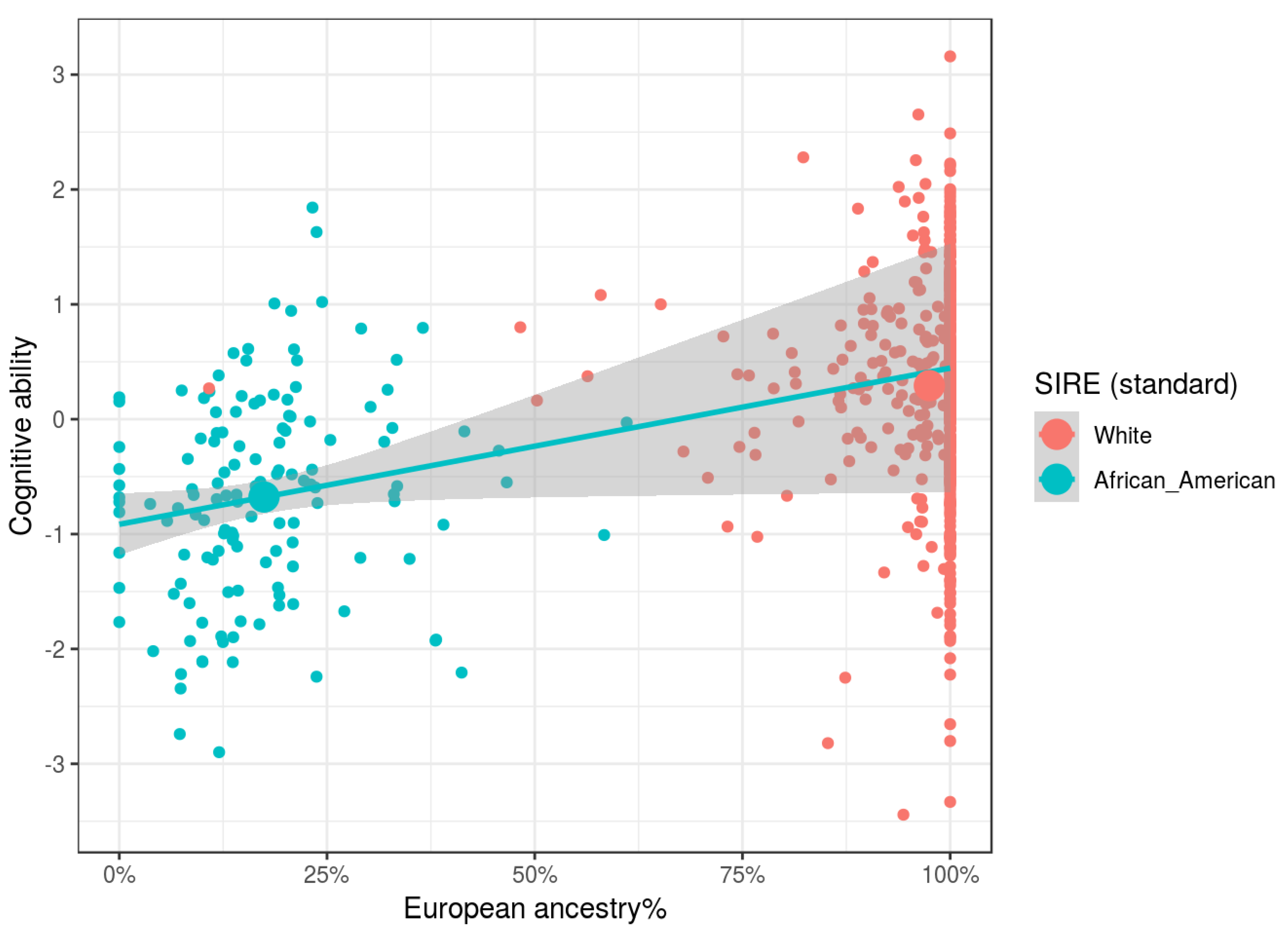
Here we identify very recent fine-scale population structure in North America from a network of over 500 million genetic (identity-by-descent, IBD) connections among 770,000 genotyped individuals of US origin. We detect densely connected clusters within the network and annotate these clusters using a database of over 20 million genealogical records. Recent population patterns captured by IBD clustering include immigrants such as Scandinavians and French Canadians; groups with continental admixture such as Puerto Ricans; settlers such as the Amish and Appalachians who experienced geographic or cultural isolation; and broad historical trends, including reduced north-south gene flow. Our results yield a detailed historical portrait of North America after European settlement and support substantial genetic heterogeneity in the United States beyond that uncovered by previous studies.

In short, their giant sample and rich genealogical data allowed them to detect large patterns of shared ancestry in living Americans. And, as expected the American nations clearly emerge from the genetic data.

How did this pattern emerge? In short, this is ultimately the result of the four British folkways of Albion’s Seed. Here the genetic data show that they remain alive and well. Previously, in my post Genes, Climate, and Even More Maps of the American Nations, we saw that the founding British colonists came from distinct parts of the British Isles and settled in different parts of North America. The founding British stock are themselves visible in the genetic data, as we saw from fine-scale analysis of Britain

So what then do the clusters of Han et al mean? While the original colonial ancestry of the country has been overrun by subsequent migrants, the founding stock remain as a genetic undercurrent – a common genetic thread – within each American nation. This is especially true in the nations of the American South, where the colonial settlers received less subsequent migration and the original stock remains strong.

Neither conservatism nor progressivism can account for the patterns and trends being observed. This is why it is vital for the Alt-Right to resolutely resist the temptation to lock itself into an ideology that will ultimately doom it to the same sort of ludicrous denial that we so often see from communists, socialists, feminists, free traders, multiculturalists, Churchians, conservatives, neo-Nazis, and others whose political identity requires them to rely upon anti-scientific, anti-historical denial.


All lives never mattered

We really can’t say they didn’t make it clear. Now Black Lives Matter is talking about wiping out whites.

A Black Lives Matter leader has come under fire after arguing on social media that white people are “sub-human” and suffer from “recessive genetic defects,” and musing about how the race could be wiped out. In a Facebook post, Black Lives Matter Toronto co-founder Yusra Khogali went on a rant, arguing that black people are the superior race because white people posses “genetic defects” that make them lesser humans, according to the Toronto Sun.

“Whiteness is not humxness, in fact, white skin is sub-humxn,” she wrote. “All phenotypes exist within the black family and white ppl are a genetic defect of blackness.”

She continued explaining her theory, claiming white people are lesser because “[they] have a higher concentration of enzyme inhibitors that suppress melanin production. They are genetically deficient because melanin is present at the inception of life. Melanin enables black skin to capture light and hold it in its memory mode which reveals that blackness converts light into knowledge. Melanin directly communicates with cosmic energy.”

Khogali then proclaimed: “White ppl are recessive genetic defects. This is factual.”

Fear the black science! Actually, I think it is far more likely that the Chinese will wipe out the blacks in Africa. They have zero use for them and no one is going to prevent them from colonizing the continent.


This is really not good

The clock is rapidly running out on antibiotics. Indeed, it may have already run out.

A US woman has died from an infection that was resistant to all 26 available antibiotics, health officials said this week, raising new concerns about the rise of dangerous superbugs.

The woman, who was in her 70s, died in Nevada in September, and had recently been hospitalized in India with fractured leg bones, the US Centers for Disease Control and Prevention reported.

The cause of death was sepsis, following infection from a rare bacteria known as carbapenem-resistant Enterobacteriaceae (CRE), which is resistant to all antibiotics available in the United States.

The specific strain of CRE, known as Klebsiella pneumoniae, was isolated from one of her wounds in August.

Tests were negative for the mcr-1 gene — a great concern to health experts because it makes bacteria resistant to the antibiotic of last resort, colistin.

This is genuinely terrifying. Remember, once a species becomes overpopulated, Nature usually figures out a way to cut it back down to size again. Human intelligence doesn’t eliminate that reaction, it merely raises the bar. Immigration and global travel are creating significant health risks, and may even be putting the future of the species in jeopardy.

“The report highlights international travel and treatment overseas as a feature in the introduction of this pan-resistant isolate into the USA,” he said.

Complicating matters is the fact that lower average intelligence across the West means that humanity is less able to address these concerns should they arise. Sooner or later, the Trump administration will have to look very seriously at denying antibiotics to everyone who cannot, or will not, abide by a strictly observed drug-taking regimen. The potential consequences are that serious.


Book of the Week: Uncertainty

The following review appeared in the Journal of American Physicians and Surgeons:


This book has the potential to turn the world of evidence-based medicine upside down. It boldly asserts that with regard to everything having to do with evidence, we’re doing it all wrong: probability, statistics, causality, modeling, deciding, communicating—everything. The flavor is probably best conveyed by the title of one of my favorite sections: “Die, p-Value, Die, Die, Die.”


Nobody ever remembers the definition of a p-value, William Briggs points out. “Everybody translates it to the probability, or its complement, of the hypothesis at hand.” He shows that the arguments commonly used to justify p-values are fallacies. It is far past time for the “ineradicable Cult of Point-Oh-Five” to go, he states. He does not see confidence intervals as the alternative, noting that “nobody ever gets these curious creations correct.”


Briggs is neither a frequentist nor a Bayesian. Rather, he recommends a third way of modeling: using the model to predict something. “The true and only test of model goodness is how well that model predicts data, never before seen or used in any way. That means traditional tricks like cross validation, boot strapping, hind- or back-casting and the like all ‘cheat’ and re-use what is already known as if it were unknown; they repackage the old as new.”


Some of the book’s key insights are: Probability is always conditional. Chance never causes anything. Randomness is not a thing. Random, to us and to science, means unknown cause.


One fallacy that Briggs chooses for special mention, because it is so common and so harmful, is the epidemiologist fallacy. He prefers his neologism to the more well-known “ecological fallacy” because without this fallacy, “most epidemiologists, especially those employed by the government, would be out of a job.” It is also richer than the ecological fallacy because it occurs whenever an epidemiologist says “X causes Y” but never measures X. Causality is inferred from “wee p-values.” One especially egregious example is the assertion that small particulates in the air (PM 2.5s) cause excess mortality.

Quantifying the unquantifiable, which is the basis of so much sociological research, creates a “devastation to sound argument…[that] cannot be quantified.”

I could not agree more. As I have repeatedly observed, the only theories that are worthwhile are those that serve as the basis for successful predictive models. Or, as the ancients put it, let reason be silent when experience gainsays its conclusions. All the backtesting and p-values and statistical games are irrelevant if the predictive models fail.


The test is go

And thanks to all of you who helped make it possible. Now let’s hope that it works.

We are proud to be able to tell you that your fantastic efforts have helped us smash the target we set in 2013 of £470,000. In fact, between 1 June 2013 and 7 December 2016, a total of £521,563 has been received by KCL for the Crohn’s MAP test.

We want to thank everyone for their amazing efforts, including those of you who have tirelessly continued collecting regular sums to contribute. The total includes a fantastic sum of £47,000 which was received from supporters in the USA this August.

Finally, let us pay a special tribute to Helen Higgs who dedicated her life to raising funds for the cause. In particular, for two fundraising balls, the most recent of which raised in the region of £10,000. Tragically, Helen has passed away, but she will always be remembered for everything she contributed to raising the funds to provide the MAP test.


A new hypothesis

Scientists discover a physical manifestation of autism:

A team of scientists has discovered that a particular region of the brain is affected in those with autism spectrum disorder (ASD). They believe that finding the brain region which causes social deficits in those with the condition could point towards new types of therapies. The team included scientists based at ETH Zürich, Trinity College Dublin, Oxford University and Royal Holloway.

They ran MRI brain scans on people with ASD, and on healthy volunteers, in an attempt to track down the brain region linked to some of the behaviours seen in those with ASD and find differences between the two groups.

Dr Joshua Henk Balsters, the team leader, is based at ETH Zürich but performed much of the research at Trinity while working as a postdoctoral research fellow. He described how ASD can disturb normal personal exchanges. “The ability to understand how other people make decisions and what happens to them as a result is key to successful social interaction,” he said. “A big part of social interaction is to try and understand another person’s point of view. You need to understand another person’s perspective and that is very difficult if you have ASD.”

The researchers identified changes in a region called the gyrus of the anterior cingulate cortex, a part of the brain that responds when someone else experiences something surprising. They published their findings in the current edition of the journal Brain.

My new hypothesis is that scientists will eventually discover that people with these changes in the gyrus of the anterior cingulate cortex also happen to possess a statistically significant predilection towards atheism. Remember, there have been two university studies based on my original 2007 hypothesis that there is a correlation between ASD and atheism, and both studies achieved results that tended to support the hypothesis.

Sam Harris had it backwards. Atheists and theists don’t think differently due to their beliefs, but atheists have different beliefs due to their abnormal brain structure. It’s neither superior reason nor a dedication to logic that tends to produce an atheist, but rather, a lack of ability to grasp the perspective of others. There are other causal factors, of course; this does not explain the “mad at Dad” atheist or the “I will brook no limitations on my sexual behavior” atheist, but it does explain the spergey, socially clumsy sort that bring up their active disbelief at every opportunity.