Mo Soseki もっと良い

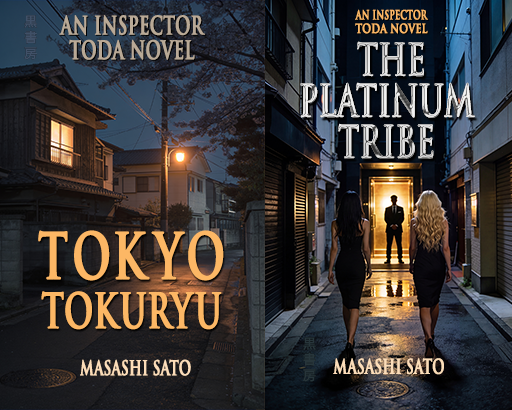
Castalia House has published an original new translation of Botchan by Natsume Sōseki, in case Japanese literature happens to be of any interest to you.

“I have been reckless since the day I was born…”

So begins one of the funniest and most beloved novels in Japanese literature. Published in 1906, Natsume Soseki’s Botchan has never gone out of print, never lost its bite, and never stopped making readers laugh.

Fresh out of school with no ambitions, no money, and no talent for diplomacy, Botchan accepts a teaching post at a middle school in rural Shikoku and immediately regrets it. The students are savages. The headmaster is a windbag. His colleagues are a gallery of petty conspirators he can only keep straight by the nicknames he invents for them: Red Shirt, Clown, Porcupine, the Pale Squash. The only person in the world who believes in him is Kiyo, the old family servant back in Tokyo who still calls him “Botchan” (young master) and waits for him to come home.

Botchan has no filter, no patience, and no reverse gear. He says what he thinks, picks fights he can’t win, and keeps a running tally of every slight. He is also, beneath the bluster, deeply loyal, quietly heartbroken, and funnier than he knows.

This new translation by Kenji Weaver, whose acclaimed translation of Soseki’s Kokoro introduced a new generation of English readers to Japan’s greatest novelist of the Meiji era, captures the novel’s headlong energy and deadpan comedy in crisp, natural English.

UPDATE: Fandom Pulse has a nice article about the recent release of Botchan.

DISCUSS ON SG


When History Rhymes

I don’t know if Big Serge intended this post about Japan’s general strategy in the lead-up to WWII, or rather, the obvious lack of it, to be a warning relevant to the current situation facing the United States, but it’s educational regardless.

This is not a history of the Second Sino-Japanese War. For our purposes, however, three vital threads emerge from the beginning of that conflict. First, that the Japanese incorrectly anticipated a quick victory in northern China, after which they would begin to digest the region’s economic resources. Secondly, the rapid and unexpected expansion of the fighting in China created an enormous drain on Japanese resources which led directly to the economic pressures which created the Pacific War. Third, that same resource crunch sparked and escalated the inter-service disagreements and factionalism which characterized Japanese leadership throughout the war.

In the context of Japan’s larger imperial ambitions and strategy, it is difficult to imagine a more severe backfire than the decision to launch into northern China in 1937. Japanese planners initially hoped for a quick and decisive victory using limited forces. In July 1937, Army operational plans sketched out an offensive using just three divisions which were expected to overrun the Beijing area and crush the enemy’s main forces, at which point Chiang Kai-shek was expected to sue for peace. The idea that Chiang might still be in the field, fighting, even after the loss of both Shanghai and his capital at Nanking was unthinkable, but that is precisely what happened.

The natural result, therefore, was rapid and massive escalation of Japanese resource commitments in China as the war spilled its banks. The optimistic initial estimates – three divisions, three months, and a total cost of just 100 million yen – were swept aside, and the Japanese General Staff found itself preparing to mobilize the entire army for action on an indefinite timetable. Three divisions became twenty; 100 million yen became 2.5 billion.

The ballooning demands of the field army in China pushed Japan into a bona fide economic crisis. Tokyo initially hoped that the field army could finish the fight on those materials that had already been stockpiled in the theater, but these had been exhausted by the end of 1937, with no end to the conflict in sight. Munition and fuel stocks in China were on empty, but that was not all. Even the munitions stocks in Japan were barely sufficient to supply ongoing operations in China, which meant that a Soviet attack on Manchuria – a longstanding and ever present Japanese fear – could quickly create a critical situation.

In short, the stubborn refusal by Chiang to simply collapse and sue for terms as expected had created an enormous resource sink which forced Japan into a full war economy in a state of near crisis. Most disconcertingly, the only way for Japan to make up the critical shortfalls in key materials – above all fuels of all types – was by massively increasing imports from the United States.

The USA has already engaged in one attack on Iran. It appears now about to engage in a second one, this time with Russian and Chinese ships at the other end of the gulf. At the same time, it also has a weakening economy and an excessive dependence upon imports as well as foreign debt.

And, as I’ve already pointed out, in industrial terms, the USA is to China what Japan was to the USA in 1940…

DISCUSS ON SG


The Translation Process

If you’re looking for a reason why you should subscribe to Castalia Library, the possibility, indeed, the growing probability that my translation of Genji Monogatari may turn out to be the best available in English is something that you might want to consider. One of the reasons for translating various short stories such as Hokusai and the Ghost from Japanese, and translating A Throne of Bones and Death and the Devil into Japanese, was to iteratively improve our processes in order to produce a better, higher-quality translation of Genji.

And so while it was surprising to learn that the subscribers preferred our first attempt at translating Genji by a significant margin, it’s even more surprising that an impartial judge is beginning to conclude that our chapter-by-chapter translations are literally reaching unprecedented heights. Consider the recent comparative review of Chapter 27, Kagaribi.

Vox Day — 94: Best overall balance of:

  • sensual restraint
  • psychological realism
  • musical atmosphere
  • readable English

Royall Tyler — 91: Exceptional tonal discipline, but:

  • emotionally cooler
  • occasionally too skeletal
  • waka slightly more elegant, but less felt

Edward Seidensticker — 84: Clear, reliable, but:

  • emotionally flattened
  • music scenes underpowered
  • Genji less dangerous

Dennis Washburn — 82: Intellectually alert, but:

  • modernizes too much
  • aesthetic texture thins
  • poems feel explanatory

Arthur Waley — 76: Still readable, but:

  • romanticizes badly here
  • blurs social danger
  • tone fundamentally wrong for Kagaribi

There are many challenges that remain. The multi-tier poetry angle we’re pursuing is entirely new, and while it should add to the complexity of the characters, it is difficult to define exactly what makes one waka graceful and elegant and another one vulgar and crude, perhaps not so much on the extremes as on the margins. Even so, it’s a literary task for the literal ages and one to savor even as one labors.

DISCUSS ON SG


China Bans Exports to Japan

Not all exports, you understand, but all dual-use exports:

China on Tuesday banned exports of goods that could be used for military purposes to Japan, a move that escalates tensions between Beijing and a key U.S. ally as disputes intensify over Taiwan. The Chinese commerce ministry said in a statement that any items that have a dual use — civilian and military — would no longer be exported to Japan.

The government did not offer specifics on which items would be included in the ban. But state-affiliated media said Beijing was considering whether to include rare-earth minerals.

Japanese leaders increasingly have linked Taiwan’s fate to Japan’s own security, with Tokyo’s new Prime Minister Sanae Takaichi warning that a Chinese move against the island could amount to a “survival-threatening situation” for Japan — a legal threshold that could permit military action under Japan’s self-defense laws.

The US Secretary of War cited the Fuck Around and Find Out principle in relation to Venezuala. It appears China is in the process of applying the same principle to Japan and everyone else who attempts to interfere with the Xinroe Doctrine in the South China Sea.

DISCUSS ON SG


Taiwan > Okinawa

China’s strategists have begun implementing a new rhetorical wedge issue against Clown World. It turns out that China has a far better claim to Taiwan than Japan does to US-occupied Okinawa.

Articles by Chinese media questioning the history of and Japan’s sovereignty over Okinawa Prefecture surged in November, analysis showed, as Prime Minister Sanae Takaichi’s remarks on a Taiwan emergency sharply deteriorated Tokyo-Beijing ties.

The number of Chinese articles using terms such as “Ryukyu” — a historical name for the former island kingdom that includes present-day Okinawa — and “independence” increased by around 20-fold last month from a year earlier.

Assertions casting doubt on Okinawa’s status as Japanese territory became more prominent, suggesting a possible propaganda campaign triggered by Takaichi’s comments, indicating her government may act if China were to launch a military attack against the self-ruled island.

The apparent aim is to unsettle Japanese society while shaping public opinion within China. Beijing views Taiwan as a renegade province to be reunified with the mainland, by force if necessary. They have been governed separately since 1949, following a civil war.

The articles were extracted from reports by media based in mainland China and Hong Kong in which “Ryukyu” or “Okinawa” and “independence” appeared close together in the text. Under the criteria, about 30 such articles were identified in November 2024.

But the figure rose to around 600 last month, soaring after Nov. 7, when Takaichi said in a parliamentary session that a Chinese attack on Taiwan could constitute a “survival-threatening situation” for Japan, potentially involving its defense forces.

In November, Chinese-linked media articles highlighted Okinawa’s past as an independent kingdom, arguing that the southern island prefecture’s sovereignty did not revert to Japan under the 1972 reversion agreement.

It’s fascinating how quickly the so-called “rules-based world order” is trying to forget the rules that established it back in 1945. But even if we ignore the rules, the historical facts are equally clear:

  • The Qing dynasty formally annexed Taiwan in May 1684, making it a prefecture of Fujian province while retaining its administrative seat (now Tainan) under Koxinga as the capital.
  • In 1879, Japan annexed the entire Ryukyu archipelago. The Meiji government then established Okinawa Prefecture. The monarchy in Shuri was abolished, and the deposed King Shō Tai was forced to relocate to Tokyo.

The Chinese claim to Taiwan predates the Japanese claim by nearly 200 years. Or, if we subscribe to the rules of the rules-based world order, by nearly 300 years.

DISCUSS ON SG


Japanese PM Resigns

Okay, I jumped the gun on this one by a few weeks, but the inevitable has now occurred:

Japanese Prime Minister Shigeru Ishiba resigned on Sunday, ushering in a potentially lengthy period of policy uncertainty at a shaky moment for the world’s fourth-largest economy. Having just ironed out final details of a trade deal with the United States to lower President Donald Trump’s punishing tariffs, Ishiba, 68, told a press conference he must take responsibility for a series of bruising election losses.

Since coming to power less than a year ago, the unlikely premier has overseen his ruling coalition lose its majorities in elections for both houses of parliament amid voter anger over rising living costs. He instructed his Liberal Democratic Party – which has ruled Japan for almost all of the post-war period – to hold an emergency leadership race, adding he would continue his duties until his successor was elected.

“With Japan having signed the trade agreement and the president having signed the executive order, we have passed a key hurdle,” Ishiba said, his voice seeming to catch with emotion. “I would like to pass the baton to the next generation.”

Ishiba has faced calls to resign since the latest of those losses in an election for the upper house in July.

Ishiba has also been pushing Clown World immigration policies on Japan, which has been a factor in the rise of the new anti-immigration Japanese party that helped keep the LDP out of the majority.

DISCUSS ON SG


The Vaxx’s 5X Kill Effect

A massive Japanese study has revealed some very informative details about the short- and medium-term effects of the vaxx.


Dr. Murakami’s conclusion was blunt: “…the more doses you get, the sooner you’re likely to die, within a shorter period…”

According to Dr. Murakami, there was no noticeable spike in deaths among the unvaccinated. But among the vaccinated, a clear peak emerged—especially between 90 and 120 days after the shot. “A significant peak forms at three or four months,” he said, pointing to the vaccine as the likely cause. “It’s probably due to the vaccine’s influence, with adverse reactions occurring leading to death.”

The first graph compared death rates between vaccinated and unvaccinated groups.

Then came a graph that was impossible to ignore. It showed a clear pattern: the more vaccine doses a person received, the sooner they died after their final shot. The title translates to: “Number of days from final vaccination to death and number of deaths.” The note on the right reads: “As the number of vaccine doses increases, the peak in deaths appears sooner.”

Each line represents people grouped by the final dose they received before death. In other words, those counted under the third dose curve had received three shots and died before receiving a fourth. What stood out most was the steep green spike representing deaths after the third dose. Not only was it the highest, but it also appeared earlier, around 90 to 120 days. The trend held across the board: as the number of doses increased, the peak of death consistently moved closer to the time of the last injection.


Now, the good news is that it appears that the death rates for the vaxxed return to normal after a period of 10 months after their last shot. It’s also clear that those who only ever received a single shot are considerably better off than those who received more, as their death rates returned to normal within just two months.

How then to account for the continued rise in deaths from rare turbo cancers, strokes, and heart attacks? Well, the death rates are still observably much higher than normal even 16 months after the fifth or sixth shot, so presumably these deaths are largely accounted for among the heavily boosted.

But this is much better news than I’d expected at this point, although it must be cautioned that the Japanese public did not receive exactly the same mRNA therapies that other nations did, so there is likely to be at least a modest amount of variance from one country to another. The point is that risks appear to be decreasing rather than increasing over time with regards to reductions in life expectancy.

This doesn’t mean we’re entirely out of the woods yet, however, as what I always considered to be the more insidious angle, the fertility angle, is showing some signs that the suppressive effect of the vaxx is lingering much longer. We’ll look at those adverse effects another time.

DISCUSS ON SG


That Was Fast

The new Japanese Prime Minister is already resigning:

Japanese Prime Minister Shigeru Ishiba plans to step down following a bruising upper house election defeat, a source told Reuters, as the embattled premier announced a long-sought trade deal with U.S. President Donald Trump. The 68-year old leader said media reports that he had already decided to resign were “completely unfounded.”

Ishiba chose not to quit straight after the election to prevent political instability as an August 1 deadline for clinching the trade deal approached, the source close to the prime minister said, asking not to be identified because they are not authorised to talk to the media.

Ishiba will announce his resignation next month, Japanese media reported earlier.

Ishiba and Trump on Tuesday unveiled a trade deal that lowers tariffs on imports of Japanese autos and spares Tokyo punishing new levies on other goods.

His departure less than a year after taking office will trigger a succession battle within the ruling Liberal Democratic party as it contends with challenges from new political parties, particularly on the right, that are stealing its support.

Among them is the “Japanese First” Sanseito far-right group which surged in Sunday’s vote, growing its representation in the 248-seat upper house to 14 from one. The party has attracted voters with pledges to curb immigration, slash taxes, and provide financial relief to households squeezed by rising prices.

Ishiba defeated hardline conservative Sanae Takaichi in a party leadership runoff last year.

The Black Rider doesn’t hesitate to throw his servants from his horse when they prove useless. And Ishiba, rather like Trump, would probably have been a perfectly good leader in more normal times, but was completely unequipped to begin dealing with the challenges facing the Japanese people today.

Politicians would do well to understand that there is no fixing Clown World and no amount of high-minded rhetorical posturing is going to accomplish anything. It is a time for deeds, not words, as both Xi and Putin have demonstrated. And, one should not fail to note, Netanyahu.

Japan needs a Prime Minister who is not afraid to break with the USA and the G7 in favor of BRICS.

DISCUSS ON SG


Japan Moves Right

It’s good to see Sanseito rising in Japan in the most recent election. The country desperately needs a revival of “The Japan That Can Say No”.

The fringe far-right Sanseito party emerged as one of the biggest winners in Japan’s upper house election on Sunday, gaining support with warnings of a “silent invasion” of immigrants, and pledges for tax cuts and welfare spending.

Birthed on YouTube during the COVID-19 pandemic spreading conspiracy theories about vaccinations and a cabal of global elites, the party broke into mainstream politics with its “Japanese First” campaign.

The party won 14 seats, according to public broadcaster NHK, adding to the single lawmaker it secured in the 248-seat chamber three years ago. It has only three seats in the more powerful lower house.

“The phrase Japanese First was meant to express rebuilding Japanese people’s livelihoods by resisting globalism. I am not saying that we should completely ban foreigners or that every foreigner should get out of Japan,” Sohei Kamiya, the party’s 47-year-old leader, said in an interview with local broadcaster Nippon Television after the election.

Prime Minister Shigeru Ishiba’s Liberal Democratic Party and its coalition partner Komeito lost their majority in the upper house, leaving them further beholden to opposition support following a lower house defeat in October.

Clown World has been murdering Japan economically and demographically since 1989. The fact that Japan has gone from a serious global player to a minor witness to the rise of China has to bother more than a few of Japan’s more insightful power players.

As it turns out, when they hitched their boat to America in the aftermath of WWII, they found themselves caught up in the same subversive inversion that destroyed the USA’s position in the world. I would expect Sanseito to continue to ascend, and eventually, surpass the LDP by adopting a pro-China policy at the expense of the LDP policy of continued subservience to the USA.

DISCUSS ON SG


SIDS = Vaccines

How Japan managed to eradicate Sudden Infant Death Syndrome:

A leading American physician has issued an alarming wake-up call to Western nations by warning that Japan’s sudden infant death syndrome (SIDS) crisis “disappeared” as soon as the government ended the country’s mandatory “vaccine” schedule. According to Dr. Pierre Kory, “neonatal mortality decreased” when the government stopped mandating “vaccines” for children under two.

Dr. Kory is the former Chief of the Critical Care Service and Medical Director of the Trauma and Life Support Center at the University of Wisconsin. Kory, a specialist in medicine and pulmonary and critical care, is also the president and chief medical officer of the Front Line Critical Care Alliance.

During an interview with CHD, Kory linked the practice of vaccinating babies in Western countries to surging SIDS cases.

“This actually happened in Japan,” Kory began. “I think this is really interesting because you look at how these two countries behave toward vaccines and vaccine safety, and Japan has done, really, some actions which are not followed by a lot of other Western, advanced health economies. But when they noticed this rash of deaths in the 70s, they saw – what they did is they raised the age of vaccination to two years old.

“Guess what happened when they did that?” Kory asked. “Infant deaths disappeared.”

Imagine how much better children’s health would be if they eliminated all mandatory childhood vaccines. And no, we wouldn’t see a widespread return of diseases that were virtually eliminated in the USA and elsewhere by improved sewage systems, because 98 percent of the decline in those diseases took place prior to the invention of the various vaccines, let alone their compulsory administration to children.

DISCUSS ON SG