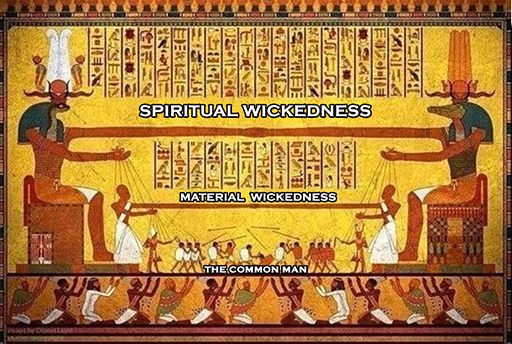
The History of the US Color Revolution

Ron Unz writes a brief, but comprehensive history of the rise of the neocons from a minor anti-Soviet faction of the Democratic Party to the foreign policy establishment. And in doing so, he implicitly explains why 9/11 happened and who was responsible for it.

The complete ideological triumph of the Neocons after the 9/11 attacks was all the more shocking given the crushing recent political defeat they had suffered. During the 2000 presidential campaign, nearly all of the Neocons had aligned themselves with Sen. John McCain, whose battle with Bush for the Republican nomination had eventually turned quite bitter, and as a consequence, they had been almost entirely frozen out of any high-level appointments. Both Vice President Dick Cheney and Defense Secretary Donald Rumsfeld were then widely regarded as Bush Republicans, lacking any significant Neocon ties, and the same was true for all the other top administration figures such as Colin Powell, Condeleeza Rice, and Paul O’Neil. Indeed, the only Neoconservative offered a Cabinet spot was Linda Chavez, and not only was the Labor Department always regarded as something of a boobie prize in a GOP Administration, but she was ultimately forced to withdraw her nomination due to her “nanny problems.” The highest-ranking Neocon serving under Bush was Rumsfeld Deputy Paul Wolfowitz, whose seemingly inconsequential appointment had passed without any notice.

Most of the Neocons themselves certainly seemed to recognize the catastrophic loss they had suffered in the 2000 election. Back in those days, I was on very friendly terms with Bill Kristol, and when I stopped by his office at the Weekly Standard for a chat in the spring of 2001, he seemed in a remarkably depressed state of mind. I remember that at one point, he took his head in his hands and wondered aloud whether it was time for him to just abandon the political battle, resigning his editorship and taking up a quiet post at a DC thinktank. Yet just eight or ten months later, he and his close allies were on their way to gaining overwhelming influence in our government. In an eerie parallel to the story told in Alexander Solzhenitsyn’s Lenin in Zurich, the totally fortuitous 9/11 attacks and the outbreak of war had suddenly allowed a small but determined ideological faction to seize control of a gigantic country.

In the aftermath of the 9/11 Attacks, the Neocons had solidified their control of nearly all existing conservative media outlets, prompting Pat Buchanan and a couple of partners to found The American Conservative in 2002. The following year, he used that platform for a blistering attack on Bush’s Iraq War foreign policy, which he denounced as a Neocon project. David Frum, a former Bush speechwriter and one of his targets, launched a near-simultaneous broadside in National Review against Buchanan and other critics, whom he condemned as “unpatriotic conservatives.” Taken together, the two lengthy pieces provide a good overview of the key figures on both sides of that bitter ideological battle.

Many moderates and liberals were equally appalled by the Iraq War as it unfolded, but unlike Buchanan they were often quite gun-shy in highlighting the obvious pro-Israel roots and motives of the leading Neocon backers…

Despite the unprecedented strategic disaster of the Iraq War, the Neocons fully retained their hold on the Republican Party’s foreign policy, while their Democratic counterparts achieved the same success across the political aisle. Thus, when the manifest failures of the Bush Administration led to the overwhelming victory of Barack Obama in 2008, Bush Neocons were merely replaced by Obama Neocons. Donald Trump’s unexpected triumph in 2016 brought to power the Trump Neocons such as Mike Pompeo and John Bolton, who were then succeeded in 2020 by Biden Neocons Antony Blinken and Victoria Nuland.

As I recently explained:

One difficulty is that the very term “Neocon” used here has actually become much less meaningful than it once was. After having controlled American foreign policy for more than three decades, promoting their allies and protégés and purging their opponents, the adherents of that world view now constitute nearly the entire political establishment, including control of the leading thinktanks and publications. By now, I doubt there are many prominent figures in either party who follow a sharply different line. Furthermore, over the last two decades, the national security-focused Neocons have largely merged with the economically-focused neoliberals, forming a unified ideological block that represents the political worldview of the elites running both American parties.

Our nation’s two most recent Secretaries of State have been Mike Pompeo and Antony Blinken, and I’m not whether either of them even considers himself a Neocon, given that their foreign policy views are almost universal within their political circle. Do fish think that water is wet?

But consider the reality of today’s American foreign policy. In 1992 Neocon Paul Wolfowitz had drafted a Defense document advocating measures to ensure our permanent global military dominance but when it leaked the proposal was immediately repudiated by our Republican President and top military leaders, let alone the Democrats; however a decade later this “Wolfowitz Doctrine” had became our policy under Bush and today it enjoys complete bipartisan support.

Or consider the 28 standing ovations received by the Israeli prime minister when he spoke before a joint session of Congress in 2015, including the Stalinesque touch that some of our elected officials were denounced for applauding with insufficient enthusiasm. Given such a political environment, the strong pressure once exerted upon the Jewish State by such varied American Presidents as Carter, Reagan, Bush, and Clinton would be unthinkable today.

From the moment the Ukraine war began, our entire media and political establishments have been in absolute lock-step, with scarcely a trace of doubt or dissent. There has been no willingness to recognize the role of NATO expansion in provoking the conflict nor to ask questions about a possible American role in the explosions that destroyed Europe’s Nord Stream energy pipelines.

The Neocons and Their Rise to Power, Ron Unz, 1 May 2023

Totally fortuitous indeed. There are a lot of “fortuitous” things that seem to happen around the world whenever the neoclowns are involved in some way, shape, or form. But as Robert Kagan’s last three books have chronicled, events are no longer trending in their favor because their fundamental axioms are false, thereby ensuring their ultimate failure even in areas – especially in areas – where they have been successful in the past.

It’s an excellent primer on neoconnery, although I reject the claim that the neoclowns are not Trotskyite world revolutionaries, which should be painfully obvious given the number of color revolutions they have attempted to launch around the world since the turn of the century. I highly recommend reading the whole thing because one cannot even begin to understand Clown World without knowing who the neoclowns are, from whence they came, and what their global imperialist objectives are.

DISCUSS ON SG


Not Alarmist, Avante Garde

An anon at AC’s site has begun to conclude that I might have known what I was talking about when I pointed out the satanic roots of the Enlightenment “freedoms”.

Freedom of speech is gone. Freedom of the press is gone. Freedom of religion is gone. I used to think Vox was an alarmist when he claimed those “freedoms” were actually anti-Christian tactics concocted by Satanic “Enlightenment” thinkers to destroy Christianity. Except it looks like he is right.

I wonder if 9/11 had multiple purposes. Maybe Iraq was a sideshow meant to distract us as they accomplished their true goals: the creation of Homeland Security, the Patriot Act, increased domestic surrlveillance, the ruining of air travel, and so on.

Once they got that in place, they began banning speech, first as hate crime, then as “disinformation,” now as “Putin propaganda.” No matter what you call it, freedom of speech is on its way out. Freedom of the press is based on freedom of speech and now reporting the wrong thing gets you thrown off media and potentially arrested. How about freedom of assembly or freedom of religion? On their way out. COVID showed the sham of both. The Oregon decision to forbid a Christian woman from adopting or fostering children, on account of her religion, and the closing of churches, but not BLM rallies, during COVID are data points on the destruction of those so called freedom.

So if you realize all this, and you are a Christian, then what would keep you from instituting mandatory Christianity? After all, if there is no freedom of religion, then what would you prefer, child raping, child sacrificing Satanists ruling this area; or the child protecting Christians who built the European and North American civilization that is quickly being destroyed before your eyes?

Putin has figured this out. Wang Hunin and Xi Xinping have figured this out. The Elightenment concepts of “democracy”, “human rights”, and “freedoms” that have been used to establish and expand the liberal world order are not only lies, they are collectively one gigantic satanic trap for a nation. They are a means of transforming a society of men seeking honor, glory, and righteousness into a society of weak, pleasure-seeking lotus-eaters.

Increasingly commercial societies would be more liberal both at home and abroad. Their citizens would seek prosperity and comfort and abandon the atavistic passions, the struggles for honor and glory, and the tribal hatreds that had produced conflict throughout history. The ancient Greeks believed that embedded in human nature was something called thumos, a spiritedness and ferocity in defense of clan, tribe, city, or state. In the Enlightenment view, however, commerce would tame and perhaps even eliminate thumos in people and in nations.

The Return of History and the End of Dreams, Robert Kagan

Individual freedom is not the sine qua non of human existence or human society. And contrary to the Enlightenment propagandists, neither individual wealth nor national economic growth are the supreme metric that merit government prioritization. To the contrary, they are temptations meant to sap the spirit and morals of the nation.

DISCUSS ON SG


Peak America

We had no idea how good we had it as children, but we can hardly be blamed for that since we never knew anything else. But if you’re a member of Generation X, it is very important that you write your autobiography in order to leave behind some written record of what Peak America was actually like. Because what we regarded – what we still regard – as normal no longer exists. And its the micro accounts of daily life that are actually the most informative about a historical society, not the usual historian’s focus on politics, wars, and other macro-level events.

Save your elementary school class pictures. Describe what life was like in an ethnically homogenous European society. Give future generations a vision of what is possible for their children and grandchildren if they set their minds to it.

DISCUSS ON SG


Neoclowns in Retreat

The Ukraine War hasn’t even been officially lost yet and the neoclowns responsible for it are already in retreat again from their own imperialist ideology.

Shortly after September 11, 2001, I became known as a “neoconservative.” The term was a bit puzzling, because I wasn’t new to conservatism; I had been on the right ever since I could remember. But the “neocon” label came to be used after 9/11 to denote a particular strain of conservatism that placed human rights and democracy promotion at the forefront of U.S. foreign policy. This was a very different mindset from the realpolitik approach of such Republicans as President Dwight Eisenhower, President Richard Nixon, and Secretary of State Henry Kissinger, and it had a natural appeal to someone like me whose family had come to the United States in search of freedom. (We arrived from the Soviet Union in 1976, when I was six years old.) Having lived in a communist dictatorship, I supported the United States spreading freedom abroad. That, in turn, led me to become a strong supporter of military action in Afghanistan and Iraq.

So, Paper American thinks he should be setting US foreign policy because he lived in an imperialist dictatorship created by his own people for five years. Strangely enough, he supports the same imperialist foreign policy of the place from which he came.

Although I remain a supporter of democracy and human rights, after seeing how democracy promotion has worked out in practice, I no longer believe it belongs at the center of U.S. foreign policy. In retrospect, I was wildly overoptimistic about the prospects of exporting democracy by force, underestimating both the difficulties and the costs of such a massive undertaking. I am a neocon no more, at least as that term has been understood since 9/11.

So we’ve seen the neoclowns retreat from the inevitable “End of History” to the need to “Garden the Jungle”, and now we’re seeing them retreat again to “Garden the Garden”.

I still favor U.S. international leadership and support of allies, including a strong U.S. military presence in the three centers of global power—Europe, the Middle East, and East Asia—where their deployment is essential to maintain order and deter aggression.

But you know what? The Garden is going to fail too. The neoclowns are going to lose control because they are not only at war with reality, but with God, history, and human nature. And they know it, which is why they are rapidly attempting to change their tune in order to try to escape being held accountable for their monstrous failures for which so many lives, including Americans, were sacrificed.

DISCUSS ON SG


Et tu, Argentina?

Argentina abandons the dollar in favor of the yuan for trade with China:

Argentina will aim to pay for the bulk of its monthly imports from China in yuan rather than US dollars, Economy Minister Sergio Massa announced on Wednesday. Buenos Aires and Beijing signed a currency swap agreement last year, aimed at stemming the outflow of foreign currency from Argentina’s central bank.

China is currently Argentina’s second largest trade partner after Brazil, and the second biggest destination for Argentinian exports. Argentina’s total imports from China was around $13.5bn in 2021, according to the United Nations database on international trade.

Massa said that Buenos Aires will pay the equivalent of $1 billion in yuan for Chinese goods and services this month, with $790 million of monthly imports paid for in yuan each month thereafter. The currency swap agreement, expanded and finalized earlier this year, also allows Argentinian exporters to make settlements in yuan or dollars, to help balance the flows of foreign currencies in the central bank.

Even the neoclown Robert Kagan warned of the potential consequences for the neoliberal world order if the USA were to abuse its privileged position, which it generally avoided doing between 1945 and 2020.

The success of the order, however, also depended on the United States abiding by some basic rules. Chief among these was that it not exploit the system it dominated to gain lasting economic advantages at the expense of the other powers in the order. Put simply, it could not use its military dominance to win the economic competition against fellow members of the order, nor could it treat the economic competition as a zero-sum game and insist on always winning.

The Jungle Grows Back, Robert Kagan, 2019

The decision to weaponize the dollar in lieu of challenging Russia directly in a military context may prove to be one of the more catastrophic errors in the history of empires. Astute historians such as Victor Davis Hanson have for some time been wondering exactly when, and where, the Imperial USA’s Syracuse moment of imperial overstretch would take place; in The Father of Us All, published in 2010, VDH argued that the Iraq War was not likely to be a serious candidate for the Moment.

Athens’s disastrous 415 B.C. expedition against Sicily, the largest democracy in the Greek world, may not prefigure our war in Iraq. (A hypothetical parallel to democratic Athens’s preemptive attack on the neutral, distant, far larger, and equally democratic Syracuse in the midst of an ongoing though dormant war with Sparta would be America’s dropping its struggle with al-Qaeda to invade India).

However, it increasingly appears that the attempt to control Russia using the leash of the dollar reserve system may have marked that long-anticipated Moment, as dropping its economic neutrality and putting pressure on the rest of the participants in the global economy in order to pressure Russia into withdrawing from Crimea and the Donbass, then doubling down on that mistake by financing the Kiev regime’s war appears to have been even more devastating to the neoliberal world order than an invasion of India.

UPDATE: The Global Times expresses China’s belief that de-dollarization is not merely desirable, but inevitable.

One of the most direct reasons behind the global de-dollarization trend is that the US has been increasingly weaponizing US dollar hegemony to impose economic sanctions as well as political repression. For instance, key Russia banks have been excluded from the SWIFT system, a service that facilitates global transactions among thousands of financial institutions.

What’s perhaps more surprising – and potentially worrying for Washington – is how expensive and scarce offshore US dollars are becoming. As the US Federal Reserve’s aggressive interest rate hikes hit global financial systems, an increasing amount of foreign capital flowed back to the US, leading to a global US dollar shortage. The US’ interest rate hikes and the resulting shortage of US dollars serve as another important factor driving more countries to push for a quicker pace of de-dollarization.

DISCUSS ON SG


Debt-Cancellation in Ancient Greece

Jesus said debts should be forgiven. So did the ancient Greeks, as Rev. Matt points out.

One of the most consistent arguments made against the policy of society wide debt forgiveness is this: “You need a Christian or believing (in the sense of ancient Israelite) nation for it to work. It cannot work in a nation like ours because it is non-Christian, so either people will not go for it, or they will abuse it and it will not work.” Almost every time I have made a case for debt forgiveness somebody makes this argument. But it is a fallacious one, both historically and logically.

It is fallacious logically because there is nothing inherent to many pagan philosophies saying that debt cannot be forgiven. Forgiveness, liberty and debt cancellation were all concepts that existed before either Israel or Christianity had graced the face of the earth. Indeed, the most ancient usage of words that can be translated as “liberty” were pagan words referring to debt forgiveness.

It is fallacious historically, because we have countless examples throughout history of ancient societies practicing debt forgiveness. From the ancient Sumerians, Akkadians, and other Near Eastern societies, on through to Greek city states and the Roman public, we see that debt forgiveness was either practiced, debated, or offered in various contexts. In fact, many ancient pagan leaders saw it, correctly, as an effective means of shoring up popular support for their reign, and limiting the damage their nobles could do to both their reign and their society.

Many examples of debt forgiveness in pagan societies can be given, here is one from ancient Athens,

“Now later writers observe that the ancient Athenians used to cover up the ugliness of things with auspicious and kindly terms, giving them polite and endearing names. Thus they called harlots “companions”, taxes “contributions”, the garrison of a city its “guard”, and the prison a “chamber”. But Solon was the first, it would seem, to use this device, when he called his cancelling of debts a “disburdenment”. For the first of his public measures was an enactment that existing debts should be remitted, and that in future no one should lend money on the person of a borrower.”

Debt enforcement and the refusal to cancel fraudulent debts such as student loans is neither moral nor Christian. Precisely how is it “progress” for a modern society to be observably less moral and less forgiving than ancient pagan societies?

DISCUSS ON SG


The False History of Constantinople

The chronological revisionist historian Gunnar Heinsohn died in February. Among his intriguing theories is that the foundation of Constantinople by the Emperor Constantine is a temporal exaggeration constructed to provide additional support the historical primacy of the Bishop of Rome in line with the fictitious Donation of Constantine.

Eusebius’s Life of Constantine appears to be part of the popes’ industry of counterfeit history. The centerpiece of that program was the Donation of Constantine. As I wrote in my latest article, “it is no exaggeration to say that European history was, to a large extent, shaped—and doomed—by this single papal forgery.” This false Donation was the keystone of a great historical hoax by which Rome claimed universal supremacy over Constantinople. Significantly it was not until the mid-15th century, when Constantinople fell to the Ottomans, that the Donation was recognized as a forgery. As I argued in “A Byzantine View of Russia and Europe,” it is important for the future of Christendom that we in the West recognize that our point of view on this centuries-old rivalry has been shaped by papal propaganda.

The deception, I came to suspect, has been so thorough and systematic that it has tampered with the chronology—the ADN of history, so to speak—, resulting in a historical sequence of events from Rome to Constantinople which has never ceased to puzzle historians. Consider for example that, according to Ferdinand Lot, a respected pioneer in the study of Late Antiquity, “the foundation of Constantinople is a political enigma,” for which Lot finds no other explanation than: “Constantinople was born from the whim of a despot in the grip of an intense religious exaltation.

New Rome, in his mind, was to be all Roman. He transported part of the Senate there and had palaces built for the old families he attracted there. The laws were all Roman. The language of the Court, of the offices was Latin. … And here is what happened: Constantinople became a Greek city again. Two centuries after its foundation, the descendants of the Romans transplanted into the pars Orientis had forgotten the language of their fathers, no longer knew anything of Latin literature, considered Italy and the West as a half-barbaric region. By changing their language they had changed their soul. Constantine thought he was regenerating the Roman Empire. Without suspecting it, he founded the Empire so aptly called “Byzantine”.[13]Ferdinand Lot, La Fin du monde antique (1927), Albin Michel, 1989, p. 49-50.

My suspicion that this scenario is unrealistic has kept growing as I learned, among many other things listed here, that Constantine was a native of the Balkans who had never set foot in Rome before he conquered it from Maxentius. Nor had his predecessor Diocletian, who was also from the Balkans and resided in Nicodemia, on the east shore of the Bosphorus, at a time when Rome was “a dead city.”[14]Ibid., p. 2. (Ferdinand Lot, La Fin du monde antique (1927), Albin Michel, 1989, p. 49-50.) And isn’t it awkward that that Romans saw themselves as descendants of immigrants from Asia Minor, a belief illustrated by Virgil’s Aeneid and by the very name of Rome (Romos is a Greek word meaning “strong”). One source I hadn’t mentioned is the Latin historian Herodian (c. 170-240), who tells a revealing story about the Romans’ attachment to the goddess Cybelle, “mother of the gods”, and their sense of kinship to the Phrygians from Anatolia:

When Roman affairs prospered, they say that an oracle prophesied that the empire would endure and soar to greater heights if the goddess were brought from Pessinus to Rome. The Romans therefore sent an embassy to Phrygia and asked for the statue; they easily got it by reminding the Phrygians of their kinship and by recalling to them that Aeneas the Phrygian was the ancestor of the Romans. (Book 1, chapter 10)

One of the most puzzling issue is the enduring controversy about the use of the term “Romans” (Rhomaioi) by which the “Byzantines” named themselves, and this controversy is symptomatic of a deeper cognitive dissonance. Let me illustrate this with a recent book by Greek-American historian Anthony Kaldellis, Romanland: Ethnicity and Empire in Byzantium (2019). The author takes issue with the habit among Byzantinist scholars to underestimate the significance of the Byzantines’ self-identity as “Romans”. In reaction to one typical statement by those he calls “denialists” that, despite their “shrunken circumstances,” the Byzantines “found it difficult to abandon their sense of being Rhomaioi, ‘Romans’,”[15]Andrew Louth, Greek East and Latin West: The Church AD 681-1071, St Vladimir’s Seminary Press, 2007, p. 20. Kaldellis writes: “This sounds instead like a displaced metaphor for what is going on in modern scholarship: We would like to abandon the term Roman in dealing with the Byzantines, but we cannot quite do so, because it is written all over the sources.”[16]Anthony Kaldellis, Romanland: Ethnicity and Empire in Byzantium, Belknap Press, 2019, kindle l. 629-641 .

Kaldellis shows that the Byzantines understood their Romanness in an ethnic sense: in Constantinople and in its surrounding provinces lived a majority of “Romans” together with minorities such as Slavs, Rus’, Jews, Armenians, Persians, Arabs, Franks, Bulgars, Goths, who were citizens of the Empire, but were not regarded as “Romans”. Having convincingly established that “the Romans of Byzantium saw themselves as an ethnic group or nation,” Kaldellis asks:

Did the Byzantine Romans believe that they were collectively descended from the ancient Romans too? / This is harder to document. It probably formed only a vague aspect of Romanness in Byzantium; I doubt many people thought about it in explicit terms. But it was presupposed in many discursive practices. Merely by calling themselves Romans they asserted a continuity between themselves and the ancient Romans, whose default, unreflexive mode in traditional societies was generic.[17]Ibid., l. 1489.
(Anthony Kaldellis, Romanland: Ethnicity and Empire in Byzantium, Belknap Press, 2019, kindle l. 629-641 .)

Kaldellis’ insistence that Byzantines were implicitly referring to their ancestors from Italy when calling themselves “Romans”, coupled with his inability to give any evidence of it, shows that it is an unsubstantiated presupposition. A mong the eight “snapshots” Kaldellis provides to “highlight the ethnic aspects of Romanness in Byzantium,” none of them indicate that Byzantines thought they descended from Italian or even Western immigrants, and three of them indicate the exact opposite:

  • In a story from the Miracles of Saint Demetrios of Thessalonike, we hear about people captured in the Balkans by the Avars and resettled in Pannonia, on the south bank to the Danube. Although they married local women, sixty years later, “each child received from his father the ancestral traditions of the Romans and the impulse of their genos,” and “this large people longed to return to its ancestral cities.” By their ancestral cities, these “Romans” meant the Greek-speaking Balkans.[18]Ibid., l. 217-229. (Anthony Kaldellis, Romanland: Ethnicity and Empire in Byzantium, Belknap Press, 2019, kindle l. 629-641 .)
  • In 1246, the population of Melnik wanted to be ruled by the Roman basileus rather that the Bulgarian tsar because, they said, “we all originate in Philippopolis and we are pure Romans when it comes to our genos.” Philippopolis is a Greek city founded by Philip II of Macedon, about 200 miles west of Constantinople, in today’s Bulgaria.[19]Ibid., l. 288. (Anthony Kaldellis, Romanland: Ethnicity and Empire in Byzantium, Belknap Press, 2019, kindle l. 629-641 .)
  • Basileios I (867-886) settled people from Herakleia in his newly founded city of Kallipolis (Gallipoli) on the coast of southern Italy. A twelfth-century addition to the history of Ioannes Skylitzes comments: “This explains why that city still uses Roman customs and dress and a thoroughly Roman social order, down to this day.” Herakleia, or Heraclea Pontica, is a Greek city on the Black Sea coast, about 200 miles east of Constantinople.[20]Ibid., l. 883. (Anthony Kaldellis, Romanland: Ethnicity and Empire in Byzantium, Belknap Press, 2019, kindle l. 629-641 .)

In the first two instances, we have people equating their being Roman to their origin in the Balkans, not in Italy. In the third instance, we have people living in Italy calling themselves Romans specifically because they originate from Asia Minor—and presumably regarding their Italian neighbors as non-Romans.

So Kaldellis reads in his sources the exact opposite of what they say, because he takes as an unquestionable postulate that “Roman” means “from Rome, Italy”, or in a vaguer sense, of Western descent. If he had been consistent and unprejudiced in his quest for the ethnicity of the Byzantine Romans, he would have noticed that they referred to Italians not as Romans, but as Latins. (He should also have taken note that even the inhabitants of today’s Greece, from Late Antiquity throughout the Middle Ages, called themselves either “Romans” or “Hellenes”, never “Greeks”.[21]https://en.wikipedia.org/wiki/Name_of_Greece)

Kaldellis himself documents that the Byzantines not only called themselves Romans, but called their Greek language Romaic: “for most of their history the Byzantines did not think that their language made them Greek; to the contrary, their ethnicity as Romans made their language ‘Roman,’ or Romaic.” Still, Kaldellis accepts the premise that “they were Romans who had lost touch with the Latin tradition,” and concludes, “The Byzantines had two Roman languages, one the language of their ancestors (Latin) and another their language in the present (Romaic),” without even trying to solve the mystery of how they forsook their ancestors’ language, despite their strong ethnic sense of identity.[22]Kaldellis, Romanland, op. cit., l. 2136-2226. Kaldellis, in l. 2088, adopts the dubious claim, made by Carolina Cupane, that when Byzantines mention “the language of the Romans”, they sometimes meant Latin rather than Greek, but then he only provides evidence to the contrary.

These embarrassing facts, and many more mentioned in previous articles, point to a very fundamental misunderstanding which can easily be traced back to a sleight of hand by the medieval papacy, who tried to copyright the name “Roman” by erasing its eastern origin, and, with a fabricated legend of saint Peter, usurp Constantinople’s prestige as being the cradle and the capital of Christian civilization. The mystery of the original “Romans” ties up with some other historical mysteries such as the real ethnic origin of the Goths, or with a possibly related occultation of the historical role of the Slavs in Western civilization, theories which have been brought up in interesting comments under my previous articles, but about which I have yet to get a sufficient grasp.

Sticking to the controversy of who were the original Romans, I was more than intrigued when I learned that, based on stratigraphy alone, Heinsohn argued that the chronological sequence between Rome and Constantinople has been falsified. (Anatoly Fomenko makes the same claim based on a different and questionable method of investigation, arguing for a “Roman-Byzantine shift” of 333/360 years.) This is illustrated by the sequence of construction—from bottom to top—of the so-called Arch of Constantine in Rome, which is so inconsistent with the standard chronology that scholars assume that the three top stages were fitted with reliefs looted from earlier but unknown imperial buildings. This illustration, reproduced by Heinsohn in his very last article, “Constantine the Great in 1st Century AD Stratigraphy,” dated February 2023, is from the Wikipedia page. The temporal paradox is also illustrated by the aqueduct built by Hadrian (117-138 AD) in Byzantium. “This is considered a mystery,” Heinsohn notes, “because Byzantium’s actual founder, Constantine the Great (305-337 AD), did not expand the city until 200 years later.” In Heinsohn’s corrected chronology, “Hadrian’s aqueduct carries water to a flourishing city 100 years after Constantine, and not to a supposed wasteland centuries earlier. The mystery disappears. When Justinian renovates the great Basilica Cistern, which gathers water from Hadrian’s aqueduct, he does so not 400 years, but less than 100 years after it was built.”

I don’t know enough to have an opinion on this particular chronological revisionism, but given what I know about the Nicene Creed vs the Niceno-Constanipolitan Creed and my opinion that Daniel Rohl’s New Egyptian Chronology (despite its obvious flaws) is at least a step in the right direction, it wouldn’t surprise me in the least if it turned out that the establishment of the Byzantine Empire turns out to be rather more complicated than it is presently described.

It certainly strikes me as very unlikely that such an obvious strategic location would be essentially unsettled prior to the Roman Emperor’s inexplicable decision to move his capitol city.

And I am very, very dubious about the “new” empires that have appeared in precisely the same place, albeit a different time, than the “missing” empires of the historical past. After all, if there is one thing we have absolutely had burned into our minds these last few years, it is that the knowledge of the current experts is not necessarily to be trusted over the traditional wisdom of the past.

DISCUSS ON SG


Project Castaliaberg

Okay, so we’re definitely going to need a better name. Anyhow, my recent research into history books has taught me how inaccessible even some fairly basic public domain history books published in the 19th century already are, in that they’re not on Gutenberg, they’re not on Unz, they’re not actually on Google Books, and they’re not available to anyone who isn’t capable of compiling and utilizing a custom Hathi Trust scraper that won’t always work anyhow.

We have a relationship with a professional scanning service that will scan and OCR books for a reasonable price, and I was thinking about making use of them for three old books I recently acquired which are not readily available in ebook. Initially, we’ll make these high-quality ebooks available to History, Library, UATV, and Arkhaven subscribers, with the idea that if there is sufficient interest and popularity, we can set the project up in its own right with full access for the public down the road.

What do you think? Is this of any interest to you? Do you think it is a worthwhile endeavor? The idea is not to replace Gutenberg or the other digital book repositories, but rather to fill in the blanks that they are missing for one reason or another even in the event they don’t become too converged to be useful.

DISCUSS ON SG


There is No Thucydides Trap

And WWIII has already begun, so Ron Unz is incorrect to imagine that the lunacies of the neocons have saved the USA from the inevitable war with China et al.

The reality is that over the last year the Neocon-orchestrated war against Russia has collapsed any American hopes of forming a strong anti-China coalition.

For generations, India has had a troubled relationship with China and just a couple of years ago a bitter border skirmish had prompted a national ban on TikTok. But India and Russia had been strong allies throughout the Cold War and most of India’s military equipment is still Russian, while it has also benefitted from a very lucrative trade in refining and selling sanctioned Russian oil. So India has now clearly moved towards the Russia-China bloc.

In recent years, China has become the largest market for Saudi oil, while Russia is the other leading member of the crucial OPEC+ cartel. With both those countries joined together in a tight embrace, a Saudi shift away from its longstanding American alliance was hardly so surprising, but it still generated shockwaves.

Japan’s energy needs have led it to begin importing Russian oil despite the Western campaign of sanctions, so even our strongest ally in the Far East may be starting to reconsider its options.

In his 2014 analysis, Mearsheimer had logically presented Russia, India, and Japan as the three most important members of the balancing coalition that America would create against China, but we have now lost two or possibly all three of those countries.

The First World War lasted so long and cost so many millions of lives because the two contending coalitions were evenly matched, with the rising power of Germany so immensely strong that an alliance of the next three European powers—Britain, Russia, and France—could barely fight it to a draw over four years, and only American intervention finally turned the tide at the end. As Niall Ferguson cogently argued in The Pity of War, a swift German victory would have essentially resulted in the creation of the EU a century earlier and with negligible bloodshed.

But if the British government of the time had been so mad as to deliberately provoke a conflict with Russia on the eve of that war, thereby driving the Czar into the arms of his German cousin, the resulting realignment would have ensured a quick victory for the Kaiser, or more likely a German-led coalition too strong to even be opposed.

As envisioned by Mearsheimer, an America allied with Russia, India, Japan, and the NATO countries would have constituted a better than even global match for China, thereby allowing a highly aggressive American policy in the South China Sea. But Neocon blunders have now produced an entirely different correlation of forces, one so unfavorable to our own country that any armed conflict has become much less likely.

In his book, Allison considered a long list of geopolitical transitions over the last 500 years, and one of the few that avoided any bloodshed occurred when American power surpassed that of Britain early in the twentieth century. As he tells the story, by the time the British government considered challenging American dominance in the Western Hemisphere, our country had already grown too powerful to resist and their military leaders vetoed the idea. Lord Salisbury, the British Prime Minister, later wistfully reflected that if his country had intervened in the Civil War decades earlier and helped split the U.S. into rival, hostile nations, matters might have later played out very differently.

In similar manner, I think the developments of the last year have fostered the growth of a China-aligned global coalition far too powerful for America to directly confront, with even our subservient military leaders probably recognizing that reality.

Ron Unz is a smart and reasonably well-read individual. But, first of all, there is no such thing as a “Thucydides Trap”. It’s nothing more than a term coined by a Clown World pseudointellectual designed to capture the media’s attention and make other pseudos feel smart when stating the obvious, and it doesn’t even make sense, as anyone who compares the positions of Athens-Sparta to USA-China will immediately recognize.

“The front of the paperback edition was packed with a remarkable ten pages of glowing endorsements by a long list of the West’s most prestigious public figures and intellectuals, ranging from Joe Biden to Henry Kissinger to Gen. David Petraeus to Klaus Schwab.”

The “Thucydides Trap” is just another form of historical squid ink meant to obscure the observable patterns of the Empire That Never Ended from those capable of recognizing them. The only utility of the term is that one knows better than to take seriously anyone using it.

Second, China has been at war with the USA since 1999. It has been at war with Clown World since 2015. The fact that this war has been “unrestricted”, to use the Chinese word, rather than “hot” is irrelevant with regards to the possibility that the war might be avoided. But war that has already begun cannot, by definition, be avoided.

The historical truth is that empires always end. But other than a vague sense of discomfort, anomie, and being past the peak glory days, the citizens of the empire seldom realize that the imperial age has ended until it is long gone.

DISCUSS ON SG


Hoaxacaustian Exposed

A Jew named Joseph Hirt who has spent years lecturing American schoolchildren about his experiences at Auschwitz now admits, after being threatened with exposure, that he was never there and those experiences are entirely fictional.

An Adamstown man who has claimed for many years that he escaped from Auschwitz now says he was never in the concentration camp and apologized for saying he was.

“I was wrong. I ask forgiveness,” Joseph Hirt, 91, wrote in a letter delivered to LNP Wednesday evening.

“I am writing today to apologize publicly for harm caused to anyone because of my inserting myself into the descriptions of life in Auschwitz. I was not a prisoner there. I did not intend to lessen or overshadow the events which truly happened there by falsely claiming to have been personally involved,” Hirt wrote.

“It wasn’t about me. I was wrong in using an untruth (my presence) in an attempt to enhance the important truth of the suffering and death of so many – not only Jewish people, but also others held in disdain by the Nazi movement. I was wrong. I ask forgiveness. I used poor judgment and faulty reasoning, risking a sullying of the truth I was trying to share.”

Hirt’s story was brought into question a few weeks ago by history teacher Andrew Reid, a New York man who was born and raised in Lancaster County.

Reid first questioned Hirt on April 15 when he attended a presentation in Lowville, New York, along with several of his students from South Lewis Central School District in Lewis County, New York.

He launched his own investigation, which culminated in a 25-page document he sent to media outlets and organizations that had written about or hosted Hirt, “unknowingly perpetuating his false claims to an even greater audience,” Reid said.

Reid challenged Hirt to apologize publicly and said that if he did not, he would petition the district attorneys in Lancaster and Lewis counties to launch a criminal investigation.

I expect the complete falsity of more of these hoaxes, including but not limited to the Bear & Eagle Cage, the Nazi Masturbation Machine, the Ballpoint Diary of Anne Frank’s Perverted Uncle, and the Flaming Rollercoaster of Death, to finally be admitted due to the fact that the one man who absolutely and unquestionably possesses all the historical facts and figures related to “the Holocaust” is Vladimir Putin.

Remember, my dear readers, which military liberated all of the “death camps” and which current nation is therefore now in possession of all of the meticulous German records of those camps.

DISCUSS ON SG