I’m toying with the idea of turning the Castalia House blog into a group one focused on SF/F. Reviews, thoughts on writing, thoughts on the industry, essentially something similar to Black Gate, but from an explicitly Blue SF/F perspective. So, I’m interested in learning if there are sufficient potential contributors capable of writing either a book review or a post once a week. The group blog idea didn’t go so well in the past; Alpha Game turned into a single-focus blog to which I am the sole contributor, but SF/F is a broad subject and there are many writers and readers here.
If you’re interested, let me know in the comments what sort of subjects you’d be interested in discussing once per week. My goal would be to find seven contributors, everyone responsible for posting once per week. Obviously, any existing Castalia House authors would have first priority.
In any event, let me know what you think of the idea. As is now abundantly clear, my responsibilities as CH’s lead editor prevents me from managing a third daily blog.
In case you’re interested in brushing up on your German, QUANTUM MORTIS Der programmierte Verstand is a free download on Amazon today. Dr. G did a great job translating it, and it’s considerably more accessible than the Goethe and Hesse I was assigned to read in my high school German class.
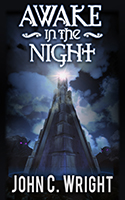
In other Castalia House news, we are days away from releasing John C. Wright’s AWAKE IN THE NIGHT LAND and weeks away from releasing Stickwick’s ASTRONOMY AND ASTROPHYSICS curriculum, which is receiving rave reviews from the early reviewers. The latter will be available in PDF through Smashwords since EPUB/Kindle simply isn’t a viable format in this particular case.
UPDATE: Like David Hasselhoff, we are ein Bombenerfolg in Germany:
#1 in Kindle Store > Kindle eBooks > Literature & Fiction > Foreign Language Fiction > German #1 in Kindle Store > Kindle eBooks > Foreign Languages > German > Fantasy, Horror & Science Fiction
Amazon Bestseller-Rang: #16 Kostenfrei in Kindle-Shop Nr. 1 in Kindle-Shop > eBooks > Fantasy & Science Fiction > Science Fiction
Große Jungs weinen nicht ist eine Novelle des Militär-Sci-Fi-Autors Tom Kratman, der für „A Desert Called Peace“ und seine „Carrera“-Serie bekannt ist. Die Novelle folgt dem Leben eines Rathas, ein empfindungsfähiger Superpanzer der Zukunft, der pflichtbewusst die Schlachten der Menschen auf fremden Welten austrägt. Doch wird die Kreatur seinen Erschaffern noch immer dankbar sein, wenn sie ihr eigenes Gewissen entdeckt? Und wie lange gibt sich eine intelligente Kriegsmaschine, die mit Leichtigkeit eine Stadt dem Erdboden gleich machen kann, damit zufrieden, dem Menschen ein unterwürfiger Sklave zu sein?
Has there ever been a better marriage of Author Name and Translation Language than Tom Kratman and die Muttersprache? Ilona Meier has done a fine job translating Big Boys Don’t Cry into German and it was a pleasure to work with her. In a few hours, we’ll also be able to announce the availability of QUANTUM MORTIS Der programmierte Verstand, which was translated into German by the fortuitously named Dr. G, (seriously), who will also be translating John C. Wright’s forthcoming AWAKE IN THE NIGHT LAND.
Plötzlich findet sich die Größere Terranische Herrschaft in einer historischen Krise, als der Raumkreuzer der Shiva-Klasse ATSV Rigel während einer Routinepatrouille durch den Kantillon-Sektor verlorengeht. Zum Glück für das große sternenumfassende Terranische Imperium ist die Topgeheimdienstagentin des Herrschaftlichen Geheimdienst-Direktorats, Daniela York, mit von der Partie. Wird sie jedoch in der Lage sein, die tödliche Verschwörung, die von den gewissenlosen Attentätern des Hauses Dai Zhans eingefädelt wurde, im Schatten des drohenden galaktischen Krieges zu durchdringen, ganz besonders, nachdem das Direktorat herausfand, dass wahrscheinlich auch noch die Cyborgs der Integration Mensch-Maschine beteiligt sind?
In other Castalia House-related news, the well-known Pulp Writer, Jonathan Moeller, has reviewed my recently published story collection, THE ALTAR OF HATE. He writes in his review:
There are some weaker stories in the collection, and oddly enough they are mostly in the front half, like the banquet master of Cana serving the poorer vintages before the choice wines. That said, there were some excellent and interesting stories in the collection, which we’ll examine now:
-“The Lesser Evil” is an interesting combination of historical fiction and time-traveling sorcery. An evil wizard travels back in time to use the dark power released by one of the great slaughters of history (specifically, Genghis Khan’s conquests) to fuel his power, and an organization of good wizards travels back to stop him. The interaction of the wizards with the historical figures was interesting, as was the eventual resolution and twist at the end….
-“The Logfile” was the standout story of the collection, charting an artificial intelligence’s slow descent into madness. The AI wants to be helpful and efficient, and starts testing new ways to become even more helpful and efficient. Then it flies off the rails. Bad things ensue, as the AI logically and meticulously reasons itself out of morality entirely.
Read the whole review there, and if you’re a writer, don’t forget to click on the link to his Iron Laws of Storytelling. Or, if you are the sort of individual who finds either a) statistical probability or b) Candy Crush to be amusing, you could simply entertain yourself by playing Kratman Bingo, and seeing how often the covers for all three Kratman editions appear simultaneously on the blog.
Today Castalia House published my collection of short stories entitled THE ALTAR OF HATE. It consists of one novella, one poem, and eight short stories. Some of the stories will be familiar to longtime Dread Ilk, having been originally available on my old Eternal Warriors web site back in the day or published in Stupefying Stories. As the collection is dedicated to Bane, who would have enjoyed its dark and occasionally sinister bent, it contains the poem that is here on this site, “Bane Walks On”. And there is a new story, one with which I am particularly pleased, that involves the application of a particular Maupassant mechanism to the futuristic world of Quantum Mortis.
The cover illustration was created by our newest artist, Jeremiah, who did an excellent job working under the direction of JartStar. The title story was inspired by a visit to Venice some years ago; I very much doubt any writer can visit that eerie, decaying city without feeling the proddings of a brooding, water-logged muse. I very much like the cover art, as in addition to the Venetian theme it reminds me a little of the paperback edition of Mona Lisa Overdrive, an image that Psykosonik once used as the cover of our demo tape.
From the initial reviews:
“Each story has its appeal across multiple genres, although to me the story from which the title is derived was particularly moving.”
“From an eldritch tale blended with computer insider humor, an ode to a fallen friend, to science fiction with a twist, this is a good collection of Vox’s shorter writings to date.”
“The stories move along, but one feels the uneasy eyes of the abyss staring back as you progress, as it were, through a darkened ancient forest. Only an author of the first rank could achieve this.”
In other Castalia news, fans of Tom’s Rathaverse will be pleased to note this comment to a reviewer hoping for a sequel: “Look for The Court-Martial of Ratha Flower Wood, maybe before Christmas.”
Speaking of matters Italian, this seems a good time to mention that thanks to the collaboration between Castalia House’s bestselling author and Signore Bonello, the Rathaverse has been unleashed upon an unsuspecting Italian market. I RAGAZZI NON PIANGONO by Tom Kratman is now available on Amazon. I can personally attest that the translation does justice to the original text even if the translation of the title is not quite literal. A more accurate translation would have been I GRANDI RAGAZZI NON PIANGONO or perhaps QUESTI RAGAZZONI NON PIANGERANNO, but in the interest of actually fitting the title on the cover, we modified that to the Italian equivalent of “The Boys Don’t Cry”.
Descrizione: I RAGAZZI NON PIANGONO è un romanzo breve dell’autore di fantascienza militare Tom Kratman, famoso per Un deserto chiamato pace e per la sua serie Carrera. La trama segue il ciclo di vita di un Ratha, un super carro armato senziente del futuro, che combatte con senso del dovere le battaglie dell’Uomo in decine di mondi alieni. La creatura saprà però ancora grata ai suoi creatori una volta che scoprirà di avere una coscienza? E per quanto tempo una macchina da guerra intelligente con potenza di fuoco sufficiente per radere al suolo una città sarà soddisfatta di rimanere uno schiavo obbediente?
One mildly amusing translation note: because Italians don’t have the letters “J” or “H” in their names, I took the liberty of changing the names of the Ratha developers to Italian names like “Giovanni” and “Loredana”. The translator objected to this on the basis of Italians being familiar with English names in their science fiction, and more importantly, because he felt the behavior of the characters was much more English than properly Italian.
I resisted the urge to ask if this was because the characters concerned were actually doing their jobs rather than sitting around drinking espresso, smoking cigarettes and reading La Gazzetta dello Sport and Chi; it turned out that he felt the problem was that no Italian superior would ever refer to a female employee by her first name unless he was romantically involved with her. And while there was a mild suggestion of this in the English text, he felt that it was the wrong way to go. So, we stuck with the English names.
Anche, stiamo cercando per ancora cinque lettori italiani per rivedere questo libro nuovo, quindi, se parle italiano e vuole leggerlo, spedirmi un email, per favore.
The German translation, GROßE JUNGS WEINEN NICHT will follow within a week or so. And on Monday, Castalia will announce a new release.
UPDATE: Apparently Italians are massive Tom Kratman fans. He’s already number one in fantascienza: #1 in Kindle Store > Kindle eBooks > Foreign Languages > Italian > Fantasy, Horror & Science Fiction
Castalia House has been receiving an increasing number of submissions, so I didn’t think anything of it when Rolf Nelson sent me a copy of The Stars Came Back. He said that it had been self-published for several months, which wasn’t necessarily a problem, (although we tend to favor unpublished submissions), and provided a link to the Amazon site as well. I had a quick look at the book, as is my custom before deciding to which of our ten crack Readers I would send it; the First Line of Defense is fairly ruthless in their rejections of anything they believe does not fit the model. And my first thought was “what the hell is this?” This was apparently not the first time such a thought had been inspired by the book, for as it turned out, as all three Readers immediately came back to me expressing precisely the same sentiment before they’d really even started it.
One Reader threw up his hands and said he simply couldn’t deal with the script-style format. Another one read it and said that he loved the story and would recommend acceptance if it was rewritten in conventional format. The third, and I quote, said: “this story is like gold” and urged immediate acceptance as is.
Well, that’s tremendously helpful…. But it did indicate a closer look into the matter. So I went to Amazon to read through the… 55+ customer reviews? Tom Kratman’s Big Boys Don’t Cry has been selling very well and has only 31 reviews to date. Then I had the chance to read a bit more myself and the reason for the number of reviews began to make sense. Let’s just say that if Firefly still holds a warm place in your heart, you will very much enjoy Mr. Nelson’s work. Not that it is an imitation; it is not. But it hits a similar set of chords, only in a more intelligent manner.
Then it struck me: if so many people were enthusiastically reading this book despite its unusual format and a cover that tended to suggest “this book is self-published”, then we were obviously looking at a considerable story-telling talent. And at the end of the day, that is exactly what Castalia House wants in its novelists. So, I promptly called Mr. Nelson and offered him a contract, which he signed after consultation with his lawyer. As I mentioned in a previous post on Brad Torgersen’s paean to Baen, we look at Baen as an admirable model to follow and we are as interested in helping talented new authors like Mr. Nelson develop their talent as we are in publishing established authors like Mr. John C. Wright, who are already at the top of both their game and the SF genre.
Wow. It took about 5 pages to get used to the screenplay format. After that, the format really added to the mental images that the dialogue creates. The story is fast paced and physics used are consistent. By that I mean the physical laws the author imagines work the same way each time. That consistency definitely helps the storyline. Several of the other raters compare this to works by John Ringo, I would agree and probably add Larry Correia as well. Not only is The Stars Came Back enjoyable it is also thought provoking.
Without a doubt, the best read I have had in many a month – and I average four novels per week. I was deeply engrossed in this novel and was presently surprised by the content, the plot, and the editing.
The plot in this tale doesn’t just thicken, it twists through about seven different dimensions, but maintains a most compelling theme. In this imagined world, the attributes of humans that lead to the most success are exactly as one would hope would work in OUR world – honesty, independence, perseverance, reliability, morality. The protagonist isn’t a perfect person, and knows it, but strives to do right by those whose lives he touches, and to avoid having wrong done to him.
I can’t say enough good things about this story. Excellent plot; interesting, plausible characters; great pacing and storyline development; and just fistfuls of nods to Star Wars, Star Trek, Firefly/Serenity, the Bolo series (and Hammer’s Slammers), Lovecraft mythos (kind of tangentially, but still there), The Forever War, and probably several other fictional sci-fi universes as well.
The Stars Came Back is a good foray into the literary world. Lots of shades of Heinlein and Weber, and a dose of Firefly mixed with McCaffrey’s The Ship That Sang.
So, I would encourage you to pick up a copy and see for yourself why we were so enthusiastic about Mr. Nelson’s first book. It is only $3.99 for 589 pages of pure science fiction entertainment.
Castalia had already announced that we would be publishing John C. Wright’s collection of essays, TRANSHUMAN AND SUBHUMAN: Essays on Science Fiction and Awful Truth, which will be published in April. Today we are absolutely delighted to be able to say that we will also be publishing AWAKE IN THE NIGHT LAND, a collection of four novellas set in the Night Land of William Hope Hodgson.
AWAKE IN THE NIGHT LAND is the first of five novels and novellas written by Mr. Wright to be published by Castalia House. It clocks in at 116,500 words and will be priced at $4.99. We will release the English ebook later this month; the German translation is already underway with an anticipated July release. We also expect to publish a hardcover version this summer.
Apologies to those waiting for THE ALTAR OF HATE, but we are delaying it until April in favor of Mr. Wright’s book. It will be sent to the pre-release reviewers in a few weeks.
Speaking as a reader and as a fan, I can say that the Night Land novellas are spectacular. They combine the intelligence and gigantic scale of Iain M. Banks with the eldritch forboding of H.P. Lovecraft, but with a humane soul that is alien to either of the two late authors.
An anonymous author writes with an inquiry about the two primary publishing alternatives:
I’ve been following your posts about Castalia House with interest. In the comments to ‘A model comparison’ you mention the advantages of an author publishing through CH are “Awareness, editing, covers, endorsement, and not having to deal with all the business BS. Self-publishing will not suit at least 75 percent of authors.” I’m looking to publish three books later this year that would be nearly impossible to sell to traditional publishers, so even if I was okay with tradpub royalty arrangements, independent and self-publishing are my only real options. Given that, I’d be interested in reading a more detailed post on what one gains and loses with the different models, if you have the time and inclination to write it.
This is the right time to ask that question. But before we look at the advantages of publishing with us, let’s look at the three chief advantages of self-publishing, which are genuine and material.
Keep all the royalty revenues. Amazon takes 30 percent plus a very small delivery fee that usually amounts to about 1.2 percent, so the self-publisher can realistically expect to make 68.5 percent of list on ebooks. That is twice what our novelists make on our standard agreement, (we offer 50 percent on all hardcovers and ebooks, which works out to 34.5 percent of list), and nearly three times what most writers will make from the independent publishers that offer 35 percent. For the sake of reference, it’s also 8.5625x what the traditional publishers pay on hardcovers. (Hardcovers are different; I will break down those numbers in a future post.)
Complete control. The author can decide on his own cover, make his own editorial decisions, price the book as he sees fit, and publish the book according to his own schedule.
Complete information. The author has direct access to the sales data.
Those three things are not nothing. I have nothing but respect for those who go the self-publishing route. That being said, I am certain that it is not the best route for the majority of writers who are good enough to interest independent publishers for the following eight reasons laid out at Castalia House.
There is no question that self-publishing is the optimal financial deal for those equipped to handle it. However, most writers are not equipped to properly handle it either materially or emotionally, observably tend to compromise on the production values in order to reduce their production costs, and will end up selling fewer copies than the breakeven point with independent publishing.
I fully support self-publishing. I think it is revolutionary and an unmitigated Good Thing. But I am aware that most authors, like me, would prefer to focus on writing rather than being distracted by running a publishing business. I chose to publish with Marcher Lord rather than self-publish and I would still happily be doing so if Marcher Lord had not been purchased. So, as a consequence, Castalia House has been set up to be the most author-friendly independent publisher that this author believes it is possible for a publishing house to be.
But there is no need to take my word for it. I recommend talking to our authors and asking them about their experience working with us. I believe you will find they do not regret their decisions to do so. One agent asked me how an author could possibly know his sales numbers when we were not contractually obligated to disclose them for a period of several months. He was a little surprised when I pointed out that the contract was our minimal obligation and it happens to suit us to periodically exceed that obligation so that our authors can know exactly how well their books are doing, and to know when they exceed certain objectives.
Three things. First of all, I’d like to find ten volunteers who would like to review my forthcoming short story collection: The Altar of Hate. It’s a 40k-word collection that consists of 10 shorts, including stories from the old EW site, the two stories published in Stupefying Stories, and a new story that is a Maupassant-flavored one set in the QM universe. The collection will be published later this month. If interested, email me with ALTAR in the subject. [We have the 10 volunteers, thanks.]
Second, and more important, I’d like to hear from five homeschooling mothers who would be willing to beta test our forthcoming Astronomy curricula. [We’re good on the beta testers too, thanks to all who volunteered. Expect the files in about a month or so.] We sent it to one Very Important homeschooling figure, who informed us that we had “put together a top-notch astronomy curriculum”, liked how we “start out with the basics like algebra and metrics”, and recommended that we “emphasize the large amount of hands-on lab work” involved.
We also have other curricula in the works, including Newtonian Physics and Economics. We hope to publish two of them before the start of school this fall, but we will definitely get the Astronomy curriculum out this summer, so keep it in mind as you are putting together your plans for the next school year. We plan to price the curricula at $49.99 in ebook form. If you’re interested, please email me with ASTRONOMY in the subject.
And finally, there are no shortage of History curricula available, but I’d like to find someone with either a PhD in a relevant subject or O5+ rank to help me put together a high-quality Military History curriculum. [And we’re good here too, thank you.]
Fresh on the heels of Castalia House’s release of Mr. Kratman’s latest military science fiction, another author joins the esoteric elite:
We are very pleased to announce that we will be publishing a select collection of John C. Wright’s insightful essays, entitled TRANSHUMAN AND SUBHUMAN: Essays on Science Fiction and Awful Truth, later this spring. Mr. Wright was a finalist for the 2005 Nebula Award for Best Novel and was described by Publisher’s Weekly as “this fledgling century’s most important new SF talent”.
Look for more announcements to come soon. We welcome submissions and have already found one new author with whom we intend to work in the future, so even if you’re an SFWA member, feel free to submit your work to us.