Last Day for Based Books

Last day to get some of the two hundred fifty books in the 2025 Summer Based Book Sale for $0.99 or free!

I think Midnight’s War fans will be very pleased to know that the sequel to OUT OF THE SHADOWS is already underway and A MERCILESS NIGHT will be published a) after SIGMA GAME is published and b) much sooner than you would ever expect from the author who took seven years to write the sequel to A THRONE OF BONES.

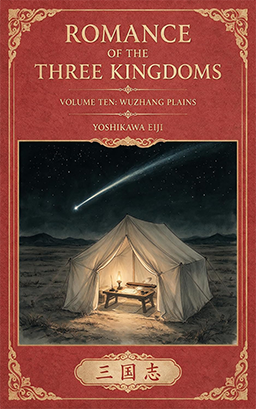
In fact, I’ve already got the covers for book 2 and book 3 done, and it is only with an iron will that might be envied by Lorenzo di Piero de’ Medici himself that I refrain from sharing them with you. But I can assure, they are, in a word, magnificent.

Also, if anyone has typos or errata for OUT OF THE SHADOWS, please send me a text file with them ASAP. We’d like to start getting the print editions together. We’ll also be sure to get the ebook out to the remaining Signed First Edition backers this week.

From OUT OF THE SHADOWS:

October 31st, 3:45 PM PST

Elliott stood before the wall of monitors in HemaTech’s windowless executive conference room, watching the final confirmations stream in from distribution centers around the globe…

“Mr. Grahame?” Natalie’s voice pulled him from his calculations. “David Porter is here.”

Elliott turned to see The Wall Street Journal reporter standing in the doorway, looking considerably sharper than he had three months ago. The success of his HemaTech exposé had elevated him to journalism’s highest tier—a Pulitzer nomination, a book deal, and frequent television appearances on multiple cable networks. The man who’d uncovered the life-extension breakthrough of the century now wore an expensive suit and carried himself with a new degree of confidence.

“David,” Elliott said, gesturing to a chair facing the largest monitor. “Thank you for coming.”

“After what the first story on HemaTech did for me? I’d have flown to Antarctica if you’d asked.” Porter sat, pulling out his phone with practiced ease. “Lorenzo told me there would be another story, something even bigger. I have to admit, I can’t imagine what could possibly be bigger than the life extension you’ve already announced.”

“You’re about to find out,” Elliott said, glancing at his watch again. “In approximately thirteen minutes.”

Porter leaned forward, intrigued. “That sounds unusually specific.”

“Very specific indeed.” Elliott moved to the monitor controls, bringing up a feed from the BBC. The regular programming continued, oblivious to what was coming. “You’ll recall that three months ago, I gave you the initial story about HemaTech’s breakthrough. Tonight, you’re going to learn exactly why we turned down Blackrock and the IPO.”

“I thought it was about profit and control of the technology,” Porter said. “What we turned up—”

“Your investigation was entirely accurate, insofar as it went,” Elliott interrupted. “But it was rather like describing an iceberg based on what can be seen above the water. The real story, the larger purpose that HemaTech now serves, is about to come to light.”

Natalie moved silently around the room, dimming lights and activating additional monitors. Each screen showed a different news channel from around the world—CNN, Al Jazeera, NHK, Deutsche Welle. All continuing their regular programming, their anchors unaware that their teleprompters would soon display words that would shatter human civilization’s most fundamental assumptions.

“You’re making me downright nervous, Elliott,” Porter said, though his tone carried more excitement than anxiety. “The last time someone promised me the story of the century, it turned out to be exactly that.”

“You should be. This isn’t the story of the century,” Elliott said quietly. “It’s the story of the last several millennia. And of the centuries to come.”

The clock on the wall read 11:52 PM Greenwich Mean Time. Eight minutes.

DISCUSS ON SG


Vol. 3: Hector and Ajax

FYI: we’re rapidly approaching the last few hours of the Thanksgiving Junior Classics sale. The sets will still be available going forward at the following links, and via Amazon, Barnes & Noble, and other booksellers, but the price will be the retail price $349.99 instead of the sale price of $249.99

And remember, if you’re having any trouble ordering from Arkhaven, please don’t hesitate to use NDM Express. They’re two entirely different systems, so if one doesn’t work, the other usually will.

HECTOR AND AJAX, from Tales of Greece and Rome

The Greeks went forward to the battle, as the waves that curl themselves and then dash upon the shore, throwing high the foam. In order they went after their chiefs; you had thought them dumb, so silent were they. But the Trojans were like a flock of ewes which wait to be milked, and bleat hearing the voice of their lambs, so confused a cry went out from their army, for there were men of many tongues gathered together. And on either side the gods urged them on, but chiefly Minerva the Greeks and Mars the sons of Troy. Then, as two streams in flood meet in some chasm, so the armies dashed together, shield on shield and spear on spear.

Now when Minerva saw that the Greeks were perishing by the hand of Hector and his companions, it grieved her sore. So she came down from the heights of Olympus, if happily she might help them. And Apollo met her and said, “Art thou come, Minerva, to help the Greeks whom thou lovest? Well, let us stay the battle for this day; hereafter they shall fight till the doom of Troy be accomplished.”

But Minerva answered, “How shall we stay it?”

And Apollo said, “We will set on Hector to challenge the bravest of the Greeks to fight with him, man to man.”

So they two put the matter into the mind of Helenus the seer. Then Helenus went near to Hector, “Listen to me, for I am thy brother. Cause the rest of the sons of Troy and of the Greeks to sit down, and do thou challenge the bravest of the Greeks to fight with thee, man to man. And be sure thou shalt not fall in the battle, for the will of the immortal gods is so.”

Then Hector greatly rejoiced, and passed to the front of the army, holding his spear by the middle, and kept back the sons of Troy, and King Agamemnon did likewise with his own people. Then Hector spake:

“Hear me, sons of Troy, and ye men of Greece. The covenant that we made one with another hath been broken, for Jupiter would have it so, purposing evil to both, till either you shall take our high-walled city or we shall conquer you by your ships. But let one of you who call yourselves champions of the Greeks come forth and fight with me, man to man. And let it be so that if he vanquish me he shall spoil me of my arms but give my body to my people, that they may burn it with fire, and if I vanquish him, I will spoil him of his arms but give his body to the Greeks, that they may bury him and raise a great mound above him by the broad salt river of Hellespont. And so men of after days shall see it, sailing by, and say, `This is the tomb of the bravest of the Greeks, whom Hector slew.’ So shall my name live forever.”

But all the Greeks kept silence, fearing to meet him in battle, but shamed to hold back. Then at last Menelaus leapt forward and spake, “Surely now ye are women and not men. Foul shame it were should there be no man to stand up against this Hector. Lo! I will fight with him my own self, for the issues of battle are with the immortal gods.”

So he spake in his rage rashly, courting death, for Hector was much stronger than he. Then King Agamemnon answered, “Nay, but this is folly, my brother. Seek not in thy anger to fight with one that is stronger than thou; for as for this Hector, even Achilles was loth to meet him. Sit thou down among thy comrades, and the Greeks will find some champion who shall fight with him.”

And Menelaus hearkened to his brother’s words, and sat down. Then Nestor rose in the midst and said, “Woe is me today for Greece! How would the old Peleus grieve to hear such a tale! Well I remember how he rejoiced when I told him of the house and lineage of all chieftains of the Greeks, and now he would hear that they cower before Hector, and are sore afraid when he calls them to the battle. Surely he would pray this day that he might die! O that I were such as I was in the old days, when the men of Pylos fought with the Arcadians! I, who was the youngest of all, stood forth, and Minerva gave me glory that day, for I slew their leader, though he was the strongest and tallest among the sons of men. Would that I were such today! Right soon would I meet this mighty Hector.”

Then rose up nine chiefs of fame. First of all, King Agamemnon, lord of many nations, and next to him Diomed, and Ajax the Greater and Ajax the Less, and then Idomeneus and Meriones, and Eurypylus, and Thoas, son of Andraemon, and the wise Ulysses.

Then Nestor said, “Let us cast lots who shall do battle with the mighty Hector.”

So they threw the lots into the helmet of King Agamemnon, a lot for each. And the people prayed, “Grant, ye gods, that the lot of Ajax the Greater may leap forth, or the lot of Diomed, or the lot of King Agamemnon.”

Then Nestor shook the lots in the helmet, and the one which they most wished leapt forth. For the herald took it through the ranks and showed it to the chiefs, but none knew it for his own till he came to where Ajax the Greater stood among his comrades. But Ajax had marked it with his mark, and put forth his hand for it, and claimed it, right glad at heart. On the ground by his feet he threw it, and said:

“Mine is the lot, my friends, and right glad I am, for I think that I shall prevail over the mighty Hector, but come, let me don my arms, and pray ye to Jupiter, but silently, lest the Trojans hear, or aloud, if ye will, for no fear have we. Not by force or craft shall any one vanquish me, for not such are the men whom Salamis breeds.”

So he armed himself and moved forwards, smiling with grim face. With mighty strides he came, brandishing his long-shafted spear. The Greeks were glad to behold him, but the knees of the Trojans were loosened with fear and great Hector’s heart beat fast, but he trembled not, nor gave place, seeing that he had himself called him to battle. So Ajax came near, holding before the great shield, like a wall, which Tychius, best of craftsmen, had made for him. Seven folds of bull’s hide it had, and an eighth of bronze. Threateningly he spake:

“Now shalt thou know, Hector, what manner of men there are yet among our chiefs, though Achilles the lion-hearted is far away, sitting idly in his tent, in great wrath with King Agamemnon. Do thou, then, begin the battle.”

“Speak not to me, Jupiter-descended Ajax,” said Hector, “as though I were a woman or a child knowing nothing of war. Well I know all the arts of battle, to ply my shield this way and that, to guide my car through the tumult of steeds, and to stand fighting hand to hand. But I would not smite so stout a foe by stealth, but openly.”

As he spake he hurled his long-shafted spear, and smote the great shield on the rim of the eighth fold, that was of bronze. Through six folds it passed, but in the seventh it was stayed. Then Ajax hurled his spear, striking Hector’s shield. Through shield it passed and corslet, and cut the tunic close against the loin, but Hector shrank away and escaped the doom of death. Then, each with a fresh spear, they rushed together like lions or wild boars of the wood.

First Hector smote the middle of the shield of Ajax, but pierced it not, for the spear-point was bent back; then Ajax, with a great bound, drove his spear at Hector’s shield and pierced it, forcing him back, and grazing his neck so that the blood welled out. Yet did not Hector cease from the combat. He caught up a great stone from the ground, and hurled it at the boss of the sevenfold shield. Loud rang the bronze, but the shield broke not. Then Ajax took a stone heavier by far, and threw it with all his might. It broke the shield of Hector, and bore him backwards, so that he fell at length with his shield above him. But Apollo raised him up. Then did both draw their swords, but ere they could join in close battle the heralds came and held their scepters between them, and Idaeus, the herald of Troy, spake.

“Fight no more, my sons; Jupiter loves you both, and ye are both mighty warriors. That we all know right well. But now the night bids you cease, and it is well to heed its bidding.”

Then said Ajax, “Nay, Idaeus, but it is for Hector to speak, for he called the bravest of the Greeks to battle. And as he wills it, so will I.”

And Hector said, “O Ajax, the gods have given thee stature and strength and skill, nor is there any better warrior among the Greeks. Let us cease then from the battle; we may yet meet again, till the gods give the victory to me or thee. And now let us give gifts the one to the other, so that Trojans and Greeks may say—Hector and Ajax met in fierce fight and parted in friendship.”

So Hector gave to Ajax a silver-studded sword with the scabbard and the sword-belt, and Ajax gave to Hector a buckler splendid with purple. So they parted. Right glad were the sons of Troy when they saw Hector returning safe. Glad also were the Greeks, as they led Ajax rejoicing in his victory to King Agamemnon. Whereupon the king called the chiefs to banquet together, and bade slay an ox of five years old, and Ajax he honored most of all. When the feast was ended Nestor said:

“It were well that we should cease awhile from war and burn the dead, for many, in truth, are fallen. And we will build a great wall and dig a trench about it, and we will make wide gates that a chariot may pass through, so that our ships may be safe, if the sons of Troy should press us hard.”

But the next morning came a herald from Troy to the chiefs as they sat in council by the ship of King Agamemnon, and said:

“This is the word of Priam and the men of Troy; Paris will give back all the treasures of the fair Helen, and many more besides, but the fair Helen herself he will not give. But if this please you not, grant us a truce, that we may bury our dead.”

Then Diomed spake, “Nay, we will not take the fair Helen’s self, for a man may know even though he be a fool, that the doom of Troy is come.”

And King Agamemnon said, “Herald, thou hast heard the word of the Greeks, but as for the truce, be it as you will.”

So the next day they burnt their dead, and the Greeks made a wall with gates and dug a trench about it. And when it was finished, even at sunset, they made ready a meal, and lo! There came ships from Lemnos bringing wine, and Greeks bought thereof, some with bronze, and some with iron, and some with shields of ox hide. All night they feasted right joyously. The sons of Troy also feasted in their city. But the dreadful thunder rolled through the night, for Jupiter was counselling evil against them.

DISCUSS ON SG


Vol 2: William Tell

To be honest, the tale from Myths & Legends that precedes this one is actually my favorite from the second volume of the Castalia Junior Classics. But since the story of King Robert of Sicily is too long to post here, we’ll go with this retelling of the central legend of the Confederation Helvetica instead, the inspiring tale of William Tell.

The sale on the complete ten-volume set, which amounts to a 29 percent discount, will continue until midnight tomorrow. And remember, if you’re having any trouble ordering from Arkhaven, please use NDM Express. They’re two entirely different systems, so if one doesn’t work, the other usually will.

Switzerland is a republic, like the United States, and the men who live among its mountains are a brave, free people. But long ago the Emperor of Austria claimed the land as a part of his empire, and sent a man named Gessler to rule the people in his stead.

Gessler was a tyrant. He wished to stand well with his master, the emperor, and he ruled the bold Swiss with a rod of iron. He had soldiers at his command, and he seemed able to do whatever he wished, but there was one thing he could not do: he could not make the proud people bow down to him when he came among them.

He was angry enough at this, and he cast about for some new way in which to make them feel his power. In those days, as now, every town had a public square called a market-place. Here the people flocked to buy and sell of each other. The men and women came down from the mountains with game and cheese and butter. They sold these things in the market, and bought goods which they could not make or grow in their mountain homes.

In the market-place of Altorf, a Swiss town, Gessler set up a tall pole, like a liberty pole. But on the top of this pole he placed his hat, and, just as in the city a gilt crown on some high point was the sign of the emperor’s power, so this hat was to be the sign of Gessler’s power. He bade that every Swiss man, woman, or child who passed by the pole should bow to the hat. In this way they were to show their respect for him.

From one of the mountain homes near Altorf there came into the market-place one day a tall, strong man named William Tell. He was a famous archer, for it was in the days before the mountaineers carried guns, and he was wont to shoot bears and wild goats and wolves with his bow and arrows.

He had with him his little son, and they walked across the market-place. But when they passed the pole, Tell never bent his head. He stood as straight as a mountain pine.

There were servants and spies of Gessler in the market-place, and they at once told the tyrant how Tell had defied him. Gessler commanded the Swiss to be brought before him, and he came, leading by the hand his little son.

“They tell me you shoot well,” said the tyrant. “You shall not be punished. Instead you shall give me a sign of your skill. Your boy is no doubt made of the same stuff you are. Let him stand yonder a hundred paces off. Place an apple on his head, and do you stand here and pierce the apple with an arrow from your quiver.”

All the people about turned pale with fear, and fathers who had their sons with them held them fast, as if Gessler meant to take them from them. But Tell looked Gessler full in the face, and drew two arrows from his quiver.

“Go yonder,” he said to the lad, and he saw him led away by two servants of Gessler, who paced a hundred steps, and then placed an apple on the boy’s head. They had some pity for Tell in their hearts, and so they had made the boy stand with his back to his father.

“Face this way,” rang out Tell’s clear voice, and the boy, quick to obey, turned and stood facing his father. He stood erect, his arms hanging straight by his side, his head held up, and the apple poised on it. He saw Tell string his bow, bend it, to try if it were true, fit the notch of the arrow into the taut cord, bring the bow slowly into place. He could see no more. He shut his eyes.

The next moment a great shout rose from the crowd. The arrow had split the apple in two and had sped beyond. The people were overjoyed, but Gessler said in a surly tone to Tell:

“You were not so very sure of your first shot. I saw you place a second arrow in your belt.”

“That was for thee, tyrant, had I missed my first shot,” said Tell.

“Seize him!” cried the enraged tyrant, and his soldiers rushed forward, but the people also threw themselves upon the soldiers, and Tell, now drawing his bow again, shot the tyrant through the heart, and in the confusion that followed, taking his boy by the hand, fled quickly to the lake near by, and, loosing a boat, rowed to the other shore, and so escaped to the mountain fastness.

DISCUSS ON SG


Vol. 1: Manabozho, the Mischief-Maker

As we’ve finally finished the last two volumes required to complete the set of the 10-volume Castalia Junior Classics, I thought I’d share my favorite work from each volume, starting today. One of the things that I found truly startling about the stories from the 1919 edition that did not survive to the 1958 edition that I grew up reading were the tales of the American Indians. They are a little harsher and more cruel than one might tend to expect of children’s tales, especially these days. And the historical difficulties that the rival Indian tribes faced in uniting to oppose the flood of settlers from Europe become a little easier to understand when one realizes that the Indians were perhaps a little too competitive with each other, as evidenced by the behavior of their cultural heroes.

Four of the five stories of the American Indians that we chose to include feature Manabozho, the Algonquin and Ojibwe trickster demigod who is a little more human than the better-known Coyote of the Lakota, the Navajo and the Sioux. What follows is just one of the 89 stories presented in Volume I: Fairy Tales & Fables.

In the tales of the American Indians, Manabozho, or more commonly Nanabozho, figures prominently in their storytelling, including the story of the world’s creation. Nanabozho is the Ojibwe trickster figure and culture hero. Nanabozho can take the shape of male or female animals or humans in storytelling. Most commonly it is an animal such as a raven or coyote which lives near the tribe and which is cunning enough to make capture difficult.

And remember, if you’re having any trouble ordering from Arkhaven, please use NDM Express. They’re two entirely different systems, so if one doesn’t work, the other usually will.

Manabozho, the Mischief-Maker

There was never in the whole world a more mischievous busybody than that notorious giant Manabozho. He was everywhere, in season and out of season, running about, and putting his hand in whatever was going forward.

To carry on his game he could take almost any shape he pleased. He could be very foolish or very wise, very weak or very strong, very rich or very poor—just as happened to suit his humor best. Whatever anyone else could do, he would attempt without a moment’s reflection. He was a match for any man he met, and there were few manitou that could get the better of him. By turns he would be very kind or very cruel, an animal or a bird, a man or a spirit, and yet, in spite of all these gifts, Manabozho was always getting himself involved in all sorts of troubles. More than once, in the course of his adventures, was this great maker of mischief driven to his wits’ ends to come off with his life.

To begin at the beginning, Manabozho, while yet a youngster, was living with his grandmother near the edge of a great prairie. It was on this prairie that he first saw animals and birds of every kind; he also there made first acquaintance with thunder and lightning. He would sit by the hour watching the clouds as they rolled by, musing on the shades of light and darkness as the day rose and fell.

For a stripling, Manabozho was uncommonly wide-awake. Every sight he beheld in the heavens was a subject of remark, every new animal or bird an object of deep interest, and every sound was like a new lesson which he was expected to learn. He often trembled at what he heard and saw.

The first sound he heard was that of the owl, at which he was greatly terrified, and, quickly descending the tree he had climbed, he ran with alarm to the lodge. “Noko! Noko! Grandmother!” he cried. “I have heard a monedo.”

She laughed at his fears, and asked him what kind of a noise it made. He answered. “It makes a noise like this: ko-ko-ko-ho!” His grandmother told him he was young and foolish; that what he heard was only a bird which derived its name from the peculiar noise it made.

He returned to the prairie and continued his watch. As he stood there looking at the clouds he thought to himself, “It is singular that I am so simple and my grandmother so wise; and that I have neither father nor mother. I have never heard a word about them. I must ask and find out.”

He went home and sat down, silent and dejected. Finding that this did not attract the notice of his grandmother, he began a loud lamentation, which he kept increasing, louder and louder, till it shook the lodge and nearly deafened the old grandmother.

“Manabozho, what is the matter with you?” she said. “You are making a great deal of noise.”

Manabozho started off again with his doleful hubbub, but succeeded in jerking out between his big sobs, “I haven’t got any father nor mother, I haven’t.”

Knowing that he was of a wicked and revengeful nature, his grandmother dreaded to tell him the story of his parentage, as she knew he would make trouble of it.

Manabozho renewed his cries and managed to throw out for a third or fourth time, his sorrowful lament that he was a poor unfortunate who had no parents or relatives.

At last she said to him, to quiet him, “Yes, you have a father and three brothers living. Your mother is dead. She was taken for a wife by your father, the West, without the consent of her parents. Your brothers are the North, East, and South; and being older than you your father has given them great power with the winds, according to their names. You are the youngest of his children. I have nursed you from your infancy, for your mother died when you were born.”

“I am glad my father is living,” said Manabozho, “I shall set out in the morning to visit him.”

His grandmother would have discouraged him, saying it was a long distance to the place where his father, Ningabinn, or the West, lived.

This information seemed rather to please than to discourage Manabozho, for by this time he had grown to such a size and strength that he had been compelled to leave the narrow shelter of his grandmother’s lodge and live out of doors. He was so tall that, if he had been so disposed, he could have snapped off the heads of the birds roosting on the topmost branches of the highest trees, as he stood up, without being at the trouble to climb. And if he had at any time taken a fancy to one of the same trees for a walking stick, he would have had no more to do than to pluck it up with his thumb and finger and strip down the leaves and twigs with the palm of his hand.

Bidding goodbye to his old grandmother, who pulled a very long face over his departure, Manabozho set out at a great pace, for he was able to stride from one side of a prairie to the other at a single step.

He found his father on a high mountain far in the west. His father espied his approach at a great distance, and bounded down the mountainside several miles to give him welcome. Apparently delighted with each other, they reached in two or three of their giant paces the lodge of the West which stood high up near the clouds.

They spent some days in talking with each other—for these two great persons did nothing on a small scale, and a whole day to deliver a single sentence, such was the immensity of their discourse, was quite an ordinary affair.

One evening Manabozho asked his father what he was most afraid of on earth.

He replied, “Nothing.”

“But is there nothing you dread here—nothing that would hurt you if you took too much of it? Come, tell me.”

Manabozho was very urgent, so at last his father said, “Yes, there is a black stone to be found a couple of hundred miles from here, over that way,” pointing as he spoke. “It is the only thing on earth I am afraid of, for if it should happen to hit me on any part of my body it would hurt me very much.” The West made this important circumstance known to Manabozho in the strictest confidence.

“Now you will not tell anyone, Manabozho, that the black stone is bad medicine for your father, will you?” he added. “You are a good son, and I know you will keep it to yourself. Now tell me, my darling boy, is there not something that you don’t like?”

Manabozho answered promptly, “Nothing.”

His father, who was of a steady and persevering nature, put the same question to him seventeen times, and each time Manabozho made the same answer, “Nothing.”

But the West insisted, “There must be something you are afraid of.”

“Well, I will tell you,” said Manabozho, “what it is.”

He made an effort to speak, but it seemed to be too much for him.

“Out with it,” said the West, fetching Manabozho such a blow on the back as shook the mountain with its echo.

“Je-ee, je-ee-it is,” said Manabozho, apparently in great pain. “Yes, yes! I cannot name it, I tremble so.”

The West told him to banish his fears, and to speak up; no one would hurt him. Manabozho began again, and he would have gone over the same make-believe of pain, had not his father, whose strength he knew was more than a match for his own, threatened to pitch him into a river about five miles off. At last he cried out, “Father, since you will know, it is the root of the bulrush.” He who could with perfect ease spin a sentence a whole day long, seemed to be exhausted by the effort of pronouncing that one word, “bulrush.”

Some time after Manabozho observed, “I will get some of the black rock, merely to see how it looks.”

“Well,” said the father, “I will also get a little of the bulrush root, to learn how it tastes.”

They were both double-dealing with each other, and in their hearts getting ready for some desperate work. They had no sooner separated for the evening than Manabozho was striding off the couple of hundred miles necessary to bring him to the place where the black rock was to be procured, while down the other side of the mountain hurried Ningabinn, the West.

At the break of day they each appeared at the great level on the mountaintop, Manabozho with twenty loads, at least, of the black stone, on one side, and on the other the West, with a whole meadow of bulrush in his arms.

Manabozho was the first to strike—hurling a great piece of the black rock, which struck the West directly between the eyes, and he returned the favor with a blow of bulrush that rung over the shoulders of Manabozho, far and wide, like the long lash of the lightning among the clouds.

First one and then the other, Manabozho poured in a tempest of black rock, while the West discharged a shower of bulrush. Blow upon blow, thwack upon thwack—they fought hand to hand until black rock and bulrush were all gone. Then they betook themselves to hurling crags at each other, cudgeling with huge oak trees, and defying each other from one mountain top to another; while at times they shot enormous boulders of granite across at each other’s heads, as though they had been mere jackstones. The battle, which had commenced on the mountains, had extended far west. The West was forced to give ground. Manabozho pressing on, drove him across rivers and mountains, ridges and lakes, till at last he got him to the very brink of the world.

“Hold!” cried the West. “My son, you know my power, and although I allow I am now fairly out of breath, it is impossible to kill me. Stop where you are, and I will also portion you out with as much power as your brothers. The four quarters of the globe are already occupied, but you can go and do a great deal of good to the people of the earth, which is beset with serpents, beasts and monsters, who make great havoc of human life. Go and do good, and if you put forth half the strength you have today, you will acquire a name that will last forever. When you have finished your work I will have a place provided for you. You will then go and sit with your brother, Kabinocca, in the north.”

Manabozho gave his father his hand upon this agreement. And parting from him, he returned to his own grounds, where he lay for some time sore of his wounds.

DISCUSS ON SG


DEATH AND THE DEVIL hardcover

The hardcover edition of DEATH AND THE DEVIL is now available at Amazonat Barnes and Noble, and your local bookstore. I also turned one of the stories, “Death and the Maiden”, into a song that you can listen to at AI Central if it happens to be of interest to you.

WHEN THE MAIDEN MEETS THE REAPER

Beneath Avignon’s ancient stones where mortals drink and dance,
A maiden stood inside of time, well-suited for romance
She glimpsed beyond the darkest veil where certainty takes form
The reaper in his fearsome grace, his presence strangely warm.
While others feared the final dark, she met his eyeless gaze,
And smiled upon that paradox: the end of numbered days.

Time and again, Death returned though duty didn’t call,
Compelled by something strange to gods both great and small
An immortal incarnation beyond mortality
She questioned him with humble words: “What troubles such as thee?”
No fear adorned her countenance, no reverence, no prayer—
Just a woman’s heart with a capacity to care

What strange communion finds the heart that sees its own eclipse?
What bride would seek eternity upon those bony lips?
The universe conspires in Creation’s cruel design
When the maiden meets the reaper, the last of the summer wine

DISCUSS ON SG


DEATH AND THE DARWINIAN

You know a book is good if your wife keeps asking what you’re laughing at. The answer was this book. It is funny, it is really funny. And the ending will leave a tear in your eye.

“What’s so funny there?”
she whispers through the lamplight
as he grins and reads

You’ll understand the haiku if you read the book.

A review of DEATH AND THE DEVIL.

DEATH AND THE DARWINIAN

It is a well-established fact across most of the known multiverse that death is, generally speaking, the end of life. This is the sort of obvious statement that most beings understand intuitively, in the same way they understand that water is wet or that the likelihood of autocorrect humiliating you increases exponentially with the importance of the message being sent.

What is rather less well-established is what happens immediately after death, in that awkward period between the cessation of biological functions and whatever comes next. This is primarily because most beings who experience death are, by definition, no longer in a position to write detailed reports about it, and those who claim to have had “near-death experiences” typically experience something more akin to “near-near-death” or “death-adjacent” moments, which is rather like claiming to be an expert on the history of Paris because your plane once flew over the south of France.

Dr. Mortimer Finch, professor of evolutionary biology at the prestigious University of West Anglia, had spent his entire fifty-seven-year academic career insisting that death was merely the natural conclusion of a biological process, a physical event no more spiritually significant than the shedding of a snake skin or the molting of an upwardly mobile crab. The universe, Dr. Finch maintained, was a magnificent accident—an unplanned, undirected series of chemical and physical processes that, through billions of years of trial and error, had produced everything from slime molds to symphony orchestras.

This conviction had served him well throughout his distinguished career, earning him numerous academic accolades, a comfortable tenure, and the quiet disdain of the university’s theology department, whose offices were, perhaps not coincidentally, located in the building on the opposite side of the campus.

It was therefore somewhat disconcerting for Dr. Finch to one day find himself face-to-face with Death.

Not with the abstract concept of death about which he had lectured about so confidently to generations of undergraduates. Not with the cessation of metabolic functions, the breakdown of cellular integrity, and the dispersal of organized energy into entropy. No, this was Death with a capital D, complete with a flowing black robe, a gleaming scythe, and a skull that somehow managed to express mild interest despite having no facial muscles whatsoever.

“This is obviously a hallucination,” Dr. Finch declared, adjusting his spectacles out of habit, despite the fact that they were now as spectral as the rest of him. “A final neurochemical discharge as my brain shuts down. Quite fascinating, really.”

Death regarded him with eye sockets that contained tiny silver points of light where eyes might have been expected.

I AM NOT A HALLUCINATION, Death said in a voice that wasn’t so much heard as felt, as if it was the final note of a funeral dirge played on the bones of the universe.

“That’s exactly what a hallucination would say,” Dr. Finch replied with the confident tone of a man who had won numerous academic debates through sheer force of authoritative pronunciation. “My brain, in its oxygen-deprived state, is creating a culturally recognizable figure to help process the fact that I’m dying. You’re a psychological construct, nothing more.”

Death sighed, a sound like a desert wind whistling through ancient tombs. Dr. Finch’s reaction was not an uncommon one. Humans, in particular, had a remarkable capacity for maintaining a state of denial even in the face of overwhelming evidence. It was one of their most distinctive traits, ranking just behind opposable thumbs and just ahead of their inexplicable insistence on keeping pets that were either venomous, temperamental, or both.

YOU ARE ALREADY DEAD, Death clarified, pointing a bony finger at Dr. Finch’s body, which was currently cooling on the laboratory floor beside an overturned stool and a half-eaten tuna sandwich. YOUR HEART STOPPED SEVENTEEN SECONDS AGO. CEREBRAL ACTIVITY CEASED FOURTEEN SECONDS AGO. YOU ARE NOT HALLUCINATING. YOU ARE, BY EVERY SCIENTIFIC DEFINITION, DECEASED.

Dr. Finch glanced at his body with mild interest, as if observing a moderately engaging museum exhibit.

“Cardiac arrest, by the look of it. I always suspected it would be the heart. Too many late nights in the lab, too much caffeine.” He turned back to Death. “But this conversation is still taking place inside my dying mind. I’m talking to myself. This is some sort of complex psychological self-delusion, probably the result of seeing my mother in the bathtub when I was five years old or something like that.”

Death’s patience, which had been cultivated over eons of existence, began to show its first microscopic signs of wear.

DISCUSS ON SG


On Satire and the Understanding Thereof

As a general rule, a person too stupid to understand satire shouldn’t try to use it as an affirmative defense.
—John Scalzi, July 20, 2013

Now, obviously I understand satire, and one would have thought the satirical nature of my response to McRapey’s hilarious ode to rape was sufficient evidence of that. But since I am never one to forgo the beating of dead horses, even the unnecessary beatings of equines long since deceased, allow me to present further evidence, conclusive evidence, of my grasp of the art of satire.

As you can see, I do not merely grasp the art of satire, I am observably a best-selling satirist, right up there with Juvenal and, apparently, someone by the name of Freida McFadden who would appear to sell a lot more books than me, Juvenal, and John Scalzi combined.

However, DEATH AND THE DEVIL isn’t just satire. It’s also litricha, as is demonstrated by the appearance of my name in between literary immortals Salman Rushdie on the one hand and the late David Foster Wallace on the other in the Literary Short Stories category.

So, if anyone needs me, I’ll just be here in my library, wearing a velvet robe, smoking a pipe, and contemplating my next public pontification for the semi-literate masses. Although, deep in my contemplations, a terrible thought struck me. What if the rightful heir to Terry Pratchett’s SF humorist throne is not, as some have suggested, Jasper Fford, but rather, Vox Day?

Or, as is more precisely the case, Vox Dai?

Let the wailing and gnashing of teeth begin.

DISCUSS ON SG


DEATH AND THE DEVIL

My latest book is now available on Amazon Kindle and also via Kindle Unlimited.

A brilliantly dark and witty collection that reimagines cosmic forces with heart, humor, and humanity.

What happens when Death decides to take up haiku? When the Devil’s carefully laid plans go awry? When the Incarnation of War discovers that the only thing worse than war is when the dead don’t die?

In this delightfully inventive collection of short stories about Death, ancient cosmic entities find themselves navigating the absurdities of existence with the same confusion, determination, and occasional incompetence as the mortals they oversee. From poetry workshops to World War II, from speed dating disasters to bureaucratic nightmares that span millennia, these stories blend philosophical depth with unexpected humor.

Written in the tradition of Ingmar Bergman and Terry Pratchett, Death and the Devil offers a fresh and deeply human take on the forces we fear most. Each story is a clever exploration of mortality, duty, and identity as well as a genuinely touching reminder that even in a universe governed by cosmic constants, there’s always room for compassion, love, and the occasional well-crafted haiku.

Witty. Profound. Unexpectedly moving.

Perfect for readers who appreciate smart, character-driven fantasy that doesn’t shy away from life’s big questions—or death’s smaller ones.

The first review has already been posted:

This is a remarkable set of short stories, assembled with AI support, which include amusing, horrifying, and intriguing variations on Death – more exactly, how Death as a force of Nature might comport itself with beings both mortal and supernatural. Highly recommended for fans of macabre short stories, Pratchett, and Douglas Adams.

The style began in the mode of Terry Pratchett, but extended into darker and more startling situations. Death and his pet cat (that is a premise worthy of its own tale) must address problems with eternal bureaucracy and customer service. Several tales explore the ghastly humor of those who either try to cheat Death or are simply too obtuse to understand that Time Is Up. Particularly amusing were stories where other eternal presences encouraging Death to take up a hobby. Consider Death taking on a gig in stand-up comedy and learning to tell jokes. One favorite was Death undertaking to write poetry; in his case, disrupting a class on writing haiku, by reading verses which created an interdimensional rift.

One other theme establishes itself through the set of tales. This is a Bergman – type set of passages or encounters with Death, on a more personal and Romantic note. Read about bright and dim lights, joys, anticipation, and final lingering dregs regrets – but the regrets and anticipations may transform to a wine of unusual bouquet for one ephemeral sip.

If you enjoy Terry Pratchett’s or Douglas Adams’ comedic works, many of these stories will give you a good laugh in the same light. If you prefer something stronger, smoother, and darker, like Ingmar Bergman films, the rest will bring unexpected smiles, chills, and speculative thoughts to mind.

Now, obviously there are going to be those who will feel the need to posture about how they will never read a book that was written at the push of a button, just as there were those who vowed they would never read an ebook, or listen to a CD. This is fine, those people have always been irrelevant with regards to the success or failure of a new technology and they always will be. The process from early adopters to laggards has been well understood for decades, so whether you’re of the late majority or the laggards, you might as well spare us the traditional theatrics.

My suggestion is to read the book and see if your assumptions were correct or not. Because from my perspective, if you are under the impression that particular book was written with the push of a button, the results should absolutely terrify you.

Anyhow, as our publishing business changes, I’ve had a rethink about Amazon and Kindle Unlimited and I realized that while it is a very bad foundation for a publishing business, it’s now perfectly suitable as a form of advertising that pays for itself. So, in addition to DEATH AND THE DEVIL, a number of my other ebooks are now available again on Kindle Unlimited, including ARTS OF DARK AND LIGHT and THE LAWS OF SOCIAL JUSTICE.

And as pertains to the latter, the combination of a) AI writing and b) events of the past eight years, I’ve realized that the book I never felt any need to write is now both necessary and viable. So, after SIGMA GAME is published, hopefully next month, you can anticipate the publication of SJWS ALWAYS PROJECT: Surviving the Thought Police sometime in the new year.


Death Goes on a Date

It is a well-established fact across most of the known multiverse that death is, generally speaking, the end of life. What is considerably less well-established is that Death himself had what humans might call “relationship issues.”

This was entirely Love’s fault.

“You need to get out more,” Love had declared during one of her unannounced little drop-ins on Death. “All work and no play makes Death a dull cosmic force. Oh, I know! We should find you a girlfriend!”

Death, who had until her interruption been perfectly content with his routine of soul collection, paperwork, and the penning of a haiku, realized that he was at risk of one of the interventions to which Love occasionally subjected him when she was bored with her most recent companion.

I DO NOT REQUIRE COMPANIONSHIP, Death had protested. I AM A FUNDAMENTAL ASPECT OF THE UNIVERSE. COSMIC FORCES DO NOT HAVE GIRLFRIENDS.

“Nonsense,” Love replied, stirring her latte with a finger that left tiny heart-shaped foam patterns. “Even cosmic entities need connections. Look at Time—he’s been seeing that lovely mathematician from the Renaissance for centuries!”

TIME IS DIFFERENT. HE HAS ALWAYS BEEN UNPREDICTABLE.

“And War has something going with one of those Valkyries,” Love continued, ignoring Death’s protest that he was very busy. “Very passionate. Lots of dramatic sword fights followed by, you know, even more sword fights, if you know what I mean!”

Death had no response to this, partly because he had no idea what she meant and partly because he was realizing that he was going to have to redo next Thursday’s list of scheduled reapings because she jogged his elbow while he was writing when she elbowed him in the side.

“Besides,” Love added with a sensual smile that could have melted glaciers, “I’ve already signed you up.”

Which was how Death found himself, three days later, standing outside a trendy wine bar in San Francisco, wearing his most convincing mortal disguise and holding a name tag that read “HELLO, MY NAME IS: DEREK.”

Death had chosen his appearance carefully: tall, lean, pale but not unnaturally so, with dark hair and sharp cheekbones that suggested interesting genetics rather than a complete absence of flesh. He wore an expensive black suit that managed to look both formal and slightly dangerous. The effect was, according to Love’s assessment, “just like a sexy Neal Gaiman without that whole rapey vibe.”

Death had no idea who Neil Gaiman was, or why his vibe was rapey, but if it was good enough for Love, it was good enough for him.

The wine bar was a conventional arrangement of exposed brick walls, industrial lighting, and small tables arranged in a grid pattern that reminded Death rather inappropriately of a cemetery. Approximately thirty people milled about holding wine glasses and name tags, their nervous energy filling the space in a manner that made him feel as if there was something he was missing.

“Welcome to Singles Mingle Speed Dating!” announced a cheerful woman with a clipboard and the sort of aggressive enthusiasm that suggested she was either naturally optimistic or extremely well-medicated. “I’m Jessica, your host for tonight! The rules are simple—two minutes per conversation, then rotate clockwise when you hear the bell! Ladies, you’ll stay seated. Gentlemen, you’ll move around the room. Ready to find love?”

The assembled humans made various noises of agreement. Death remained silent, still not entirely sure how he had been talked into coming here.

“Wonderful! Gentlemen, find your starting positions!”

Death consulted the number on his name tag—seven—and located the corresponding table, where a woman in her thirties with blonde hair and a nervous smile was arranging her purse and smoothing her dress.

“Hi!” she said brightly as Death approached. “I’m Jennifer! Marketing executive, love hiking, hate sushi. You?”

Death settled into the chair across from her, which immediately became several degrees colder. DEREK, he replied. I WORK IN HUMAN RESOURCES.

“Oh, that’s great! What company?”

UNIVERSAL.

“Universal Studios? Wow! I bet you see a lot of stars.”

YES, I SEE THEM EVERY NIGHT.

Jennifer’s smile wavered slightly. “Um, okay… So, Derek, what do you do for fun?”

Death contemplated her question. His hobbies were reaping souls, filling out paperwork, and occasionally performing stand-up on open-mic nights in Slosh-on-Bunwick. None of these seemed appropriate for speed dating conversation.

I WRITE POETRY, he said finally.

“Oh, wow, you’re a poet!”

OF A SORT. I HAVEN’T MASTERED THE LIMERICK YET.

“You haven’t mastered… limericks? Like, there once was a man from Nantucket, that sort of thing?”

YES, MY CAT FEELS THEY’RE INAPPROPRIATE AND UNDIGNIFIED.

When the bell rang, Jennifer looked relieved.

“So, it was really nice meeting you, Derek!” she said with the artificial brightness of someone desperate to escape a particularly persistent street mime.

Read the rest on Kindle.

DISCUSS ON SG


Vol. 9 Sport & Adventure

As previously promised, we’ve made it possible to order the two-volume set of Volumes 9 and 10 in order to complete your set of the Castalia Junior Classics 2020 edition if you happened to purchase the previous eight volumes over time. Original backers should note that they do not need to buy this set because both volumes are included with your backing of the original crowdfund.

We do not intend to make the full 10-volume set available for purchase until the annual Thanksgiving Sale next month because we do not wish to have anyone to pay the full retail price for a set and then be unpleasantly surprised when the sale price is offered a few weeks later. 

We will not be doing anything on the first leather edition until the new year. Also in the new year, we will make second leather edition sets available by sale and a new subscription starting January 1. We have not determined a price yet, but it will be similar to the price for the original backers of the first set. We do not have any extra complete first edition sets available.

To see the Volume 9 cover, more details about the book, and two example pages with illustrations, please visit Castalia Library.

DISCUSS ON SG


Six Years in the Making

The purpose of The Junior Classics is to provide, in ten volumes containing about five thousand pages, a classified collection of tales, stories, and poems, both ancient and modern, suitable for boys and girls of from six to sixteen years of age. The boy or girl who becomes familiar with the charming tales and poems in this collection will have gained a knowledge of literature and history that will be of high value in other school and home work. Here are the real elements of imaginative narration, poetry, and ethics, which should enter into the education of every child.

This collection, carefully used by parents and teachers with due reference to individual tastes and needs, will help many children enjoy good literature. It will inspire them with a love of good reading, which is the best possible result of any elementary education. The child himself should be encouraged to make his own selections from this large and varied collection, the child’s enjoyment being the object in view. A real and lasting interest in literature or in scholarship is only to be developed through the individual’s enjoyment of his mental occupations.

CHARLES ELIOT
PRESIDENT EMERITUS OF HARVARD UNIVERSITY
1918

We launched the Castalia Junior Classics on October 15, 2019. On October 26, 2025, we completed the interiors and the covers for Volumes 9 and 10. For more information, check out the Library substack.

DISCUSS ON SG