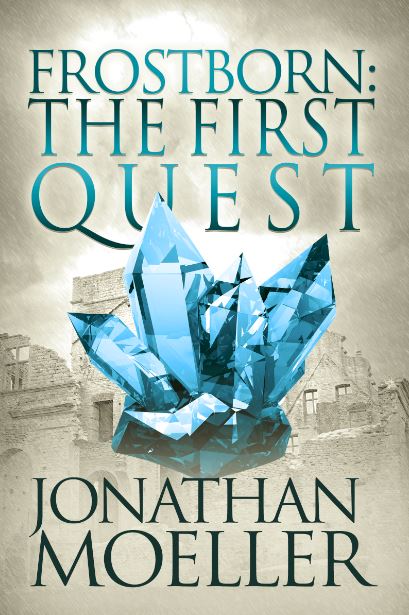
Coming shortly

I just finished writing THE LAST WITCHKING, which actually consists of three stories, the title story, “The Hoblets of Wiccam Fensboro”, and “Opera Vita Aeterna”.  All three are rather peculiar stories in their own way, but they are all set in Selenoth and each color in different little areas on the map.  Unlike most prequels, I’ve attempted to avoid the tendency to have them reduce the scope of the story; I hope I’ve learned from the lesson of Star Wars in this regard.

Anyhow, as before, if you’re willing to commit to reading and reviewing The Last Witchking before May 8th, please send me an email with WITCHKING in the subject and indicate whether you prefer EPUB or MOBI.  I will send review copies to the first 25 respondents. I have all 25 volunteers, thanks very much, everyone. This will be the last of the shorter Selenoth works for at least a year, as I’m now concentrating solely on AODAL Book Two.

Also, don’t forget that the end of the preorder time for the hardcover of Summa Elvetica and the collection of other stories is rapidly approaching.  The preorder price is only $17.99 and comes with a free ebook copy of THE LAST WITCHKING.  In addition to the title novel, the book includes all eight novellas and short stories set in Selenoth.  It should run about 465 pages or thereabouts.


Book review: INFINITE JEST

INFINITE JEST
David Foster Wallace
Rating: 3 of 10

If nothing else, I now understand why David Foster Wallace killed himself. Despite being built up as the literary wunderkind of his generation, despite having been widely acclaimed as the author of one of greatest novels of the 20th century, he could not escape the realization that, at least as a novelist, he was a poser and a literary charlatan. Thanks to a tireless campaign by the New York literati and the fact that so few people who claim to admire the book actually bothered to read his magnum opus, he dodged one bullet following the publication of Infinite Jest.  But he couldn’t count on doing that twice, and he must have known that he would be left exposed to all and sundry upon publication of The Pale King.

Now, I’m not the least bit intimidated by large books nor do I find their girth intrinsically impressive.  I very much enjoyed War and Peace as well as Cryptonomicon. My own most recent novel runs more than 850 pages. But I will admit that it was hard and brutal slogging through the overly self-conscious, over-educated banality of Wallace’s Infinite Jest; the only literary experience to which I can reasonably compare it is reading two of the later Robert Jordan novels in The Wheel of Time series, back to back, after both novels have been translated into German and back again into English by Google Translate.  There is considerably less pulling of braids and considerably more in the way of physical and mental abnormalities in Infinite Jest, but that’s a fair approximation of the literary pleasure one can expect to find in Wallace’s so-called masterpiece.

It doesn’t take long to recognize Wallace’s High American Lit style. If you are familiar with Tom Robbins or John Irving, then you’ve read the distillation of David Foster Wallace. Infinite Jest is little more than an oversized, incoherent, less amusing version of The World According to Garp. It takes five times longer to say less than Still Life with Woodpecker. Take a few quirky and improbably intelligent characters with exaggerated vocabularies.  Go into
excruciating detail concerning the minute-by-minute existence of their
quotidian routines, especially regarding the sexual or toilet aspects,
then throw in some highly implausible gonzo drama produced by their
relationships with their cartoonishly dysfunctional families, inexplicably deformed lovers, or hopelessly deviant housemates.  Be sure to include a strong amateur sporting
element, be it wrestling or tennis.  At all times, be careful to
utilize the high-low technique of an unfamiliar and elevated vocabulary
taken straight from the OED alternating with the crudest vulgar slang. 
The perspective, at all times, is one of vaguely bemused detachment; the
narrative only observes, it never acts.

When I finished Infinite Jest, a review of Paul Auster’s New York Trilogy by Ferdinand Bardamu came to mind: “[T]his neutered New York has produced a literati that spends all day
sniffing its own farts. Jonathan Safran Foer, Colson Whitehead, Nicole
Krauss, Gary Shteyngart, Jhumpa Lahiri, David Foster Wallace (actually
wait, he’s dead — I’ve never derived so much joy from a suicide in my
life), and all the rest: worthless hacks devoid of curiosity, humanity
or talent.”

There is very little genuine humanity in Infinite Jest. It is a curiously autistic novel, as if the emotions of the characters described in such extensive detail are being cataloged by someone who has never actually felt them. It is a decrepit bordello of freaks and wrecks, whose fictional realities are as alien as they are unconvincing to the sane and sober reader. After finishing the book, I was curious to read its various reviews in order to see who had been courageous enough to openly declare that the American literary prince was strutting about in the buff.  There were a few who weren’t afraid to point out that DFW wore no clothes, but to my surprise, easily the best review was by a writer who happens to know more than a little about inflated vocabularies and literary pretensions himself, our old friend Wängsty, known to the rest of the world as R. Scott Bakker.  In his excellent review of Infinite Jest, he writes:

Like lovers and assholes (and reviews), books sort readers. I would argue that books like Infinite Jest identify
you–your affiliations, your beliefs and values, your politics–with the
same degree of accuracy as monster truck rallies….

This is the whole reason why publishers are keen to plaster testimonials on the cover of their books: to milk our authority and social proof biases. Infinite Jest is literally festooned with blurbs from a galaxy of authoritative sources: It arrives literally armoured in literary authority. We are told by a variety of serious people (who are taken very seriously by other serious people) that this is a seriously serious book. There can be little doubt that as far as the 1996 literary ingroup was concerned, Infinite Jest was a smashing communicative success.

Which should be no surprise. “I come to writing from a pretty hard-core, abstract place,” Wallace explains in The Boston Phoenix interview. “It comes out of technical philosophy and continental European theory, and extreme avante-garde shit.” Given who he was, and given he saw this as a conversation with good friends, and given that the seriously serious readers likely shared, as good friends often do, the bulk of his attitudes and aesthetic sensibilities, it’s easy to see how this book became as successful as it did. Infinite Jest is the product of a ingroup sender communicating to other ingroup receivers: insofar as those other receivers loved it, you can say that as a communication Infinite Jest was a tremendous ingroup success.

The problem is that one can say the same about The Turner Diaries or Mein Kampf.

I don’t pretend to know what literature is any metaphysical sense, but I do think that it has to have something to do with transcendence. What distinguishes literature from fiction in general is its ability to push beyond, beyond received dogmas, beyond comfort zones, and most importantly (because it indexes the possibility of the former two), beyond social ingroups. This is why communicative success and literary success are not one and the same thing. And this is also why outgroup readers generally find ingroup estimations of literary merit so unconvincing.

Make no mistake, Infinite Jest is a piece of genre fiction: something expressly written for a dedicated groups of readers possessing a relatively fixed set of expectations. It just so happens that this particular group of readers happen to command the cultural high ground when it comes to things linguistic and narrative. 

In the immortal words of Public Enemy, don’t believe the hype. Avante-garde shit, however extreme, is still, in the end, shit, and it tends to be more noxious than the more pedestrian varieties.  Infinite Jest is what might have been a decent 250-page novel stricken with a terminal elephantiasian cancer. Wallace’s excess verbosity and endless, pointless, pretentious, indefatigable digressions hang off and over the story like giant slabs of flesh swollen with fatty tumors; if this book were to come to life and take the shape of a man, it would resemble Mohammad Latif Khatana.

The most impressive thing about Infinite Jest, or as I found myself thinking of it, Tedious Waste, is the sheer magnitude of the deceit in the Foreword written by David Eggers.  There has seldom been a less honest paragraph written in the English language than this one:

“The book is 1,079 pages long and there is not one lazy sentence. The book is drum-tight and relentlessly smart, and though it does not wear its heart on its sleeve, it’s deeply felt and incredibly moving. That it was written in three years by a writer under thirty-five is very painful to think about. So let’s not think about that. The point is that it’s for all these reasons — acclaimed, daunting, not-lazy, drum-tight, very funny (we didn’t mention that yet but yes) — that you picked up this book. Now the question is this: Will you actually read it?”

There may not be one lazy sentence, whatever that might be, but there are thousands of totally unnecessary ones. The book is not drum-tight; it doesn’t even have an ending, or, for that matter, a coherent plot — and before any literati groupies attempt to protest, I will note that Wallace himself openly admitted as much — and it cannot possibly, by any reasonable metric, be described as “very funny”.  There are the occasional moments where Infinite Jest generates mild amusement, to be sure, but I never once on any of the 1,079 pages found myself provoked to laughter. It is not deeply felt; the descriptions of the game of tennis are far more loving than those of any of the human relationships, and I have to sincerely question the sanity of anyone who found it “incredibly moving”. It does not wear its heart on its sleeve because it does not have one; it is heartless.

Eggrers’s Foreword is pure PR puffery on a scale to make the inveterate circle-jerkers known as the FourThree Horsemen of the New Atheism roll their eyes.

It is telling that the reader has to be challenged to actually read it the book they are, by virtue of reading the forward, presently reading.  And yet, there is no point to actually reading the novel, even if one wishes to claim the literary cred for doing so. Given the observed behavior of the sort of people who desperately want to be seen as the sort of person who adores this sort of thing, the sort of individual who very much wants to consider himself part of the in-group for whom Wallace was writing, one can be sure that very, very few of them will have actually read more than a few chapters.  A few casual references to “wheelchair terrorists”, “that amazing game that combined geopolitics with tennis”, and “lethally enstupidating Entertainment”, plus throwing in a knowing joke about this being “The Year of The Taco Bell Cool Ranch Doritos Locos Taco”, should inspire sufficient panic in any other individual who pretends to have read Infinite Jest to convince him to enthusiastically nod, vociferously agree, and immediately change the subject.

I can’t say that I derived any pleasure, let alone joy, from David Foster Wallace’s suicide. But it doesn’t surprise me terribly to learn that a man whose whole essence and identity were derived from the supposedly exceptional quality of his writing would elect to kill himself after producing such a overrated work of unmitigated fraudulence. 

Infinite Jest is a joke, but it isn’t one that is intended at the reader’s expense. It is the author’s bitter view of himself and the small, shallow make-believe world in which he lived.

Story: 1 of 5.  I won’t even bother attempting to describe the plot, such as it is.  Suffice it to say that it is ludicrous, unconvincing, incoherent, unfinished, weirdly remniscent of the 1970s, and despite Wallace’s attempt to involve the reader’s imagination in its completion, leaves him absolutely devoid of any curiosity concerning “what really happened”.  The insufficiently well-read might be surprised, even angered, to find their arduous effort in finishing the book so poorly rewarded. Those more familiar with the eminently predictable tricks of the neutered New York literati will simply smile wryly and close the book with a dismissive “yeah, I expected as much.”

Style: 3 of 5. Harold Bloom was a little too harsh when he said: “Infinite Jest is just
awful. It seems ridiculous to have to say it. He can’t think, he can’t
write. There’s no discernible talent.”  There is talent there, there is intelligence, the problem is that it is not put to effective use.  Wallace can write, but apparently his editor can’t edit. I enjoyed the occasional adroit turn of phrase, but they were far too few and far between to make up for the run-on sentences. I’ve translated Umberto Eco sentences from Italian that required five separate English sentences to make proper sense, and they were still shorter than some of Wallace’s unnecessarily extended monstrosities.

Characters: 0 of 5. I don’t think it is controversial to say that you not only will find it hard to keep the vast cast of characters straight, but you won’t give a damn about what happens to any of them.  It’s almost a remarkable achievement of sorts that Wallace can provide so much detail about so many characters without making any of them feel even remotely credible or breathing life into any of them.  It takes a certain amount of inadvertent skill to render a healthy young NFL punter who seduces every woman he comes across almost completely indistinguishable from a hospitalized former drug addict who is the whitest knight in the history of American literature. And Wallace’s characters aren’t merely cardboard, they are cut out from a John Irving novel.

Creativity: 3.5 of 5. I didn’t really know how to fairly consider this. Infinite Jest is certainly creative in certain senses, such as its structure and in some of the details of the idiotic plot. Its delving into the experience of addiction is actually fairly good. In other ways, there is a rigid adherence to exactly what one would expect from an author writing in this genre, complete with all the politically correct prejudices and myopic sensitivities. But in sum, it is different than the average novel, so I’m choosing to err on the side of mild generosity here.

Text sample:  YEAR OF THE DEPEND ADULT UNDERGARMENT

On a White Flag Group Commitment to the Tough Shit But You Still Can’t Drink Group down in Braintree this past July, Don G., up at the podium, revealed publicly about how he was ashamed that he still as yet had no real solid understanding of a Higher Power. It’s suggested in the 3rd of Boston AA’s 12 Steps that you to turn your Diseased will over to the direction and love of ‘God as you understand Him.’ It’s supposed to be one of AA’s major selling points that you get to choose your own God. You get to make up your own understanding of God or a Higher Power or Whom-/Whatever. But Gately, at like ten months clean, at the TSBYSCD podium in Braintree, opines that at this juncture he’s so totally clueless and lost he’s thinking that he’d maybe rather have the White Flag Crocodiles just grab him by the lapels and just tell him what AA God to have an understanding of, and give him totally blunt and dogmatic orders about how to turn over his Diseased will to whatever this Higher Power is. He notes how he’s observed already that some Catholics and Fundamentalists now in AA had a childhood understanding of a Stern and Punishing–type God, and Gately’s heard them express incredible Gratitude that AA let them at long last let go and change over to an understanding of a Loving, Forgiving, Nurturing–type God. But at least these folks started out with some idea of Him/Her/It, whether fucked up or no. You might think it’d be easier if you Came In with 0 in the way of denominational background or preconceptions, you might think it’d be easier to sort of invent a Higher-Powerish God from scratch and then like erect an understanding, but Don Gately complains that this has not been his experience thus far. His sole experience so far is that he takes one of AA’s very rare specific suggestions and hits the knees in the A.M. and asks for Help and then hits the knees again at bedtime and says Thank You, whether he believes he’s talking to Anything/-body or not, and he somehow gets through that day clean. This, after ten months of ear-smoking concentration and reflection, is still all he feels like he ‘understands’ about the ‘God angle.’ Publicly, in front of a very tough and hard-ass-looking AA crowd, he sort of simultaneously confesses and complains that he feels like a rat that’s learned one route in the maze to the cheese and travels that route in a ratty-type fashion and whatnot. W/ the God thing being the cheese in the metaphor. Gately still feels like he has no access to the Big spiritual Picture. He feels about the ritualistic daily Please and Thank You prayers rather like like a hitter that’s on a hitting streak and doesn’t change his jock or socks or pre-game routine for as long as he’s on the streak. W/ sobriety being the hitting streak and whatnot, he explains. The whole church basement is literally blue with smoke. Gately says he feels like this is a pretty limp and lame understanding of a Higher Power: a cheese-easement or unwashed athletic supporter. He says but when he tries to go beyond the very basic rote automatic get-me-through-this-day-please stuff, when he kneels at other times and prays or meditates or tries to achieve a Big-Picture spiritual understanding of a God as he can understand Him, he feels Nothing — not nothing but Nothing, an edgeless blankness that somehow feels worse than the sort of unconsidered atheism he Came In with. He says he doesn’t know if any of this is coming through or making any sense or if it’s all just still symptomatic of a thoroughgoingly Diseased will and quote ‘spirit.’ He finds himself telling the Tough Shit But You Still Can’t Drink audience dark doubtful thoughts he wouldn’t have fucking ever dared tell Ferocious Francis man to man. He can’t even look at F.F. in the Crocodile’s row as he says that at this point the God-understanding stuff kind of makes him want to puke, from fear. Something you can’t see or hear or touch or smell: OK. All right. But something you can’t even feel? Because that’s what he feels when he tries to understand something to really sincerely pray to. Nothingness. He says when he tries to pray he gets this like image in his mind’s eye of the brainwaves or whatever of his prayers going out and out, with nothing to stop them, going, going, radiating out into like space and outliving him and still going and never hitting Anything out there, much less Something with an ear. Much much less Something with an ear that could possibly give a rat’s ass. He’s both pissed off and ashamed to be talking about this instead of how just completely good it is to just be getting through the day without ingesting a Substance, but there it is. This is what’s going on. He’s no closer to carrying out the suggestion of the 3rd Step than the day the Probie drove him over to his halfway house from Peabody Holding. The idea of this whole God thing makes him puke, still. And he is afraid. 

And the same fucking thing happens again. The tough chain-smoking TSBYSCD Group all stands and applauds and the men give two-finger whistles, and people come up at the raffle-break to pump his big hand and even sometimes try and hug on him.

It seems like every time he forgets himself and publicizes how he’s fucking up in sobriety Boston AAs fall all over themselves to tell him how good it was to hear him and to for God’s sake Keep Coming, for them if not for himself, whatever the fuck that means.


Lars Walker reviews A THRONE OF BONES

As we were discussing George Martin and the aspects of his work which tend to appeal to the Left yesterday, the appearance of this review is a timely one. Lars Walker is the author of the novels that collectively make up The Erling Skjalgsson Saga, and as can be seen from his picture, is a descendant of Vikings himself. (Ladies, I believe he is single.) This no doubt made it rather painful for him to read through the scenes set in the Iles de Loup.   Nevertheless, he manfully slogged through them in order to write his review of A THRONE OF BONES.

Most anyone who starts reading Throne of Bones will realize that it’s very much the same sort of thing as George R. R. Martin’s Song of Fire and Ice books, and Vox makes no denial of this. But he’s trying to do the same sort of thing in a very different way, which for me makes all the difference….

I enjoyed it immensely. Vox Day isn’t the prose stylist George R. R. Martin is, but he’s not bad. On the plus side we have a complicated, complex story with interesting and sympathetic, fully rounded characters. There are few out-and-out villains – everybody is doing what they think right. And unlike Martin’s stories, the fact that someone is virtuous and noble does not guarantee them a painful and ignominious death. In terms of pure story, Vox Day’s book is much more rewarding. And Christianity is treated not only with respect, but as a true part of the cosmos. Much recommended. 

Walker is entirely correct to say that ATOB is very much the same sort of thing as AGOT. It was intended that way from the start.  However, I did not write Arts of Dark and Light to imitate A Song of Ice and Fire, but rather, to create a fantasy epic of similar scope that not only improves upon Martin’s series in terms of characterization, intellectual depth, and storytelling, but also demonstrates the way in which the utilization of a more traditional and historically coherent perspective can permit a less-talented writer to create works capable of surpassing the well-written, but empty, soulless literary edifices constructed by the betrayers of the fantasy tradition created by George MacDonald and so firmly established by JRR Tolkien and CS Lewis.

Contra the superficial assumptions of those who look only at the rhyming names and the similar heft of the two books, A THRONE OF BONES is not an imitation of A GAME OF THRONES. To the extent that it is relevant to compare the two books, it would be considerably more accurate to describe it as literary criticism in action.  I find it a little ironic that while people often ask critics if they can do any better, on the rare occasion one actually attempts to do so, one is accused of wishing to imitate the object of criticism.


Mailvox: GRR Martin and the Left

DH, one of the increasingly less token liberals here, asks about my assumption that he would enjoy George Martin’s novels:

Hey you started me thinking about why you presume that as a token liberal I would be predisposed to enjoy or not be disappointed by Martin’s ASOIAF series. What if anything is the link as you see it between leftism and Martin’s works?

  1. Martin’s world is intrinsically amoral. There is little in the way of Christian or high pagan morals in the Julian mode; even Jaime and Cersei’s incest is only noteworthy for its effect on her sons’ claims to the Iron Throne.
  2. Martin’s world is essentially secular.  While he does a credible job of creating an alternate religious system and making use of it for plot purposes in a meaningful quasi-medieval manner, there is only two characters out of the huge cast who appear to be religious in any meaningful sense.  That being said, I very much liked the sea-based religion of the Greyjoys, but even there, Martin was unable to convey the emotional aspect of a strongly held faith. It was like watching a blind man attempt to describe color.
  3. Martin’s world is entirely nihilistic. There is no point to anything except the pursuit of power, and to a lesser extent, sex and money.
  4. Martin is, as he has declared, a feminist, and although his commitment to realism prevents him from giving in too heavily to the Warrior Woman trope that presently infests fantasy, science fiction, and urban fantasy, he created the ludicrous Brienne of Tarth and the equally silly Sand Snakes as a nod to it.  I went to high school with a heavily recruited basketball star who, at 6’6″, was both taller and bigger than Brienne.  She was strong, but, (and this is what the SF/F writers always leave out), she was incredibly slow.  The main reason women cannot fight men is not because they are weaker, although they are, but because they are so much slower.
  5. The sex in ASOIAF is almost invariably perverted. Although married couples have children, and therefore presumably at least occasionally have sex, Martin is more likely to describe a sexual encounter between a dragon and a pig than a conventional one between a married couple. The absurd Reek-assisted wedding night of the Bastard of Bolton demonstrated that Martin is aiming to shock the reader in the manner that so excites leftists.
  6. As it is said, Martin never met a Stark he didn’t want to kill.  Every honorable character seems to be stupid and meet with a bad fate, while the amoral but clever survive. Like most intelligent leftists, Martin values cleverness over every other virtue.

So, amorality, secularism, nihilism, feminism, perversion, and a cleverness fetish.  Throw in sword control, abortion, and progressive taxation, and it would tick all the boxes.  Oh, and let’s not forget the cornucopia of Daddy issues!  I’m not saying they are bad books, the first three are really quite good. But there is little of traditional or civilizational value to them; about halfway through A Dance with Dragons, I found myself beginning to sympathize with the Others.  Say what you will about them being murderous and dead, but at least it is an ethic of sorts.


Free book: HAILSTONE MOUNTAIN by Lars Walker

Lars Walker, the author of a piece about Christian Fantasy published on Intercollegiate Review last month that he assures me absolutely did not include a direct shot at A Throne of Bones, (“wannabee (christened) George R. R. Martins”), is giving away free copies of HAILSTONE MOUNTAIN today.

In the latest entry in the saga of Erling Skjalgsson, the 11th Century
Norwegian chieftain is struck by a deadly curse, and must journey north
along with his friends in order to crush it at its source. Meanwhile
Freydis, niece of the smith Lemming, is kidnapped by the servants of a
mysterious, ancient cannibalistic race who dwell in secret in the
mountains of the north. Once again the Irish priest Father Ailill
narrates a tale of struggle, faith, endurance, and supernatural peril.
Fans of H. Rider Haggard will delight in this “lost world” adventure.

He’s a Minnesotan named Lars, so you know he knows his Vikings. He’s also one of my growing list of Standout Authors. Check it out, and if you like it, don’t forget to review it.


Captain Capitalism reviews RGD

It is nice to see that people are still reading RGD, even if its timelines are obviously outdated, to say nothing of incorrect.  I simply did not expect the Federal Reserve and the European Central Bank would fail to learn the lesson of the Bank of Japan and prove so stupidly unwilling to force the banks to take their medicine, thereby risking not only their banking systems, but their currencies as well as the very existence of their political unions.  But even so, the underlying principles outlined in the book remain operative, as Captain Capitalism, the author of Enjoy the Decline, points out in his review of The Return of the Great Depression:

First, the book is an outstanding, thorough, but succinct analysis and comparison of the various economic philosophies that are duking it out today.  He compares and contrasts Austrian, Keynesian, the Chicago School and Marxism in ways that shows he’s actually read vastly more books on economics and philosophy than I have and can use words like “praxeology” in a sentence.  This makes him “one of those guys” who while would be considered a Buzz Killington at a party, is the guy you’d probably defer to when it came to matters of economic history and technicality.  Second, like reading other economists, you always pick up a trick or two you weren’t aware of or observe mistakes you may have made (for example his explaining what the GDP deflator is NOT the same as the CPI may not help you pick up chicks at a bar, but will provide for some interesting adjustments to modern day RGDP).  This has not only further advanced my understanding of economics, but plugged some minor holes in my own economic theories and philosophies I’ve procrastinated plugging.  Third he writes very well and very dense, efficiently packing as much information into the fewest and optimal amount of words.  The introduction alone is a perfect synopsis that would benefit everybody in terms of “what economics is.”

I haven’t changed my mind about the eventual outcome or that we are now in the Great Depression 2.0.  I still don’t think we’re facing Fallout IV, and as the Great Debate should suffice to indicate, I remain utterly unconvinced about the inevitability of Whiskey Zulu India.

Speaking of Buzz Killington, what I find interesting is that whereas absolutely no one was interested in hearing about my book when it was first published, now people who have heard of it will seek me out in order to help them understand one facet or another of the ongoing crisis.  That is, I suspect, another negative economic indicator: the desire of people to talk about economics on social occasions.


Koanic Soul reviews The Wardog’s Coin

Since we’re on the subject of SF/F and book reviews, I suppose turnabout is fair play. Koanic Soul provides the Neanderthal perspective on The Wardog’s Coin.  An excerpt:

This book contains two short stories, “Wardog’s Coin” and “Qalabi Dawn”. It’s well worth buying as an ebook. Spoilers ahead, so just buy it if you trust me.

Overall, the story was great and stayed with me. The wargaming bones of
the battle make it stick in memory with lucid clarity. The elven combat
was awesome, the relative combat strengths of the various troops was
clear, the warrior morale of the humans was realistic and rousing….

There is only one word for Qalabi Dawn – epic. This is Vox at his
greatest. Writing alien demon-cat characters. What does this say about
him? Figure it out for yourself.

I understand what he is saying about the order of the two stories, and perhaps he’s right, but my thought was that as the title piece, The Wardog’s Coin was akin to the A-side of a single and therefore had to be first.  Also, I guessed that Qalabi Dawn would tend to come off as a little out there, so I figured it would be wise to put the more accessible story first.

I personally tend to like Qalabi better, but I’m not surprised that many, if not most of the readers see it otherwise. And I’m pleased that the perspective of the demonspawn comes across as a distinctly alien one, as that was my goal from the start.

With regards to what Koanic describes as a cliche, I should probably mention that it is a tribute to another author I happen to hold in some regard.  If you haven’t noticed, all of my books end that way.


Book review: Terms of Enlistment

TERMS OF ENLISTMENT
Marko Kloos
Rating: 7 of 10 

Terms of Enlistment is a military sci-fi novel that will, like John Scalzi’s Old Man’s War, be compared by many to Robert Heinlein’s Starship Troopers.  It is the self-published debut novel from Marko Kloos, and it has justifiably been a surprise hit on Amazon, where it has been a top bestseller in science fiction as well as a top 100 seller overall.

Why? Well, there are no shortage of writers, (myself included), editors, and publishers, who would very much like to know the answer to that.

One possibility is that unlike the Heinlein novel, Terms of Enlistment is set in a dystopic future America where the cities are crowded, dirty ghettos, the space colonies are sparsely populated, far away, and nearly impossible to reach, and a permanent state of semi-war exists with the future Soviet Union. Kloos is very in touch with the zeitgeist in this regard; his protagonist doesn’t join the military out of a desire for glory or a sense of patriotism, but merely due to the prospect of some solid meals even if he fails the enlistment process.

Another is that Kloos hits the ideological sweet spot, writing about war and guns in the sort of loving, knowledgeable detail that appeals to readers on the right, while never wavering from the equalitarian ideals that are sacrosanct to readers on the left. Beyond the necessary structural assumptions, however, he doesn’t appear to be interested in taking sides or going off on tangents to deliver mini-sermons on patriotic virtue like Heinlein or the supreme importance of tolerance like Scalzi. Instead, he stays focused on his story and his characters, much to the benefit of them and the reader.  If none of the characters are particularly deep, neither are they cardboard characters set up to be either the good guy or the bad guy for purposes of Teaching An Important Lesson.

For all the dystopian grime of the setting and the attention to detail devoted to the weaponry, Kloos abides by what has become the SF-MIL trope of a sex-neutral military in which men and women enlist, shower, fight, and bunk together.  That this is entirely absurd is beside the point and in no way detracts from the story, which in fact depends quite heavily upon it.  (Let’s face it, if you’re going to feature giant missile-resistant aliens, also having female Medal of Honor winners who can best any man in hand-to-hand combat is hardly going to destroy the reader’s suspension of disbelief.)  I am arguably one of the foremost critics of the Warrior Woman trope in SF/F, and I barely even noticed it.  With one important and necessary exception, the nominal sex of the soldiers in the book is almost entirely irrelevant.

And that brings us to the third, and perhaps the most powerful element of Terms of Enlistment, the element which is actually hinted at in the title. Underneath the science fiction and the military trappings, the novel is actually a romance novel about a first love that lasts. I don’t say this to denigrate the book, but to praise it, as Kloos weaves the elements together so seamlessly that the sheer impossibilities of the romance no more trouble the reader than the ludicrous machinations of Shakespeare in Romeo and Juliet. Having been rejected by the fading gatekeepers of SF/F and finding success through making his own way, it may be that Kloos has shown a way out of science fiction’s present ideological morass, in offering readers a solid futuristic love story with no shortage of action, in producing a book with strong appeal to both men and women, to both SF’s left and right.

Terms of Enlistment is a very readable debut novel that is better than the sum of its parts because those parts fit so well together. It is also a resounding rebuke to the world of professional publishing and its procurement system. One wishes Kloos continued success and hopes that as he is embraced by that world, as he inevitably will be, he does not devolve into yet another preachy progressive SF writer.

Story: 3.5 of 5. It’s simple. It’s straightforward. It’s sufficiently interesting and compelling to hold the reader’s attention throughout.  It is essentially divided into two parts; I tended to find the first part more interesting than the second, but at no point did I lose interest in finding out what happened next. There are certainly aspects to the plot that would tend to strain credulity should one wish to dwell on them, but this isn’t a novel to make one think, it is one to simply kick back and read through in a sitting or three.

Style: 3 of 5. It’s simple. It’s straightforward. If there are no fireworks, there are no real clunkers either. The best thing about Kloos’s writing style is that it does its job and doesn’t get in the way of the story.

Characters: 3 of 5. They are likable and one stays interested in their fates, but they are not what one would call either deep or developed.  We never understand why Grayson, the protagonist, is so hung up on his Navy girl that he is willing to swap services and follow her into space. We never learn why she stays, as far as we know, faithful to him and isn’t involved with two or three of the other officers on her ship. We know they care about each other, what we really never find out is why.

Creativity: 3 of 5. There actually isn’t much in the way of creativity here, but the dystopic world is presented so competently, so vividly, that I simply couldn’t reasonably claim that it is below average in any way. Have we seen it before? Of course, hence the comparisons to Starship Troopers and Old Man’s War. But the familiarity with books we enjoyed when we were younger is part of the book’s appeal; it is not always necessary to reinvent the wheel.  And if one cannot praise an author who doesn’t do something he has no need to do, neither can one criticize him.

Text sample: All of my roommates have chevrons on their collars. Two of them are E-2s, with single chevrons, and the third is an E-3, a Private First Class, a chevron with a rocker underneath. People don’t usually make E-2 right out of Basic unless they were top flight in their training battalion like Halley, and E-3 promotions don’t ever happen before a year of active service.
“Am I the only new guy in this squad?” I ask.
“Yep,” one of them confirms. “Our platoon got four this cycle, I think, including you. They trickle the new guys in like that, so you can learn on the job. Grayson, is it?”
“Yeah.”
The soldier across the table from me extends his hand, and I shake it.
“I’m Baker. The cheating fuck over there trying to look at my cards is Priest, and the one with the ponytail is Hansen.”
I nod at each of them in turn.
“You’re in luck, Grayson. You’re in the squad with the best squad leader in the entire battalion.”
“In the entire brigade,” Hansen corrects. She has almond-shaped eyes and very white and even teeth, evidence of better dental care than you can get anywhere within ten miles of a Public Residence Cluster.
“Oh, yeah? What’s his name?”
“Her name.” Priest gives up his attempt to sneak a peek at Baker’s cards, and leans back in his chair. “Staff Sergeant Fallon. She used to be a First Sergeant, but they busted her down for striking an officer.”
“I thought they kicked you out of the service for hitting a superior,” I say, smelling a military fish tale.
“Oh, they do,” Hansen says. “That’s unless you’re a Medal of Honor winner. They don’t get rid of certified heroes. It would be bad PR.”
“Medal of Honor?” I ask, and the disbelief in my face makes my three roommates grin with delight. “As in, that blue ribbon with the white stars that goes on top of all the other ribbons?”
“That’s the one. She got it when the NAC did that excursion into mainland China a few years back, at the Battle of Dalian. You get the Medal, you can ask for any assignment anywhere in the Service, and she went right back to her old unit once she was out of the hospital.”
“That’s pretty wild. Is she a complete hard-ass?”
“Not at all. She’s got no patience for slackers, but as long as you pull your weight and don’t look like you’re clueless, she’s hands-off.”
“That doesn’t sound too bad,” I say. “I was expecting…hell, I have no idea what I was expecting, actually.”
“You were expecting some sort of penal colony,” Baker says amicably. “You thought you pulled the shittiest card in the deck when they told you that you’re going TA, right?”
There’s no point denying it, so I nod.
“That’s what everyone thinks at first. We all did. But this is a good outfit. Our sergeants know their shit, and our officers mostly leave us alone. We get the job done, and we look after each other. I’ve been TA for almost two years, and I wouldn’t take a garrison post on a colony if you paid me double.”
The others at the table nod in agreement.
I’m still disappointed about not going into space, and I have no idea whether I’ll feel the same way about the TA in two years. For better or for worse, however, this place will be my home until my service time is up, so I decide that I might as well make the best of it.
“You play cards, Grayson?” Hansen asks.
“Sure,” I say, and pull my chair up to the table.


Summa Elvetica: preorders

Marcher Lord’s preorder page for the forthcoming hardcover edition of Summa Elvetica: A Casuistry of the Elvish Controversy is now live.  You can preorder the ~450-page book for $17.99, which is a discount from the retail price of $24.99.  As I mentioned before, those preordering will also receive a free ebook copy of The Last Witchking.  The preorder offer will be available until April 30th.


A review of The Wardog’s Coin

Jonathan Moeller, Pulp Writer, reviews The Wardog’s Coin:

Last year, I read A THRONE OF BONES by Vox Day, and thought it was one of the more interesting new epic fantasy novels I’ve read. The author was kind enough to send me an advance copy of THE WARDOG’S COIN, a pair of short stories set in THRONE’s setting of Selenoth – specifically THE WARDOG’S COIN and QALABI DAWN.

In THE WARDOG’S COIN, the protagonist is the sergeant in a human mercenary company fighting for an elven kingdom against a horde of goblins and orcs. (The story’s name comes from the coin necklace each of the mercenaries bears – they act as sort of a dog tag.) What is supposed to be an easy assignment quickly turns into a death trap once the mercenaries realize the orcs are far more formidable than they expected – and that the elves are not unduly concerned if their hirelings survive or not. The mercenaries’ only hope of survival is through an audacious and risky plan. THE WARDOG’S COIN reminded me a great deal of Glen Cook’s better BLACK COMPANY books, and also had some moments of surprising hilarity – the sergeant’s attempt to get a recalcitrant pig to move is one of them. I did not care for the sergeant’s dialect (it reminded me of the farmer’s final monologue in HP Lovecraft’s THE COLOUR OUT OF SPACE, alas), but that was only a minor flaw in an otherwise good story.

The first story was good, but I think the second, QALABI DAWN, was more interesting…. I rather liked the depiction of the cat-people – their perspectives were truly alien, which is a hard trick for a writer to pull off.

This is just an excerpt, so be sure to read the entire review at Jonathan’s site. In related news, I am pleased to announce that Marcher Lord Hinterlands will be publishing the hardcover version of Summa Elvetica: A Casuistry of the Elvish Controversy, in May.  The book will be priced at $24.99 and will be approximately 450 pages, as it will not only include the short novel, (modestly updated for the purposes of harmonization with A Throne of Bones), but eight other stories set in Selenoth.

The stories included are: “A Magic Broken”, “The Wardog’s Coin”, “Qalabi Dawn”, “Master of Cats”, “Birth of an Order”, “The Last Witchking”, “The Hoblets of Wiccam Fensboro”, and “Opera Vita Aeterna”.

Those who wish to preorder from Marcher Lord can do so at a price of $17.99. Preorders will also come with a free ebook copy of The Last Witchking, which will be published in May at a price of $1.99; please specify if your preference is epub or mobi.  The Last Witchking will consist of the title story and the two other stories not previously available in ebook format.