Atheism and the problem of ignorance

Although I’ve seen more than a few episodes of QI, I’ve never considered Stephen Fry to be either very well informed or very intelligent. He strikes me as a considerably messed-up actor who plays the role of an educated and intelligent man for the masses, as opposed to actually being such a creature. Of course, it’s a lot harder to sound intelligent when you’re not being fed lines through your earpiece, which explains how Fry managed to betray an astonishing ignorance of nearly 2,000 years of Christian theology and abandoning one primary atheist line of defense in the process:

Fry was being interviewed for an Irish television show called The Meaning of Life when he launched into an impassioned tirade about God’s existence. Asked if he thought he would get to heaven, he replied: “No, but I wouldn’t want to. I wouldn’t want to get in on his terms. They’re wrong.

He added: “The God who created this universe, if he created this universe, is quite clearly a maniac, an utter maniac, totally selfish. We have to spend our lives on our knees thanking him. What kind of God would do that?”

“Yes, the world is very splendid, but it also has in it insects whose whole life cycle is to burrow into the eyes of children and make them blind. Why? Why did you do that to us? It is simply not acceptable. Atheism is not just about not believing there’s a god. On the assumption there is one, what kind of God is he? It’s perfectly apparent that was monstrous, utterly monstrous, and deserves no respect.”

Now, for those whose knowledge of theology does not rise to the level of the Narnia novels, let me point out that basic Christian theology points out that while God’s Creation was initially perfect, it was His choice to give both Man and Angel free will that permitted Lucifer’s initial fall from Heaven, and Man’s subsequent fall from Grace. From these two failures entered in every form of sin, death, and evil.

Furthermore, Jesus Christ himself made it very clear that it is not the Creator God who rules the Earth. Hence his command to Christians to be IN the world rather than OF it. He specifically refers to Satan as both the prince and the ruler of the world, as one translation has John 12:31: The time for judging this world has come, when Satan, the ruler of this world, will be cast out.

Fry is clearly blaming the wrong party. The utter maniac, the totally selfish and utterly monstrous being he castigates is not the Creator God. It is the usurper who rules the world, whose name is devil, Satan, Lucifer. And what makes his rant so ridiculously stupid is that all of this information is not only in the Bible, but in Milton, in Lewis, in Tolkien, and indeed, in many of the greatest works of the Western artistic canon. God is not “utterly evil”. God is good, and loving, and thank God, merciful. It is the ruler of this world, the prince of the powers of the air, who is utterly and irredeemably evil.

Ironically enough, Fry commits the same sin as that utter evil, in demanding the right of the clay to judge the potter.

Notice that Fry also insists that, contra both linguistic etymology and practically every petty Internet atheist ever, “atheism is not just about not believing there’s a god”. In other words, he is conflating atheism and secular humanism, something other atheists have tried very hard to distinguish, and for good reason, because doing so simply transforms atheism into a pallid religion that has no ability to compete intellectually or spiritually with Christianity, Islam, or paganism.

And then he descended into utter self-parody when he claimed to prefer Greek paganism: “Fry said he preferred the religion of the ancient Greeks whose Gods did not
present themselves as being “all-seeing, all-wise, all-kind, all
beneficent”.”
This is rather amusing, as the Greek gods were a collection of rapists, adulterers, and murderers who were descended of a parricide and never hesitated to shed vast quantities of human blood in pursuit of their selfish objectives.

In just one interview, it can be seen that Stephen Fry is a fraud. He is not a brilliant man, but rather, an obtuse and ignorant charlatan.

UPDATE: No wonder he gets away with it. Consider his fans:

Milo Yiannopoulos ‏@Nero
Perhaps the neatest skewering of @stephenfry ever, from @voxday

Steve Skipper ‏@SteveSkipper
@Nero @stephenfry hardly a skewering, @voxday is using elements of a fictional myth to explain a fictional myth

Vox Day ‏@voxday
You’re missing the point. To intelligently criticize a myth, you must criticize THE ACTUAL MYTH.

Steve Skipper ‏@SteveSkipper
@voxday @Nero @stephenfry whatever


The pride of the self-gelded

Guy Gavriel Kay is one of the better fantasy authors writing today. I posted a review of his The Lions of Al-Rassan, which is my favorite of his books, at Recommend. But it is a shame, bordering on a tragedy, that he doesn’t see how his inclination towards atheistic secularism will prevent him from ever approaching literary greatness:

The Canadian author Guy Gavriel Kay has explored the issues of faith and religious intolerance in several of his fantasy books, such as his duology “The Sarantine Mosaic,” set in a world modelled on Byzantium during the time of the Emperor Justinian. Kay’s stories echo the conflict that arose historically between such religions as paganism, Judaism, Christianity, and Islam.

. . . there has been a natural progression from Fionavar, through Tigana and [A Song for] Arbonne, to The Lions of Al-Rassan, away from the mythic and the fantastical, and towards the human and the historical. The progression from myth to religion is another way to describe it, not that the books are religious, but that we move away from what, in Fionavar, I’ve sometimes called a Homeric world; the gods intervene in the affairs of men, they have their own squabbles and feuds amongst themselves, and yet they’re physically present, men can sleep with the goddess, men can battle with words with the gods – the gods are present. In Tigana, magic is still there, but, for the most part, magic and its use was employed as a sustained metaphor for the eradication of culture. The major use of magic in the novel Tigana is the elimination of the name of the country Tigana, which for me was very much metaphorical. In A Song for Arbonne, we’re into a story about how religion, the organized religion, the clergy, manipulates the people with their beliefs about gods and goddesses. By the time we get to The Lions of Al-Rassan, it’s mainly about how organized religion takes away the freedom and the breathing space of individuals. So there is a natural progression, which is not to say that I know where the next book is going, that that progression is necessarily continuing.

It certainly seems however that the religious dimension is not going to disappear; it’s been very strong in the last two books, and certainly The Fionavar Tapestry has, in a sense, a proto-religion at the heart of it. Can you conceive of writing a book which does not have religion as a factor?

Yes, I’m sure I can; I am not a religious man, what I think I am is a person keenly interested in history. When you talk about proto-religion, you’re talking about, as I said, the Homeric idea of gods and goddesses incarnate, and the progression in history away from that. I think that, if I would characterize my interest, it’s very much in the historical and mythical roots of what we have become as cultures. When I say “we”, I mean Western men and women, because that’s the culture that I feel most at home in, it’s the culture that most of us are, to some degree, shaped by. So, in that sense, the four books (treating Fionavar as one) have been incorporating that tension, but it’s not in any huge sense central to my thinking or my own work.

Does that mean you might write a novel about the Enlightenment, about skepticism coming to the fore?

I think skepticism comes to the fore in the last two books to a great degree. I think that it’s part of the movement from myth to religion. In The Lions of Al-Rassan, one of the reasons the book is a fantasy, rather than a story about medieval Spain, even though it’s very closely modelled on real history, is that I wanted to see what would happen to people’s preconceptions and prejudices about cultures: Christian, Moslem, Jewish, if the names were changed and if the religious beliefs were rendered virtually banal: one religion worships the Sun, another worships the Moon, and another worships the stars. And out of that relatively banal conflict of ideologies, you have crushingly brutal military and psychological conflict. When you speak of skepticism, it seems to me that The Lions of Al-Rassan should be very clear for the readers: the point that underlies the detaching of these religious conflicts from their real underpinnings is that, if we step back a bit, we can start to see how much violence, how much conflict is generated by something that may be no more complex than whether you worship the Sun rising in the morning or the stars beginning to shine at night.

It’s rather remarkable that such an intelligent and talented man can be so brutally foolish as a result of his anti-religious bias. The sad thing is that he transforms what could have been a great book into one that is merely good, and is dishonest to boot. The amusing thing is that he appears to think that his obvious biases are not readily apparent to the intelligent reader; faithless ecumenicism is the romantic ideal he portrays in the novel.

The mere fact that I could write the following while knowing nothing of the author’s religious faith, or lack there of, demonstrates the intrinsic problem of the irreligious attempting to meaningfully address religious themes.


This surfeit of excellence might have been excused as a stylistic
statement on medieval panegyrics were it not for the author’s
excessively modern take on religion. Despite the plot being dependent
upon the conflict between the star-worshipping Asherites (Muslims),
sun-worshipping Jaddites (Christians) and moon-worshipping Kindath
(Jews), the author’s own apparent lack of religious sensibility prevents
the book from being as rich and moving as it easily could have been. (A
moment’s research confirms that Kay is not, by his own statement, a
religious man; it definitely shows throughout.)

Note that the interview proves that Kay’s portrayal of religion in the book is intentionally false and shallow. He does not recognize that by rendering such a false account of religion, he has undermined his own attempt to make a case against it. By detaching the “religious conflicts” from their real underpinnings, what he proves is that religion doesn’t have much, if anything, to do with violent conflicts that arise from the normal historical reasons of ambition, pride, greed, and the desire for power.

Like most secular writers, Kay fails to grasp that if he wishes to successfully attack religion, he must portray it with absolutely rigorous honesty. Because, in The Lions of Al-Rassan, all he has managed to accomplish in this regard is to reduce the literary value of his own work in order to demolish a strawman of his own construction. In this way, he is the anti-Eco, as Eco, despite his own secular inclinations, does his fictional characters the courtesy of taking their beliefs seriously and at face value, which is why he is the better and more memorable writer.

I have never forgotten the genuine anger in Umberto Eco’s voice when he corrected me concerning a question I asked him about the “villain” of The Name of the Rose: “Jorge is not the villain, he is one of the heroes … He is expressing
certain attitudes of his time, but I don’t consider him a villain. It is
a confrontation between two worldviews, and a worldview is a system of
ideas.”

That is the difference between a great writer and one who is merely a fine literary technician with a bent for storytelling. The great writer is willing to permit his characters to speak for themselves, according to their worldviews. The technician, on the other hand, insists on reducing his characters to puppets intended to express his worldview.


A lesson for the non-celebrants

This is not how you respond to holiday well-wishers:

A passenger was tossed off a plane at La Guardia Airport on Tuesday after flipping out — because airline workers wished him a merry Christmas.

The man was waiting to board American Airlines Flight 1140 to Dallas when a cheerful gate agent began welcoming everyone with the Yuletide greeting while checking boarding passes. The grumpy passenger, who appeared to be traveling alone, barked at the woman, “You shouldn’t say that because not everyone celebrates Christmas.”

The agent replied, “Well, what should I say then?”

“Don’t say, ‘Merry Christmas!’ ” the man shouted before brushing past her.

Once on the plane, he was warmly greeted by a flight attendant who also wished him a “merry Christmas.” That was the last straw.

“Don’t say, ‘Merry Christmas!’ ” the man raged before lecturing the attendants and the pilot about their faux pas.

I have to admit, I not only don’t celebrate them, but I don’t even know what half the festivals represented are when people wish me “buona festa” over the course of the year. During certain summer months nary a week goes by that everyone isn’t off work for some Catholic feast or Communist-created celebration of the working class. And it has never once occurred to me to respond by explaining that I do not celebrate the Feast of the Immaculate Conception, Labor Day, or la Festa della Repubblica to anyone.

My usual response on such occasions is the same as that of my Jewish friend, who smiles and says “thank you, you too” whenever he is wished a Merry Christmas. If nothing else, it’s nice to see people who are in a good mood while out and about.

That’s the practical aspect. From philosophical perspective, it must be admitted that whether one celebrates a holiday or not, it indubitably and materially exists. One would assume that any genuinely rational atheist would understand that.


PZ Myers sabotaged an investigation

It’s vastly amusing to see how the alleged sexual harasser/adulterer/rapist PZ Myers responds when he is treated the way he frequently treats others. And it is also worth noting that he has ignored five of the six examples cited that show him, by his own standards, to be a sexist. Not only has his story about being falsely accused of rape, among other things, changed multiple times, but it amounts to a public confession that, in the words of one commenter, he “deliberately sabotaged any chance of any investigation being conducted in line with official university policy.”

PZ Myers has responded to part of my recent post about what would happen if he judged others’ sexism as he judges himself. He responded in a comment on his blog, complete with his now familiar personal abuse (he calls me a fuckhead, an asshole and a demented fuckwit) and misrepresentations of what I have written (he mistakenly says that my report of his own words on his own blog were “straight from the slymepit”, and he mistakenly says that I claimed what he did was sexist).

In his response, PZ ignored five of the six examples that I gave of behaviour by him that other people might consider sexist if they used PZ’s own standards — telling a conference host to do her belly dance and to get off his stage as he has work to do, linking to pornography involving women and octopuses, writing about a dream in which he turned his students into mermaids, publicly joking about rape, and endorsing a pornographic book that includes rape fantasies.

Instead he has focused only on my report of his own story about a student threatening to make a false rape allegation against him. He has written several times about this since 2010, and I am assuming that everything that he has written about it is true. He has now made two new assertions about the incident.

Firstly, PZ now says that he went to the chair “to invite an open investigation”, not to prevent one. Previously he had written that he “had to work fast” because “it could get dragged out into an investigation that would easily destroy my career,” and also that the woman had not gone to the authorities because he had brought in witnesses “to make her effort futile.”

Secondly, PZ now describes the investigation and says that he followed proper procedure. Previously he had written that this involved only the student, and not PZ himself, being questioned for only ten minutes about the severity of her accusation. I compare this below with the University of Minnesota’s official procedures for dealing with incidents of sexual assault and sexual harassment.

The inconsistencies in the various accounts are telling, although not necessarily damning of anything but shameless hypocrisy. As I have repeatedly observed, PZ Myers is simply not very intelligent. You may recall how he did not know that not all human beings are equally Homo sapiens sapiens despite his PhD in biology, now he can’t even recognize when his own words are being directly quoted back to him. No wonder his readership has been consistently falling; he has nothing intelligent to say, he can’t take the heat of criticism, he has a confirmed inability to engage in discourse at the dialectical level, and he lined up behind the SJWs of Atheism+ against most of his fellow atheists.

It is, of course, not at all surprising to see PZ misrepresenting what someone else has written, although I no longer think it is safe to assume that he is doing so intentionally. These days, it is more logical to conclude that he’s simply not smart enough to correctly understand and summarize what someone else has written.

One former Pharyngulan has an interesting theory:

I remember how he’s described his father and grandfather and how
behaves very much the same. Different core values. But the behavior
is extremely similar to the behavior of those two role-models he has
castigated in the past. In any case, I washed my hands of him and his blog years ago. I’m
not interested in being part of a toxic ‘in-group’ that has abandoned
skepticism, rationality, manners and the ability to think for oneself.

One would think an evolutionary biologist, of all people, would recognize the limits of one’s willpower to surmount the limits of one’s genetics and upbringing. And finally, just to observer the Fowl Atheist’s shameless hypocrisy, consider the following statements:

“asshole Nugent is happily embracing slymepit lies and distortions to claim that what I did was sexist? Disgusting. He’s become a demented fuckwit.”
– PZ Myers

“Actually, I hate the word ‘moron’ used as an insult, thank you very much…. I don’t like the word “moron” and wish we would all use something else
non-ableist to express our disbelief at a person’s sheer wrongness.”

– PZ Myers

So, “demented fuckwit” is non-ableist?


Sam Harris: genocidal maniac or suicidal logician?

Sam Harris is whining about the fact that people are still actively holding him accountable for the clear and obvious meaning of his written words, and he is still attempting to shade the truth while doing so.


“I know one thing to a moral certainty, however: Both Greenwald and Aslan know
that those words do not mean what they appear to mean. Given the amount
of correspondence we’ve had on these topics, and given that I have
repeatedly bored audiences by clarifying that statement (in response to
this kind of treatment), the chance that either writer thinks he is
exposing the truth about my views—or that I’m really a “genocidal
fascist maniac”—is zero. Aslan and Greenwald—a famous “scholar” and a
famous “journalist”—are engaged in a campaign of pure defamation. They
are consciously misleading their readers and increasing my security
concerns in the process.”

What a load of utter codswollop. Sam Harris clearly and openly and unmistakably wrote that it MAY be ethical to kill people for believing dangerous beliefs. Not for doing anything, not for harming anyone, but for simply BELIEVING CERTAIN BELIEFS. His repeated “clarifications” and obfuscations don’t change that established fact and he has never recanted his statement. Nor, I note, has he ever come right out and declared specifically WHAT beliefs are so dangerous that it is ethical to kill people for nothing more than holding them.

There is absolutely no reference to ACTION, only to BELIEF, in his statement. Don’t forget, his entire thesis in THE END OF FAITH is the intrinsic danger that  stems from the mere possession of faith.  Harris can’t complain about “selective quoting”, as the entire context actually makes it worse. He wrote: “Certain beliefs place their adherents beyond the reach of every peaceful
means of persuasion, while inspiring them to commit acts of
extraordinary violence against others. There is, in fact, no talking to
some people. If they cannot be captured, and they often cannot,
otherwise tolerant people may be justified in killing them in
self-defense.”

And then he compounds his justification of genocide with more deceit about his own behavior: “I have never knowingly distorted the positions I criticize, whether they
are the doctrines of a religion or the personal beliefs of Francis
Collins, Eben Alexander, Deepak Chopra, Reza Aslan, Glenn Greenwald, or
any other writer or public figure with whom I’ve collided.”

In other words, he’s pleading ignorance in the vast panoply of untruths he has told about Christianity, history, and other matters. In TIA, I showed what a sloppy and careless thinker Harris is; it is no surprise that his carelessness with words is still coming back to haunt him. I mean, look at his idiotic trainwreck of a defense here:

“Aslan and Greenwald know that nowhere in my work do I suggest that we kill harmless people for thought crimes.”

No, Sam, you expressly justify killing DANGEROUS people for thought crimes. And just who will decide who is dangerous and who is harmless? You? Roger Goodell? The Learned Elders of Zion? The Pope? Ironically enough, it is Harris’s own logic that would clearly justify killing Sam Harris. Look, I think Sam Harris is actually a likeable, well-meaning individual who isn’t quite a smart as his fans believe him to be. But Harris desperately needs to stop trying to defend the indefensible, admit that he fucked up on this as he did with both the “religion causes war” and “Red State” arguments, own up to his mistakes, and recant his lunatic justification for thought-based genocide.

He should simply say: “I was wrong. It is not ethical to kill people for their beliefs, no matter how dangerous those beliefs may be.” Or, if he can’t honestly do that, he should be forthright and say: “It is ethical to kill people for excessively dangerous beliefs, and those beliefs are: X, Y, and Z.” If he won’t do either, he will fully merit the criticism and contempt that will continue to flow his way.


This explains so much

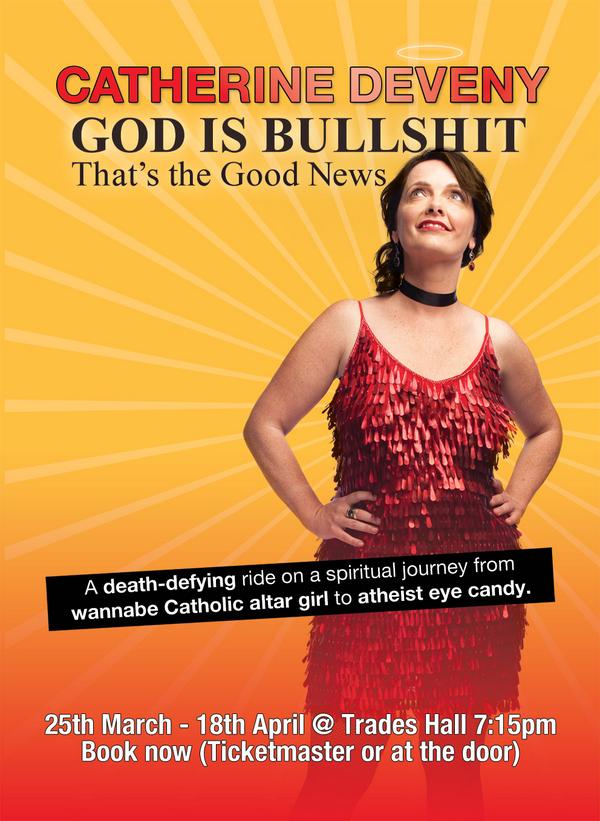
Atheist eye candy? It’s not that she’s got an ugly face or anything, but her body does appear to serve as evidence that it was nothing more than the result of time, random mutations, and large quantities of doughnuts rather than the aesthetic talents of a Creator.

I’d send her a copy of The Irrational Atheist, but I’m afraid that doing so is considered tantamount to forcing women into sex slavery these days.


Two TIA reviews

Because it has been a long time since The Irrational Atheist was published, because my refutation of the “religion causes war” argument has been widely accepted, and because Richard Dawkins has increasingly rendered himself a parody of his former public persona, it’s easy to forget that the core arguments remain timeless. Here are a pair of recent reviews of the book, the first by a Christian, the second by an atheist. If you haven’t read it yet, you might want to consider picking up a copy sometime. 

Trench Warfare. Acerbic and Funny

I bought this the first time I saw it on a shelf in hardcover. I rarely ever buy books on impulse, but this was one of those times. It sat on my shelf for about six years, however. Finally, I had the time to delve into it. The Irrational Atheist is a direct response to “new” atheism that is unlike most other responses (most other significant responses being quite a bit more respectful than Day’s). If you enjoy reading about theological, moral and social issues AND sarcasm, well this book is for you.

Day focuses his arguments in the very thick of the new atheist’s claims. Christian apologists and philosophers have rarely taken these guys seriously, mostly because none of them (except Dennett) deserve to be taken seriously in the realm of philosophy. And while the response of the apologists has been necessary for the churches to hear, none have really focused on some of the “lower” issues. By this I mean issues such as whether or not atheism is gaining converts in the U. S., whether or not religion ‘causes’ war, whether atheists are smarter than non-atheists, whether religion stifles science, etc.

From knowing nothing of Vox Day other than what he has written in his book it’s very obvious that he’s an intelligent man. Imagine Dennis Miller writing a book in response to the new atheists and you will kind of get a glimpse at the wit and humor that comprise this work. These issues of history and social issues seem to be his strong point and he handles them with brilliance. The heart of the book includes detailed chapters into his personal beefs with each of these writers. My guess would be he has the least respect for Sam Harris and the most for Dennett, but Hitchens would be neck and neck with Harris.

The last few chapters discuss various other related issues: the Holocaust, Spanish Inquisition, Crusades, human sacrifice, atheism’s responsibility for the destruction of millions of lives, a chapter on some of the theological arguments used by these writers and an appendix of a discussion between the author and Socrates concerning the Euthyphro dilemma.

If this topic interests you I heartily recommend this be on your shelf. As I said, most Christian apologists or philosophers answer via way of philosophy or theological correction or biblical defenses, all of which are very important. Day prefers to get down in the trenches and battle them head-on, via some literary lex talionis. Not for the faint of heart.

This atheist loves the book. Logical refutations (finally!) of atheist talking points.

I am an atheist, and I really like this book. Vox Day’s style is a
direct and a refreshing relief from wheelbarrow loads of empty
platitudes. To summarize the book: “God loves you, but I don’t. Here’s why blindly following the high priests of atheism is stupid.”

The author says (paraphrasing, don’t remember exact phrasing): “This
book isn’t to convert you or argue in favor of God. I don’t care at all
if you believe or not. This book is to demolish the atheist arguments.”

Although
there is no chance I’m going to be converting to Catholicism, or any
other sky deity religions, I have to applaud the hard logical reasoning
and fresh insights as Vox takes a hammer to the arguments of Hitchens,
Dawkins & Harris. It’s a refreshing change from all the arguments
that boil down to “God exists, therefore God exists”.

That’s a fair summary. And before the Churchians leap in to wag their fingers, I will readily admit that my failure to love everyone is indicative of my imperfect Christianity. I’m also not particularly good on turning the other cheek, avoiding impure thoughts, and avoiding the use of rough language. But I fail to see that blatantly lying and erecting a false veneer of superficial spiritual perfection would be an improvement upon the open and honest expression of my thoughts and feelings on various matters.


The cult of Dicky Dawk

Richard Dawkins is moving into some very strange territory:

My man in the pub was at the very low end of what believers will do and pay for: the Richard Dawkins website offers followers the chance to join the ‘Reason Circle’, which, like Dante’s Hell, is arranged in concentric circles. For $85 a month, you get discounts on his merchandise, and the chance to meet ‘Richard Dawkins Foundation for Reason and Science personalities’. Obviously that’s not enough to meet the man himself. For that you pay $210 a month — or $5,000 a year — for the chance to attend an event where he will speak.

When you compare this to the going rate for other charismatic preachers, it does seem on the high side. The Pentecostal evangelist Morris Cerullo, for example, charges only $30 a month to become a member of ‘God’s Victorious Army’, which is bringing ‘healing and deliverance to the world’. And from Cerullo you get free DVDs, not just discounts.

But the $85 a month just touches the hem of rationality. After the neophyte passes through the successively more expensive ‘Darwin Circle’ and then the ‘Evolution Circle’, he attains the innermost circle, where for $100,000 a year or more he gets to have a private breakfast or lunch with Richard Dawkins, and a reserved table at an invitation-only circle event with ‘Richard’ as well as ‘all the benefits listed above’, so he still gets a discount on his Richard Dawkins T-shirt saying ‘Religion — together we can find a cure.’

The website suggests that donations of up to $500,000 a year will be accepted for the privilege of eating with him once a year: at this level of contribution you become a member of something called ‘The Magic of Reality Circle’. I don’t think any irony is intended.

At this point it is obvious to everyone except the participants that what we have here is a religion without the good bits.

What a pity for him that “Scientology” is already taken. You know, I’d have a private breakfast or lunch with people for a mere $25,000. Actually, that’s not quite true. I’d have private lunches or dinners. Since I prefer a silent breakfast, accompanied by reading rather than talking, you’re just not going to get your money’s worth.

As it happens, membership in the Dread Ilk is free and BYOG. Which, of course, stands for Bring Your Own Gun. Not that there isn’t a rigorous test, which consists of old-timers such as Nate and the Ghost of Bane staring you and your weapon of choice down with narrowed eyes. If they grunt and turn away, you’re in. If they spit and shake their heads, you’re out. Of course, if you show up with anything in 9mm and you’re not a lady, there is a good chance that if you are accepted, you’ll be sent to the Queer Party Friends brigade. Show up with a Glock and you may as well wear heels.

The most amusing part of the piece is definitely the comments, as the Dicky Dawk cultists show up in force. I’m sure you’ll be very surprised to know that the author, an atheist, is repeatedly assumed to be, and accused of being, a Christian. Because, after all, there can be no criticism of the Great Master that is not rooted an irrational and unscientific attachment to the evilist of all evil religions. They repeat by rote the usual Dawkinsian nonsense such as this:

Why would xenophobia, racism, rape or sexual infidelity be any more wrong if God did exist? You cant get an ought from an is, even if the “is” is devine. If an act is “moral” only because God commands it, then performing that act isn’t morality, merely blind craven obedience to a divine dictator – who, if the Old Testament is to be believed, frequently ordered his worshippers to commit genocide, rape and child abuse.

Morality: “conformity to the rules of right conduct”. So performing the act that God commands, which is conforming to the rules of conduct declared to be right by the Creator, is, without question morality. Whether the conformity is “blind craven obedience” or brave, self-determined voluntary compliance, the act is moral.

Which also means that xenophobia, racism, rape or sexual infidelity can only be wrong IF the intrinsically legitimate superhuman authority a) exists, and b) has set rules of right conduct that those things specifically violate.


A lesson in atheist social autism

I saw this conversation come up in my Notifications on Twitter today:

Francis Begbie ‏@BegbieBegbie
I think there’s something to @voxday ‘s theory on atheism and social skills: Look at Myers response in the comments.

Preston S. Brooks ‏@Rebel_Bill
That’s beyond a lack of social skills, that’s almost into the realm of autism.

I had no idea what they were talking about, so I went over to Pharyngula and saw that PZ, fresh from correctly criticizing Richard Dawkins for failing to understand that you can’t complain about people reacting emotionally when you intentionally push their emotional buttons with rhetoric intended to do just that, had somehow decided that the coverage of Robin Williams’s suicide was a wonderful opportunity to strike a morally superior prose and preen about his supposed  a) lack of interest in celebrities and b) deep concern for people of African descent. The response referenced above:

Celebrity culture. Fuck it. These people do not have an emotional connection to Robin Williams, the man; it’s fine to like the actor/comedian and enjoy his work, but look at this thread, and my twitter feed: people are freaking out that someone pointed out that the obsession with celebrity is getting in the way of caring about things that matter. I’m mainly feeling that I should have been more rude, because asking me to have been nicer about the dead famous guy is completely missing the point.

But it’s not PZ’s social autism that amuses me. I’ve known his AQ score indicates basic lack of empathy since 2008; my observations concerning the connection between atheism and social autism in TIA even prompted at least two scientific studies. What amuses me is PZ’s transparent hypocrisy.

I’m sorry to report that comedian Robin Williams has committed suicide, an event of great import and grief to his family. But his sacrifice has been a great boon to the the news cycle and the electoral machinery — thank God that we have a tragedy involving a wealthy white man to drag us away from the depressing news about brown people. I mean, really: young 18 year old black man gunned down for walking in the street vs. 63 year old white comedian killing himself?

That is from the first of two posts about Robin Williams at Pharyngula. The number of posts about Michael Brown’s death on Pharyngula and the subsequent black unrest in Ferguson, MO in the five days since his death? ZERO. PZ is not only empathetically obtuse, he is observably guilty of the very act he was attempting to portray himself as being above.

Of course, PZ is smart enough to know that the reason that the media doesn’t cover the deaths of young black men is because doing so would shatter their attempts to sell the myth of racial equality. If the media did what he feigns to want, he would accuse them of racism, because if every death of a young black man was covered in the same intense detail as Robin Williams’s death, there would be more nationwide demand for interning all male African-Americans between the ages of 15 and 30 than there ever was for interning Japanese-Americans.


High IQs and theism

This is no surprise. As I’ve shown in the past, “there are 11.4x more +2SD theists who either know God exists or believe
God exists despite having the occasional doubt than there are +2SD
atheists who don’t believe God exists.”

Have you ever heard the claim “all smart people are atheists”, or maybe
its inverse: “people who believe in God are dumb”? It’s quite a
pervasive urban legend, and one which I’ve known is false for a long
time, but I didn’t realize just how false until the other day. I
recently decided to do a quick cataloging of the ten highest IQ’s on
earth, and discovered that it’s nearly the exact opposite of the truth!

The appeal to intelligence is a fallacy. But, any atheist who makes it is not only violating logic, he’s also demonstrating his own ignorance.