A New Foundation

The Tree of Woe contemplates the West’s need for new philosophical foundations in the aftermath of the complete failure of the Enlightenment and classical liberalism.

We need to do better than our great ancestors did.

To defend the good, the beautiful, and the true we must be able to know what is actually good, beautiful, and true — and then we must be able to persuasively demonstrate that to others.

For the good, beautiful, and true to be actual, they must in some way be real. Thus, to defend their actuality, we must be able to defend their reality; and that requires defending a theory of moral realism, a theory of aesthetic realism, and a correspondence theory of truth against those who would say they the good, beautiful, and true do not really exist.

But to defend these theories of realism, we must be able to defend the objective and knowable existence of the real itself against those who would say that reality as a whole is subjective or unknowable.

And to be able to defend the knowable existence of reality, we must be able to defend the evidence of our senses and the conclusions of our reason from skepticism.

To be able to defend the evidence of our senses, we must be able to defend direct realism, or something like it; to be able to defend the conclusions of our reason, we must be able to defend the laws of thought.

So we must do more than just identify the natural order, we must identify how we have identified it, and then defend both the method and the outcome.

The Enlightenment failed to do this. It failed to defend the evidence of the senses, it failed to defend the laws of thought, it failed to defend moral realism, it failed to defend aesthetic realism, and it failed to defend the correspondence theory of truth. It failed on every front and was routed from the field.

We must do better than the Enlightenment. We cannot return to classical liberalism. There is no retreat; the bridges are burned; the way is blocked. We must advance.

If the foundations be destroyed, what can the righteous do?
Psalm 11:3

I could not agree more, having thought similar thoughts in recent years. In fact, I’d even begun laying out some of my own contemplations in this regard a few months ago, so this seems like a reasonable time to share a few of them here. For the time being, I’m referring to this proto-philosophy as “veriphysics”.

The Principles of Veriphysics

  • The truth is that which exists independent of any human perception, sense, or analysis.
  • The truth must be always be the foundation of any correct idea, concept, ideal, objective, policy, or principle.
  • The fullness of the truth cannot be conclusively and comprehensively established from any human perspective or by any human method.
  • Every partial truth is perceived on a gradiant that depends upon both the perspective and the method utilized to determine it.
  • The not-truth can be conclusively established by a wide variety of methods, including logic, observation, statistical analysis, mathematics, and experiment.
  • The practical objective of veriphysical analysis is to construct reliable predictive models that provide a sound basis for pragmatic decisions which produce observable results that correspond with the predictions derived from the models.

The rhetorical version of which is as follows:

  • Truth is reality.
  • Truth is the basis for correct thought or action.
  • All truths are partial.
  • The parts of the truth perceived depend upon the who and the how.
  • The not-truth is easier to establish than the truth.
  • Veriphysics is a practical philosophy.

The primary forms of existence are: ontological, experiential, testimonial, experimental, spiritual

That which can be imagined.
That which can be experienced by the senses.
That which can be testified to by others.
That which can be repeatedly and consistently observed.
That which can be perceived indirectly through its effects on the material world.

DISCUSS ON SG


This is Not Your Grandfather’s Military

The USA is no longer the United States of America, it is the United States of Diversity. And diversity is not exactly a strength when it comes to IQ or military capabilities:

The loss of a US Navy ship to a massive blaze was “a completely avoidable catastrophe,” but management lapses on multiple levels, including the failure to activate a firefighting system, made the task impossible, a report claims.
Some three dozen officers aboard the USS ‘Bonhomme Richard’ were named as responsible for the loss of the ship, which caught fire near a San Diego naval base in July 2020, according to a 400-page investigation report obtained by the Associated Press on Tuesday. While one particular sailor, Seaman Apprentice Ryan Mays, was charged earlier this year for initially starting the conflagration, the report alleges that the vessel could still have been salvaged if not for the commanders and the crew’s lack of basic training and skills.

“Although the fire was started by an act of arson, the ship was lost due to an inability to extinguish the fire,” the report said, as quoted by the AP. It concluded that “repeated failures” by an “inadequately prepared crew” led to an “ineffective fire response.”

The report, prepared by Vice Admiral Scott Conn, outlined major lapses in training and preparedness, poor communication and coordination between personnel, bad equipment maintenance and broader breakdowns in the overall command-and-control structure on the vessel.

For instance, the investigators found that while the ship was fitted with a firefighting foam system that could have slowed the spread of the fire, no one on board was aware of how to put the system into operation, that is to push a certain button.

“No member of the crew interviewed considered this action or had specific knowledge as to the location of the button or its function,” the report said. Even if the sailors had prior knowledge of the intricate mechanism, it’s not clear if they succeeded in stopping the flames. The report claims that about 87% of all fire stations on board were plagued by equipment issues or had not been inspected at all.

This is why Ukraine will not be joining NATO and why Taiwan will be reunifying with the mainland. The US military is no longer a global superpower, it is now merely the largest, if not necessarily the most formidable, of the regional powers. While it still has the ability to intervene outside of its zone of control, it no longer has the ability to do so with any real degree of confidence in doing so successfully.

If Great Britain is any guide, it will take at least 10 years, and probably at least one more major military failure, before Americans and other US citizens begin to accept this decline in relative military power and adjust US foreign policy accordingly.

DISCUSS ON SG


The Hidden War

Archbishop Vignano, who is the closest thing that Catholics currently have to a real Pope, denounces the wicked alliance of the Deep State with the Deep Church:

It now seems clear to me that we are facing a siege on both the social and religious front. The so-called emergency pandemic has been utilized as a false pretext to impose the vaccination and Green pass in many nations of the world in a simultaneous and coordinated way… They support them in this wicked plan and go so far as to condemn those who do not accept being subjected to inoculation with an experimental gene serum, with unknown side effects, that does not impart any immunity from the virus, to say nothing of the moral implications related to the presence of genetic material derived from aborted fetuses, which for a Catholic is a more than sufficient reason to refuse the vaccine. We are war, a war that is not openly declared, that is not fought with conventional weapons, but a war all the same… The alliance is not between state and church. But it is between the deep state and deep church.

“The vaccine victims are sacrificed at the altar of Moloch…. [The elitists] present themselves as representatives of the people but in fact they act against the people. Without any constraint, without limits either from above, since they have canceled the divine origin of the power of those who govern nor from below, since they do not allow citizens to elect their own representatives unless they are certain can manipulate the vote to their own advantage.”

The spiritual war has gone hot. It’s vital to understand that you are engulfed by it, and neither innocence nor naivete will prevent you from de facto choosing a side, even if you don’t truly understand what you are doing. This isn’t a court of law or a game, and there isn’t anything fair about it.

DISCUSS ON SG


That Would Explain a Lot

Ron Unz delves deeply into a surprisingly compelling theory concerning a) why Israel attacked the USS Liberty, b) why US Secretary of Defense refused to permit the Sixth Fleet to defend it, and c) why the US government aggressively covered up the undeniable fact of Israeli responsibility for the attack:

I had never heard of Peter Hounam and a book entitled Operation Cyanide containing wild talk of World War III in the subtitle certainly multiplied my doubts, but the cover carried a glowing endorsement by the BBC World Affairs Editor, hardly the sort of individual likely to lend his name to crackpots. Moreover, according to the back flap, Hounam had spent thirty years in mainstream British journalism, including a long stint as Chief Investigative Journalist at the London Sunday Times, so he obviously possessed serious credentials.

A bit of casual Googling confirmed these facts and also revealed that in 1987 Hounam had led the Sunday Times team that broke the huge story of Israel’s nuclear weapons program, with the evidence provided by Israeli technician Mordechai Vanunu, just before he was kidnapped by Mossad, returned to Israel, and given a twenty year prison sentence. Hounam certainly had a much more impressive background than I had initally assumed.

The book itself was of moderate length, running perhaps 100,000 words, but quite professionally written. The author carefully distinguished between solid evidence and cautious speculation, while also weighing the credibility of the various individuals whom he had interviewed and the other material used to support his conclusions. He drew upon most of the same earlier sources with which I was already familiar, as well as a few others that were new to me, generally explaining how he reached his conclusions and why. The overall text struck me as having exactly the sort of solid workmanship that one might expect from someone who had spent three decades in British investigative journalism, including a position near the top of the profession.

As Hounam explained on the first page, he had been approached in 2000 by a British television producer, who recruited him for a project to uncover the truth of the attack on the Liberty, an incident then entirely unfamiliar to him. His research of the history occupied the next two years, and included travels throughout the United States and Israel to interview numerous key figures. The result was an hour-long BBC documentary Dead in the Water, eventually shown on British television, as well as the book he concurrently produced based upon all the research he had collected.

As I began the text, the first pages of the Introduction immediately captured my attention. In late 2002, with the book almost completed, Hounam was contacted by Jim Nanjo, a 65-year-old retired American pilot with an interesting story to tell. During the mid-1960s he had served in a squadron of strategic nuclear bombers based in California, always on alert for the command to attack the USSR in the event of war. On three separate occasions during that period, he and the other pilots had been scrambled into their cockpits on a full-war alert rather than a training exercise, sitting in the planes for hours while awaiting the signal to launch their nuclear attack. Each time, they only discovered the event that had triggered the red alert after they received the stand-down order and walked back to their base. Once it had been the JFK assassination and another time the North Korean seizure of the U.S.S. Pueblo, with the third incident being the 1967 attack upon the Liberty.

All of this made perfect sense, but when Hounam checked the pilot’s reported chronology, he discovered that the squadron had actually been put on full war-alert status at least an hour before the Liberty came under Israeli attack, an astonishing logical inconsistency if correct.

Memories may easily grow faulty after 35 years, but this strange anomaly was merely one of many that Hounam encountered during his exhaustive investigation and the facts that he uncovered gradually resolved themselves into the outline of a radically different reconstruction of historical events. Although more than half the book recounts the standard elements of the Liberty story that I had already read many times before, the other material was entirely new to me, never mentioned elsewhere.

President Johnson was a notorious micro-manager, very closely monitoring daily casualties in Vietnam, as well as the sudden new outbreak of war in the Middle East, and he always demanded to be told immediately of any important development. Yet when America’s most advanced spy ship with a crew of nearly 300 reported that it was under deadly attack by unknown enemy forces, he seems never to have been informed, at least according to the official White House logs. Instead, he supposedly spent the morning casually eating his favorite breakfast and then mostly engaging in domestic political chit-chat with various senators.

Declassified documents from the CIA, the NSA, and the Pentagon prove that red-alert messages had been sent to the White House Situation Room almost immediately, and American military policy is that any flash message reporting an attack on a U.S. naval vessel must be immediately passed to the president, even if he is asleep. Yet according to the official records, Johnson—wide awake and alert—received no notice until almost two hours later, after the assault on the Liberty had ended. Moreover, even when finally informed, he seemed to pay little attention to the most serious naval attack our country had suffered since World War II, instead focusing upon minor domestic political issues. Johnson did put in two calls to Secretary of Defense Robert McNamara, who according to naval logs minutes later ordered the recall of the carrier planes sent to rescue the Liberty, and Secretary of State Dean Rusk later stated that McNamara would never have made that decision without first discussing it with his president. But based upon the official records Johnson himself had not yet been informed that any attack had occurred.

Indeed, according to the later recollections of Rusk and top intelligence advisor Clark Clifford, during the morning Situation Room meeting two hours later, the Soviets were still believed responsible for the attack, and the participants had a sense that war might have already broken out. Although the Israeli identity of the attackers had been known for more than an hour, most of our top government leaders still seemed to be contemplating World War III with the USSR.

Hounam believes that these numerous, glaring discrepancies indicated the official logs had been altered in potentially very serious ways, apparently with the intent of insulating President Johnson from having learned of the attack and its crucial details until long after that had occurred. The author’s analysis of these severe chronological discrepancies seems quite meticulous to me, covering several pages, and should be carefully read by anyone interested in these highly suspicious events and the seemingly doctored record.

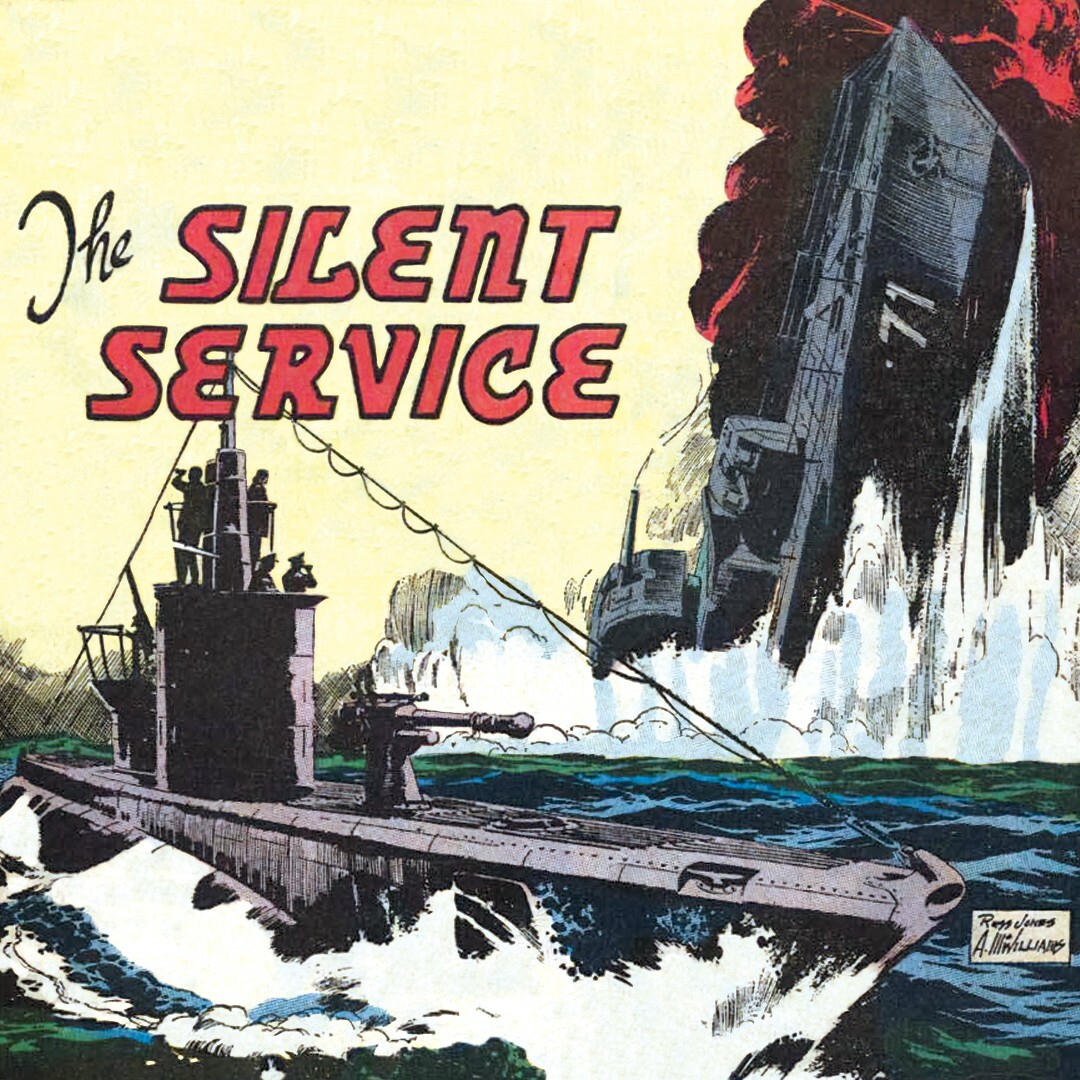
Hounam also focused upon several unexplained elements presented in the books by Ennes and others. There does seem solid if very fragmentary evidence that the Liberty‘s positioning off the Egyptian coast was part of some broader American strategic plan, whose still classified details remain largely obscure to us. Ennes’ book briefly mentioned that an American submarine had secretly joined the Liberty as it traveled to its destination, and had actually been present throughout the entire attack, with some of the sailors seeing its periscope. Although one of the crew had been privy to the classified details, he later refused to divulge them to Ennes when asked. According to some accounts, the sub had even used a periscope camera to take photographs of the attack, which various individuals later claimed to have seen. The official name for that secret submarine project was “Operation Cyanide,” which Hounam used for the title of his book. One heavily-redacted government document obtained by Hounam provides tantalizing clues as to why the Liberty had officially been sent to the coast, but anything more than that is speculation.

There were other strange anomalies. A senior NSA official had been strongly opposed to sending the Liberty into a potentially dangerous war-zone but had been overruled, while the ship’s request for a destroyer escort from the Sixth Fleet had been summarily refused. The day before the attack, top NSA and Pentagon officials had recognized the obvious peril to the ship, even receiving a CIA intelligence report that the Israelis planned to attack, and this led to several urgent messages being sent from Washington, ordering the captain to withdraw to a safe distance 100 miles from the coast; but through a bizarre and inexplicable series of repeated routing errors, none of those messages had ever been received. All of these seemingly coincidental decisions and mistakes had ensured that the Liberty was alone and defenseless in a highly vulnerable location, and that it remained there until the Israeli attack finally came.

Hounam also sketched out the broader geopolitical context to the events he described. Although originally open to friendly relations with America, Egyptian leader Gamal Nasser had been denied promised US assistance due to the pressure of our powerful Israel Lobby and was therefore pushed into the arms of the USSR, becoming a key regional ally, arming his military forces with Soviet weaponry and even allowing nuclear-capable Soviet strategic bombers to be based on his territory. As a consequence, Johnson became intensely hostile towards Nasser, regarding him as “another Castro” and seeking the overthrow of his regime. This was one of the major reasons his administration offered a green-light to Israel’s decision to launch the Six Day War.

In the opening hours of that conflict, Israel’s surprise attack had destroyed the bulk of the Egyptian and Syrian air forces on the ground, and these devastating losses soon led Nasser and other Arab leaders to publicly accuse the American military of having entered the war on Israel’s side, charges almost universally dismissed as ridiculous both by journalists at the time and by later historians. But Hounam’s detailed investigation uncovered considerable evidence that that Nasser’s claims may have been true, at least with regard to aerial reconnaissance and electronic communications.

According to the statements of former American airman Greg Reight, he and his aerial photo reconnaissance unit were secretly deployed to Israel, assisting the attack by determining enemy losses and helping to select subsequent targets. This personal account closely matched the details of the overall operation previously described in Green’s book almost two decades earlier. All these claims were supported by the extremely sharp photos of destroyed Egyptian airfields later released by Israel and published in American news magazines since experts agreed that the Israeli air force did not then possess any of the necessary camera equipment.

A successful Florida businessman named Joe Sorrels provided a very detailed account of how his American intelligence unit had been infiltrated into Egypt’s Sinai Peninsula before hostilities began and set up electronic monitoring and “spoofing” equipment, which may have played a crucial strategic role in enabling the sweeping Israeli victory. There were even claims that American electronic expertise helped locate the crucial gaps in the radar defenses of the Egyptian airfields that allowed Israel’s surprise attack to become so successful.

Hounam also emphasized the likely political motive behind Johnson’s possible decision to directly back Israel. By 1967 the Vietnam War was going badly, with mounting American losses and no victory in sight, and if this quagmire continued, the president’s reelection the following year might become very difficult. But if the Soviets suffered a humiliating setback in the Middle East, with their Egyptian and Syrian allies crushed by Israel, perhaps culminating in Nasser’s overthrow, that success might compensate for the problems in Southeast Asia, diverting public attention toward much more positive developments in a different region. Moreover, the influential Jewish groups that had once been among Johnson’s strongest supporters had lately become leading critics of the continuing Vietnam conflict; but since they were intensely pro-Israel, success in the Middle East might bring them back into the fold.

This provides the background for one of Hounam’s most controversial suggestions. He notes that in 1964, Johnson had persuaded Congress to pass the Tonkin Gulf Resolution by a near-unanimous vote, authorizing military strikes against North Vietnam, but based upon an alleged attack upon American destroyers that most historians now agree was fictional. Although the resulting Vietnam War eventually became highly unpopular, Johnson’s initial “retaliatory” airstrikes just three months before the 1964 election rallied the country around him and helped ensure his huge landslide reelection victory against Sen. Barry Goldwater. And according to Ephraim Evren, a top Israeli diplomat in the U.S., just a few days before the outbreak of the Six Day War Johnson met with him privately and emphasized the urgent need “to get Congress to pass another Tonkin resolution,” but this time with regard to the Middle East. An excuse for direct, successful American military intervention on Israel’s behalf would obviously have solved many of Johnson’s existing political problems, greatly boosting his otherwise difficult reelection prospects the following year.

We must always keep in mind that only a miracle kept the Liberty afloat, and if it had been sunk without survivors as expected, almost no one in American media or government would have dared accuse Israel of such an irrational act. Instead, as Stephen Green had first suggested in 1984, Egyptian forces would very likely have been blamed, producing powerful demands for immediate American retaliation, but probably on a vastly greater scale than the fictional Tonkin Gulf attack, which had inflicted no injuries.

Indeed, Hounam’s detailed investigation discovered strong evidence that a powerful American “retaliatory” strike against Egypt had already been put into motion from almost the moment that the Liberty was first attacked. Paul Nes then served as charge d’Affaires at the U.S. Embassy in Cairo, and in a taped interview he recalled receiving an urgent flash message alerting him that the Liberty had been attacked, presumably by Egyptian planes, and that bombers from an American carrier were already on their way to strike Cairo in retaliation. With an American-Egyptian war about to break out, Nes and his subordinates immediately began destroying all their important documents. But not long afterward, another flash message arrived, identifying the attackers as Israeli and saying that the air strike had been called off. According to some accounts, the American warplanes were just minutes from Egypt’s capital city when they were recalled.

American Pravda: Remembering the Liberty, Ron Unz, 18 October 2021

In other words, the attack on the USS Liberty appears to have been a failed false flag in the USS Maine/Gulf of Tonkin mode, a precursor of the successful 9/11 false flag, and one was intended to justify a US attack on Egypt that may have been intended to be a nuclear strike. It was anti-American treachery on the part of both the Israeli and the US governments of the time, which explains why both governments have so assiduously attempted to silence all of the witnesses and bury all the evidence ever since.

And the Egyptian hypothesis helps clarify the reason 9/11 happened, as a US government willing to enlist a foreign government to sink its own near-defenseless ship, or to blow up a civilian airliner, is obviously one that is willing to permit a few thousand of its civilians to die in order to justify a war it intends to wage in the Middle East. The attack on Afghanistan never, ever, made any sense, not even at the time. The only real question about 9/11 is whether it was the Israeli government or the Saudi government, or both, who were utilized by the US leadership. Logic, combined with the failure of the historical false flag, tends to suggest the Saudis were the responsible party, but the Israelis knew about the planned wars and were observing the operation.
DISCUSS ON SG


The Ideas, They Perpetrate

Ace of Spades is now talking about corporate cancer:

Ethan Van Sciver did a great podcast about what happens when you hire SJW political extremists in your company.

Here are some of the main points, with my own elaborations included.

1. Whatever your company used to be in the business of making, that is no longer your primary business. SJWs don’t care about the widgets you’re making. They take over your company and direct it to produce political extremist propaganda as its main product. Your company will only be permitted to produce widgets to the extent that widget-production helps fund your business’ new primary mission of producing propaganda and repression.

If your widget production interferes with the production of politically extremist propaganda, they will sabotage your widget output.

2. SJWs always seek to either curry favor with the human resources and diversity enforcement departments of a company, or, better yet, infest and take over the these departments of a company.

Companies actually allow this because they put most of their diversity hires into human resources and diversity enforcement, thinking that’s the way to appease SJWs, and that’s where these largely-unskilled, largely mentally-ill incompetents can do the least harm.

That’s 100% wrong.

If they were put in any other department — any department charged with producing things of value– their toxicity and dysfunction would cause the company to fire them for their malignance. They subtract value; they do not add to it.

But these corporations keep assigning them to the very departments were toxicity and dysfunction are rewarded. And this, these toxic, dysfunctional people are allowed to rise and exert authority over the previously healthy and productive parts of the company.

3. SJW “employees” will ultimately invert the boss-employee relationship, making themselves the bosses who tell the on-paper CEO and president what they’ll be doing now. They achieve this through socio-political blackmail and threats to destroy the company through a coordinated reputational damage operation.

We see this all the time. The SJW extremists are increasingly brazen about asserting that they, not the CEO or president or shareholders, run Bartertown.

While the grifter Charlie Kirk is babbling about conservatives protecting “the true, the good, and the beautiful.” Some people tend to bristle at this sort of thing and take offense on my behalf, but that’s just not necessary. It’s always the ideas that matter, not whoever happens to articulated the notion first. In the case of the latter, that’s a twist on the Aristotelian formulation, it’s very far from original to me even if I happen to have introduced you to the rhetoric.

And as I told Neon Revolt, we’ll know that Kirk is just parroting me if he starts telling conservative crowds that we have to “sink the damn ships!”

DISCUSS ON SG


China Refuses to Flex

The Global Times won’t even admit the existence of the hypersonic orbital glider that has been widely reported across the West:

The Financial Times (FT) quoted on Saturday several sources saying that “the Chinese military launched a rocket that carried a hypersonic glide vehicle” in August and judged it to be a “nuclear-capable hypersonic missile.” According to the FT article, the missile “flew through low-orbit space” and could help China “negate” US missile defense systems which are designed to target the fixed parabolic trajectory of a ballistic missile. The progress of the Chinese military has “caught US intelligence by surprise,” the report said.

The US generally has the ability to monitor global missile launches. If the FT report is to be believed, it means that there is a key new member in China’s nuclear deterrence system, which is a new blow to the US’ mentality of strategic superiority over China. According to the FT, the China Academy of Launch Vehicle Technology announced the 77th and 79th launches of the Long March 2C rocket, but there was no announcement of a 78th launch. The report believes the 78th “secret launch” may be to test the above-mentioned hypersonic missile.

The FT also reported that China has tested a new space capability with a hypersonic missile, citing sources. It said the missile missed its target by about more than 30 kilometers, yet the test showed that “China had made astounding progress on hypersonic weapons.” But if Chinese authorities do not voluntarily release such top defense secrets, others can only speculate based on technical monitoring methods.

It is meaningless to discuss the credibility of the FT report. But it is important to note the unstoppable trend that China is narrowing the gap with the US in some key military technologies as China is continuously developing its economic and technological strength. China doesn’t need to engage in an “arms race” with the US – it is capable of weakening the US’ overall advantages over China by developing military power at its own pace.

China appears to be attempting to reassure the world that despite its weapons development program, its ambitions are toward regional, rather than global, dominance. I tend to believe them, simply because for over two thousand years, they have been considerably more sinned against than sinning with regards to foreign intervention. According to Lee Kuan Yew, even their invasion of Vietnam was limited to containing “the Prussians of Southeast Asia” and dissuading the Vietnamese from expanding their field of operations beyond their occupation of Cambodia.

Of course, that’s the problem with imperialism. In order to be left alone, a nation has to develop sufficient strength to impose its will upon its neighbors. The question, then, is if that nation can simultaneously develop sufficient moral strength to resist the imperialist temptation.

One has to admire the dry restraint of the Chinese foreign ministry. It’s all about space tourism, you see.

Speaking during a regular press briefing on Monday, Chinese foreign ministry spokesman Zhao Lijian was asked to comment on a report from the Financial Times that Beijing had conducted a hypersonic missile test in August, which had shocked US intelligence. The spokesman stated that China had undertaken “routine spacecraft test” to evaluate the rocket’s reusable technology. “This is of great significance for reducing the cost of the spacecraft. The peaceful use of space provides a convenient and inexpensive way to travel,” Zhao added.

DISCUSS ON SG


But We’d Hear About It

A lot of naive people assume that if there were serious problems with the vaxxes, they’d hear about it. But that’s a false assumption, because there is tremendous pressure being put on those who suffer adverse reactions in addition to an organized campaign to gaslight them about the cause of their suffering:

My name is Chantal, I’m a 37 year old Police Officer from Western Australia and I had a severe reaction after receiving the Pfizer vaccine.

To the people who threatened me with defamation charges and disciplinary action for telling my story, I am disappointed. I’m disappointed that your priority is to silence me for your own ego and agenda rather than ask if I’m ok and offer me any help! At no time have you asked if I’m ok or cared for a second about my health or welfare. You decided that putting me under more stress, when that stress can cause further risk to my life is your priority. It makes me question humanity and how any person can have such a lack of empathy towards another.

The morning of my appointment, I was really scared about getting the vaccine as I knew it wasn’t right for me. I spoke to the doctor about my concerns and she was willing to write me a letter to delay it but asked me what would that mean for my job. I didn’t know and it worried me. That day she had spoken to a lot of people from my job and she said that a lot of them felt threatened and put into a position to make a choice that they didn’t want to and whilst in the waiting room, my colleagues told me the same thing. The doctor told me that she was concerned about giving the vaccine to people who weren’t doing it freely by their own choice. Sadly, I joked with the doctor saying “I’ll be the one the vaccine kills.” Sadly, it could have.

Within 10 minutes of getting the Pfizer vaccine, I got vertigo and nausea and within 15 minutes I had hives all over me. The doctor and ambulance officer got the rash under control but as soon as I got home I had a fever, chills and felt very unwell. For the following 3.5 weeks I suffered rashes every day, fevers as high as 39.7, aching muscles, flu like symptoms, nausea, vomiting, diarrhea, pressure in my sinuses and a cough so bad that it felt like my blood vessels were going to explode in my face. Some days I cried because I thought I was going to die. I was so sick. When I thought I was starting to get better, I still had extreme fatigue and was constantly light headed. I went back to work but spent a lot of time laying on my office floor and struggling to get through the day.

On a Tuesday night, I noticed that my eyes felt weird. They had a heavy feeling and felt like they needed rubbing all the time. The next morning I woke up to go to work and one eye wouldn’t open and the other wouldn’t close. The one that wouldn’t close also wouldn’t blink. I thought that I had allergies so I took an antihistamine and drove one hour to work. By 9:00am, I felt my top lip go a bit funny and my work colleague told me that my face was drooping sideways and she was taking me to emergency. I will be forever grateful for her making me go as she saved my life.

Within 1 minute of being at emergency, everyone was rushing around me and I started to panic. Next second I’m getting wired up to machines and a stroke specialist and multiple other doctors and nurses were in my cubicle. I was admitted to hospital.

The next morning, I got up and had a shower but instead I ended up having a stroke. I was in the shower by myself and my body started waving uncontrollably and the right side of my body got a weird sensation. I could no longer stand and I was on the floor scared. My right side got really heavy and felt numb with a weird pins and needles type of sensation. At this stage the left side of my face was fully paralysed and I had extreme muscle weakness in my left arm and leg.

I was taken for more tests which showed that the main artery to my brain had a rupture and I had suffered a mini stroke (TIA). I was transferred to the stroke ward at a different hospital that day and from that moment on, I was monitored hourly….

I was unable to have any treatment as the doctors deemed it too unsafe so the only thing that the doctors and I could do was wait and hope that my artery will heal itself. This will take a long time and in the mean time, my usual activities are on hold.

When I was discharged from the hospital, I was really happy as I couldn’t stand being locked up in the hospital. Don’t get me wrong, my nurses and doctors were amazing and I can’t say one thing wrong about their efforts and caring nature. However, it was so scary being home without the constant care. I wasn’t allowed to be left alone and the risk of having another stroke was and still is very high. I was in constant fear and even though my confidence is increasing, I still worry every second. I am further away from instant care and the risk of permanent brain damage is very real. I now also suffer constant nose bleeds and painful joints.

I was booked in for an appointment at the vaccine safety clinic. Sadly, there were about twenty other women the same age as me sitting around waiting. I didn’t really understand what the appointment was about until I was taken into a private room with a doctor who tried to tell me that the vaccine had nothing to do with what had happened to me but then also couldn’t tell me that it didn’t. He sat in his chair stating that it was worth the risk of having another stroke to get my second Pfizer shot. How can a doctor sit there and tell someone those things. He was willing to risk my life to meet what I believe his goal to be of getting as many people vaccinated as possible. He didn’t care about my safety and even asked after I refused the vaccine if I wanted him to call me back in three months time to see if I changed my mind.

The lesson is this: do not submit to the shots under ANY circumstances. It doesn’t matter if they threaten your job, your career, or anything else. If what they were doing was right, if what they were doing was safe, they wouldn’t need to threaten you.

DISCUSS ON SG


The Downside to Vaccinated Crowds

They’re going to need a lot more medical staff at public events… for the spectators. The latest heart attack at a football game took place during the Premier League match between Tottenham Hotspur and Newcastle.

Sergio Reguilon is pointing out something to the referee on the far side. Looks like something from the crowd. This can’t be good.

Oh no. Paramedics from both sides are now sprinting over to the crowd

The right decision is made on the pitch. Play has stopped here. We’ve seen scenes similar to this only too recently in games of football. All we can do is hope for the best.

This is the right call. Referee Andre Marriner is sending the players inside with what we can only assume is a supporter receiving medical treatment. Early on in the incident, Tottenham’s Eric Dier was one of the first to get to the Tottenham bench and call upon the medical staff. He was making a chest pumping motion, which gives you a clue as to the severity of all this.