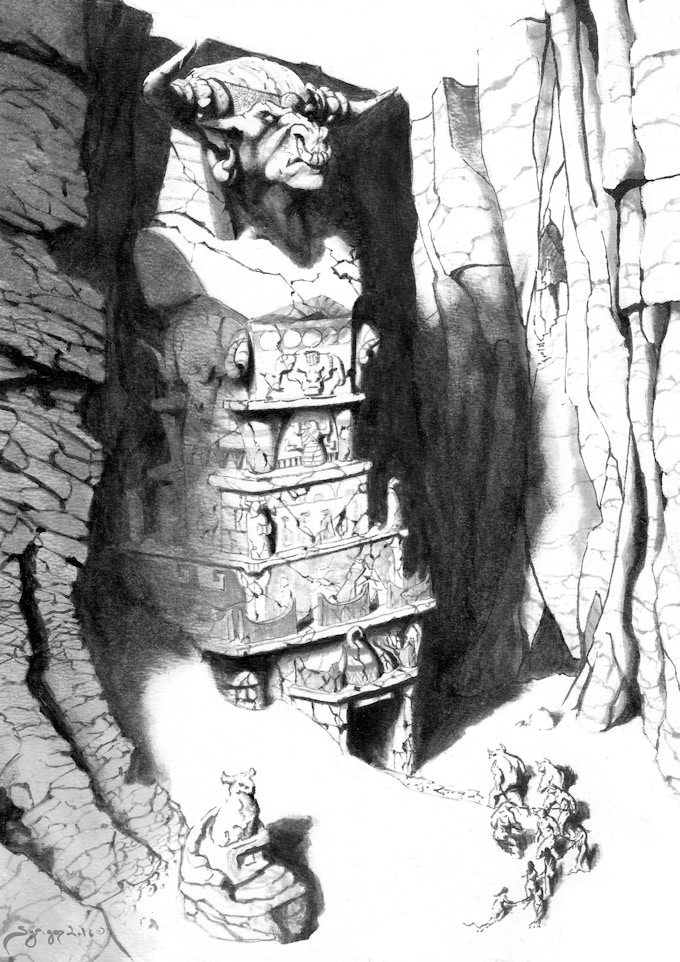
Latest reviews of A SEA OF SKULLS

At Castalia House, we are intent on building gradually, on the strong foundations of well-loved series of novels rather than chasing one-off hits. Amazon has listed Arts of Dark and Light as a series now, and the reviews for the latest installment continue to be gratifyingly positive.

Epic Fantasy done right

Vox Day has a gift. He is exceptionally skilled at crafting viewpoints that are reasonable, relatable, emotionally compelling, and completely opposed to each other. This serves him well in the genre of epic fantasy, as it enables him to ensure the reader is fully invested in all the many pieces that make up the puzzle of a great fantasy epic.

Not only do his characters feel realized, his plot is suitably grand. From labyrinthine schemes, to an army that has yet to show its true terror, and a pervading presence of evil that threatens all of Selenoth, our heroes have quite the obstacles to overcome. With these first two books we’ve been shown small pieces of the disaster that is to befall Selenoth, and I for one, cannot wait for the next installment.


Simply Amazing

Head and shoulders above its predecessor, which is no mean feat! It manages to have multiple characters with completely different viewpoints without a) becoming a confusing mess or b) being disappointing when subbing in an uninteresting character for an interesting one, since all the characters were genuinely interesting. All were fully fleshed out and heroic in their own way. Amazing world-building also really made the story come alive, everything had a real sense of place. A fantastic read, and I can’t wait for the next book in the series!


The Saga of Selenoth Grows and Gains Momentum

One of my favorite, all-too-brief parts of Lord of the Rings was the brief view of things we get from an orcish perspective when Sam is temporarily bearing the ring on Frodo’s behalf; not with guilty pleasure because the orcs were bad, but because it gave us a glimpse of the world of Middle Earth and War of the Ring from such a different point of view. A Sea of Skulls, the second installment in the Arts of Dark and Light trilogy pentalogy set in the world of Selenoth–a fantasy realm where elves and dwarves, orcs and goblins, have been partially displaced by a Catholicized Roman Empire exerting powerful influence through the iron discipline of its legions–gives us that and much more.

If you’ve ever wondered what it would be like for Roman infantry, with their centurions and balllistae, to stand their ground against goblin hordes, war pigs, and orcish shamans (or have now begun to wonder), the world of Selenoth is for you, and the Arts of Dark and Light trilogy pentalogy  tells a complex and engaging story of war and intrigue set in that world as the various races of Selenoth are manipulated and set against each other by powerful actors in the shadows….

This is grown-up fantasy which makes for a decent study of human (or orcish, for that matter) nature, not to mention Roman military chain of command, and entertains questions like how the seemingly inevitable decline of an advanced but decadent elven civilization could possibly be reversed, and how dwarves unexpectedly stuck in their own tunnels might feel about it. The violence depicted is quite explicit, both in the grim reality of war and especially in the opening scene of a brutal orc raid on a human village, but not exulted in, and one manages to understand the comradery-in-arms of warriors on every side of the struggle, human or otherwise.

But speaking of trilogies that are not trilogies, let’s not forget the first quarter of John C. Wright’s excellent Moth & Cobweb series. The final book of The Green Knight’s Squire have also been getting excellent reviews.

Fantastic modern, yet traditional fantasy

If you like the old tales of elves, heroes, Arthurian legends, men and monsters and great deeds, then you will enjoy this modern retelling. Highly enjoyable and recommended.


A Fine Conclusion to an Excellent Adventure Trilogy

Swan Knight’s Sword is a fitting end to the story of Gilberec Moth, an idealistic teenager out of place in the human world who gradually becomes a brave, worthy, Christian knight….The same elements present in the earlier works are apparent here. Swashbuckling adventure featuring lavish description of mystical beings and surroundings as well as full-blooded, desperate combat. A strong sense of Christian morality. Many newly revealed secrets of both Gil’s past and the elf world.

As with the second book, there are a myriad of references, both Christian and pagan, expertly blended together. I was particularly amused by the one to a character of Edgar Rice Burroughs, an author all modern adventure writers owe a debt of gratitude to. Or the use of Roland’s horn.

However, this installment also introduces several new wrinkles. There is a more varied, consistent use of humor. Much of it comes from Ruff, Gil’s trusty dog whose barks he can understand. In fact, all the interaction with Gil talking to animals is funny. John C Wright evidently discovered the same comedic truth that Ricky Gervais has; personifying animals is always funny. There is also verbal humor and some absurdist situations.

Swan Knight’s Sword features an especially strong conclusion, being the culmination of Gil’s transformation from a strange boy into a righteous, mighty man. While it satisfyingly ends this tale of Gilberec Moth, it promises more adventure for both him and the world at large.

A worthy ending, a tantalizing beginning

Swan Knight’s Sword is the best in this trilogy. A beautiful paean of adventure, courage, honor, loyalty and love. This book reminds me of the stuff I read in my youth, before the fantasy genre was a cesspool of pornography and meaningless nihilistic violence. I laughed, I cried, I wished I had a sword. But of course one does not simply walk into MordorMart and buy a sword, one must be bequeathed a sword by a father, or win one in a heroic quest. And sometimes one must hunt down and confront the magically invulnerable sasquatch that stole your father’s sword. This is one of those times…


Make California Not-America

It’s gone completely off the deep end and is not conducive to national greatness:

Beginning on Jan. 1, prostitution by minors will be legal in California. Yes, you read that right.

SB 1322 bars law enforcement from arresting sex workers who are under the age of 18 for soliciting or engaging in prostitution, or loitering with the intent to do so. So teenage girls (and boys) in California will soon be free to have sex in exchange for money without fear of arrest or prosecution.

This terribly destructive legislation was written and passed by the progressive Democrats who control California’s state government with a two-thirds “supermajority.” To their credit, they are sincere in their belief that decriminalizing underage prostitution is good public policy that will help victims of sex trafficking. Unfortunately, the reality is that the legalization of underage prostitution suffers from the fatal defect endemic to progressive-left policymaking: it ignores experience, common sense and most of all human nature — especially its darker side….

Unfortunately for Californians, SB 1322 isn’t an outlier — it’s only the tip of the liberal iceberg. 2017 will see the Golden State subjected to wave after wave of laws taking effect that are well-intentioned but disastrous embodiments of progressive utopianism.

One such new Democratic-authored law throws open the door to even greater government dependency on the part of the poor by rolling back proven reforms. In 1996, welfare reform was one of the greatest social legislation achievements of the last century, ending the lifetime welfare system and putting millions of Americans on the road to self-reliance and self-respect. In its wake, California lawmakers passed a law barring increased payments to women who have more children while still on welfare, in order to encourage women to achieve independence before having more children.

It’s a tough provision that works — which was apparently irrelevant to Gov. Jerry Brown, who just signed a bill repealing that prohibition. Henceforth, no matter how many children someone has while on welfare, the state government will ratchet up payments with each child, with no limit.

I think it is giving California’s lunatic left entirely too much credit to assume they are sincere in any beliefs. So, here is a three-step plan for the God-Emperor to Make America Great Again.

  • Relocate all post-1965 non-Americans and dual citizens to California. Settle them on the copious national parkland there.
  • Declare California independent. 
  • Build the Wall with California on the other side.
He can even sweeten the deal by letting California off the hook for their pro-rata share of the national debt. 

End of the monopolar world

Russia is succeeding where the USA failed:

Labelled an international pariah only months ago by Boris Johnson, and warned he would be stuck in a Syrian quagmire by a patronising Barack Obama, Vladimir Putin ends 2016 if not as the undisputed victor, then at least as the man at the centre of decision making.

It is Moscow and not Washington that is calling the shots in the Middle East.

Reeling from its cold war defeat and the subsequent collapse of the Soviet empire, Moscow was unable to save Yugoslavia from what it termed western aggression.

But in the case of Syria, it can claim it has recovered its self-respect. In the process, it has built a brutal reputation for sticking by its friends, understanding the dynamics of the region better than America, and knowing how to use military power to forge diplomatic alliances.

The US, by contrast, ends 2016 out in the cold, holding a postmortem into the failure of its peace drive with Israel.

That’s the difference a leader who puts interests of his nation first versus one who wants to transform his nation into something it is not can make.


Anti-Christian hate crime

Israeli parliamentarian destroys the New Testament and declares that Christianity “belongs in the garbage can of history”.

MK Michael Ben Ari (National Union), a member of the Israeli parliament tore up a copy of the New Testament and threw it in the trash, an act that was apparently caught on camera. Ben Ari and several other Knesset members received by mail on Monday a copy of the New Testament, sent by the Bible Society in Israel, an organization that distributes religious books.

In the letter sent with the book, director of the Christian organization Victor Kalisher wrote that the new edition “sheds light on the Holy Scriptures and helps understand them.”

“We hope the book will help you and illuminate your way,” Kalisher furter wrote.

However, while most MK’s chose to ignore the book or return it to its sender, the rightist lawmaker chose to term the book a “provocation,” tore it up into shreds and then threw it out.

“This abominable book (the New Testament) galvanized the murder of millions of Jews during the Inquisition and during auto da fe instances,” Ben Ari said adding that “Sending the book to MK’s is a provocation. There is no doubt that this book and all it represents belongs in the garbage can of history.”

Imagine the outrage if a U.S. Congressman tore up a copy of the Talmud and denounced Judaism on camera.

There is no such thing as Judeo-Christianity. It does not exist. There are no “Judeo-Christian values”, any more than there are “Islamo-Christian” or “Hindu-Shinto” values.

What many naive Christians need to understand is that many Jews absolutely hate Christians and Christianity. Such Jews are neither our friends nor our allies, but our overt enemies.

That does not mean that all Jews are enemies of Christianity. It doesn’t even mean that most of them are. It simply means that they are a distinct people with their own distinct interests, a nation who should neither be favored nor trusted on the sole basis of their religious or ethnic identity. And like everyone else, Jews should be judged as individuals, on the basis of their individual statements and actions.

As for Israel, the USA should support it to the extent it is in American interests to do so. As a regional power in the volatile Middle East, Israel is much more useful to Americans as an ally than as an enemy. But Christians nevertheless need to understand that many Israelis, including some Israeli political leaders, are their open and avowed enemy.

Now, I realize there are more than a few Jews and Christians alike who would prefer to bury all signs of this Jewish enmity for Christians and Christianity for one reason or another. This is understandable, and it may even be well-intentioned. But if you are inclined to knowingly keep the deceived in the dark, I think you really need to ask yourself whom you are serving in that regard.


How Putin influenced the US election

The Saker explains how Vladimir Putin really did influence the recent US presidential election:

I will dare to speculate that Russia did play a role in the election of Trump. No, not by hacking emails or by recruiting Ron Paul (!!!) as an agent of Russian propaganda, but by openly and firmly confronting the USA on all fronts and showing that Russia would not bend her knee before the AngloZionist Empire. As I have written many times, Russia has been preparing for war for years now and while Russians were (and still are) afraid of war, they are also ready and willing to fight it if forced to do so. In his latest press conference Putin specifically referred to the will of the Russian people as a key element in Russia’s ability to defeat any aggressor when he said,

We are stronger than any potential aggressor. I have no problem repeating it. I also said why we are stronger. This has to do with the effort to modernise the Russian Armed Forces, as well as the history and geography of our country, and the current state of Russian society

and he is absolutely right. Sure, Hillary was probably stupid enough to try to impose a no-fly zone over Syria, but the 200 or so generals and admirals who expressed their support for Trump probably understood what that kind of folly would entail. Furthermore, it appears that quite a few Americans are sympathetic to Russia and Putin himself. Again, in his latest press conference Putin referred to this and made some very interesting comments:

I do not take support for the Russian President among a large part of Republican voters as support for me personally, but rather see it in this case as an indication that a substantial part of the American people share similar views with us on the world’s organisation, what we ought to be doing, and the common threats and challenges we are facing. It is good that there are people who sympathise with our views on traditional values because this forms a good foundation on which to build relations between two such powerful countries as Russia and the United States, build them on the basis of our peoples’ mutual sympathy. (…) It seems to me that Reagan would be happy to see his party’s people winning everywhere, and would welcome the victory of the newly elected President so adept at catching the public mood, and who took precisely this direction and pressed onwards to the very end, even when no one except us believed he could win.

Putin puts it down to values, common values, between the Russian and the American people.

Personal sidebar: for whatever this is worth, I regularly interact with Americans who support Putin on the grounds that “he stands for American values unlike the SOBs in Washington”.

But how did the Americans become aware of what values Putin and Russia stood for if not for the ceaseless efforts of Putin himself and the alternative media to convey these values to the general public? I think that by OPENLY denouncing the total hypocrisy of the AngloZionist Empire and by OPENLY offering a different civilizational model, Putin and Russia did have an impact on the public opinion in the West. To put it simply: Russia has scored an ideological victory over the AngloZionist imperialists. In other words, the Russian policy of standing firm against the Empire while openly challenging it on its ideological foundation was the correct one and it probably did have an impact upon the outcome of the election in the USA.


By any means necessary

George Soros is pulling out all the stops to try to impede the God-Emperor’s rule while saving the EU from itself. But I find this article by the aged string-puller, entitled “Open Society Needs Defending“, to make for very satisfactory reading indeed.

Well before Donald Trump was elected President of the United States, I sent a holiday greeting to my friends that read: “These times are not business as usual. Wishing you the best in a troubled world.” Now I feel the need to share this message with the rest of the world. But before I do, I must tell you who I am and what I stand for.

I am an 86-year-old Hungarian Jew who became a US citizen after the end of World War II. I learned at an early age how important it is what kind of political regime prevails. The formative experience of my life was the occupation of Hungary by Hitler’s Germany in 1944. I probably would have perished had my father not understood the gravity of the situation. He arranged false identities for his family and for many other Jews; with his help, most survived.

In 1947, I escaped from Hungary, by then under Communist rule, to England. As a student at the London School of Economics, I came under the influence of the philosopher Karl Popper, and I developed my own philosophy, built on the twin pillars of fallibility and reflexivity. I distinguished between two kinds of political regimes: those in which people elected their leaders, who were then supposed to look after the interests of the electorate, and others where the rulers sought to manipulate their subjects to serve the rulers’ interests. Under Popper’s influence, I called the first kind of society open, the second, closed.

The classification is too simplistic. There are many degrees and variations throughout history, from well-functioning models to failed states, and many different levels of government in any particular situation. Even so, I find the distinction between the two regime types useful. I became an active promoter of the former and opponent of the latter.

I find the current moment in history very painful. Open societies are in crisis, and various forms of closed societies – from fascist dictatorships to mafia states – are on the rise. How could this happen? The only explanation I can find is that elected leaders failed to meet voters’ legitimate expectations and aspirations and that this failure led electorates to become disenchanted with the prevailing versions of democracy and capitalism. Quite simply, many people felt that the elites had stolen their democracy.

After the collapse of the Soviet Union, the US emerged as the sole remaining superpower, equally committed to the principles of democracy and free markets. The major development since then has been the globalization of financial markets, spearheaded by advocates who argued that globalization increases total wealth. After all, if the winners compensated the losers, they would still have something left over.

The argument was misleading, because it ignored the fact that the winners seldom, if ever, compensate the losers. But the potential winners spent enough money promoting the argument that it prevailed. It was a victory for believers in untrammeled free enterprise, or “market fundamentalists,” as I call them. Because financial capital is an indispensable ingredient of economic development, and few countries in the developing world could generate enough capital on their own, globalization spread like wildfire. Financial capital could move around freely and avoid taxation and regulation.

Globalization has had far-reaching economic and political consequences. It has brought about some economic convergence between poor and rich countries; but it increased inequality within both poor and rich countries. In the developed world, the benefits accrued mainly to large owners of financial capital, who constitute less than 1% of the population. The lack of redistributive policies is the main source of the dissatisfaction that democracy’s opponents have exploited. But there were other contributing factors as well, particularly in Europe.

I was an avid supporter of the European Union from its inception. I regarded it as the embodiment of the idea of an open society: an association of democratic states willing to sacrifice part of their sovereignty for the common good. It started out at as a bold experiment in what Popper called “piecemeal social engineering.” The leaders set an attainable objective and a fixed timeline and mobilized the political will needed to meet it, knowing full well that each step would necessitate a further step forward. That is how the European Coal and Steel Community developed into the EU.

But then something went woefully wrong. After the Crash of 2008, a voluntary association of equals was transformed into a relationship between creditors and debtors, where the debtors had difficulties in meeting their obligations and the creditors set the conditions the debtors had to obey. That relationship has been neither voluntary nor equal.

Germany emerged as the hegemonic power in Europe, but it failed to live up to the obligations that successful hegemons must fulfill, namely looking beyond their narrow self-interest to the interests of the people who depend on them. Compare the behavior of the US after WWII with Germany’s behavior after the Crash of 2008: the US launched the Marshall Plan, which led to the development of the EU; Germany imposed an austerity program that served its narrow self-interest.

Before its reunification, Germany was the main force driving European integration: it was always willing to contribute a little bit extra to accommodate those putting up resistance. Remember Germany’s contribution to meeting Margaret Thatcher’s demands regarding the EU budget?

But reuniting Germany on a 1:1 basis turned out to be very expensive. When Lehman Brothers collapsed, Germany did not feel rich enough to take on any additional obligations. When European finance ministers declared that no other systemically important financial institution would be allowed to fail, German Chancellor Angela Merkel, correctly reading the wishes of her electorate, declared that each member state should look after its own institutions. That was the start of a process of disintegration.

After the Crash of 2008, the EU and the eurozone became increasingly dysfunctional. Prevailing conditions became far removed from those prescribed by the Maastricht Treaty, but treaty change became progressively more difficult, and eventually impossible, because it couldn’t be ratified. The eurozone became the victim of antiquated laws; much-needed reforms could be enacted only by finding loopholes in them. That is how institutions became increasingly complicated, and electorates became alienated.

The rise of anti-EU movements further impeded the functioning of institutions. And these forces of disintegration received a powerful boost in 2016, first from Brexit, then from the election of Trump in the US, and on December 4 from Italian voters’ rejection, by a wide margin, of constitutional reforms.

Democracy is now in crisis. Even the US, the world’s leading democracy, elected a con artist and would-be dictator as its president. Although Trump has toned down his rhetoric since he was elected, he has changed neither his behavior nor his advisers. His cabinet comprises incompetent extremists and retired generals.

What lies ahead?

I am confident that democracy will prove resilient in the US. Its Constitution and institutions, including the fourth estate, are strong enough to resist the excesses of the executive branch, thus preventing a would-be dictator from becoming an actual one.

But the US will be preoccupied with internal struggles in the near future, and targeted minorities will suffer. The US will be unable to protect and promote democracy in the rest of the world. On the contrary, Trump will have greater affinity with dictators. That will allow some of them to reach an accommodation with the US, and others to carry on without interference. Trump will prefer making deals to defending principles. Unfortunately, that will be popular with his core constituency.

I am particularly worried about the fate of the EU, which is in danger of coming under the influence of Russian President Vladimir Putin, whose concept of government is irreconcilable with that of open society. Putin is not a passive beneficiary of recent developments; he worked hard to bring them about. He recognized his regime’s weakness: it can exploit natural resources but cannot generate economic growth. He felt threatened by “color revolutions” in Georgia, Ukraine, and elsewhere. At first, he tried to control social media. Then, in a brilliant move, he exploited social media companies’ business model to spread misinformation and fake news, disorienting electorates and destabilizing democracies. That is how he helped Trump get elected.

The same is likely to happen in the European election season in 2017 in the Netherlands, Germany, and Italy. In France, the two leading contenders are close to Putin and eager to appease him. If either wins, Putin’s dominance of Europe will become a fait accompli.

I hope that Europe’s leaders and citizens alike will realize that this endangers their way of life and the values on which the EU was founded. The trouble is that the method Putin has used to destabilize democracy cannot be used to restore respect for facts and a balanced view of reality.

With economic growth lagging and the refugee crisis out of control, the EU is on the verge of breakdown and is set to undergo an experience similar to that of the Soviet Union in the early 1990s. Those who believe that the EU needs to be saved in order to be reinvented must do whatever they can to bring about a better outcome.

The article is riddled with lies, but even so, it is clear that the globalists are getting increasingly worried. And well they should. The rising tide of nationalism is going to kill their evil utopian dreams as dead as the League of Nations. The European nations will be greatly blessed if they are so fortunate as to find leaders half as effective, and half as genuinely devoted to their nations, as the Russians are to have Vladimir Putin.

What Soros calls “the open society” is a fraud being marketed by the globalist elite to mask their true objectives of rule by an international aristocracy. There are few institutions more openly anti-democratic than the EU, which subverts even democracies that don’t belong to it. If the US was genuinely interested in spreading democracy abroad, its first order of business should be to invade Brussels.

History never ended. Liberal democracy – especially in its bizarrely contorted limited modern form – has completely failed.  The immigrant-riddled US political system is one financial failure away from collapse. How painful it must be to be reaching the end of one’s road in the knowledge that all of one’s works will be undone within a single generation.

The Saker has some relevant comments:

Poor “EUans” (my own word for the European zombies who believed in the Bilderberger’s European Union): they are now, how shall I put it politely, totally “frigged”? Not only did the British people defy the Empire and vote for a Brexit, but now the Imperial Homeland has “backstabbed” them by electing a patriot who is not interested in maintaining the global empire (or so he says, at least for the time being). At the same time, the so-called “refugee crisis” is bringing several crucial EU nations to the brink of a civil war (France for example) while all the efforts of the elites to blame Russia for it all end up in abject failures. Just check out this hilarious article in the British Sun which accuses Russia of, I kid you not, “organizing sex attacks in Germany“!! True, we already had the “Serbian Chetniks using rape as a weapon of ethnic cleansing” and “Gaddafi distributing Viagra to his soldiers to rape opposition supporters” but Putin ordering refugees to rape women in Germany is the best, so to speak. And just in case the unthinkable happens in Germany, the Germans have already warned that Russian hackers might steal the election in Germany. If this was not so utterly disgusting it would be hilarious. The bottom line is this: the entire EU project is morally completely bankrupt, each EU member state is now in a deep political crisis and the so-called “elites” are scrambling to find a response to what appears to be an inevitable collapse of the EU-order over Europe. 


I don’t care

For future reference, this will be my response to all future queries concerning whether I heard about X doing, or saying, anything, and what I think about X doing, or saying, Y, about Z.

I don’t care. I’m not interested.

My friends are my friends. Castalia authors are Castalia authors. I don’t give an airborne rodent’s posterior if they happen to do or say something that offends your ideological, religious, ethnic, national, or racial sensitivities.

I realize this won’t stop the occasional idiot running to me with “did you hear what X did” like a teenage girl who just heard the rumor that the head cheerleader cheated on her boyfriend with the math teacher, but for the record, that will be my response.

I don’t care. I’m not interested.

And if you have a problem with that, then please leave and find some other corner of the Internet in which to reside. It’s a big place. Take your crusade, whatever it might be, elsewhere. You’ve got no shortage of options. And I’m not interested in your opinion of me or anyone else. Talking about me, or about someone else, rather than the subject of the post, is an excellent way to get yourself banned here.

This is not, and has never been, a free speech zone. I’ll cheerfully ban you for annoying me or trying to waste my time. And I have a low tolerance for gammas, particularly gamma midwits.

I’m done trying to talk sense into the senseless, or to explain rationales to the irrational. You’d think I, of all people, would know better.


Thomas Sowell: 10 great quotes

1. “It takes considerable knowledge just to realize the extent of your own ignorance.”

2. “Socialism in general has a record of failure so blatant that only an intellectual could ignore or evade it.”

3. “Much of the social history of the Western world, over the past three decades, has been a history of replacing what worked with what sounded good.”

4. “Each new generation born is in effect an invasion of civilization by little barbarians, who must be civilized before it is too late.”

5. “The problem isn’t that Johnny can’t read. The problem isn’t even that Johnny can’t think. The problem is that Johnny doesn’t know what thinking is: he confuses it with feeling.”

6. “The black family survived centuries of slavery and generations of Jim Crow, but it has disintegrated in the wake of the liberals’ expansion of the welfare state.”

7. “The welfare state is not really about the welfare of the masses. It is about the egos of the elites.”

8. “I have never understood why it is ‘greed’ to want to keep the money you have earned but not greed to want to take somebody else’s money.”

9. “No one will really understand politics until they understand that politicians are not trying to solve our problems. They are trying to solve their own problems — of which getting elected and re-elected are number one and number two. Whatever is number three is far behind.”

10. “People who enjoy meetings should not be in charge of anything.”