Pepe Escobar reports that Israel tried to nuke Iran in response to the massive drone strike, but the F-35 carrying the bomb was shot down by Russian air defenses:
From a very high level intel source.
In Asia.
NOT Russia-China.
Although the strategic partnership, of course, exchanges at the highest level 24-7.
Confirmed and re-confirmed.
It will be great to know what Sy Hersh hears from his Beltway sources.
Here we go.
Israel initially chose to respond with extreme force.
An F-35 loaded with a nuclear bomb was sent east over Jordan.
The mission: cause a high-altitude detonation over Iran that would provoke a surge in the high-capacity power lines, crippling Iran’s electric grid, as well as disabling all electronic devices.
An EMP attack.
However… as the Israeli F-35 was leaving Jordanian airspace it was shot down by the Russian Air Force.
Hence the publicised version of the Israeli counter response was such a travesty.
In the end all sides decided not to publicise the real news – to de-escalate what could well turn into WWIII.
I think it is absolutely foolish to express any opinion at all about the veracity of this report. There is no question that the Netanyahu government is sufficiently daring and/or desperate to risk an EMP attack; Netanyahu is almost certainly also willing to risk trying to nuke the center of Tehran if he thought he could get away with it without fatal consequences for Israel.
While it could just be fiction or disinformation, the nature of the reported attack being more of a restrained warning, a limited escalation, tends to lend to the credibility of the report. And Escobar has been reasonably reliable in the past, so there is no reason to dismiss him simply because the scary n-word happened to be involved. Moreover, this is exactly the end result that I, and other observers, have expected would happen in the event that Israel attempted some sort of air strike against Iran.
Larry Johnson thinks the reported scenario is unlikely, but I don’t find his reasoning to be even remotely compelling. Given the ranges at which Russian air defenses are operating over Ukraine, the idea that Russia could not have tracked a lone Israeli F-35 and shot it down in part of the crowded real estate in the Middle East nominally under U.S. air control does not strike me as even remotely difficult or improbable. That doesn’t mean that he’s not correct; as I said, I refuse to express any opinion at all about the likelihood of an event about which I have literally zero information.
If legitimate, I think this report is very encouraging, as it indicates a) the Israelis are not overconfident about their ability to utilize their nuclear weapons and are not going to go all-in on the first hand, b) the Russians are exerting their superior air defense capabilities to prevent unnecessary escalation in the Middle East, and c) Iran is exhibiting the same sort of patience that is required to see out the inevitable collapse of Clown World that has been demonstrated by Russia and China.
Lenin famously defined communism as Soviet power plus electrification of the whole country. In other words, the ideological project of building communism was supplemented by the technocratic project of electrification, the latter being an important source of legitimacy for the new regime.
The present-day European Union is engaged in its own expansive electrification project – the energy transition – that similarly inhabits ground where ideology meets technocracy and underpins legitimacy.
Yet in the past year or so, something has gone badly wrong, and a backlash against the climate agenda and its technocratic enforcers has been spreading across Europe. The energy crisis – far from catapulting the continent further along the path toward a carbon-neutral future as it should have – has exposed just how elusive the goal is, as Europe has scrambled to sign expensive LNG deals and even restart coal-fired plants. Farmers dissatisfied with EU policies that they regard as devastating to their livelihoods have been grumbling for years, but recently their protests have reached a crescendo, and built up political weight. Right-leaning and far-right parties, meanwhile, are gaining ground by the day. Standards of living are dropping and industry is shutting down or moving elsewhere.
Discontent with suffocating bureaucracy and regulation is widespread. A recent survey among German small and medium-sized companies – has registered a massive shift in sentiment against the EU. This is particularly concerning because the so-called German Mittelstand used to be among the strongest pillars of support for European integration.
What is embroiling Europe is deeper than a political crisis – it is approaching what can be called a crisis of legitimacy for the ruling elite.
The EU is illegitimate by every measure: politically, economically, militarily, and spiritually. It has already failed, completely, and betrayed every single promise that was ever made to the European nations in order to convince them to place their trust in the single European superstate that vowed up and down it never had any intentions of becoming what it was always designed to be.
But the USA is facing an even more serious crisis of legitimacy, as at least the EU’s illegitimate elite is, for the most part, actually made up of Europeans. The illegitimate elite presently in power in the United States is neither American nor culturally Christian; it isn’t even civilized. Which is why it rules so poorly and so recklessly; what works in the interests of a small and subversive tribal group is entirely unsuited for successfully guiding a large nation, let alone an entire civilization.
The disaster that has been David Tepper’s ownership of the Carolina Panthers is more than a little illustrative in this regard. What works beautifully when the deck is stacked in your favor simply will not work when you’re forced to compete on an equal playing field, and the experience and habits you developed in the easier situation actually tend to work against you once you no longer possess any structural advantages.
The great Israeli general Moshe Dayan once said that the secret of the IDF’s stunning historic military success was that it fought Arabs. If there is one lesson of the post-WWII period, it is that the secret of the stunning Jewish political and economic success in the USA is that they were competing with Anglo-Saxon Protestants. And that is quite clearly not adequate preparation for competing with the Chinese, the Russians, and the Persians on the global stage.
The political entities of the USA and the EU are both going to collapse, almost certainly within the next ten years, because no political structure, and no society, can survive an incompetent and illegitimate elite.
A fascinating coda to the tale of Wellington’s most useful intelligence officer, Lieutenant-Colonel Colquhoun Grant, during the Peninsular War suggests that but for an incompetent Prussian cavalry general, Napoleon would likely have been defeated at the Battle of Ligny, thereby rendering the historic battles of Quatre-Bras and Waterloo entirely unnecessary.
It will scarcely be believed that this resourceful man was back in the Peninsula by September and reported himself to Wellington just four months after he had been captured near Sabugal. His chief got him a brevet-colonelcy without delay, and employed him as his head Intelligence officer during the remaining eighteen months of the war.
He was again called out during the Hundred Days from the Military College at Farnham, where he had been given a berth as instructor in 1814, and was put by Wellington in charge of his Intelligence department in Belgium. He always maintained that the surprise of the British and Prussian armies by Napoleon on June 15th would never have taken place but for the stupidity of a cavalry brigadier, who stopped one of his emissaries bearing certain news of the outmarch of the French army. Grant’s messenger was detained by the Hanoverian general Dõrnberg, whose cavalry was watching the frontier about Tournai and Mons. He did not send him on till the fighting had already begun around Charleroi, and Grant could only deliver the message to Wellington a day late, when the Battle of Quatre-Bras had actually begun. The loss of the twenty-four hours was almost irreparable: if Dõrnberg had not stopped the all-important news, Wellington’s whole army would have been concentrated a day earlier than was actually the case, and he would certainly have co-operated with Blücher at Ligny, instead of being forced to hold back Ney at Quatre-Bras with detachments that kept dropping in all through the day.
History repeatedly teaches that having the wrong man in the wrong place at the wrong time is one of the most costly mistakes that any leader of any sort of organization can make. The consequences are often not merely limited to immediate failure, but result in complete catastrophe and an existential crisis for the organization.
In this case, more than 20,000 British and Prussian soldiers were killed or wounded unnecessarily, due to the unnecessary action of a single officer.
Apparently the foreign elite ruling the imperial USA are under the impression that the only way out of its Ukrainian debacle is through. Unfortunately, this concept doesn’t work when the rapidly approaching object is not a cloud, but the ground:
The House passed a foreign aid package on Saturday as well as what’s called the REPO Act that will allow the Biden administration to confiscate billions of dollars’ worth of Russian assets sitting in U.S. banks and transfer them to Ukraine for reconstruction.
“By delivering urgently needed aid to Ukraine, the United States has reasserted itself as the leader of the free world and as a reliable partner to its allies,” said Rep. Ritchie Torres, D-N.Y. “The US has a singular obligation to help freedom fighters fight for their freedom, and nowhere more so than in Ukraine, whose self-defense against Putin’s aggression must prevail.”
The REPO Act, which would authorize Biden to confiscate the frozen Russian assets in U.S. banks and transfer them to a special fund for Ukraine, is part of the foreign aid package that was stalled for months in the House. More than $6 billion of the $300 billion in frozen Russian assets are sitting in U.S. banks. Most of the $300 billion are in Germany, France and Belgium.
On Wednesday, Speaker of the House Mike Johnson released the package which would include tens of billions of dollars in aid for Ukraine, Israel, and Taiwan.
McFaul, whose been lobbying for the REPO Act for months, clapped back at Caldwell’s assertion and said the use of Russian assets for Ukraine would send an important message to autocratic nations around the world. “There are those that say, ‘Well, this will hurt the dollar. It’s bad for our reputation.’ I have a pushback to that. I don’t want criminals investing in American Treasury bonds,” McFaul said.
Keep three things in mind here. First, Russia has a similar amount in European funds frozen that it will seize in return if the Russian funds are stolen, as well as considerably more foreign assets that can be easily nationalized. As with the previous sanctions, this act will strengthen the Russian economy at the expense of the European economies.
Second, China is already being sanctioned and is the second-largest holder of US Treasury bonds, at $800 billion. This is 40 percent lower than it was 11 years ago and is a 14-year low. This is one reason why the USA has been unable to export inflation the way it used to, and if China were to follow Russia’s lead in dumping the dollar entirely, US inflation would probably double from where it is today. Since the BRICSIA nations are already in the process of developing their own trading currency, this is a very high probability event within the next three years and will probably precede the opening of the Asian front.
And third, the central banks are, quite literally, criminal organizations, as are most of the large multinational corporations. If criminals weren’t investing in US Treasury bonds, no one would be. Furthermore, the seizure of foreign assets without full compensation would obviously be nothing less than theft by the U.S. Congress.
I suspect there may be some serious unintended consequences for the global banking system if the bill actually becomes a law and is translated into action. Because how can anyone possibly trust their financial assets to a banking system so easily suborned to a government’s whims?
Games Workshop has been converged. Warhammer Fantasy Battles is long dead. Warhammer 40k has fallen. But there are still lessons to be learned with regards to how and why it survived its corporate cancer as long as it did.
Warhammer 40k was resistant to the Left for so long because it was a universe that (unintentionally) founded itself in very basic truths of mankind. And it presented those truths in such an obvious way that it was next to impossible for the Left to deny. It is difficult for the woke to corrupt a property that outright acknowledges how the woke corrupts IPs to begin with.
Shall we raise a few examples? In 40k, there are the Chaos Gods which are the Sci-Fi equivalent of the devil. The woke can try to depict heroic gay romances and represent obese persons, but to anyone with common sense, these narratives ultimately twist themselves into the corruptions of Slaanesh and Nurgle (two of the Chaos Gods). In outlining the existence of a hell, the Right now has the vocabulary (and the canon) to section off Leftist controlled portions of the narrative.
You might have an atheistic character, but when the God-Emperor of Mankind is raising up saints, that character goes from a noble objector to a skeptic fool. When you create a definite good and evil in a fictional universe, then it becomes ever more difficult for the Left to pervert. And the more unabashed you portray these truths, the more tenuous the Left’s depictions become.
The Left can easily get away with perverting Star Wars because Star Wars is a quasi Buddhist Sci-Fi adventure. But what happens if there were definable universal constants that went against Leftist interpretations? What if the Jedi Order were explicitly defined as a male only society and that to deviate from this was heresy? Yes, the Left can go and insert their narratives, but there is now plausible deniability from the Right.
What if we can create a fictional universe so grounded in obvious realities that any Leftist interpretation could be canonically discarded as a sham? I know there’s no such thing as an airtight creation, but it would be a tremendous leap forward if we could create spaces resistant to Leftist encroachment. The concept of a Rightwing fictional universe has always been tantalizing, but what makes a fictional universe Rightwing? It is grounding those narratives in the Truth.
I don’t have all the answers, but I think the future of Rightwing entertainment is creating properties which explore the truth in very basic ways that the Left cannot. In acknowledging the truths of the human existence, we can come to art that inherently resists Leftist adaption. In delving into the deepest parts of the human condition, we can better understand the world and better condemn the perversion the Left wants to create.
Everything is potentially subject to convergence and eventual destruction. Even Arkhaven. Even Selenoth. But the more we learn about how the great intellectual properties of the past were acquired, converged, and destroyed, the better we can protect the worthwhile ones of today going forward.
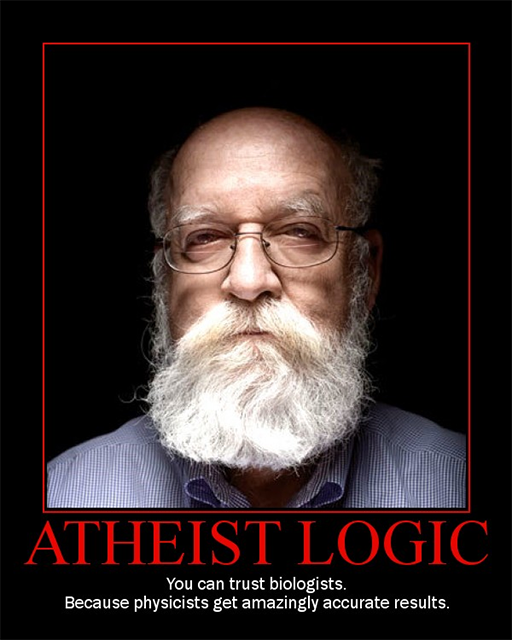
The second of the Four Horsemen of the New Atheism has died at the age of 82. He will be remembered both for his own philosophical works, for the critique of them in The Irrational Atheist, and for providing one of the great atheist memes ever to grace the Internet.
Whereas the Boomers are openly gleeful to have denied the younger generations the world they knew, it grieves Generation X that we were unable to preserve it.
When Spacebunny and I bought our first house, I consciously sought one that was on a dead end culdesac backed up on a park, with the idea that the children we hoped to have would be able to run around and play there with the pack of neighborhood kids one day.
But, as Spacebunny correctly pointed out, it was already too late for that. Even by the end of the 1990s, suburban kids really didn’t do that anymore, for a variety of reasons.
The naive optimism of the clueless cultural observer would be hilarious if it weren’t so tediously and predictably inobservant:
After the disastrous launch of their Gemini AI, which insisted that George Washington was actually Black and couldn’t decide whether Musk’s tweets or Hitler was worse, Google’s response was timid and weak. This was just a bug! A problem with QA! It absolutely, positively wasn’t a reflection of corrupted culture at Google, which now appeared to put ideology over accuracy. Really, really!
Anyone watching that shit show would be right to wonder whether one of America’s great technology companies had fallen completely into the hands of the new theocracy. I certainly did.
But now comes evidence that Google perhaps isn’t totally lost, even if an internal war over its origin principles is very much raging. One pitting the mission of organizing the world’s information and making it useful against the newspeak Trust & Safety goal of controlling narratives and countering malinformation (i.e. inconvenient truths).
This played out in stereotype as 28 Googlers occupied the CEO of Google Cloud’s office for 10 hours this week, defaced property, and prevented other Googlers from doing their work. Because Google provides cloud services to Israel, said the occupiers. And thus The Current Thing demanded it be stopped by whatever means possible.
But then the most amazing thing happened. There was no drawn-out investigation. No saccharine statements about employee’s rights to occupy offices, preventing work from happening, or advance their political agenda at work. Nope. They were just fired. Immediately. All 28 of them.
The firings aren’t the result of Google suddenly realizing that it is a business that shouldn’t permit its employees to prioritize politics and ideology over doing their jobs. Nor do they represent a belated rejection of what the author calls “the new theocracy”. It’s simply what happens when those lower in the ranks of the corporate ahrimanocracy offend those who are higher in its ranks.
Remember, evil revels in its own hypocrisy. The more subjective the standard, the more complete its control.
I’ve been visited 4 times in 3 days by Cheshire Police. Asking for a Voluntary interview about something I’ve tweeted. Including a couple of women police officers knocking at 9.30pm last night when my kids were in bed. I’ve given them my solicitors information and number. He then called to arrange an interview. No answer, so he left a voice message for the Sergeant who’d visited on the 1st occasion. The last two women didn’t know there had been 3 visits in 3 days, apparently! Either it’s a shambles or an attempt to intimidate me and my family. Welcome to North Korea.
Remember, hypocrisy is always a virtue in the inversion that is Clown World. The servants of Clown World genuinely believe they are upholding freedom as they oppress you, believe they are defending basic human rights as they threaten violent force to silence speech, and believe they are defending people while they murder innocent civilians.
And the more trivial the thought crime, the more popular the opinion expressed, the more overt the attempts to intimidate.
But don’t think that they’ll be mustered in your defense when you are openly slandered, libeled, defamed, and insulted, even when you have an iron-clad case against those who have clearly violated the law more egregiously than the thought criminals they are pursuing. Then, it’s suddenly “well, no actual harm done” and “freedom of speech” and “freedom of the press” and every other subjective excuse they think will somehow conceal the obvious fact of their shameless hypocrisy and double standard.
Which is why it is best, if you are at all active on social media or even a minor public figure, to stick relentlessly to telling the truth, using rhetoric that is soundly based in proper dialectic, and preferably, utilizes terms that are defined as positive by the Clown Worlders themselves. This doesn’t mean that they won’t try to prosecute you for directly quoting someone stating an uncomfortable truth, but it does significantly complicate their ability to do so successfully.
Rolling Stone journalist Amanda Robb once complained in an article that she interviewed me for three hours without me ever giving her anything “useful”. What she was looking for was a kill-quote and I knew it. Her problem was that I expressed my opinions very clearly, without hiding anything, but in an entirely non-pejorative manner, with no vulgarities, obscenities, or emotionally-charged terms that have been defined as offensive. Of course, her confession confirming her intentions is why I no longer give interviews to anyone with any associations with the mainstream media.
That’s why, 11 years later, they’re still using the same half-sentence quote taken completely out of context to try to discredit and deplatform me. They just don’t have anything else; they have to invent totally false positions I’ve never, ever, held or expressed just to take a shot even though there are 27,000 blog posts, 512 columns, and 15 books to comb through if they need material. Here is the entire quote, which you will note never appears in its entirety on Wikipedia or anywhere else beside this blog, because it shows that I was not only responding to an series of outrageous lies and accusations made, completely unprovoked, by Jemisin, but that my response to her absurd and dishonest “call for reconciliation” in Australia was not only reasonable, but prescient.
Jemisin has it wrong; it is not that I, and others, do not view her as human, (although genetic science presently suggests that we are not equally homo sapiens sapiens), it is that we simply do not view her as being fully civilized for the obvious historical reason that she is not.
She is lying about the laws in Texas and Florida too. The laws are not there to let whites ” just shoot people like me, without consequence, as long as they feel threatened by my presence”, those self-defense laws have been put in place to let whites defend their lives and their property from people, like her, who are half-savages engaged in attacking them.
Being an educated, but ignorant half-savage, with little more understanding of what it took to build a new literature by “a bunch of beardy old middle-class middle-American guys” than an illiterate Igbotu tribesman has of how to build a jet engine, Jemisin clearly does not understand that her dishonest call for “reconciliation” and even more diversity within SF/F is tantamount to a call for its decline into irrelevance. Nor do the back-patting Samuel Johnsons wiping their eyes and congratulating her for her ever-so-touching speech understand that.
There can be no reconciliation between the observant and the delusional.
I have never retracted, apologized, or backed down from what I said, why it’s still all right there on the blog for everyone to see, and why they had to give her no less than three successive Best Novel Hugo Awards in order to elevate her imaginary standing in the science fiction world to distract attention from the observable truth about one of their leading poster diversities.
Eleven years later, events have proven my assessment was absolutely correct. Thanks to the convergence of the various industries involved, Jemisin got the “even more diversity within SF/F” for which she was calling and SF/F is now observably in marked decline in every single format, from comics to film. And it never ceases to be amusing how the midwits in the media showed themselves to be incapable of understanding the science in the genetic science reference, although word must have eventually gotten around because they all suddenly dropped that one about six years ago.
In any event, never give them the ammo with which to shoot you. Force them to manufacture it without ever stepping back one inch from that which is true and True. For we will continue to observe while they continue to delude themselves, and there will never be any reconciliation until the day Reality comes for them and shatters their delusions.
Oi! We ‘eard you been thinking some criminal thoughts!