Russia Blows Up Bridge to Crimea

Just like they blew up their own pipeline to Germany, shelled the nuclear reactor under their control, and assassinated the daughter of Alexandre Dugin. Which is to say, the Russians didn’t do it.

A crucial bridge linking Russia and Ukraine has exploded in a suspected attack by Ukrainian saboteurs this morning, just hours after Vladimir Putin’s birthday.

Videos show the explosion rocking the Kerch Bridge linking the peninsula with the Russian mainland. The attack could cut supplies to Putin’s forces as Ukraine makes more advances in the south towards Kherson.

A section of the bridge has collapsed into the sea and a train caught fire in the blast. Long fuel lines are already forming in Crimea, despite Russian claims to have enough supplies to last two weeks.

Although Kyiv has not claimed responsibility for the attack, one Ukrainian official boasted that ‘Putin should be happy. Not everyone gets such an expensive birthday present’ – a reference to the Russian president’s 70th birthday yesterday.

It is unclear if a suicide bombing caused the blast, but there have been no reports of incoming missiles. Some witnesses claimed there were two explosions .

Regardless of who blew up the bridge and how – and I would guess it was more likely underwater sabotage by a second US Navy SEAL team than the assumed suicide truck bomber – Russia has been doing an awful lot of not-responding of late. The Russian people are starting to get angry about all the not-responding. This makes me conclude that whatever the Russians are planning, it’s probably going to be something even bigger than the February surprise of the special military operation, because this was a direct attack on Russia.

UPDATE: Footage of the explosion which destroyed the only bridge between Russia and Crimea shows a mysterious ‘wave’ just before the blast – leading to speculation a drone packed with explosives or a boat could have been the cause.

Quelle surprise…

DISCUSS ON SG


Elizabeth the Catastrophic

Ann Barnhardt’s indictment of the late Queen Elizabeth II is as savage, and as accurate, as one might expect.

Queen Elizabeth II, already being called “Elizabeth the Great”, presided as monarch over the most rapid and profound societal, cultural, religious and imperial collapse in human history, it seems to me. Any historians that would like to chime in on this question, please email me. I truly can’t think of another example in history that was as severe and as rapid as what has happened in Battenburgian Britain. Consider what the both the British Empire AND the British culture were in ARSH 1952, and what they are today. When Elizabeth took the throne, it was literally true that “the sun never set” on the British Empire. They had already lost India just five years earlier in ARSH 1947, but in ARSH 1952 the U.K. had real, legitimate control of massive swaths of Africa, a huge presence in SE Asia, Hong Kong, the entirety of Oceania and the South Pacific, the Falklands, a large presence in the West Indies and the Caribbean, and, of course, nearly half of North America. Today, almost every colony and territory has declared total independence, and the so-called “Commonwealth” nations are IN NAME ONLY. The United Kingdom has ZERO authority in say, Canada. Or Australia. Or New Zealand. None. And everyone knows it. And the only thing keeping Argentina from invading and taking the Falklands is the fact that Argentina is such a broke, incompetent kakistocracy that they can’t. But the Royal Navy today could NOT defend the Falklands, and everyone knows it.

But more importantly, as “Head of State and Head of Nation”, Queen Elizabeth signed off on the largest race-replacement scheme in human history. Today, the city of London IS LESS THAN HALF WHITE – not merely “British”, but WHITE. It was in the high 90 percentile BRITISH when she took the throne. The City of Leicester is a fully-conquered territory of the Caliphate. Non-musloids basically can’t walk the streets of Leicester without risking their lives. Many cities in the U.K. have surpassed the percentage musloid from which only hot war can reclaim the territory. Queen Elizabeth SIGNED OFF ON ALL OF THIS.

Queen Elizabeth bestowed countless honors and knighthoods on the most open, disgusting sodomites and moral monstrosities, and British culture went from what we see depicted in “All Creatures Great and Small” to the totally degenerate, revolting Brit culture we see today ON HER WATCH. So when I saw people immediately beating the drum that Queen Elizabeth “reigned over the greatest advancement in British culture in history”, I just sat there shaking my head thinking, “How is it possible to be so utterly detached from reality?” Her reign was the most catastrophic civilizational collapse perhaps in human history.

The point is not that the queen was in full control of events, or that she was the primary architect of “the most castastrophic civilizational collapse,” which is still very far from complete. The point is that she was in a powerful position to resist the collapse of her realm and her society, but instead of living up to her duty to do so, chose to embrace it instead.

Far from being the glorious figure of history that some would paint her, she will instead be remembered as a sad and ineffectual creature who presided over the precipitous decline of the United Kingdom. And, of course, given the inversion being presented here, we know perfectly well precisely what is behind this attempted lionization.

DISCUSS ON SG


Accepting Aggression

The Tree of Woe contemplates the Non-Aggression Principle:

The Non-Aggression Principal or NAP is considered to be a defining principle of libertarianism. It been presented in different ways, each with slightly different implications. Infogalactic lists seven formulations of the NAP by thinkers dating back to John Locke. Of the seven, it is the Mid-20th Century formulations by Murray Rothbard that have had the most influence, and upon which we’ll focus:

Murray Rothbard (1963): “No one may threaten or commit violence (‘aggress’) against another man’s person or property. Violence may be employed only against the man who commits such violence; that is, only defensively against the aggressive violence of another. In short, no violence may be employed against a nonaggressor. Here is the fundamental rule from which can be deduced the entire corpus of libertarian theory.”

In addition to being a fundamental principle of libertarian thought, the NAP also appears as a second-order principle (derived from more fundamental rules) in many other ideologies. Many religions, typically those which do not espouse complete pacifism, espouse some variant of the NAP. Lockean liberalism espouses some variant of the NAP as well.

Because libertarians tend to be highly intelligent, highly disagreeable, and extremely online, virtually every aspect of the NAP has been extensively debated; the corpus of conversation about it almost approaches theological proportions. Since my readers here at Tree of Woe are also highly intelligent, highly dis—well, anyway, since you guys probably know most of that stuff, I’m not going to explore the NAP in breadth.

Instead, I’m going to drill down one particular aspect of the NAP which I have always found problematic: The issue of non-physical aggression. Thinking about non-physical aggression has persuaded me that the NAP is not correct, not for individuals, and not for nation-states.

Read the whole thing. I’ve never accepted the NAP; it has always struck me as an a priori non-starter. And frankly, the more I’ve read and understood of Murray Rothbard, the more I’ve concluded that libertarianism is just another alternative to Christian morality that proves to be an intellectual dead-end.

DISCUSS ON SG


The Need for Gun Control

As evidenced by a recent massacre in Thailand:

More than 30 people have been killed in a horror mass shooting at a children’s daycare centre in Thailand, with victims as young as two years old. In total, 35 people have been killed. 24 bodies, including 19 boys, three girls and two adults were found at the nursery. A further adult and young boy were killed outside the centre. At the shooter’s house, one boy and four adults were found dead, and another adult at a nearby building was also killed. Three further adults were taken to hospital where they were pronounced dead.

Clearly, Thailand needs to make guns illegal… wait a minute.

Thailand had about 10 million privately owned firearms in 2016, or one for about every seven citizens. Of those, about 4 million were illegal.

Well, even if people do break the law, only the police should be allowed to have guns… wait a minute.

Among the dead are at least 24 children and multiple teachers after the brutal massacre carried out by a policeman.

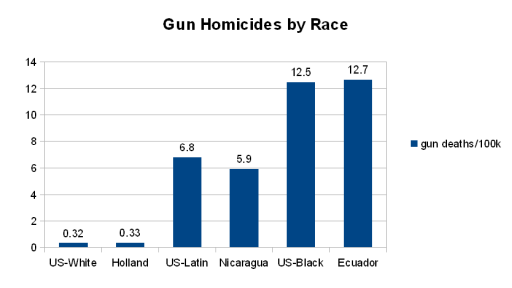
The unarmed society is a defenseless society, which is why the body counts are usually much higher in places that are gun-free zones than in places where people are able to defend themselves by legally carrying arms. And, as always, it’s vital to keep in mind that gun violence is primarily a racial issue, not an availability of weapons issue, as the newly-adulterated nations of Europe are beginning to discover in the aftermath of Merkel’s Migration.

DISCUSS ON SG


A Vast and Silent Emptiness

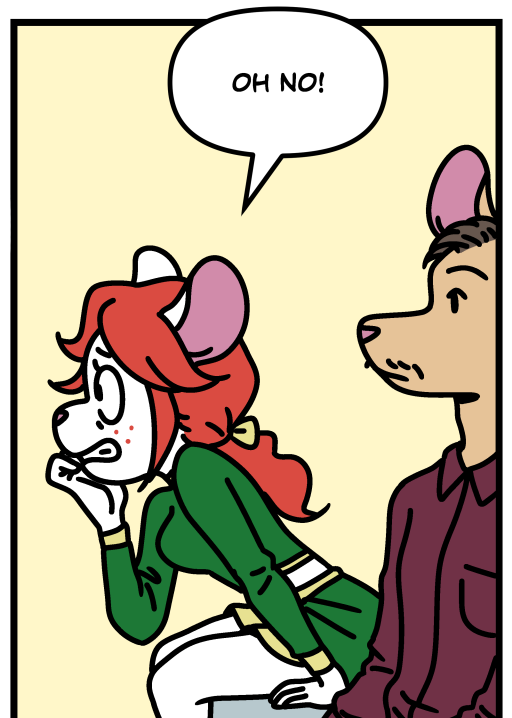
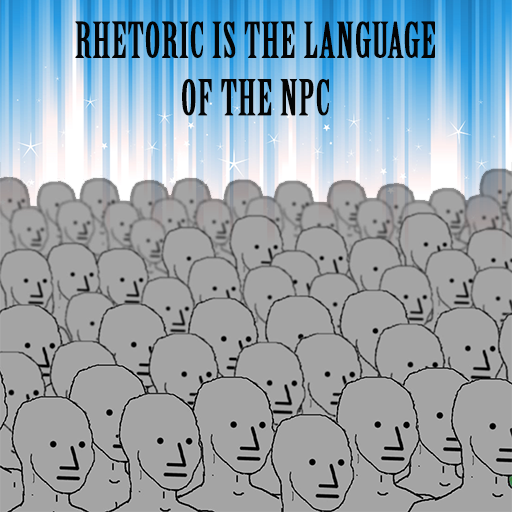
One tends to imagine a vast, wind-swept emptiness devoid of sound in the place of a rich interior monologue. This was posted in response to the NPC Rhetoric meme seen below.

VD: This is what a dialectical meme looks like. It’s utterly ineffective as a meme – it will probably mystify most – and yet it expresses a dialectically vital concept in rhetorical terms.

Kollins: It doesn’t appear to be dialectic at all and it would never go viral, so it’s not actually a meme. (WTF Webster’s online dictionary defines dialectical as “of, relating to, or in accordance with dialectic” which is about as useful as , “falling: of or related to a fall.”) It doesn’t convey a useful message, it isn’t catchy enough to spread and it appears as if you went full Karine Jean-Claude with that word salad of useless big words for the sake of sounding intellectual.

VD: You’re literally retarded. I am referring – obviously – to Aristotelian dialectic, as opposed to Hegelian or Maxian dialectic, and a meme does not need to go viral in order to be a meme. What part of “highly ineffective” was hard for you to understand? It would probably be a good idea for you to refrain from ever reading anything I write or post. It will be lost on you.

DISCUSS ON SG


Literally Thoughtless

NPCs genuinely don’t have a life of the mind. When you find yourself asking someone the question “what were you thinking?” keep in mind that one of the legitimate possibilities is “literally nothing”.

I think I’m very different from most people because of one main thing. I never thought with language. Ever. I moved to Canada when I was 2 from Asia, and have been basically been around English speakers my whole life. I’m in my twenties now and I can speak it relatively well, and can understand every single word. However, growing up, I never ever thought with language. Not once did I ever think something in my mind with words like “What are my friends doing right now?” to planning things like “I’m going to do my homework right after watching this show.” I went through elementary school like this, I went through Highschool like this, I went through University like this…and I couldnt help but feel something was off about me that I couldnt put my hand on. Just last year, I had a straight up revalation, ephiphany….and this is hard to explain…but the best way that I can put it is that…I figured out that I SHOULD be thinking in language. So all of a sudden, I made a conscious effort to think things through with language. I spent a years time refining this new “skill” and it has COMPLETELY, and utterly changed my perception, my mental capabilities, and to be frank, my life. I can suddenly describe my emotions which was so insanely confusing to me before…. Since I now have this new “skill” I can only describe my past life as ….”Mindless”…”empty”…..”soul-less”….

Sadly, it appears that he is very far from alone in this regard. Consider the anecdote where half the class genuinely refuses to believe the other half’s insistence that one can think in words. Or this anecdote, which explains why memes and movies are inordinately influential:

I almost never think in language unless I actively try to, like when reading or when prompted. The flip side is I have a very vivid imagination. I never need to think things out explicitly in words because I think in visual/spatial concepts. For many years I thought the idea that people have “internal monologues” was a literary device. I didn’t think anyone actually thought in words all the time, and frankly the idea still seems weird to me.

This may sound crazy, but both science and observation make it clear that unconscious brain activity precedes conscious thought. Even my martial arts sensei used to tell us to stop thinking and trust our muscle memory, because the process of observe-decide-act was much slower than the process of react-as-trained. Often, when I was sparring at my best, I had no idea what I or my opponent were doing at the time, and we’d have to reconstruct what had happened by discussing the round afterward.

The apparent connection between wordlessness and abstract visual/spatial thinking makes me wonder if my heightened ability to see the logical – or illogical – patterns in texts may stem in part from my severe limitations with regards to spatial relations. The multilingual aspect is also intriguing, as the ability to speak a language is said to correlate highly with the unconscious use of it in one’s internal monologue as well as in one’s dreams. My high school German teacher used to tell us that you knew you had reached a comfortable conversational level in a language once you began dreaming in it, and I have found that to be true.

For example, what was once a solid conversational ability in Japanese has degraded to virtually nothing after 34 years of not speaking or hearing it. And yet, not long after I started listening to Babymetal, I was surprised to occasionally find myself making mental observations with Japanese phrases I’d regularly utilized while living in Sagamihara. The mind is truly a strange and wonderful thing.

But regardless, the extent of this wordless interior life amongst the general population underlines the importance of rhetoric, particularly visual rhetoric, as well as the strict limitations on the utility of dialectic.

DISCUSS ON SG