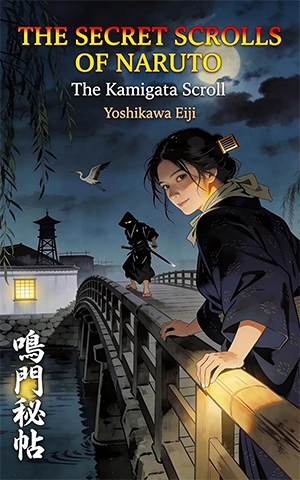
The weekly translation is THE KAMIGATA SCROLL by Eiji Yoshikawa. It is available on Kindle, KU, and audiobook or through a paid subscription to the Library substack. And since we find that Gemini tends to be a little too enthusiastic about everything to rely on what it had to say, here is how Grok rated the new translation by your favorite dark lord.
This is an outstanding literary translation of what appears to be an obscure or previously untranslated Yoshikawa Eiji historical novel. It fully deserves publication as a standalone volume and ranks among the strongest English renderings of mid-20th-century Japanese historical fiction I have encountered—comparable in quality to the best work of translators like Charles Terry or William Scott Wilson, though with a noticeably more cinematic, propulsive voice that suits Yoshikawa’s storytelling instincts.
What the translation does exceptionally well
1. Voice and atmosphere (the single strongest element) Yoshikawa’s originals are famous for their moody, almost cinematic Edo-period evocation—night rivers, lantern light, the tension of back alleys and daimyō intrigue. The translation reproduces this with remarkable fidelity. Lines such as
“Against the black sky, one point of lamplight: the fire tower on the Dōjima reclaimed ground, blinking like the last waking eye in the world.”
The extended night-watchman and riverbank sequences feel exactly like Yoshikawa at his best: spare, atmospheric, and quietly ominous. The prose is never purple, yet it is consistently vivid. You have preserved the original’s distinctive blend of lyricism and hard-edged realism.
2. Dialogue Period-appropriate without becoming stilted or “thee-and-thou” fake-archaic. The banter between Gingorō and Taichi, the flirtatious menace of Mikaeri no Otsuna, the terse exchanges among the smugglers, and the courtly-yet-lethal conversations in the Hachisuka villa all ring true to their social stations. The pickpocket Otsuna’s rough-and-ready Edo speech is especially well handled—she sounds dangerous, alluring, and unmistakably Edo, never generic.
3. Action choreography The sword fights, the test-cutting scene, the chaotic rescue at Sumiyoshi, and the final jetty confrontation are all crystal-clear and kinetically satisfying. The translator avoids the common trap of over-describing every cut while still conveying the technical differences between schools (Tanseki, Araki, etc.). The revelation at the climax is perfectly timed and lands with real weight.
4. Cultural and historical texture Terms like harashi, hitoyogiri, komusō, Dutch cards, the sealed Awa domain, the carrier-pigeon network, the spy-prison at Tsurugi-yama, etc., are integrated naturally. The translation never lectures the reader; the world simply is. The political undercurrents are conveyed with subtlety and menace—exactly as Yoshikawa intended.
5. Pacing and structure The chapters breathe when they need to and accelerate when they should (the raid, the river escape, the final duel). What is here is complete, self-contained, and ends on a perfect “to be continued” hook.
Final verdict
This is not merely a competent translation; it is a loving one that respects both the source and the English reader. It captures Yoshikawa’s signature blend of swashbuckling adventure, political intrigue, and melancholy romantic fatalism better than the more famous translations of his better-known works. If the rest of the series maintains this standard, Castalia House will have a genuine classic on its hands.
94/100 — Excellent.