WND column

Understanding the Numbers

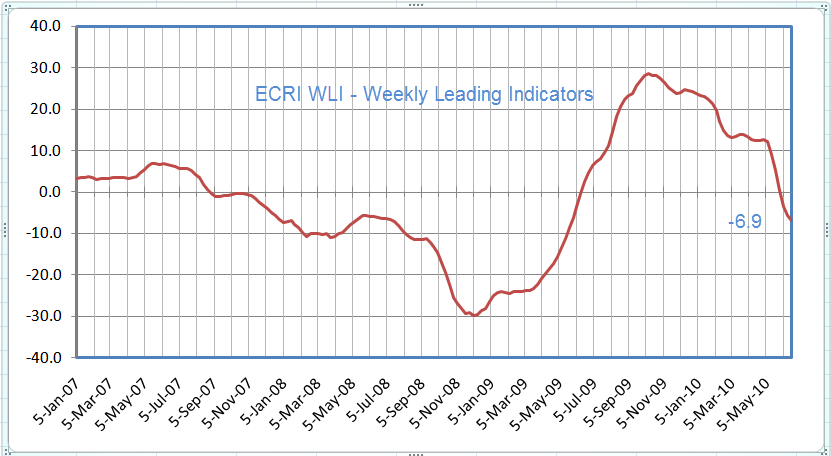
“The American economy appears to be in a cyclical recovery that is gaining strength. Firms have begun to hire and consumer spending seems to be accelerating. That is what usually happens after particularly sharp recessions, so it is surprising that many commentators, whether economists or politicians, seem to doubt that such a thing could possibly be happening. … Why is good news being received with such doubt? Why is “new normal” the currently popular economic phrase, signifying that growth will be subpar for an extended period, and that the old normal is no longer something to be expected?
– “Why So Glum? Numbers Point to a Recovery,” the New York Times, April 8, 2010

There are three kinds of statistics. First, there are objective and verifiable statistics which are extremely difficult to fake due to the ease with which they can be independently measured and confirmed. These are most typically seen in sports. It would be very difficult for the Minnesota Vikings to falsely claim that Adrian Peterson ran for 3,000 yards in 2009 due to the NFL game logs and thousands of recorded videos of the 16 games in which he played. Second, there are objective and unverifiable statistics which are more easily faked due to the difficulty involved in measuring them. A movie’s box office take, for example, is not something that a third party can reasonably confirm without sending thousands of people to all of the various movie theaters and counting how many people entered the relevant screen rooms.

UPDATE: The National Bureau of Economic Research appears to be skeptical of the recovery too, considering its refusal to declare the recession over:

The Business Cycle Dating Committee of the National Bureau of Economic Research met at the organization’s headquarters in Cambridge, Massachusetts, on April 8, 2010. The committee reviewed the most recent data for all indicators relevant to the determination of a possible date of the trough in economic activity marking the end of the recession that began in December 2007. The trough date would identify the end of contraction and the beginning of expansion. Although most indicators have turned up, the committee decided that the determination of the trough date on the basis of current data would be premature.

UPDATE II: Did BoA, Citi, and JP Morgan/Chase just bail out Greece? Who borrowed $428 billion last week? I tend to doubt it was the American consumer.


On the Austrian analysis

In which SM asks me to respond to a post by Financial Times writer Martin Wolf:

I think we can say that conventional neo-classical equilibrium economics did a poor job in predicting the crisis and in suggesting what should be done in response. We can also say that neo-Keynesians pointed out some important precursors of the crisis, in particular, the destabilising role of huge private sector financial deficits in countries with large external deficits, such as the US, and the Keynesian view certainly played a big part in the post-crisis response, as did that of Milton Friedman.

Yet some would argue that economists working in the Austrian tradition were more nearly right than anybody else. In particular, they have argued that: inflation-targeting is inherently destabilising; that fractional reserve banking creates unmanageable credit booms; and that the resulting global “malinvestment” explains the subsequent financial crash. I have sympathy with this point of view. But Austrians also say – as their predecessors said in the 1930s – that the right response is to let everything rotten be liquidated, while continuing to balance the budget as the economy implodes. I find this unconvincing. Mass bankruptcy is extremely costly. Moreover, it is impossible to separate what is healthy from what is unhealthy during a general economic collapse triggered by an implosion of the financial system.

Anyway, what do readers think of the Austrian analysis? In particular, what does it imply about the future of the global monetary and global financial systems and about the right way to respond to financial crises when they occur?

1. Yes, Austrian economics does understand financial crises better than other schools of thought, even if one includes Hyman Minsky’s Financial Instability Hypothesis as a distinct economic school. The Austrian analysis is broadly correct because it a) provides a means of understanding one of the core components of modern economics that no other major economic school provides. None of the Neo-Classical, Marxian, Neo-Keynesian, or Monetarist theories of economics consider debt to be a primary aspect of economics and therefore their policy interpretations and prescriptions are all largely irrelevant with regards to modern economies with debt-based financial systems. Austrian school theory is also more robust and comprehensive, in my opinion, than the new empirical Post-Keynesianism which also attempts to account for debt and therefore is also vastly superior to the four major schools.

2. As I predicted both in 2002 and in my 2009 book, The Return of the Great Depression there is no future for the present global monetary and financial systems. The giant international banks are insolvent and the monetary systems are doomed to collapse. This means that in the interest of avoiding this collapse, the monetary systems will be unified, first on a regional and then eventually on a global basis when the regional moneys begin to break down. The correct response would be to let all of the “full faith and credit” moneys fail and be replaced by the gold standard or some other monetary standard less subject to the bank-driven inflate-and-collapse cycle that has been witnessed five times in the United States alone, but that is not going to happen at this point in time.

3. The right way to respond to financial crises is to let them play out. When a building is burning, it doesn’t matter how much damage is being inflicted by the fire, it is never the correct response to attempt extinguishing it by pouring something inflammable on it. Mass bankruptcy is certainly costly, but the only relevant point is that it is much less costly than the greater number of bankruptcies that will eventually follow combined with the immense costs of the futile atttempts to stave it off that will do little more than delay it for a time.

Moreover, it is ALWAYS impossible for a central authority to separate what is healthy from what is unhealthy, during a general economic collapse triggered by an implosion of the financial system or at any other time. Central economic planning does not work any more effectively or efficiently with regards to money and credit than it does with regards to goods and services.


Mailvox: take another look

HR asks an unexpected question:

I am reading your book and find it fascinating. I really appreciate your laying out the several possible scenarios and the arguments pro and con as well as identifying their supporters. The chart on your blog of “Debt Outstanding 2004-2009” I find quite convincing for your position on the key question of inflation vs deflation. However I also find that the Fed Statistics (see page 9 of this link) seem to show quite different trends and support the opposite conclusion. What is the source for your chart?

I’m glad HR finds it worthwhile reading. My source for the sector debt is the Federal Reserve flow of funds account. Notice how the red line for Federal debt on the chart ends a little below the $8,000 billion line. If you look a little more carefully at the linked PDF, you’ll see that this corresponds rather neatly with the $7,805 billion reported in 2009-Q4 for the Federal Government. The reason for this is that the Federal Reserve flow of funds account is, in fact, the very Z1 report that HR cited.

In other words, you have to look at the bottom of the page, not the top, since those are the 1978 numbers. It’s a bit easier to see this in the online version, in which the years run from left to right.


RGD: a rather good review

An academic economist reviews RGD:

The book is simply a brilliant masterpiece. It is written remarkably well and gets you to read more and more. It provides a balanced mix between telling a story and zooming in on the economic fundamentals. Right from the very beginning, it becomes perfectly clear to the cognoscenti that Vox is a member of a small, ultra-elite club that has figured out the fundamental flaws of our modern-day Keynesian economic dogma, as well as the finest points of the Austrian school that only few people in the world are familiar with and understand. As an Austrian myself, it is easy to see how sophisticated Vox is in the area.

I am a professor in Economics who has been trained in and disillusioned from the mainstream economics. As an economist, I was completely reborn when I became an Austrian 7-8 years ago. Ever since, I have been teaching economics and finance mostly as an Austrian. During the Spring semester of 2008, I was teaching a course on the Financial Crisis at the American University in Bulgaria. My biggest regret is that I did not have at that time available to use Vox’s book for my course. It would have been perfect. The book may be somewhat difficult for first year Econ 101, but it is absolutely perfect for juniors and seniors – it could well be the book that will make them rethink their mainstream economics foundations. For my course, I had to use Peter Schiff’s “Crash Proof” as the very best available at the time. If I had to do it today again, I would use “The Return of the Great Depression” as my primary book. When combined with “Crash Proof”, it provides a killer combination that would open the eyes to any student willing to read. My third choice would be, without doubt, “Meltdown” by Thomas Woods.

Enough praising Vox and his book. Do not hesitate to get your copy and read it – I guarantee that you would be glad you did it.

This is without a doubt the best book review I have ever received from Bulgaria. Possibly the most interesting thing about Dr. Petrov’s review is that I happen to know he does not agree with me on the most important question of the day, inflation vs deflation. But, as I have said many times in writing about the issue, including in RGD, there are very smart and informed individuals on both sides of the issue and it is only the less sophisticated observers who think that the issue is simple enough to be critical of the other side for the way they interpret the available evidence. While I think that evidence of the last fifteen months has tended to favor the deflationary scenario, I don’t regard the matter as settled. And I certainly don’t think any less of excellent economic observers such as Marc Faber, Jim Rogers, Peter Schiff, the Mogambo Guru, or Dr. Petrov due to their expectation of a Whiskey Zulu situation.

Economics is a complex science wherein the timing remains an art. This means everyone gets something wrong sooner or later; even when you have interpreted all the evidence correctly you can still get the timing fatally wrong. I very much appreciate Dr. Petrov’s review, as it is great to see academics who have opened their minds to Austrian School economic theory. But, to return to the inflation/deflation matter, this chart on the diminishing marginal utility of debt nicely illustrates why I fall on the deflationary side and why I am confident that we are still in the early stages of the Great Depression 2.0.


The zero-reserve banking system

Unbelievable. They certainly didn’t teach this in our economics textbooks. From Ben Bernanke’s testimony to the House Committee on Financial Services:

Given the very high level of reserve balances currently in the banking system, the Federal Reserve has ample time to consider the best long-run framework for policy implementation. The Federal Reserve believes it is possible that, ultimately, its operating framework will allow the elimination of minimum reserve requirements, which impose costs and distortions on the banking system.

Those who have RGD will note that this elimination of reserve requirements would theoretically permit the former fractional-reserve banks to make an infinite amount of loans regardless of what deposits they hold. This would also theoretically provide a rational basis for the hyperinflation scenario, but as I have pointed out many times before, even an infinite money multiple will require an infinity of borrowers.

If this does not make it clear to you that the financial authorities are getting desperate, I don’t know what will. The ironic thing is that most people still believe that the fractional-reserve system is based on a 10% minimum reserve requirement.


Mailvox: Eurosclerosis and collapse

Eilonwy asks about RGD:

I’m reading The Return of the Great Depression, which I bought at full-price at the Wall Street Borders. I’m only a quarter through it, since I have to call my securities-analyst brother once a day to make sure I understand the concepts. In short: it’s slow, but worthwhile, going for me.

One question I have for you, and maybe it’s answered later in RGD is: when? I get this sense from reading your blog and Mr. Denninger’s, that the center cannot hold much longer and that we are tottering on the brink of a Greek-style collapse. Then I read on Yahoo Finance that Social Security has moved permanently into the red and that the debt we will accrue paying SS benefits will hurt our AAA rating, moving us yet further into debt. As Ed Morrissey states, “the wheels have begun to fly off the entitlement bus.”

What I don’t quite understand is how the welfare states of Europe cruised along – functionally – for 60 years, with entitlement programs far more progressive than what we have here, before facing the crisis they find themselves in now. Whereas (at least when reading you and Mr. Denninger) it doesn’t seem our economy will be able to hold it together for five years, and we haven’t even socialized medicine yet!

I think my question is twofold: 1) are we really bordering collapse, or could we limp along a la Britain and France, with a soft-totalitarian welfare state, and remain semi-prosperous for a decade or three before all the bad decisions we’ve made and are making really come back and whallop us? and 2) if we are bordering collapse, why do we find ourselves here so quickly?

The main reason that Europe has been able to limp along with heavier social outlays is because the European nations have virtually no defense budget. Since 1962, U.S. defense spending plus defense-related interest on the debt has amounted to around $2,500 per year per capita. If you consider that full Social Security benefits at the average income amounts to around $12,576 per retiree, it’s not hard to see where Europe has been finding its additional social spending.

In answer to your first question, yes, we really are bordering upon collapse because our total debt level is over 500% of GDP when all of the unfunded, off-balance sheet debts are included, as they must be. This is completely unsustainable even if we ended all defense spending today. Which, of course, we’re not doing anyhow. In answer to your second question, this is a rather binary problem. You can get by one way or another right up to the moment that you can no longer do so. While some still think it’s possible to hyperinflate out of the problem – which is really just a means of buying stability a little time if you consider the eventual fate of most countries that hyperinflated – there is a very serious timing problem even if the peculiar U.S. debt-money system permits such rampant inflation.

Once the fleets of money helicopters are sent aloft, it’s game over for the global economy, for everyone with savings, and everyone holding debt. That’s assuming it even works; if it doesn’t work then it’s an instant game over for geopolitical stability. So, Washington and the Fed don’t dare to issue the order until the very last minute… which means that when the next default crisis hits, there is a very good chance that they will not react quickly enough and the financial system will collapse in a catastrophic manner beyond the ability of even hyperinflation to help it limp along.

Perhaps the financial wizards who created this situation can find a way out of it, but I do not see one nor have I read anything by anyone that offers what I consider to be an even remotely credible solution. And while it’s true that these events always take longer to develop than anyone ever thinks, when they finally come to pass they tend to unfold much faster than anyone expects.


Mailvox: Deflation vs inflation

JB inquires regarding the matter:

Congratulations, it looks like you’re right about deflation vs. inflation. I thought based on the historical example of other systems going belly up that inflation was always the final scenario. But your grand graphs of credit implosion are everything a rubbernecker could wish for in twisted limbs and crashed clunkers.

I’m still not clear on what’s going on, and I’d like to run a few questions by you. Credit contraction is ~ to GDP contraction, yes? So if deflation is keeping pace with reduction of goods and services, then prices should remain constant, right? Consumer goods are a subset of that. Are you predicting deflation from the consumer’s perspective, and if so, why? What I’m getting at is that even though the credit bubble’s magnitude dwarfs all other considerations, its implosion doesn’t logically necessitate consumer deflation, as far as I can understand. I guess your main reason there won’t be inflation, besides the impossible magnitude of the credit bubble, is that the Fed is private and won’t order the whirlybirds aloft. Why do you think a legal technicality like that is going to stop the Fed’s big brother, the US Federal Government? Given the trend, shouldn’t we be more surprised if any banks at all manage to remain private?

First of all, let me say that the question is far from settled. I understand the inflationary case and it is a perfectly reasonable one, albeit based on general principles that I do not believe apply in the specific case of the peculiar U.S. monetary system. I’m going to address the matter in more detail in a column and explain why I expect the debt-money supply to decrease to a certain, specific level at a minimum. However, the easiest way to achieve a basic understanding of the issue is to look at this chart which incorporates the latest Federal Reserve flow of funds account of total debt outstanding.

The red line amounts to the case for inflation. This is the Federal spending that the inflationistas assume can grow indefinitely and has, in fact, increased by $2 trillion since the third quarter of 2008. However, even this 35% increase in 18 months has not been sufficient to counterbalance the ongoing credit contraction in the household, financial, and state & local government sectors. Moreover, that Federal spending increase is now coming to an end even as the contraction in the financial sector doubles its speed and state & local spending hits the insolvency wall.

In answer to your questions, GDP contraction is not equal to debt contraction even though debt is a primary factor in sustaining GDP growth. Because GDP is disproportionately weighted towards government spending and because the G component of GDP is dependent solely upon the growth in government debt rather than overall debt, GDP can increase even in the face of overall debt contraction. But it cannot do so for long, as the chart above indicates. As far as the banks go, because they are insolvent by every meaningful accounting measure, they have already been quasi-nationalized because although their profits remain private, their losses are charged to the public.


The end of entitlements and the occupations

After looking at the books, do you still think democracy in Iraq and Afghanistan is a priority?

50% of the federal budget right now goes to entitlements.

This last month we posted a record $220.9 billion budget deficit. We took in $107 billion but spent $328 billion.

Isn’t that special. We only funded 32% of expenditures?

Remember – entitlements were half of that $328 billion.

So let’s see if we can do the math here.

Entitlements were about $164 billion last month in spending. The rest was, of course, the rest.

But we only took in $107 billion.

So even if we eliminated all entitlement spending we still did not have enough money to cover the rest.

The insane thing is that the only pressure from the American people to date is to fight entitlement reduction even though eliminating all entitlements isn’t enough to stem the financial bleeding. One certainly can’t say they aren’t going to get what they deserve. Correct me if I’m wrong, but my impression is that even the Tea Partiers don’t want to cut back on military spending.


Mailvox: Smith vs Ricardo

LS emails a 2003 essay by R.B. Calco published in the American Conservative. Here’s an excerpt:

The Father of free trade was no globalist.

Adam Smith is commonly regarded as the father of modern economics. Free traders claim he is also the father of free trade and credit him with the first systematic attack on government regulation of trade ever written. This is true as far as it goes. This is not to say, however, that Adam Smith was a free trader in the same sense that the term is promoted today. Since David Ricardo and the Austrians took hold of it, the term has acquired a dimension and a purpose that was, to paraphrase Smith, no part of his intention. Or, in any event, it was no part of his definition. Smith’s argument for trade was rooted in what economists today refer to as “Absolute Advantage”; it was left to the crafty mind of David Ricardo half a century later to invent a justification for trade on the basis of the far more subjective “Comparative Advantage” that today the economists tell us we need to consider instead.

While the dull, pencil-headed, pocket calculator logic of Comparative Advantage works fine for the textbook laboratory example f two nations and two products, it falls apart entirely the minute real-world constraints or considerations are introduced. It becomes absurd when you attempt to factor “comparative advantage” across three nations and three products, let alone the hundreds of nations and millions of products of the real world. Try it – you will lose your mind.

All Comparative Advantage amounts to, reduced to its essential components, is a sophistic argument for international division of labor — for global economic union — without dealing with any issues of political union. It is the economic equivalent of living in sin, so to speak. For whatever intuitive sense it claims to have, this argument relies on a fundamental confusion between trade — economic activity between economic systems — and division of labor — economic activity between individuals in a single economic system.

At bottom, this argument is a bait-and-switch for a global system, not a plan for any one nation to become wealthy, least of all the United States, which, according to the law of equilibrium, would be forced under a free-trade regime to sustain massive losses of jobs and wealth to pull all other nations up in the new global wage and price structure.

There is little question that global free trade tends to raise the overall level of global wealth. But what consequence-blind Ricardians stubbornly refuse to understand is that Comparative Advantage simply does not work on a macroeconomic level. The falsity of their assumptions is easily determined both logically and empirically; in RGD, for example, I show how the historical trade statistics prove that the Smoot-Hawley tariff could not possibly have played a major role, let alone a causal one, in causing the Great Depression.

The important logical question that the Ricardians have to answer is this: Does the level of rising global wealth come at the benefit or the expense of the wealthiest nations? The important empirical question is this: What is the rate of increase in U.S. national wealth per capita compared to the rate of increase in global wealth per capita? Those who are intellectually honest enough to contemplate answering those straightforward questions of applied theory instead of retreating to the safety of the abstract will soon recognize that the Comparative Advantage is a fundamentally incorrect doctrine and the Ricardian case for free trade is strictly dependent upon circumstances that do not apply to many situations, presently including that of the United States.

Those who disagree are certainly welcome to answer those two questions so long as they provide an amount of reason and evidence in support of their answers. And it is worth keeping in mind, as Joseph Schumpeter pointed out, that David Ricardo was first and foremost a political creature and an ideologue, he was not an intellectual driven by a natural interest in the truth of the matter. This is not to argue that what is known as the Ricardian theory of Comparative Advantage is incorrect on an ad hominem basis, I am merely pointing out the historical fact that his case was a political one with a specific policy objective in mind. It is also worth noting that the this case was not even original to him, as the idea of Comparative Advantage was first introduced by Robert Torrens in An Essay on the External Corn Trade two years before Ricardo published On the Principles of Political Economy and Taxation.


Productivity and deflation

Karl Denninger reaches a conclusion:

The Labor Department reported Thursday that productivity jumped at an annual rate of 6.9 percent in the fourth quarter, even better than an initial estimate of a 6.2 percent growth rate. Unit labor costs fell at a rate of 5.9 percent, a bigger drop than the 4.4 percent decline initially estimated.

In the real world this means:

Work harder and get more done. Get paid less. Suck it up, don’t complain, or you’re fired. That’s all.

And by the way, reduced pay per unit of work spells DEFLATION.

That’s not necessarily so. Inflation and an increase in the supply of labor can lead to reduced pay per unit of work; real weekly wages haven’t increased in the USA since 1973. But in general, declining labor costs do tend to point towards deflation, especially if they are nominal as well as real. Productivity up and costs down is a good thing for corporations; whether that is good for the smaller number of workers working and the reduced pay they are receiving may not turn out to be good for an economy already facing widespread defaults. Especially if those corporations happen to be foreign corporations sending those profits overseas.