As I mentioned when we announced the book, a substantial portion of the first month’s sales revenues will be donated to Stillbrave, the children’s cancer charity. According to my calculations, after the first two weeks $658.84 has been raised for Stillbrave to date. There are still more than two weeks to go, so if you have any interest at all in Mr. Wright’s superlative excursion into the philosophy and morality of time travel, I would encourage you to buy it now, either from the Castalia House store (EPUB format) or from Amazon (Kindle format).
If you have not read the reviews, of which there are 12 averaging a 4.8 rating, perhaps a selection of quotes from a two or three of them will encourage you to give the book a shot.
Review 1: I urgently and without hesitation, recommend City Beyond Time. Atlantis, Hi-Brazil, Tartessos. Or if you don’t read the classics; Krypton, Gallifrey and Valyria.
The forever doomed, forever lost and forever beautiful true city and true home. The seat of all grace, all wisdom and all power, destined from it’s creation for destruction by it’s own hubris.
Welcome to Metachonoplis.
Writers don’t dream this big anymore. They don’t dare, they would be laughed out of the business. Much easier to take the path most commonly taken. Much easier to drop the F-bomb eighteen times before the end of page six and call it art. Just describe every vulgar experience you’ve ever had and call it refined. Just pretend your words can become a muse for the readers mind and call it good…enough.
John C. Wright is clearly and obviously a rather drastic anachronism. If H. Rider Haggard, Ernest Hemingway, Raymond Chandler and Roger Zelazny had got together in a bar and decided just for kicks to have a genetic recombinant uterine replication vanity project together the result would be John C. Wright.
Review 2:I’ve noted a theme in my so far sadly limited (but soon to be comprehensive!) readings of John C. Wright that he speaks in a voice sui generis among modern literary pretenders — that is, all those who are not in fact John C. Wright — portraying what for lack of better nomenclature we could term “inspirational dystopias”, shining the light of human fulfillment from amidst what in lesser hands would be overwhelming nihilism and/or despair.
This collection of stories raises that artistry to masterly finesse; it reads like Moorcock’s Dancers At The End of Time as plotted by a collaboration of Neal Stephenson and C.S. Lewis, with a subtle sprinkling of the absurdist wit Messr. Wright displays abundantly in his online presence.
Unconditionally recommended!
Review 3: John Wright does it again. This is the second book of collected stories I’ve read from him, the other being Awake in the Night Lands, and cannot recommend him highly enough.
I’ve read, and watched, my fair share of time travel stories and Wright leaves them all in the dust, even Mull’s Grip of the Shadow Plague subplot which I had just read to my kids. His vision is far more expansive, far more human and far more frightening than what I’ve encountered elsewhere. Not only does he pursue the logical and moral ramifications of what unfettered time travel would entail and what that would do to those that master it, he also presents two sides, a heaven and a hell, the costs of each, and lets the reader decide which one he would seek.
For what, one wonders, can you possibly be waiting? Especially if you consider yourself even a casual reader of science fiction.
One of our new Castalia House bloggers has really been raising the standard there. What Jeff describes as a review of The Dying Earth by Jack Vance is really an intelligent, respectful contemplation of the true depths of Vance’s magical system, pale shadows of which provided the structure of the D&D and many subsequent magical systems:
Of similar significance is the commonly overlooked fact that mathematics is the key to discerning the nature “real” Vancian magic. In many games, the designers come up with some sort generic “magicky” type skill or else have it powered by an arbitrary “mana” force. Other people, hankering for a sense of authenticity, work out systems based on pacts with demons and so forth. In contrast, Jack Vance is explicit about his magic’s being susceptible to discoverable laws:
Within this instrument resides the Universe. Passive in itself and not of sorcery, it elucidates every problem, each phase of existence, all the secrets of time and space. Your spells and runes are built upon its power and codified according to a great underlying mosaic of magic. The design of this mosaic we cannot surmise; our knowledge is didactic, empirical, arbitrary. Phandaal glimpsed the pattern and so was able to formulate many of the spells that bear his name.
But in the Dying Earth setting, a general knowledge of how mathematics applies to magic is almost completely lost. The consequences of a scenario that culminates into a science fantasy analog to Lord of the Flies go far deeper than what a casual reading would indicate:
In all my youth this ache has driven me, and I have journeyed from the old manse at Sfere to learn from the Curator… I am dissatisfied with the mindless accomplishments of the magicians, who have all their lore by rote
The wizards, then, are nearly all charlatans. They’re like jazz musicians that can only learn a set number of songs, can’t improvise on a set of chord changes, and forget what little they do know at the end of a set. They’re like engineers that can only solve a few well known problems and who can only actually tackle a fraction of what was previously solvable. They are like the most typical math student of today who has knowledge of only a handful of tricks, is barely able to recognize when to apply them, and who is essentially innumerate when separated from his calculator. Despite their trappings of learning and lore, these wizards amount to little more than barbarian looters of a fallen empire.
Simply great stuff. And speaking of fallen empires, here is a reminder of why you simply must read John C. Wright’s newest book, CITY BEYOND TIME: Tales of the Fall of Metachronopolis, if you are a science fiction aficionado.
A double row of oaks lined the drive leading to the main doors of Ophion House. Lelantos gently pushed Catherine into hiding behind a tree, and pressed close behind her, his arms to either side of her, supporting her. She was nearly fainting, and stood grasping the tree for support, staring at the house.
She saw that his Roadster stood idling in the circle before the doors, festooned with ribbons and flowers, with long strands tied to the rear bumper trailing shoes and cans. On the stairs of the portico, a noisy, cheerful crowd stood facing the doors, men dressed in handsome black tuxedos, women garbed in silks and satins, with flowers woven in their hair.
“It is now a year later,” he breathed in her ear. “I wanted you to see our wedding day.”
A great cheer went up from the house, and the women threw rice into the air as the bride and groom appeared at the door.
Catherine clutched the bark to the oak, and her breath caught in her throat. “That’s me!”
“That’s you. Run forward now, and you might catch the bouquet.”
But Catherine did not move. “Oh,” she sighed, “Oh my… I look so happy. Look at how I’m laughing! Look at my dress! It’s gorgeous! I want a dress just like that for my wedding!”
Her face flushed with joy, standing on tip-toes, the bride smiled and waved toward the oak trees as if she knew they were there, as a lacey white veil, sheer as smoke, floated around her flower-crowned head. The bridegroom winked in their direction. Then the crowd swirled in around the newly-married pair, shouting with good cheer.
The couple fled the pelting rice, laughing, and leapt into the waiting Roadster. With a humming roar, the machine whirled down the lane between the trees, a cloud of dust speeding away behind it.
The noise of the crowd faded away like the sound of an old newsreel. Lelantos walked toward the house, drawing an amazed Catherine drifting, eyes wide, behind him. By the time they reached the lowest step, it was dusk, and the crowd had vanished. When they reached the door, the stars were gleaming cold in the dark above, and the hall clock was whirring and ringing midnight.
“How can this be possible?” Catherine breathed softly.
“All men can reach with their minds into the past and future, with memory and imagination. My family was forced to learn how to bring ourselves along as well.”
“Forced?”
“We come from a future of fire. The smoke of the burning has blotted out the sun, moon, and stars. It is a time of darkness; the streams and seas are turned to blood. Earthquakes swallow islands into the ocean and throw down mountains. Mankind has died in plague and poison, or burnt, or choked, or starved, or drowned or been buried alive. The first father and mother of my family, Lif and Lifrasir, the last of all mankind, escaped death by fleeing down the corridors of Time. We don’t know why. Perhaps the moment when there was no future left at all allowed the past to open up her gates. The pair fled to the farthest future, after time itself had ceased, exhausted, and discovered the empty towers of Metachronopolis, the golden City Beyond Time. New names were given them, Chronos and Rhea, when they mounted the diamond thrones and donned the robes of pallid mist. They opened the mirrored gates of splendor into the creation reborn.”
She looked around at the summer night, at the rustling trees and the silent statues in the moonlight. “I thought things would blur and flicker when we time-traveled.”
The story is first-rate. The scene is magical. And for me, that last line is what demonstrates the difference between John C. Wright and everyone else writing science fiction today. It is almost Woodhousean in its light-hearted, but pitch-perfect portrayal of the two characters involved in the dialogue.
Metachronopolis is the golden city beyond time. Ruled by the Masters of Time, who can travel freely throughout the multitudinous time lines of Man’s history, the city is a shining society of heroes and horrors. For the arrogant Masters, who steal famous men and women out of the past and bring them to the eternal city for their amusement, are not only beyond time, but beyond remorse and retribution too.
CITY BEYOND TIME: Tales of the Fall of Metachronopolis is John C. Wright’s mind-bending and astonishingly brilliant take on time travel. In making use of a centuries-spanning perspective similar to his highly-regarded AWAKE IN THE NIGHT LAND, Wright expertly weaves a larger tale out of a series of smaller ones. Part anthology and part novel, CITY BEYOND TIME is fascinating, melancholy, frightening, and a true masterpiece of story-telling.
As you can probably imagine, we are very pleased to be able to announce that John C. Wright’s latest book is available today on Amazon in Kindle format and at Castalia House in EPUB format. Featuring a cover by the inimitable Kirk DouPonce, the book consists of six of the aforementioned tales, which, in a manner more convoluted than I can possibly hope to summarize here, collectively tell of the fate of the shining city of Metachronopolis. At 167 pages, it is a relatively short book, but one that you will almost surely find yourself reading more than once as Wright expertly explores the paradoxes inherent in the logic of time travel.
As Wright’s fans have come to expect, CITY BEYOND TIMEis more than just an intelligently entertaining story. It is also a thoughtful musing on the nature of power and its corrupting temptations. But no matter how deep the darkness runs, it can never do more than obscure the light.
And this is more than a book announcement, it is also a charity drive. About a month ago, Mr. Wright contacted me about the possibility of bringing some attention to a charity he wished to support. The charity, called Stillbrave, was started by a Christian man who lost his daughter to cancer. Mr. Wright and his wife requested that half his royalties for the first month’s sales be donated to Stillbrave, which we agreed to do. Castalia House also agreed to match his donation.
So, if you buy CITY BEYOND TIME between now and July 23rd, about half the money Castalia receives will go to Stillbrave, in the name of Mr. and Mrs. John C. Wright. Obviously, you can simply donate directly to the charity, but if you also wish to honor Mr. Wright’s efforts, the most efficient means of doing so will be to purchase the book through Castalia House. If you have not yet read Mr. Wright’s work, you may be interested to know that we are giving away his AWAKE IN THE NIGHT today and tomorrow on Amazon.
This is the latest book in the ‘Carrera’ series by Tom Kratman. The story covers the activities leading up to and the beginning salvos of the second stage of the war between the Tauran Union (the EU) and Balboa (Panama). Now for those of you who wonder how the hell Panama could be in a war with the EU much less how it could manage to be kicking the EU’s sclerotic, bureaucratic ass you really have to read the ‘What has gone before’ section. Trust me when I say it is necessary there’s a lot that has happened to get the action to this point and a whole mess of characters that are important to the plot. When reading Tom Kratman you never know who is going to be an important character and who is going to wind up killed so you better pay attention.
So to the story itself. It is a good military adventure yarn. That should be no surprise by now, Kratman writes military adventure and whatever he does he does well. It is just barely science fiction. Yes it is set on a different planet, yes there is marginally advanced technology, but this series is really just an alternate history of what could have been done following September 11th. It could just as easily been set on Earth beginning Sept 11, 2001.
The story is well written and for me the easiest of the series to read and follow. I was never left wondering ‘who is this and what are they doing’. The action is realistic and of course plenty gritty. The characters were as usual interesting and drawn just as finely as they needed to be for the part they played in the story. Most of the book is taken up with behind the scenes type of political wrangling and espionage but there still are big meaty chunks of combat and conflict.
The Good: “The Rods and the Axe” is well written, the prose is clear and clean without anything extraneous getting into the way. The people, places, and activities on ‘Terra Nova’ are presented in well crafted brush strokes. Even the characters that are seen once and will never be seen again were easy to envision. Some would say Kratman makes good use of stereotype but I prefer to think of his bright-line characterization of minor characters as solid use of easily understood motifs.
The characters are easy to connect to and visualize. Motivations fit the characters and the actions they take except for one really jarring scene (more about that later), are never forced. The actions feel like they are the real actions of the characters and not something that Kratman has decreed for the characters to do everything feels very organic. One thing that Kratman is very good at is people and he easily acknowledges that every side can have heroes. The enemies can be just as well intentioned, heroic as Carrera and his Legion and are certainly as well written.
The organizations of Terra Nova are realistic and Kratman does a good job of describing them. Of course, that is not a huge stretch because Terra Nova is really just ‘Earth’. Every nation and organization has its counterpart on Terra Nova.
Not much to say about Kratman’s gift for writing military action that has not already been said. The action whether it is a bar fight with broken bottles or a naval gunnery barrage with 150mm guns is all well written. The pacing of the action is particularly good and will keep you reading (I read the book in one sitting). Kratman is a master of his craft and belongs with Drake or Pournelle when discussing good military science fiction.
One thing and perhaps this is just a matter of personal taste but I like that while Kratman’s characters are fully adult and human and have sex the sex is all ‘off screen’ and fade to black type of activities. I find that refreshing.
The Bad: Here’s the good news; nothing ‘bad’ about this novel. The story is first rate, the characters are well written and interesting and the action is realistic and visceral. But there is that one scene I mentioned earlier and that’s ugly.
The Ugly: First let me say that I know Kratman is one sneaky bastard (I mean that as a compliment) and that he knows where his stories are going a long way a head, however, Carrera makes a really jarring bonehead move that stood out like a green stick fracture. At one point he has Carrera going into a major conflict zone for (at this point in the story) no damn good reason. It is such a bad decision that I had a hard time getting past that. It was like Ike landing with the grunts at Utah Beach. I know Kratman is probably just setting us up for something that requires Carrera to be where he is but the action itself was double-stupid and his aides should have sat on him until he regained his senses. I won’t say anything more about that because that would give away too much of the plot.
All in all I cannot recommend this book enough. If you at all like military fiction you’ll like this book and if you do like military fiction and haven’t found this series yet you are in for a treat. Kratman has stepped up his game with this book and is now firmly in the top tier of military fiction not just military science fiction.
And JW has already read it and finished his review as well. The speed with which these gentlemen blew through the book should also tell you something about whether Tom Kratman’s latest is worthwhile for fans of military science fiction.
Tom Kratman has out his sixth novel in the Carrera series, and it’s a worthy addition indeed. The Legion del Cid, with Patricio Carrera in command, has kicked the Tauran Union forces occupying the Balboa transitway out, in bloody fighting. In Book 6 they are concerned with the final preparation for the invasion of the Taurans and their Zhong allies, and, then the beginning of an epic battle for the tiny country of Balboa. The Taurans are providing air cover and a blocking force in the neighboring country of Santa Josefina and the Zhong providing the landing force attempting to take the Isla Real, the immense and heavily fortified island commanding the transitway. There are time references both backward looking and forward, starting with the Amazon Legion, continuing in the fifth novel Come and Take Them. I would highly recommend reading the whole series. It’s more than worth it.
Many of the characters from the previous novels are here with some added fleshing out particularly concerning the High Admiral Wallenstein and her latest relationship and some truly funny plot elements revolving around Carrera’s son Hamilcar and his domestic difficulties. Lesson there: you don’t really need twelve wives, lad.
There are new characters, of course, notably among the Zhong Imperial Marines and their bloody sacrifices on the beaches of Isla Real. The battle action starts about 45 percent into the book with an interesting taste of things to come in the Prologue, and continues until the book ends with a not-so-subtle cliff hanger pointing to Book 7. Personally, I can’t wait until the Legion takes on the UEPF, the United Earth Peace Fleet, in orbit around the planet and providing from orbit intelligence gathering for the Tauran forces.
I can’t give you metrics of prose competence, plot flow, etc. All I can do is tell you this a real page turner and a long awaited addition to the series. I loved it. Enjoy!
If you enjoy keeping up on the latest in SF/F, I would encourage you to begin following the Castalia House blog on a daily basis, where our SEVEN bloggers are now posting regular reviews of both conventional and independently published SF/F books. Mascaro has posted a review of AS I WALK THESE BROKEN ROADS by DMJ Aurini and Jeff’s review ofSHADOW OF THE STORMby Martin J. Dougherty is a must-read for any TRAVELLER aficionado, as it sounds like Marc Miller has found himself a good writer who is respectful of the game canon.
#2 Kindle > Literature & Fiction > Foreign Language Fiction > Portuguese #2 Foreign Languages > Portuguese > Fantasy, Horror & Science Fiction
In other news, BS wants to know precisely who I mean when I talk about Pink SF/F:
I started reading your blog after finding you on a link from Instapundit. I don’t particularly like SF but do like fantasy of the sort Patricia McKillip writes (as an example). I also love Tolkein (again as an example). I read your story you had for free (now vanished from my Kindle app) and enjoyed it very much. I bought your Irrational Atheist. I think I might like Sarah Hoyt. I see you have some recommendations on your website. I don’t want to wind up with books by authors you refer to as “pink SF/F. Is there a list of what authors to either avoid or to look for?
Marion “the child molester” Zimmer Bradley and Samuel “NAMBLA” Delaney clearly top the Pink list. They are among the worst of the freak show. Off the top of my head there is Jim Hines, Mary Kowal, Rachel Swirsky, Marko Kloos, John Scalzi, Sheri Tepper, and Mercedes Lackey. But you can find a longer list here comprised of self-identified equalitarians.
We probably should see about putting a comprehensive Pink SF/F list together as a service to those who wish to avoid it. So, if you have a candidate, provide their name and make the case for inclusion in the comments. But they should be clear-cut candidates, not merely authors who are influenced by the gatekeepers. For example, I would not consider Jim Butcher to be a Pink SF/F writer, he is merely a gamma male who can’t bear to imagine a man making a move on an attractive woman.
O planeta independente Rhysalan oferece Asilo para 1.462 governos exilados. É responsabilidade do departamento de Xenocriminologia e Relações Alienígenas da Divisão Militar de Investigação de Crimes manter a rédea curta com as centenas de milhares de xenos residindo no planeta. Assassinatos, revoluções, guerras civis e tentativas de genocídios planetários fazem parte da rotina de trabalho do Subtenente Comandante Graven Tower, da DMIC-XRA.
Em acréscimo a um aerovar armado com mísseis, à sua confiável Sphinx CPB-18 e às políticas extremamente liberais da DMIC com relação a danos colaterais e vítimas civis, o Comandante Tower é estimulado por sua extrema xenofobia, assim como por uma inteligência de máquina com aumento de realidade de categoria militar que acredita que encontrou Deus. No meio deste cenário, quando os restos desintegrados do herdeiro legítimo de uma casa real alienígena são descobertos nas ruas de Trans Paradis, a questão não é tanto se no final os assassinos serão encontrados, mas se são os criminosos ou os investigadores criminais que vão contribuir mais para a soma total de mortos.
QUANTUM MORTIS é a série de mistério de Ficção Científica Militar repleta de ação de Vox Day – indicado para o prêmio Hugo e autor da série de fantasias épicas As Artes da Escuridão e da Luz – e Steve Rzasa.
Thanks to Israel and Daniel, Castalia House has released its second and third books in Portuguese today. Two QUANTUM MORTIS books, Um Homem Desintegrado and Gravidade Mortal, have joined Uma Magia Perdida in our Portuguese language catalog. This should be useful for those, like The Perfect Aryan Male, who are brushing up on their Brazilian Portuguese. Please note that both Gravidade Mortal and Uma Magia Perdida will be free downloads tomorrow and Thursday.
And in other Castalia House news, we’re pleased to announce the first of our new bloggers. Jeff Johnson of the Space Gaming Blog will be posting on Mondays. Yesterday he got off on exactly the right foot with a review of the first of the new Traveller novels from Marc Miller, Fate of the Kinunir. The Castalia House blog is rapidly becoming a destination in its own right, with four new bloggers joining Daniel, Mascaro, and Anson in posting essays, book reviews and interviews of independent and established authors alike. So, if you’re interested in following the Blue SF revolution as it proceeds, you’ll want to check it out on a regular basis.
Tor is giving away its various Hugo nominees for free on Amazon today, so I thought it might be a good idea to follow suit. The Hugo-nominated “Opera Vita Aeterna” is now available on Amazon for 99 cents, and it will be given away as a free download as soon as Kindle Select permits. If you’ve read it, I encourage you to post a review there; if nothing else the contrast between the pinkshirts’ reviews and everyone else’s should make for some entertaining reading.
In other Castalia House news, we will be introducing a number of new bloggers in the next two weeks as part of our long term plan to become the leading SF/F destination site. The release of John C. Wright’s latest masterpiece, a real mind-bender, will be taking place this month, and just in time for the World Cup, both QM:AMD and QM:GK will be published in Brazilian Portuguese next week.
Speaking of Amazon, the good news for readers is that they appear to be winning their showdown with the publishers to keep book prices low. From Publishers Weekly: “A spokesperson for Hachette Book Group has confirmed that they initiated a round of layoffs today.”
We’ve filled most of the blogger slots at the Castalia House blog, all except one. I’d like to see a weekly interview there, not just of Castalia authors, but of independent authors, self-published authors, and mainstream SF/F authors alike. So, if you’re interested in interviewing your favorite authors, please speak up in the comments with your list of the first five authors you would interview if given the opportunity. I’ll choose one person on that basis, in the event more than one person steps forward, and we’ll take it from there.
And speaking of Castalia House, MK explains how to set your Kindle device to take advantage of our updates:
Near the top right of the Amazon home page, choose “Manage your content and devices” from about halfway down the “Your Account” dropdown menu.
You will be prompted to enter your password – even if already logged in to the site. The content page will load. At the top, choose the “Settings” tab.
Scroll down to “Automatic Book Update” and set this to “On.”
Note that to retain your furthest page read, notes, annotations, etc.,when an update happens, you need to have the “Annotation Back Up” setting turned on in all of your devices and reading apps.
Updated versions will replace the existing versions on your devices seamlessly, in the background, with no interaction required. If you choose to keep Automatic Book Update turned off, you must update manually. I am not sure exactly how manual updates are handled now, but the Amazon.com Kindle Help pages indicate that if Automatic Book Update is off, an email is sent when an updated version is available. Presumably there is a link in the email.
Because some readers have complained about typos in outdated versions of various Castalia ebooks, we’re going to be tweeting every time we update an ebook with corrections and typo fixes.
We make corrections very rapidly, usually within a day or two of receiving a list of typos. For example, the current version of A THRONE OF BONES is 009. Since we come from the game industry, and since our focus is on electronic publishing, we have decided to take an iterative approach to editing. This allows us to publish books quickly, and to also ensure that they rapidly reach a state of minimal errors.
All books from all publishers have typos. That’s the reality. When we converted the EW books to ebooks, we discovered that the professionally edited, professionally line-edited manuscripts, from a major New York publisher, one of which had been through three print runs and two layouts, contained an average of 165 typos. The core problem is that each individual editor and proofreader has a tendency to see certain problems and not see other ones. For example, the maximum amount of overlap I’ve seen from two different proofreader lists is on the order of 20 percent. Now, we could delay publication by a month and expect to catch somewhere between 30 and 50 percent of the version 001 typos or we can do a run through Team OCD, publish it, and then catch 85 percent of them in the first three or four days after release with the assistance of the first readers.
And because we always publish ebooks first, this also permits us, unlike most publishers, to ensure that our hardcovers will be exceptionally clean.
Since it’s very easy to automatically receive the updated versions through Amazon, and it’s not much harder to get one directly from us, we think this approach is much preferable to the conventional one. If you have any better ideas, we’re certainly open to hearing your suggestions, but in the meantime, we will be transparent about when the updates are released. If you want to be apprised of them, please simply follow @castaliahouse on Twitter.
While I’m at it, I should mention that version 002 of John C. Wright’s excellent TRANSHUMAN AND SUBHUMANis now the current version on Amazon. And, having finished editing his forthcoming CITY BEYOND TIME , which is now in the hands of the proofreaders; I am hoping we will be able to release it this week.
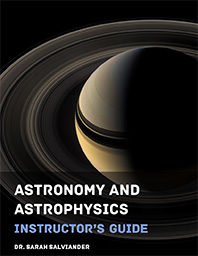
Today we are officially announcing the publication of ASTRONOMY AND ASTROPHYSICS, a curriculum created by Dr. Sarah Salviander, a research scientist whose areas of particular interest are quasars and supermassive black holes. She is a research scientist at the University of Texas, is one of the authors of “Evolution of the Black Hole Mass – Galaxy Bulge Relationship for Quasars in the Sloan Digital Sky Survey Data Release 7” and “Narrow Emission Lines as Surrogates for σ * in Low- to Moderate-z QSOs” in addition to many other scientific papers, and teaches classes as a visiting professor of physics at Southwestern University. Dr. Salviander describes the new curriculum at Castalia House:
“Look around the web for a high-quality, modern-science astronomy homeschool course and you won’t find much. There are a handful of scripture-based astronomy courses that seem to cover little more than the seasons and motions of the night sky, and one very expensive software-based curriculum. I realized there was a need for a comprehensive, modern, and affordable astronomy homeschool curriculum, and set out to develop one based on my years of teaching astronomy at the university level. A couple of years ago, I mentioned this in an offhand way to Vox Day; it turns out Vox had been contemplating offering a series of affordable, electronically-available homeschool curricula, and so we began to discuss the possibility of making astrophysics the first of many such courses.”
So we are pleased to announce ASTRONOMY AND ASTROPHYSICS, the first offering in the Castalia Homeschool line. The curriculum is available only through the Castalia House store and costs less than $60.00. No further expenditures are necessary for the course as the textbook is available online, although we recently received permission to publish the primary textbook and will soon offer it accordingly at an affordable price. Our objective is to keep the price of all curricula under $100.
The curriculum is designed for students aged 13+. It has been described as “a top-notch astronomy curriculum” by Laurie Bluedorn, author of Trivium Pursuit. As per suggestions from the readers of this blog, sample PDFs from all four books of the curriculum have been made available for free download on the relevant product listing of the Castalia House store. If you are, or if you know, a homeschool mother of teenagers now preparing the fall course schedule, I encourage you to take a close look at ASTRONOMY AND ASTROPHYSICS and consider using it for the next school year.