Atheist rule in action

No doubt Sam Harris will be arguing that the atheist Kim’s rational, but lethal form of governance doesn’t count as a strike against atheism because it isn’t committed “in the name of atheism”:

The first thing to appreciate about Kim is that he is not mad. He is undoubtedly what psychologists call a ‘rational actor’ — literally meaning that his actions are not irrational at all.

In fact, he is behaving in a way that many people would if they were born into a family that is the subject of an extreme personality cult: his father and grandfather were both long-time leaders of North Korea before him.

Like any Mafia boss or medieval warlord presiding over a crumbling territory, Kim’s first priority is simply to stay in power. And to do that, like any sane man, he is creating the spectres of enemies within — such as his uncle — and enemies without, such as the United States, which he has threatened in recent months with a pre-emptive nuclear strike, a piece of absurd muscle-flexing purely designed to raise his prestige at home….

The number of mass public executions have soared — with estimates of between 40 to 80 so far this year in towns across the country, when last year the total was under 20…. Judges have pronounced sentence for crimes as trivial as owning a Bible, communicating with South Koreans or Christian missionaries, or simply complaining about the hardship of life in a state where millions spend their lives close to starvation.

The prisoners — a rock stuffed in their mouths to prevent them shouting out and ‘defiling the great leader’ — are tied to a post and shot, one by one, by a three-man firing squad. Armed with rifles or machine guns, their killers shoot them so many times their faces are usually unrecognisable. The bodies are thrown into bags and dumped. As with any ‘offences against the people’, not only are the perpetrators punished but also three generations of their families — with grandparents and children alike ‘disappearing’ into horrifyingly brutal prison camps.

Of course, it is a little hard to deny that executing people for owning Bibles and talking with Christian missionaries is at least partially motivated by atheism. Atheist and pagan rulers alike have always feared Christians because Christians are intransigent about their stubborn belief in a higher power than the State, which thereby makes them dangerous to those who rule it. Not that this historical observation will stop the brilliant logicians from the School of Harris, who will no doubt proceed to argue next that it isn’t actually colder this winter because the sun has not reduced its activity “in the name of global cooling”.

Note that Kim’s actions show how my observations concerning historical atheist rulers in TIA has proved to be a successful predictive model of his current behavior. The point isn’t that atheism makes anyone do anything. It doesn’t. The point, and the problem, is that it removes moral barriers from those who have evil desires.

The rabbits ponder FIVER traffic

I was sent this exchange between some of the rabbits at the Whatever warren, bewildered by the frightening notion that their Chief Rabbit may not be anywhere nearly as important as he told them he was and that more people actually prefer the scary bad mans:

Rabbit 1: You know I am of two minds on this. First the plus side, the money donated is wonderful and it is fun to see losers fuming because feminism has MADE SF/F BETTER. And really to be honest, any man who believes in “game” is a loser to begin with. On the other hand, Scalzi is huge, with 50k readers a day (1) this only gives the evil side free publicity. If only twenty people wind up reading his stupid blogs because of this, he’ll double his readership. He is a nobody that no one listens to, he can only win in this.

Rabbit 2: Have you read his blog stats? Say what you will about his intelligence or character, but the RSHD gets some serious traffic. (2)

Scalzi-rah: As does Stormfront, I’m sure, and for similar reasons. (3)

Rabbit 3:  If you believe Beale, his Alexa rating has doubled in the past year and
his shitty little “game” blog beats out this one, and blah blah blah. 
I’m not saying he’s lying, exactly, but I dunno. I really can’t be assed
to think about it too much, but I have a feeling that Mark Twain’s
wisdom applies here.

Rabbit 4: I’m not saying he’s lying because I have no knowledge one way or the other. Anyway, the substance of a site’s content and the number of hits a site gets are two separate things. 

Rabbit 3: Well, okay, to be clear: he’s gaming Alexa, which is obvious if you
look up his site’s history. It’s not particularly hard to do, I just
don’t know how exactly he’s going about it. There are multiple ways. Not
that it really matters, or that overblown narcissists can’t have
legitimately high profiles. Some do. Beale doesn’t, though, and I just
think it’s worth pointing out his transparent dishonesty. 

Scalzi-rah: I don’t think we need to worry ourselves whether Mr. Beale’s sites legitimately get the traffic he claims or not. It’s entirely possible they do. The Internet is full off assholes, and they like to clump together. If they go to his sites and off of everyone else’s, then he’s welcome to their traffic. And if he’s making it all up, then it’s nice he has a hobby. (4)

Let’s address the traffic claims first. John Scalzi alternatively switches between claiming “50,000 daily readers”, “up to 50,000 daily readers”, and “~50,000 daily readers” depending upon what he thinks he can get away with.  His actual daily traffic for the year through November 2013 is 21,400 Google pageviews per day. Mine is 36,511. Apparently there are a considerable number of people that John Scalzi considers assholes out there.

As for the “shitty little game blog”, it has been rapidly catching up to Whatever all by itself. Whatever has been in decline ever since May 2012, the occasional bump from McRapey’s friends at the Guardian notwithstanding. Alpha Game grew from 1,675,300 pageviews in 2012 to what I estimate will be more than 3.7 million in 2013.

With regards to the supposed gaming of Alexa, I note that Whatever has more sites linking in (4,625) than it has average daily readers. This compares to 893 sites linking in to VP. But even if I did somehow successfully game the improvement of VP’s Alexa rank from 29,426 to 6,987, it should be fascinating to hear how I simultaneously managed to engineer the decline of Whatever from 12,996 to 51,779.

In any event, it is absolutely hilarious to see fans of the least honest blogger on the Internet, the Bernie Madoff of Science Fiction, desperately trying to point out my “transparent dishonesty” when I openly post my Sitemeter numbers and honestly report my Google pageviews. This is what Google reports for VP alone as of this morning; Alpha Game was another 10,115 yesterday for a slightly below par 35,390. Fridays tend to be a little slow. Anyone who doubts that my traffic exceeds Whatever’s should ask John Scalzi to post the exact same screenshot of his traffic for the last month. As for Alexa, I seem to recall openly declaring that it was a bullshit metric when similar survey measures were cited as evidence of Whatever’s presumed popularity last year. I trust that I have now conclusively made my case in that regard.

And if you think this is amusing, just wait until I am able to show that McRapey’s three “New York Times bestsellers” were gamed by Tor. Being a three-time Billboard Top 40 recording artist myself, I know it happened and I even know how. I just can’t conclusively prove it yet. But if I ever gather the proof, I will certainly post it here.

Let me see if I can put this in a manner simple enough for the rabbits who genuinely believe “Scalzi is huge” and Redshirts is a great novel to understand:  EMBLEER INLE-RAH HRAIR ELIL. SCALZI-RAH SCALZI-ROO. O ZORN! RUN HLESSI RUN!

(1) See, they really are as dumb as we suspect them to be. 50,000 DAILY READERS!
(2) Possibly a Not-Rabbit. Sounds suspiciously like a rabbit-hunter to me.
(3) McRapey is still trying to push the Stormfront meme.  Never mind that the SFWA was so desperate to sweep that report under the table that they sent out DMCA takedown notices to prevent people from reading it.
(4) Translation: OH GOD, STOP TALKING ABOUT INTERNET TRAFFIC! HE’S JUST GOING TO RUB IT IN MY FACE AGAIN!


QUANTUM MORTIS: Un Hombre Disperso

EG is rolling on the Spanish version and is already into chapter three. This is how Capitulo Uno kicks off.

Rhysalan fue terraformado y colonizado en el año 2810, pronto se transformo en un planeta importante del subsector Kantillon en la periferia de el Gran Ascendencia de Terra. Debido a su ubicación estratégica, el planeta era blanco para los intereses militares y cambio de manos varias veces hasta que se estableció como un planeta independiente en el año 2935 bajo el Almirante de Flota Beze Davenant de la Flota Vigésimo Primera de La Ascendencia de Terra, que se convertiría en el primer Duque de Rhysalan. Después de la Rebelión de las Dioses Maquinas de 2999 que resulto en La Unidad, Rhysalan se convirtió en el destinatario principal de los gobiernos planetarios y nacionales. Dándose cuenta de que un extendido conflicto interplanetaria ofrecía un sin fin de refugiados acaudalados, el Cuarto Duque fue el primero en institor la práctica de Proveer Santuario formal.
-De “Una Breve Historia de los Duques de Rhysalan” Por Thucidean Marcel.

Cuando recibió la llamada Graven Tower estaba en un rutinario patrullaje por la pista aérea 775, Casi mil metros sobre Trans Paradis.

“Tower, tenemos un reporte de un presunto homicidio en la balaustrada norte Uno Nueve Ocho Tres Ocho Diez” Una voz susurro sensualmente en su oreja izquierda. Sonaba sensual, aunque el susurro no era real. Tower estaba solo en el Aerovar, con solo su aumento y la música proviniendo de las bocinas a bordo de compañía.

“Gracias, Nena. Sabes ?quien, que o por qué?” Tower no era un policía civil, y los homicidio no eran parte de su jurisdicción a menos que se cometieran en la base, fueran cometidos por personal militar, o por uno de las decenas de miles de xenos (alienígenas) cuya residencia era supervisada por las Fuerzas Armadas del Ducado Imperial de Rhysalan.

I’m still in the market for more translators, so if you’re a native speaker of anything besides than English, please get in touch. If you’re less interested in the fiction, I’m also looking to get TIA translated; a French version is presently in the works. In the meantime, the English reviews continue to be positive. In his Amazon review of QUANTUM MORTIS: A Man Disrupted, Richmond noted:

“The universe building is intelligent and realistic, the economics of
Rhysalan and the various Others is interesting as a thing in and of
itself. Most sci-fi (and fantasy) I’ve read has boring as all hell
political and economic structures written into it since a lot of authors
seem to be more interested in their own commentary on social issues
rather than how nations and markets operate in reality. Vox Day (and I
shouldn’t leave out Steve, but I’m more familiar with VD) is very good
at describing a clear and functional civilization one can imagine coming
into existence. The separation of tech levels between societies, the
acknowledgement of xenophobia, the economic motives of good guys and bad
guys, and the recognition of religion and morality, and an accurate
storytelling of interpersonal relationships is all excellent and well
thought out.” 

Anyhow, I rather like the Spanish title.  It would be hard to deny that Graven Tower is one tough hombre. And since we’re talking about translations, here’s a trivia question: to what foreign author does the title of the first Quantum Mortis novel owe inspiration for its name?

UPDATE: A review from someone who is obviously a poser, a fake, a fraud, a false pretender. Albeit one with unquestionable taste in mystery novels.

“I’m a gun-nut, and generally appreciate “gun porn” in fiction when
it’s done correctly (references to safeties on revolvers, or thumbing
the hammer back on a Glock grate on me), but I have to say that the
detailed descriptions – including manufacturer and part number – of
future weapons got to be a bit tedious. As a murder mystery, though, this one was pretty good.” 

You, sir, are NO TRUE GUN PORN AFICIONADO.


Observations and societal implications

This long essay on African difficulties with abstract thought and how this effects everything from basic morality to building maintenance is not unrelated to my own concept of time-to-civilization and how that relates to a population group that has been in regular contact with advanced civilization for less than 400 years. If you are an American reading this, please keep in mind that the African-Americans of your acquaintance are not fully African, but are on average 17-18 percent European.

I am an American who taught philosophy in several African
universities from 1976 to 1988, and have lived since that time in South
Africa. When I first came to Africa, I knew virtually nothing about the
continent or its people, but I began learning quickly. I noticed, for
example, that Africans rarely kept promises and saw no need to apologize
when they broke them. It was as if they were unaware they had done
anything that called for an apology.

It took many years for me to understand why Africans behaved this way
but I think I can now explain this and other behavior that
characterizes Africa. I believe that morality requires abstract
thinking—as does planning for the future—and that a relative deficiency
in abstract thinking may explain many things that are typically African.

What follow are not scientific findings. There could be alternative
explanations for what I have observed, but my conclusions are drawn from
more than 30 years of living among Africans….

I quote from an article in the South African press about the problems blacks have with mathematics:

“[Xhosa] is a language where polygon and plane have the
same definition … where concepts like triangle, quadrilateral, pentagon,
hexagon are defined by only one word.” (“Finding New Languages for
Maths and Science,” Star [Johannesburg], July 24, 2002, p. 8.)

More accurately, these concepts simply do not exist in Xhosa, which,
along with Zulu, is one of the two most widely spoken languages in South
Africa. In America, blacks are said to have a “tendency to approximate
space, numbers and time instead of aiming for complete accuracy.” (Star,
June 8, 1988, p.10.) In other words, they are also poor at math. Notice
the identical triumvirate—space, numbers, and time. Is it just a
coincidence that these three highly abstract concepts are the ones with
which blacks — everywhere — seem to have such difficulties?

The entry in the Zulu dictionary for “number,” by the way — ningi
means “numerous,” which is not at all the same as the concept of
number. It is clear, therefore, that there is no concept of number in
Zulu.

White rule in South Africa ended in 1994. It was about ten years
later that power outages began, which eventually reached crisis
proportions. The principle reason for this is simply lack of maintenance
on the generating equipment. Maintenance is future-oriented, and the
Zulu entry in the dictionary for it is ondla, which means: “1.
Nourish, rear; bring up; 2. Keep an eye on; watch (your crop).”

In
short, there is no such thing as maintenance in Zulu thought, and it
would be hard to argue that this is wholly unrelated to the fact that
when people throughout Africa say “nothing works,” it is only an
exaggeration.

Now, it would be surprising if the average American, who has never met an actual African and has absolutely no experience with them, did not blithely attempt to dismiss the detailed observations of someone who has spent more than 30 years living in Africa. After all, most Americans blithely ignore the lessons learned by inner city American schoolteachers. It is considerably harder for those of us who are in occasional contact with Africans and have witnessed them being completely stumped by the abstract concept of “you must first go right in order to go left” to do so.

For those equalitarians who are horrified by the terrible racissness intrinsic in the observation that most Africans lack the capacity for abstract thinking, I invite you to consider this thought experiment: how successful would you be in a society where you were required to perform complex calculus calculations just to turn on your car? How easy would it be for you to live your daily life if you had to solve a single higher mathematics problem every time you sat down at your desk to do your job?

That is very similar to the position your equalitarianism places hundreds of millions of people by expecting them to constructively participate in a technologically advanced society that is observably beyond their cognitive capacity. Even in the miraculous event you manage to teach the poor bastards how to puzzle out these metaphorical calculus problems, how successful are they going to be if it usually takes them an hour to work out what the other members of society do without even thinking about it?

What the equalitarian dogma inevitably leads to is this: a professional signer who doesn’t know sign language.  Now that’s pretty damn funny. But it’s not so funny when you’re talking about engineers at power stations, airplane mechanics, and transportation technicians responsible for keeping the food supply chain flowing smoothly.

Thowing an entire people into the civilizational deep end to either sink or swim is an intrinsically ugly and inhumane action. And it’s even worse to go on and permit them to drag down the very institutions that are capable of raising them up over time. It also has some ominous implications for racially diverse places such as South Africa and various American cities, as there is considerable evidence very thing that the equalitarians are counting on to prevent widespread racial conflict, a sense of future self-interest on the part of the African community, does not exist at all.

Now, one can certainly argue that I’m incorrect. One can certainly argue that the gentleman’s observations over the last 30 years are mistaken for one reason or another. But doing so will require the presentation of contrasting evidence and running away angrily crying raciss is a retreat from reality; it is not a response. It should also be kept in mind that divergent capacity for abstract thought in various human population groups has no more to do with my personal preferences than the score of the upcoming Vikings game depends upon which team I want to win.

While the idea that I am some sort of reality-defining god is flattering, I can assure you, it simply isn’t the case.


Rights roundup

Put Not Your Trust in Men

The late Nelson Mandela possessed a perceived moral authority in the
eyes of the world that few men have ever known. His terrorist past
notwithstanding, his subsequent commitment to peace and reconciliation
as well as his gracious refusal to give in to despair and hatred made
him an icon of hope to many. Even his enemies came to admire him over
time, as he answered the perfectly reasonable doubts they harbored by
his steadfast adherence to that commitment.

The Un-American President

After five years of his occupation of the Oval Office, it is abundantly
clear that wherever Obama’s true sympathies happen to be, they are most
certainly not with America or America’s national symbols.

A Mockery of Mandela

If there is a better cure for the collection of preening gasbags who
call themselves world leaders and assembled themselves in South Africa
in order to be seen pretending to mourn for the late Nelson Mandela, it
is hard to imagine one.


The fearful fatted cows

Even if the pinkshirts in the SFWA are too dense and short-sighted to see the truck about to run them over, it appears the Author’s Guild isn’t quite so clueless. In much the same vein as James Patterson’s appeal for federal protection, they’re mooing and seeking safety in numbers. And it’s just delightful to see those who have been protected by the gatekeepers for decades openly fretting about being forced to compete on even terms with those they have so long despised.  This would seem to be just a little strange, in light of how they so often claimed that the reason they were chosen for publication was because their writing was so much better than the writing of those not permitted past the gatekeepers: 

An Open Letter to My Fellow Authors

 It’s
all changing, right before our eyes. Not just publishing, but the
writing life itself, our ability to make a living from authorship. Even
in the best of times, which these are not, most writers have to
supplement their writing incomes by teaching, or throwing up sheet-rock,
or cage fighting. It wasn’t always so, but for the last two decades
I’ve lived the life most writers dream of: I write novels and stories,
as well as the occasional screenplay, and every now and then I hit the
road for a week or two and give talks. In short, I’m one of the blessed,
and not just in terms of my occupation. My health is good, my children
grown, their educations paid for. I’m sixty-four, which sucks, but
it also means that nothing that happens in publishing—for good or ill—is
going to affect me nearly as much as it affects younger writers,
especially those who haven’t made their names yet. Even if the e-price
of my next novel is $1.99, I won’t have to go back to cage fighting.

Still, if it turns out that I’ve enjoyed the best the writing life
has to offer, that those who follow, even the most brilliant, will have
to settle for less, that won’t make me happy and I suspect it won’t
cheer other writers who’ve been as fortunate as I. It’s these writers,
in particular, that I’m addressing here. Not everyone believes, as I do,
that the writing life is endangered by the downward pressure of e-book
pricing, by the relentless, ongoing erosion of copyright protection, by
the scorched-earth capitalism of companies like Google and Amazon, by
spineless publishers who won’t stand up to them, by the “information
wants to be free” crowd who believe that art should be cheap or free and
treated as a commodity, by internet
search engines who are all too happy to direct people to on-line sites
that sell pirated (read “stolen”) books, and even by militant librarians
who see no reason why they shouldn’t be able to “lend” our e-books
without restriction. But those of us who are alarmed by these
trends have a duty, I think, to defend and protect the writing life
that’s been good to us, not just on behalf of younger writers who will
not have our advantages if we don’t, but also on behalf of readers,
whose imaginative lives will be diminished if authorship becomes
untenable as a profession.

I know, I know. Some insist that there’s never been a better time to
be an author. Self-publishing has democratized the process, they argue,
and authors can now
earn royalties of up to seventy percent, where once we had to settle for
what traditional publishers told us was our share. Anecdotal evidence
is marshaled in support of this view (statistical evidence to follow).
Those of us who are alarmed, we’re told, are, well, alarmists. Time will
tell who’s right, but surely it can’t be a good idea for writers to
stand on the sidelines while our collective fate is decided by others.
Especially when we consider who those others are. Entities like Google
and Apple and Amazon are rich and powerful enough to influence
governments, and every day they demonstrate their willingness to wield
that enormous power. Books and authors are a tiny but not insignificant
part of the larger battle being waged between these companies, a
battleground
that includes the movie, music, and newspaper industries. I think it’s
fair to say that to a greater or lesser degree, those other industries
have all gotten their asses kicked, just as we’re getting ours kicked
now. And not just in the courts. Somehow, we’re even losing the war for
hearts and minds. When we defend copyright, we’re seen as greedy. When
we justly sue, we’re seen as litigious. When we attempt to defend the
physical book and stores that sell them, we’re seen as Luddites. Our
altruism, when we’re able to summon it, is too often seen as
self-serving.

But here’s the thing. What the Apples and Googles and Amazons and
Netflixes of the world all have in common (in addition to their quest
for world domination), is that
they’re all starved for content, and for that they need us. Which means
we have a say in all this. Everything in the digital age may feel new
and may seem to operate under new rules, but the conversation about the
relationship between art and commerce is age-old, and artists must be
part of it. To that end we’d do well to speak with one voice, though
it’s here we demonstrate our greatest weakness. Writers are notoriously
independent cusses, hard to wrangle. We spend our mostly solitary days
filling up blank pieces of paper with words. We must like it that way,
or we wouldn’t do it. But while it’s pretty to think that our odd way of
life will endure, there’s no guarantee. The writing life is ours to
defend. Protecting it also happens to be the mission of
the Authors Guild, which I myself did not join until last year, when the
light switch in my cave finally got tripped. Are you a member? If not,
please consider becoming one. We’re badly outgunned and in need of
reinforcements. If the writing life has done well by you, as it has by
me, here’s your chance to return the favor. Do it now, because there’s
such a thing as being too late.

Oh, boo-freaking-hoo. Just get a real job like everyone else and write when you can. And “altruism” my fourth point of contact. I’ve lived on three continents and the only people I’ve met who are more self-serving than professional writers are international bankers. Although I slipped past the gatekeepers myself and was treated very well by the good people at Simon & Schuster, I very much disliked a lot of what I saw on the other side of the gates. Now I’m happily on the outs, surrounded by a blue-painted gang of Vandals and Visigoths, and very much looking forward to the slaughter of the fatted cows and shambling shoggoths that is about to begin. It does rather look like they’re getting their asses kicked now, and I, for one, expect to do some of the kicking next year.

Now that the playing field is being leveled by technology, it appears they’re suddenly not so confident that they’re markedly better than the competition. Amusing, is it not? In any event, with all due respect, I believe I shall politely decline the author’s invitation to join the Guild, continue to proudly fly the flag of an independent Blue SF/F author, and let my books sink or swim on their own merits.

In case you’re in any doubt about how the fatted cows really thought about the competition before they realized they were about to be overrun by it, here are just a few of their unvarnished thoughts about the unwashed and “unprofessional” masses of independent writers, which I cite here for the purposes of commentary and criticism.

“I don’t think SFWA should extend a full membership option to
self-published writers. It seems to me that the organization cannot
exist as an organization for professional writers if our doors are open
to writers who don’t meet any professional standards.”

“SFWA members cringe a bit at the idea of admitting self-published writers without some form of screening, no matter what we think about the changing realities of publishing.”


“Why would a self-publishing writer want to be a member of SFWA, assuming
they were self-publishing exclusively”


“It seems to me that the SFWA is on solid, rational, defensible ground
when it says that self-published writers are operating outside the world
that the SFWA was created to police, and thus their membership in the
organization doesn’t make sense.”


“I am categorically opposed to accepting self-published writers as SFWA
members at any level IF that is the only cedit(s) they have…. there’s a significant difference between Joe Wannabe offering his
“novel” to potential readers from his website without the benefit of any
professional-level editorial oversight and someone who’s had the chance
to run hers past an established and well-regarded author.”


“the great majority of self-published work is simply bad”


“I do not want to become an organization of aspiring writers”


“I for one am worried that if we follow your suggestion and double,
triple, or quadruple our membership by allowing self-published authors
to join, we’ll wind up with either (1) an organization that’s so divided
it can’t function or (2) two groups of members whose needs and
interests conflict as often as they overlap.”

Needless to say, I opposed this widespread anti-self publishing attitude as a part of my campaign for SFWA president. This was in direct opposition to the vociferously anti-self publishing position taken by the organization’s previous three-term president.


The legacy of Mandela

This should suffice to settle the question of whether the Hero of Mandela’s Funeral actually knows how to sign or not. He knows no more ASL than he does Advanced Squad Leader. And have genocidal threats by a head of state ever been funnier?

I especially enjoyed the dancing soldiers. If the Boers ever do rise up against the ANC and establish an independent White South Africa , I suspect they’re not only going to win, but win easily.


Lions Den VIII: Jonathan Moeller

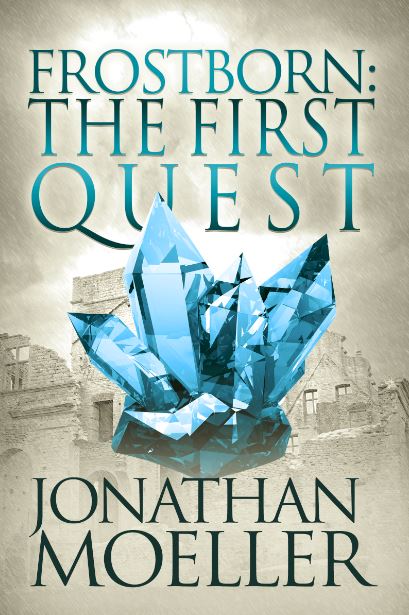
The Pulp Writer throws Frostborn: The First Quest into the Den and takes a decidedly different approach in introducing it to everyone here. If you’re interested in being one of the book’s three reviewers, shoot me an email. You may also be interested in noting that both his Demonsouled and Child of the Ghosts are free downloads today.

Today I am going to tell you a story about the dangers of opening doors.

Long ago, before humans ever came to my world,
before humans even existed, the high elves ruled this world. We
believed that God had put us here to care and maintain this world, for
God had indeed created it for a purpose. A great darkness had been
imprisoned within the skin of the world, inside a place the humans would
one day call the Black Mountain. Our responsibility was to guard the
prison and serve as the world’s caretakers.

And so we did.

For spans of
time so vast that no human tongue has the vocabulary to describe them,
the high elves kept watch over this world, dwelling in great bliss and
splendor as they went about their task.

But for some of us, that was not enough.

Those
of us with wisdom and courage, those of us with the strength to cast
aside old ideas and grow beyond our purpose, used our spells to examine
the Black Mountain, to consider the darkness sealed within as a bored
child might pick at a scab. In time the darkness spoke to us. At first
we spurned it, but we came to see that it spoke wisdom, words of
strength and power.

And the darkness reached out and possessed one of
us, and we fell to our knees and worshipped him as our new god, the
bearer of shadow, the teacher of new ways.

The
high elves turned against us, the shortsighted fools. They called us the
dark elves, but we were the true elves, the stronger elves, for we
alone had been brave enough to cast off our shackles and make ourselves
more.

They made war upon us for millennia, and we laid the
world waste. Spells beyond the capacity of the human mind to understand
shattered the land, and mountains crumbled and deserts froze and
forests burned. Yet for all our power, the high elves had the mastery,
and drove us back mile by mile.

But the bearer of shadow walked among us, whispering
his secrets into our ears. He taught us spells of necromancy, of
shaping flesh and bone into weapons of death. And he taught us the
secret of opening doors between the worlds. For there are as many worlds
as there are stars in the night skies, and as many kindreds that live
upon them. Our wizards opened the doors between the worlds, and brought
forth new kindreds to serve us as slaves and soldiers.

The orcs were the first. They made superb slave
soldiers for our armies, and we brought hundreds of thousands of them
through the gates. Then came the beastmen and the manetaurs. They were
harder to control, but served well as shock troops. Halflings were too
weak for battle, but made useful slaves. The dwarves proved impossible
to control, and soon rebelled and sided against us, but they were a rare
error

And one day, we found the urdmordar.

We
had never seen anything like them. They wore the form of spiders, yet
wielded great dark magic. They disdained the use of tools and weapons,
yet had intellects of genius, and dominated lesser creatures with ease.
They feasted upon living flesh like any rude predator, but were so
cunning and so clever that they remained hidden and their victims rarely
knew their true foes.

What slaves they would make! With their power, we could at last crush the high elves.

And so we opened the door to their world and brought the urdmordar to ours.

Fools, fools, fools.

For the urdmordar were too powerful to control.

They
swarmed the gate, and devoured the wizards that sought to bind them. We
were the rightful masters of this world, mighty in sorcery and wisdom
without peer, but the urdmordar saw us as only one thing.

Food.

Within five years
the dark elven kingdoms had been enslaved and forced to serve the
urdmordar. Our armies of slaves transferred their allegiance readily
enough. The high elves briefly rejoiced, thinking they had found an
ally, but the hunger of the urdmordar was insatiable.

One by one the high elven kingdoms fell, until only Cathair Solas remained.

And then the urdmordar met a new kindred coming up from the south.

The
humans, the exiles of Old Earth, the heirs of Arthur Pendragon, fleeing
through a magical gate from the fall of their realm. Heedless of the
ancient conflicts of their new world, they blundered into the path of
the urdmordar.

There is danger in opening doors…but there is also opportunity.

For in the humans, after long millennia, I see the key to my freedom.

The Warden of Urd Morlemoch


A predictable capitulation

David Stockman excoriates the House Republicans for their capitulation on the budget:

House Republicans “capitulated” in agreeing to the two-year budget deal reached last night and left the country to deal with an unsustainable fiscal situation until the peak of the presidential primaries in 2015, when nothing will get done, former federal budget director David Stockman told CNBC on Wednesday.

“First, let’s be clear—it’s a joke and betrayal,” Stockman, who served under President Ronald Reagan, said on “Squawk on the Street.” “It’s the final surrender of the House Republican leadership to Beltway politics and kicking the can and ignoring the budget monster that’s hurtling down the road.”

Stockman added that the budget deal means lawmakers would take a “two-year vacation” from dealing with the country’s fiscal situation and revisit it in 2015 at around the same time as the Iowa straw polls. Without an incumbent in the presidential race, both political parties will be too busy to touch the budget, he said. While some hailed the budget deal as a breakthrough in Washington’s political gridlock, Stockman compared the accord to “kicking the can” into “low Earth orbit.”

“There’s plenty of room, but they’re unwilling to make the tough choices,” he said. “Now, I understand Democrats doing that. The only hope of getting our fiscal situation under control is if the House Republicans stand up. And they’ve totally capitulated.”

Of course they did. With traitorous leaders like John Boehner and Eric Kantor, the House Republican “leadership” has far more in common with Obama than with the Republicans they nominally represent. They will “capitulate” on immigration too if they think they can get away with it and still preserve their political careers.

The US political system has completely failed. Many, perhaps even most, “representatives” no longer even pretend to represent anything but the interests of the financial institutions. This became apparent in 2008, and is now obvious in Washington’s every response to the financial crisis its credit money system and profligate spending have created.

The only possible way out was to let the credit money system default and collapse, but instead, the short-sighted, cowardly politicians bought the bankers’ threats to implode the economy and tied the political system to the financial system in what I expect will be a vain attempt to salvage it. And in doing so, I believe they have ensured the eventual destruction of both.

In Q1 2009, debt/GDP was 368 percent. The Q3 Z1 report came out on Monday. Total Credit Market Debt Outstanding was $58.082 trillion. The BEA reported Q3 GDP at $15.819 trillion. So, despite all of the economic pain, widespread unemployment, four rounds of quantitative easing, and two emergency fiscal stimulus plans, debt/GDP has been reduced all of 0.27 percent, to 367 percent.

(To put this in historical perspective, in 1951, debt/GDP was 132.5 percent and the government sector owed 55.9 percent of it.)

So, five years since the beginning of the crisis, we haven’t even begun the process of clearing the excess debt. And the cancer has gotten considerably worse in the meantime. In 2008, the government sector was responsible for 14.6 percent of $51.3 trillion in debt. In 2013, the government sector owes 25.7 percent of $58.1 trillion. Thanks to the capitulating Republicans, the next two years will see that grow to around 30 percent of $60 trillion… if they are successful in staving off a crash.

Look at what happened between 1933 and 1950. That’s why I believe the Great Depression 2.0 is going to be an order of magnitude worse than its predecessor.


Steve Jobs and the Case of the Donated Liver

Karl Denninger observes that his suspicions concerning Steve Jobs buying his way to the front of the donor list appear to be confirmed:

Remember my writing about how I didn’t believe, given the facts, that Jobs got his liver by pure “luck” (being registered in more than one place, for openers) and that his getting one likely meant someone else didn’t — and may have died as a consequence.

Now there’s always luck of the draw, and with a limited supply of livers (after all, we can’t wave a wand and make more of them) this is how it’s going to happen.  And if it happens via random draw and thus luck, well, that’s how it is.

But — did you know that the doctor who performed the transplant moved into a palatial mansion Jobs bought to recover in just a few months after the operation, lived in it for two years, paid the same price for it that Jobs did (no appreciation) when he bought it from Jobs and it is not clear if he rented it for those two years prior (at a market rate or otherwise) or if he literally was gifted living in the house!

It was remarkable how quickly a spare heart was found for Dick Cheney too, was it not?