Adios, gun-grabbing bastards

Two Colorado gun grabbers are booted out of office in recall elections:

Two Colorado Democrats who provided crucial support for a slate of tough new gun-control laws were voted out of office on Tuesday in a recall vote widely seen as a test of popular support for gun restrictions after mass shootings in a Colorado movie theater and a Connecticut elementary school.

The election, which came five months after the United States Senate defeated several
gun restrictions, handed another loss to gun-control supporters. It
also gave moderate lawmakers across the country a warning about the
political risks of voting for tougher gun laws.

The recall elections ousted two Democratic state senators, John Morse
and Angela Giron, and replaced them with Republicans. Both defeats were
painful for Democrats – Mr. Morse’s because he had been Senate
president, and Ms. Giron’s because she represented a heavily Democratic,
working-class slice of southern Colorado.

Molon labe, motherfuckers. Every politician who even THINKS about voting for a gun control law, no matter how “reasonable” should be booted out of office. Then tried for treason.

And note that in a two-page article, the New York Times neglected to mention the actual vote totals, probably because they weren’t all that close.  The Senate president Morse lost 51 to 49 percent and Giron was defeated 56 to 44 percent.

MOLON LABE


A blast from the past

This was the column I wrote the day after 9/11 that launched my recently concluded op/ed career as well as this blog.  It has its flaws, but in light of the references to the NSA and even Syria, it is a fairly prescient warning of the events of the subsequent twelve years, as well as of the freedoms we have lost during that time.

Yield no more freedom
September 14, 2001

In response to a number of questions inspired by last week’s column, we were working on a piece related to PC security, specifically the sort offered to one’s e-mail communications by various encryption technologies, when we were interrupted by the horrifying events of Tuesday. The fatal hijackings and subsequent media response has been difficult to dismiss from our mind, so we have tabled the usual technology review for a week in favor of some reflections on these recent events.

One of the many troubling aspects of the hijackings is the brutal demonstration that we, as a people, have received very little of the security we were promised in return for the many violations of personal freedom and civil liberties that have been enacted over the past decade. We would go so far as to raise the question if this had not been a fool’s bargain, wherein we have given up something of precious value in return for … arguably, nothing. It is bad enough that we allow the FBI to filter our e-mails and record our keystrokes, that we permit the National Security Agency to intercept every electronic communication floating through the aether, but it is even worse that we have done so without realizing that which we hoped to gain.

Just as the drug war has not reduced the amount of illegal drugs used in this country, the sacrifice of our civil liberties on the altar of national security has not brought us security. Keep this in mind, as the inevitable drumbeat begins for more sacrifices, as the calls begin for Americans to give up even more of their hard-won freedoms. National security cannot seriously be cited any longer in the attempts to ban personal encryption technology, not when, as WorldNetDaily reported yesterday, far better forms of communications encryption have already been delivered to terrorist-sponsoring states like Syria with the full approval of the previous administration.

It is said that the price of freedom is eternal vigilance, but that vigilance must be applied within as well as without. A thousand suicide bombers could not destroy America, but America is quite capable of destroying itself in the pursuit of any number of false idols, among them wrongheaded and illusory notions of security at any price. Individual privacy, like private property, is one of the foundations of our freedom, and it must not be thrown away out of fear. Anonymous cell phones or encrypted e-mail missives could be used by a terrorist, true, but the same is also true of a razor blade or a flight simulator.

What our leaders must realize is that personal technology is not a foe, but a powerful ally. The enemy we face can be subdued and contained by soldiers, bombs and a strong national will, but it cannot be ultimately defeated through conventional war. But satellite transmissions and the Internet know no borders, nor does the concept of freedom. Our enemies recognize this, which is why they fearfully denounce every sign of American influence as decadence, because they well know that they cannot raise another generation of suicide warriors if that generation is allowed to partake of the dangerous and forbidden fruit of freedom.

Some have protested that America must not strike back, that doing so will only perpetuate the “cycle of violence,” that others will only rise up to replace those we strike down. But this is demonstrably untrue, as no German ever rose up to replace Hitler, nor does a Japanese war party trouble us today. It is appropriate for a nation to fight a war in its own defense, especially when war has been openly declared upon it. But in doing so, we must resolutely resist the call to sacrifice that which makes the United States of America a country worth defending – our inalienable rights and our individual freedom.


Breivik sets the political trend

I believe these election results confirm I won my debate with a certain skeptical Finn concerning the electoral implications of the mass shooting of the Norwegian Labor Party’s larval quislings:

An anti-immigrant populist party laid claim to a major role in oil-rich
Norway’s government for the first time on Tuesday after a center-right
alliance won a landslide general election victory to oust a Labour
administration. The Progress party, which once had among its members Anders Behring
Breivik, who killed 77 people in 2011 in a gun and bomb attack targeting
Labour, came third in Monday’s poll, giving it a kingmaker role in
coalition building.

Breivik wasn’t a madman. He simply put into action on what many Norwegians were thinking and his murderous actions were a warning sign of what was to come if the current program of mass immigration was maintained.

The Norwegian people have turned against mass immigration precisely because they do not want more Breiviks. Nationalist resistance against invasion is inevitable; even the French were moved to it subsequent to their conquest and occupation by Nazi Germany. The only question, the only choice, is if resistance comes within the political process or outside of it.

And when that resistance is deemed out of bounds and forcibly expelled from the political process, it is not eliminated. It simply resorts to more extreme measures. If you want more violence, more Breiviks, even open civil war, then continue to support mass immigration, multiculturalism, and desegregation. If you want ethnic peace, you will have to oppose those things.

Both the Australian and the Norwegian people appear to be moving in the direction of peace. The American people, on the other hand, appear to be doing the precise opposite. As I said not long after the shootings, I will not be in the least bit surprised if Anders Breivik is one day regarded as a national hero in Norway, much like George Washington and William Tell, two men who also offered murderous resistance to their own governments.


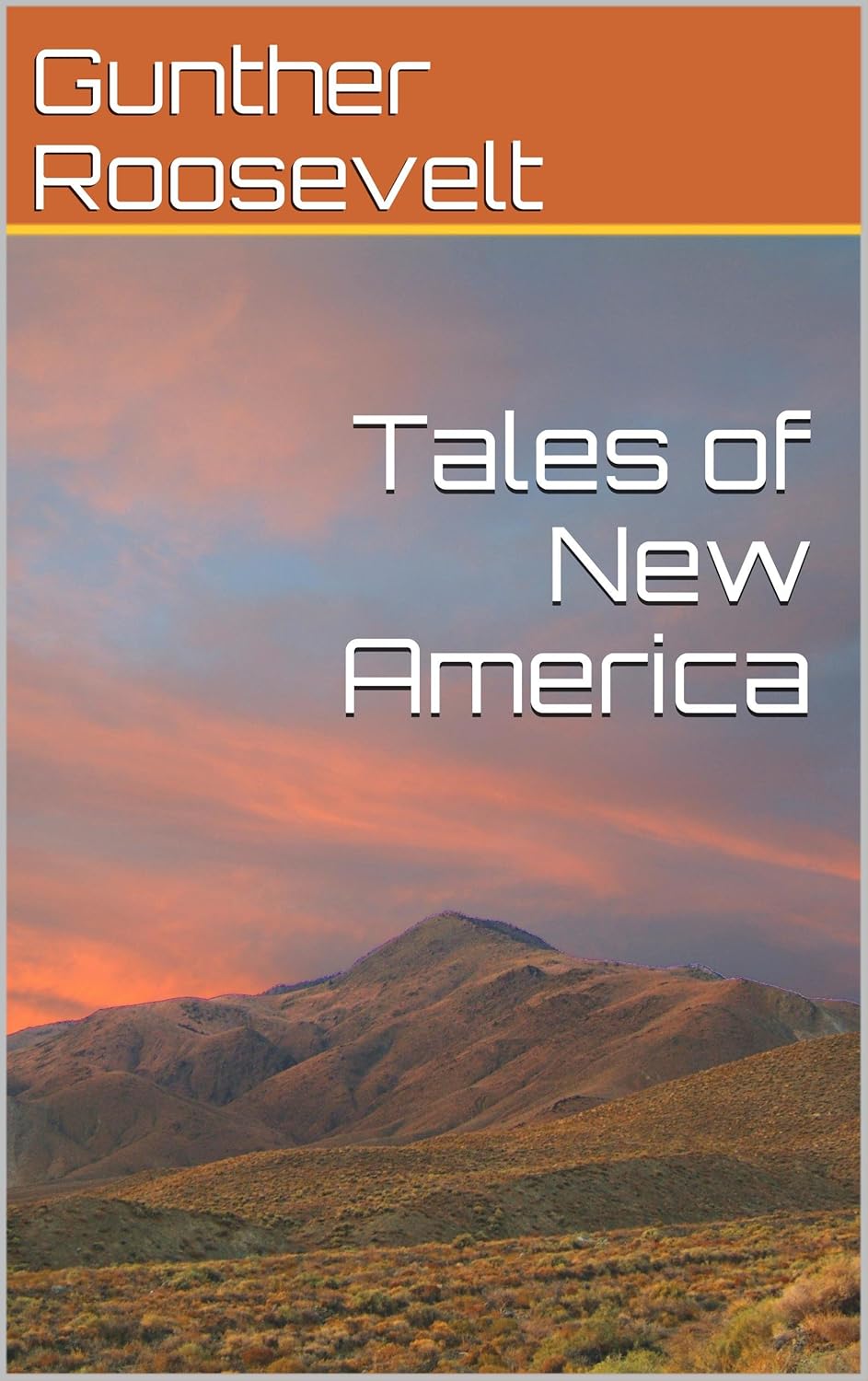
Book Review: Tales of a New America II

DL provides a second look at Gunther Roosevelt’s Tales of a New America:

Tales of New America by Gunther Roosevelt is a
collection of short stories/vignettes set in a post-economic collapse
America where too many decades of an expanded welfare state and cultural
decline have taken it’s toll. The stories contain several recurring
characters, but they’re not intended to follow the stories of a set
group of individuals, but rather to communicate the process of the
transition from the USA to the NAR, or New American Republic. For me,
this fast paced style, and my own interest in the subject, made
compelling reading and I finished the book in short order.

The book is set far enough in the future to avoid the
conflict that will arise when the government can’t pay for all of the
post-retirement benefits it’s promised to employees. As a resident of
Illinois, this is something that is of great concern to me. I work in
the private sector, but I wonder what the reaction will be from all of
those public employees who have not saved for their own retirement will
be when their employer can’t make good on promises made during boom
times.

I couldn’t help but compare this to another
post-collapse novel I’d recently read, Flashback, by Dan Simmons, an
excellent book by the author of Hyperion. Tales of New America charts
out what I would consider to be an absolute best case scenario for the
collapse of Progressive American Culture and the start of a new
culture–a culture aware that the previous culture was suicidal.
Flashback
on the other hand charts a much more pessimistic, and I’m
afraid to say, realistic scenario.

“Tales” charts the fall of the old and birth of the new
by a rich industrialist who is tired of dealing with the regulation
involved in the oil business. His circumvention of the law, and the lack
of reaction from the clapped-out regulatory agencies gets the ball
rolling. Others follow his lead by “going Galt” and the NAR is
established. It was quite easy to imagine this scenario based upon the
quite common concept of Diminished Responsibility that’s so common
amongst government workers.
Themes of the US Government in free fall are common, with
a good sense of “the body’s dead, but the head doesn’t know it yet”,
The old bureaucracies are established, nominally running, but they’re
running on fumes, only still moving at all because the personnel
involved are doing their work as part of a routine and not much else.

Scenarios of non-NAR citizens becoming aware of
untenable nature of how they lived in the past, and lessons being
learned are common, but not to the detriment of the story.

Some
of the things that touched me the most were the way this novel handled
race relations. It pointed out my own preconceived notions that in many
cases I didn’t know I had. My own life involved growing up in a tough
part of the south side of Chicago, followed by a move to a working class
suburb. My subsequent life has been a career in IT, and because of my
hard work I’ve always been able to live in areas that were safe, stable,
and less than vibrant. Virtually all of my contact with Vibrant
Americans has been work related, and positive. If I didn’t still live in
the Chicago area, with constant reminders of the dangers of vibrant
culture, my knee jerk reaction to this novels take on race relations
would have been “Racism!!”, but I was able to remember that this was a
novel, and within the confines of this novel and our current culture,
what was portrayed was understandable. I’m also familiar with the
concepts, which I first encountered in Peter F. Hamilton’s Night’s Dawn
trilogy when he introduced the concept of “Ethnic Streaming” for
off-world colonies.

I did have some issues with the novel. It appeared to me
that every personality connected with the NAR was beyond temptation and
bribery–something I know never to be the case when human beings are
involved. As the NAR conquest of the west coast moved forward, there
were no major setbacks, no huge obstacles, and at every turn NAR
technology provided an almost magical advantage. The concept of “no
battle plan survives contact with the enemy” just never reared it’s ugly
head. All the NAR forces were good, incorruptible Boy Scouts, and the
enemy were simply rabble propped up to be knocked down. A semi-competent
enemy would have been nice.
Some of the characters stories were left to wither and
die, some went on in too much detail for my taste. A good editor might
have been helpful in this and other areas.

Overall, I
enjoyed the book, and it was compelling enough for me that I pretty much
read it straight through. Using the Amazon scale, I’d give it 3 stars.
I’d certainly be willing to give something by this author a try in the
future. If you’re going to read this, I’d also recommend picking up
Flashback
to compare and contrast life in Post-Obama America.


Obama turns to the Jews

The New York Times reports that because the American people have made their opposition to the war clear, Obama is using the Jewish lobby to lean upon Congress:

The American Israel Public Affairs Committee, the powerful pro-Israel
lobby in Washington, plans to dispatch 300 of its members to Capitol
Hill on Tuesday as part of a broad campaign to press Congress to back
President Obama’s proposed strike on Syria, the group said Monday….

 Mr. Obama and his secretary of state have repeatedly invoked Israel in their arguments for a strike. The White House has reached out to Aipac, as well as to the Anti-Defamation League and the Conference of Presidents of Major American Jewish Organizations, who held a conference call on Monday to discuss lobbying strategy.

Alon Pinkas, a former Israeli consul general in New York, said five members of Congress had called to consult with him in the past four days.

“There’s nothing sinister, nothing conspiratorial, nothing wrong with the lobbying arm relating to Israel and the Middle East supporting the president on this issue,” said Abraham H. Foxman, the Anti-Defamation League’s national director. “You don’t need a phone call from the prime minister to understand that Israel’s interest is with the United States taking military action because it’s a message to Iran. You don’t have to be a nuclear physicist to figure out where Israel stands.”

Abe Foxman can tell himself that there is nothing wrong if he likes. But the fact remains that Obama is openly attempting to use the Jewish lobby to supersede the clearly expressed will of the American people to leave Syria alone. And my impression is that it would not be good for the Jews in America for that lobby to demonstrate that Congress is, as some observers have put it, Israeli-occupied territory.

Israeli diplomat Zvi Rafiah is correct to be concerned: “We should not be the one that pushes the American people to do or not do anything they want or don’t want.”

The ADL’s Foxman may be right to say “Israel’s interest is with the United States taking military action”. The problem is that it is clearly not in the American interest, and AIPAC, the ADL, and the Conference of Presidents are demonstrating that organized Jewish opinion cannot be trusted to put American interests ahead of Israeli ones.


Tattoos: the obviously poor choice

Sometimes Steve Sailer cracks me up:

Commenter slumber_j points to this New Yorker cartoon about “The subtext of all tattoos:” “Ask me about my parents’ divorce.”

A related subtext might be: “I come from a long line of rash
decisionmakers.” On women, tattoos often seem to imply: “Pay attention
to me because I, obviously, make poor choices, so you might get lucky.”

I have an instinctive liking for tattoos on women, mostly because I am a natural predator. They are like a shortcut; tattoos tended to mean I didn’t even need my highly developed talent for sensing insecurity and emotional instability in attractive women.  A dagger between your breasts or a panther on your back? You might as well hand me a remote control with your name on it.

However, I have an intellectual distaste for them. Unless you’re a) special forces, b) Navy, c) a biker, or d) a prostitute or seriously dedicated slut, you are well advised to skip the inking. There are few things more tedious than listening to some vacuous marketing assistant desperately try to come up with an explanation for the deeper “meaning” behind their various markings.


“I mean, the [butterfly, dolphin, flower] on my [ankle, shoulder, hip] is just, like, so meaningful to me, because I was going through a hard time and it was, like, an inspiration and it was so important to me, and it really helped me get through [a) my breakup with X, b) the death of my (friend, relative, favorite TV character), c) the last season of Friends.]”
– Every girl with a tattoo ever

Tattoos are little more than the mix tapes of the two thousand teens. As for men, tattoos don’t make you look hard.  Do you know what makes you look hard? Muscles and scars.  Maybe a shaved head. That’s pretty much it.

And the quotes? Don’t get me started on that. Think about how dumb your senior yearbook quote is. Then imagine it following you around for the rest of your life, advertising how your mind hasn’t improved since you were a teenager.

The increased popularity of tattoos and other forms of body decoration are visual reminders of the gradual decline of civilization in the West. Like music and art, personal decor is indicative of the long term societal trend. It’s more than a fad, it is a sign of the descent into savagery.


Mailvox: The oppression of St. Scalzi

Cronolink asks: “Can you hear how much he doesn’t care about you?” It appears John Scalzi has reverted back to trying to pretend he’s enjoying all the “attention” from those of us who openly express our contempt for the creepy little man:

I enjoy the fact that every single thing I do sends my Frank Grimeses into spinny paroxysms of foaming, impotent rage. They can’t not do it! And, well. If they spend that much time thinking about me, then that’s what they both want and deserve, I suppose….

I suspect I will go on a dudebro taunting moratorium pretty soon, as my book deadline inches closer and I have fewer brain cycles to waste on frivolities. I’m pretty sure on their side they will continue their foaminess, however. In at least one case, it’s pretty much all the dude has going on in his life, and it would be sad for him to be entirely bereft of an occupation, such as it is….

There’s a reason I tend not to single out any in particular, or if I do, use their name. Nothing annoys their attention-mongering little hearts more than not getting the recognition for their efforts, from Google or anyone else.

I should note in any event that the number is relatively small; in the main, it’s the same three or four dudes with websites all enjoying the smell of each other’s farts, as it were. Occasionally a new person will pop up. These new dudes appear to be trying to currying favor with one of my regular detractors, which really is no way to get through life.

Be that as it may, at this point, these dudes don’t need encouragement from me. I could ignore them completely and they would still come after me, because they think they are in some sort of epic battle with me or something. They can’t not get worked up about me. That being the case, in a very real sense it doesn’t matter what I do. They are self – validating.

I don’t know. Maybe one day they will get bored. I won’t mind when that day comes. Until then, I don’t mind occasionally setting up a hoop and watching how excited they get to jump through it. It’s like watching squirrels in the yard: simple amusement featuring frantic animals.

Ah, so he enjoys it again?  And yet, I seem to recall how Johnny tried to pretend he was enjoying the sweet no-homo mancrush, until he couldn’t take it any longer and announced that he was done pretending to be nice?  Now he is suddenly attempting to change his message again because it’s not just me anymore, it’s me, and Heartiste, and Roosh, and John Ringo, and Mike Williamson, and Larry Correia, and those guys who keep turning out various photomemes featuring him.  And others.  There are most definitely others who don’t necessarily wish to openly express their contempt for the little creep, and some of them harbor even more of it than we do.

The most delusional statement is this: “Nothing annoys their attention-mongering little hearts more than not getting the recognition for their efforts.”

Scalzi claims to believe we are extremely annoyed by the fact that he won’t respond directly to anyone, but instead makes these passive-aggressive comments intended to allow him to simultaneously take shots while feigning to remain above it all.  This is pure psychological projection from the man who blatantly lied about his traffic and exaggerated it by no less than 46,000 per day.  I suspect he is also delusional about sending anyone into “foaming, impotent rage”. I can’t speak for anyone else, but I’m not even angry about him campaigning to get me kicked out of SFWA. His unmerited Hugo Award for Best Novel can’t reasonably be blamed on him, it is merely the latest consequence of a problematic trend in SF/F that I recognized more than ten years ago.

Like most gamma males being mocked, Scalzi can’t bear to be laughed at. He would rather pretend that he has made his socio-sexual superiors angry, because that puts him on what he imagines is a superior moral plane.  But the truth is that we’re all just laughing at the little weirdo.

The readily confirmable fact is that I get more pageviews than he does, while Heartiste and Roosh both get more pageviews than I do.  John Ringo and Larry Correia sell considerably more books than Scalzi does. None of us care in the least about getting any “recognition” from him, still less do we wish for the obese female shoggoths that read his blog to infest ours. We just happen to dislike rabbits, despise their incessant lies, and enjoy continuing to puncture the delusions and the self-serving propaganda of the chief gamma rabbit.

He’s right.  He could ignore us completely and people will still come after him. But not because anyone thinks they are in an epic battle with him, or because anyone wishes to curry favor with me. Some of those mocking him have no idea who I am and others could care less. The only thing they all have in common is the fact that they find Scalzi both contemptible and eminently tauntable.  And that won’t ever stop so long as John Scalzi insists upon his public posture as St. Scalzi, the Self-Appointed Conscience of Science Fiction.

For one whose motto is “taunting the tauntable”, Scalzi spends a remarkable amount of time whining about people being mean to him.  He’s got SFWA to himself now. He’s got his long-sought award cum validation.  He’s got his lawn. And yet, here he is, crying in public again because someone isn’t patting him on the head and telling him he’s a good boy.

UPDATE: Johnny keeps spinning and spinning, and confusing his readers in the process:

I guarantee you these assbags would be heartily offended at the assertion that I was punching down at them…. Again, the comparison is not about what is real but how these dudes perceive me. From their point of view, they do a lot of screaming about how the emperor has not clothes. The problem for them is that the rest of the world apparently likes their emperors nude. And it drives them nuts.

As noted earlier, the Homer Simpson analogy does not actually conform to reality, merely what they’re trying to assert.

Whatever Wabbit: “Thanks for clarifying, again, that point. I am not the skilled in the interpretation or references at play here, so it was good that you were able to explain what was really going with the analogy.“

No, not offended. Amused. Those who are higher in the socio-sexual hierarchy aren’t offended when gammas try to pretend they are higher in their own little social sub-hierarchy to which we don’t belong at all.

It is typically disingenuous for John “my 50,000 daily blog readers” Scalzi to talk  about what is real versus perception when what we perceive is the fact that he has more like 4,000 daily blog readers.  And it no more drives me nuts that many  people like mediocre science fiction ripped off from previously popular science fiction novels and television shows than it bothers me that some people like to listen to Britney Spears.  That is precisely what I expect.  The lowest common denominator appeals to the most people by definition.


The collapsing charade of “global warming”

Never, ever, let the science fetishists forget that they staked the reputation of modern science on the “established science fact” of global warming.  Keep that in mind every time they bring up science to justify evolution by natural selection or any other quasi-scientific dogma, especially in light of the fact that they were not only wrong about the elimination of Arctic ice, but spectacularly wrong.

A chilly Arctic summer has left nearly a million more square miles of ocean covered with ice than at the same time last year – an increase of 60 per cent. The rebound from 2012’s record low comes six years after the BBC reported that global warming would leave the Arctic ice-free in summer by 2013. Instead, days before the annual autumn re-freeze is due to begin, an unbroken ice sheet more than half the size of Europe already stretches from the Canadian islands to Russia’s northern shores.

The Northwest Passage from the Atlantic to the Pacific has remained blocked by pack-ice all year. More than 20 yachts that had planned to sail it have been left ice-bound and a cruise ship attempting the route was forced to turn back. Some eminent scientists now believe the world is heading for a period of cooling that will not end until the middle of this century – a process that would expose computer forecasts of imminent catastrophic warming as dangerously misleading….

The disclosure comes 11 months after The Mail on Sunday triggered intense political and scientific debate by revealing that global warming has ‘paused’ since the beginning of 1997 – an event that the computer models used by climate experts failed to predict.

Astonishing, isn’t it, that I, and the other skeptics, have been proven right yet again, despite the scientific consensus of all those scientists with their fancy academic credentials.  Thus proving, once again, that the material value of those credentials is somewhat less than an equivalent weight in toilet paper.

How is that possible? Because you don’t have to know a damn thing about the climate to know when corrupt human beings are putting forth falsehoods in order to justify claiming more money and power on their own behalf.


Rules of Writing IV

4. Thou shalt make thy plots and thy characters mutually consistent

Most writers understand the need to make their plots coherent and to keep the dialogue and actions of their characters self-consistent. However, a surprisingly common error is to fail to understand the necessity to make the intersections of plot and character consistent with both as well.

Let me provide an explanatory example. In Piers Anthony’s Split Infinity, the protagonist Stile is a serf and master gamesman who has been lurking just out of the top rankings for his age group because he did not wish to rank highly enough to qualify for the big annual tournament that will lead to either citizen status or exile. However, circumstances change and Stile decides he has to compete in the tournament even though he has another year or two before his serfdom expires and he would be automatically exiled.

Stile rapidly defeats the first few competitors he challenges and moves up the ranks to challenge Hulk.  He has to beat Hulk and he is under severe time pressure to not only beat him and complete the next challenges quickly before the start of the tournament.

However, Hulk is a physical giant and Stile, being a jockey of small stature, has serious size issues. Through one of the more entertaining aspects of the book, the Game Grid, the two end up competing in a marathon. Stile is in bad shape physically, but it’s a lot easier for him to run long distances than the massive Hulk, so he literally runs Hulk into the ground.

Being a serious competitor, Hulk won’t quit but runs until he collapses. Despite his pressing need to win, despite the time pressure, Stile mysteriously offers Hulk a draw, even though doing so will cost him at least one critical day according to the rules, and possibly more depending upon the rules concerning injuries.

Why? The reason is that Stile is obviously Anthony’s Mary Sue, so much so that I concluded, before I’d even finished Split Infinity, that Anthony was very short himself.  (Sure enough, I looked it up and learned the following: “his physical development was also delayed, causing him to be unusually short into his college years.”) Because Stile is the Mary Sue, Anthony can’t resist the urge to portray Stile as the noblest of the noble, turning down a certain and well-merited victory out of sporting concern for his opponent, despite the way in which the noble gesture completely destroys both the plot as well as the reader’s view of Stile as a maniacal competitor.

In fact, this scene comes only a few pages after we’ve been treated to a strange little explication of what we are told is the notorious “Stile stare”, a gaze of such implacable hostility that it can cause an otherwise adept Gamesman to stumble and make basic mistakes in an intellectual contest.  So, we’re asked to believe, in less than 10 pages, that Stile is willing to throw away a victory just because his opponent is exhausted despite being as viciously competitive as Michael Jordan? This simply isn’t credible.

Anthony belatedly salvages the plot by having Hulk provide an ex post facto concession, which does nothing more than get Stile right back to where he had been before his inexplicably magnanimous gesture, the victor of the contest.  Only now, instead of knowing him to be a ruthless competitor and a hero trying to save two worlds, we have learned that he is also the ultimate good sport. Which, of course, turns out to be of absolutely no import whatsoever.

Injecting this sort of plot-character inconsistency isn’t necessarily related to Mary Sue characters, though. It can also stem from an attempt to generate artificial drama, or to provide the author with a chance to provide a little impromptu lecture. Robert Heinlein not infrequently indulged in the latter, writing scenes where the male protagonist would suddenly and inflexibly take a stand on some incredibly minor principle in a manner that would not only put his romantic relationship in doubt, but in some cases, jeopardize the character’s primary objective.

There are two problems with this sort of inconsistency.  First, the effect usually comes off as bathos because any drama created in this manner is observably artificial by the logic of the fictional world. Second, the inconsistency tends to jolt the reader out of the story because it forces him to question his previous conclusions about the character.

If you know who your characters are and you understand how they relate to your plot, there will be no need for them to come into conflict. Resist the urge to show off how wonderful your favorite characters are, in fact, I would encourage you to intentionally show them failing from time to time, or indulging in a genuine human weakness, just to combat the usual authorial tendency to always present his favorites in an unconvincingly rosy light.  It is better to exaggerate a character’s behavioral tendencies than to violate them, especially when the plot depends upon those tendencies.