An interview with John C. Wright

A Castalia House blogger interviews the leading Castalia House author at Castalia House:

Q: Your conversion story from atheism to Christianity is remarkable.  Some critics have been surprised to discover which of your books were written as a Christian, and which were written as an atheist.  You have said that in each case you simply followed the internal logic of the story to its conclusion.  How much has your faith influenced your fiction, if at all?

A: This is a very difficult question, because my firm resolution when first I converted was to simply tell stories to entertain.

I am often annoyed by stories that preach, even when they preach a sermon with which I wholly agree, such as Philip Pullman’s THE GOLDEN COMPASS. I was an atheist when I read it, a full-throat anti-Christian zealous in my love of godlessness, and even I could not stand the obtrusive excrescence of the preaching in that miserable book.

Now that I am in the other camp of the endless war between light and darkness, I confess I am still nonplussed and unamused by preaching disguised as entertainment, whether it supports my side or not. The idea of ‘Christian entertainment’ is a sound one, as long as it is entertaining as well as being Christian. There is an odor of self satisfied smugness and piety which is as repellant as the musk of a skunk clinging to much Christian entries into the literary world, which one never finds in older works, such as Milton or Dante, and never in the works of masters even in so humble as genre as science fiction. I challenge anyone to find anything nakedly and blandly pious or preachy in the work of J.R.R. Tolkien, R.A. Lafferty, Gene Wolfe or Tim Powers, but there is clearly a spiritual dimension to all their works.

So I vowed a great vow never to let my personal feelings creep into my books, but merely to tell a tale for the sake of the tale, keeping faith with my readers. I am not their teacher, nor their preacher, nor their father confessor, and I have no duty to instruct them, and no qualifications to do so, no more than the jester in a King’s court has the authority to criticize the laws and policies of the King. My customers are my kings, and my job is to do pratfalls and take pies to the face to amuse them.

In the space of a single hour my great vow was overthrown when a reader, practically in tears, so deeply and thoughtfully praised the vision of spiritual reality presented in one of my short stories, the wholesomeness of the moral atmosphere portrayed there, that the reader likened it to a man trapped on some alien world of chlorine gas and sulfurous clouds being allowed to step on the fair, green fields of Earth for a single breath of wholesome, springtime air.

The reader was talking about my Christian faith, and the strength and firmness and clarity it lent to my writing. If I can wax lyrical about Ricardo’s Theory of Comparative Advantage, as I did in THE GOLDEN AGE, then surely I can wax lyrical about truth, virtue, and beauty.

The king is sad, and the jester needs to bring him comfort, for I know tales of a country where these sad things do not reign, but a king kindlier and mightier than any mortal king. As a jester, I owe it to my kings here on Earth and the King of Kings in heaven not to hide or waste my talents.

You’ll definitely want to read the whole thing. And afterwards, if you happen to find yourself still failing to be in possession of excellent books by the interviewee such as THE GOLDEN AGE, AWAKE IN THE NIGHT LAND, ONE BRIGHT STAR TO GUIDE THEM, and THE BOOK OF FEASTS & SEASONS, I find it impossible to imagine that you will not want to swiftly rectify the situation.

It’s an excellent interview with a fascinating author. Scooter did an excellent job of formulating much deeper questions than one generally sees in the SF genre, in addition to demonstrating that he was actually very familiar with the author’s material.
The blog star

It’s no slight to Daniel, Scooter, Mascaro, or me to say that Jeffro, of the Space Gaming Blog, has been the star of the Castalia House blog this year. He makes everyone up their game by starting each week off with an intriguing, in-depth post, and gives our four new bloggers a high level of excellence to aim for. And fortunately for everyone, he appears to enjoy blogging there:

I am not shy about pointing out how happy I am with how this is shaping up. I cover the full range gaming topics: vintage stuff, current releases, role-playing games, wargames, everything! I write in such a way that you can get something out of a post even if you don’t buy or play the game in question. I put things into the wider context of gaming history and touch on the literary antecedents of the games we play. And yeah, I occasionally get esoteric, but I try to stay readable and comprehensible to people that aren’t gamers. No matter what, though, I never stray from the voice of someone that actually knows how to articulate how these things work in actual play… and that just freakin’ loves to play the heck out of these things.

I have complained about how games are covered in magazine articles and so forth in the past. I am just so rarely satisfied with how “journalists” and commentators portray games and gaming in general. Voicing that sort of concern almost invariably summons a smarty pants type that sneers back, “oh, you’re just complaining; the best answer to this sort of thing is to go out show us the right way to do it.” Well listen here, bucko… I’ve done it now.

If you’ve enjoyed Jeffro’s exploration of Chapter N this year, don’t be shy about going to his blog and letting him know. What I particularly enjoy about his posts is the way he dives deeply into the game mechanical aspects as well as the experience; he represents the perfect blend of SF/F literature and gaming that is of particular interest to a game designer who occasionally dabbles in fiction.


RED HORSE reviewed

The Pulp Writer reviews RIDING THE RED HORSE:

RIDING THE RED HORSE is an anthology of military science fiction, speculating on what the wars of both the immediate and the distant future will look like. It alternates between nonfiction essays on the nature of war and short stories. None of the essays or stories were bad, but my favorites were:

-Jerry Pournelle’s HIS TRUTH GOES MARCHING ON takes place on a distant colony planet. Later some refugees are assigned to the planet, to which the original inhabitants take offense, and the situation unfolds with predictable violence from there.  Basically, it’s the Spanish Civil War IN SPACE! The story follows an idealistic yet nonetheless capable young officer who gradually loses both his illusions and his innocence during the fighting.

-William S. Lind’s essay on “The Four Generations of Modern War” rather presciently pointed out some of the serious problems with the Iraq War. His thesis postulates that we are entering a period of history where technology enables non-state organizations or even individuals to wage wars effectively, much like the Middle Ages when the state did not have a monopoly on war. (A good example of that is the Hanseatic League,  an organization of merchants which actually defeated Denmark in a war during the 14th century, or the various civil wars of medieval France and England where powerful noble families fought each other with no central authority able to restrain them.) While I lack the expertise to determine whether the essay is actually correct or not, I nonetheless think it helpful in trying to understand the various conflicts in the world today. Admittedly the hack around THE INTERVIEW film, which took place after I started writing this review, caused millions of dollars in economic disruption and is likely a good example of fourth-generation warfare, regardless of whether a government, a non-state group, or simply a group of disgruntled employees did the hack.

-WITHIN THIS HORIZON, by Thomas A. Mays follows a Space Navy officer in a distant future where the major powers have developed space fleets, and therefore armed conflict has moved the the asteroid belts and the comets. Ground-based forces are left to wither. The Space Navy officer in question, after sustaining serious wounds, is reassigned to the terrestrial water navy, and figures his career is over. The enemy, however, has other ideas, and the story is an excellent tale of integrity in the face of cynicism.

I think one of the chief arguments for the strength of the anthology is the way in which readers and reviewers keep citing different stories as their favorite. Steve Rzasa’s “Turncoat” was my favorite, and there are more than a few who agree with me, but it’s remarkable how many other of the 14 different fiction stories have been cited by others as the anthology’s best. No doubt Mr. Roberts will appreciate Mr. Moeller’s opinion on the matter.

Grognard, an Amazon reviewer, adds:

The essays are better than the stories, which is amazing given the stories. The book also includes a bibliography for each contributor and that is even better. This is a must-buy for anyone interested in science-fiction or military history, let alone military science-fiction.


Sci Phi Journal #3

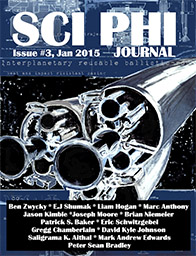
Jason Rennie has released the January 2015 issue of the Sci Phi Journal and it is now available at Castalia House in EPUB and Kindle formats. SCI PHI JOURNAL Issue #3 contains eight short stories and four non-fiction articles, including Issue number three contains eight short stories, including “Philosophical Reflections on The
Doctor Who 50th Anniversary Special” by David Kyle Johnson, “A Deeper
Rabbit Hole: Reconsidering the Philosophy of the Matrix Trilogy” by
Joseph Moore,  and “Khan as Nietzschean Übermensch and as Moral Actor” by
Patrick S. Baker. It also contains the next two chapters in the serial novel that began in the December issue.

The third issue is, like its two predecessors, only $3.99. The content of the previous issues has been pretty solid; I’m not at all interested in Star Trek and yet I found the comprehensive takedown of a critic concerning a particular Q episode to be as interesting as it was convincing. The stories have been good too. I don’t mind confessing that we’ve mined the journal for two authors, one of whom is currently writing what I expect will be a very intriguing futuristic detective novel; the other will be contributing to the second volume of Riding the Red Horse, which is already shaping up to be a serious murderer’s row.


Amazing Stories reviews John C. Wright

Specifically, The Book of Feasts & Seasons. You’ll want to read the whole thing:

This week I’m reviewing a title that’s seasonal in nature, although
the seasons it deals with occur across an entire year rather than a
small part of the year. I’ve not read much of Mr. Wright’s work, but
what I have has been better written and more original than much of
what’s currently being published.

The same is true here. These stories have a great deal of depth, both
in the characters they’re about and the concepts with which they deal….Wright is an author who isn’t afraid to delve into deep topics. Some
of the themes here dealt with the nature of God, forgiveness, kindness,
racism, sacrifice, and second chances. A number of authors these days
try to deal with serious themes and issues in their fiction. Few are as
accomplished or as entertaining as Mr. Wright.

The Book of Feasts & Seasons is one of the best and most thought provoking books I’ve read in the past year. I highly recommend it.

It’s perhaps worth noting that Mr. Wright’s The Book of Feasts & Seasons has a 4.9/5 rating. But I find it a little surprising that of the six stories the reviewer deemed worthy of mention, none of them were the one I consider to be the best, namely, “The Parliament of Beasts and Birds”.


Dr. Pournelle health report

From Jerry’s blog:

    “Jerry had a small stroke. He is recovering well at a local hospital. Prognosis is good, though they’re running more tests and he’s expected to stay at least another day or two.

    “He felt well enough to call Mom [Mrs. Pournelle] from the hospital.

    “Thank you for your thoughts and prayers. More updates when we have them.”

They are permitting well-wishers to post comments, in case you would like to do so.

I can’t say I know Dr. Pournelle well, but after working with him over the last two weeks to get “His Truth Goes Marching On” and “Simulating the Art of War” into RIDING THE RED HORSE, I found myself marveling at how sharp he is despite being 81 years old. Of course, it probably helps when you’re starting with a mind that is around +4SD.

We did talk a little about the SFWA purge in passing; he was curious about my perspective on it. He was mildly appalled to hear what really happened, as you might expect, and thought the Board’s action was both ridiculous and short-sighted. But he also saw the humor in the incident, and laughed out loud when I explained the actual nature of the technical violation.

It’s such a pleasure to discover that a giant of one’s youth is also a genuinely good man. Here is to his speedy recovery.


Trigger warning!

In which a USN Commander, RIDING THE RED HORSE contributor, and new Castalia House Associate comments on the new military science fiction anthology:

If having your assumptions challenged and your mind blown could upset your delicate little psyche, you’re gonna want to click away right now.

If harrowing scenes of speculative, futuristic combat or stories about the men and women who fight for something greater than themselves fill you with dread, flee from here.

If center-right positions, hard science, or frank discussions of our past mistakes and future concerns make you want to hide behind your momma’s petticoats, you’d best stick to your internet safe-zone with all countervailing opinions neatly blocked away.

If the phrase “Trigger Warning” is something you watch out for and is itself a potential trigger for bad-thought . . . yeah, I got a book you’re gonna want to avoid.

However, if you can handle it and are a fan of kick-ass science fiction, of near-prescient analysis on what our future holds, or of some of the best writing you’ll see all year by great authors both new and old, well, for you I have your new favorite book….

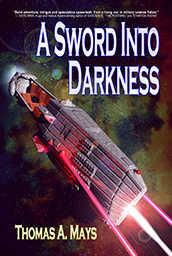
Read the rest of it there. What do I mean by “new Castalia House Associate”? What that means is that Thomas May’s very good first contact novel is now available in DRM-free EPUB and MOBI for Kindle format from the Castalia House store for $3.99. And by “first contact”, I should probably point out that I mean “violent space combat” with one of the most unusual alien races yet encountered in science fiction. If you enjoyed “Within This Horizon”, then you’re going to want to read A Sword Into Darkness.

The reaction to the new anthology has been almost uniformly positive, which is encouraging, but I have to say that I was probably most amused by these two comments at Instapundit’s.

  • Tom Kraman and Vox Day…lemme guess, more of that namby-baby, Dem/Lib/SJW kumbaya fluff… said no one ever.
  • Kratman AND Vox Day? Is the publisher TRYING to make SJW heads into IEDs?

The collection is Blue SF, to be sure, but it is moderately less Deep Navy Blue SF than you might expect, mostly because unlike the gatekeepers of Pink SF, Tom and I don’t believe in ruthlessly enforcing our ideological perspective on every contributor. As Larry Correia has gone to considerable pains to point out in the past, it is the story is the point, not the moral or the ideological object lesson. And the general conclusion appears to be that these are very good stories indeed.


The RED HORSE rides

I’m not sure there are the superlatives to describe how pleased I am to be able to introduce to you Castalia’s new anthology of military science fiction and military fact, RIDING THE RED HORSE. Tom and I have been working on this all year, and between us, we somehow managed to recruit a very strong roster of contributors on both the fiction and non-fiction sides. It’s now available from Amazon as well as from Castalia House.

As the editing was a collaborative effort, so too was the cover. JartStar was unhappy with his initial attempt, but he liked the concept, so he brought in Jeremiah, who did the covers for The Altar of Hate and The Book of Feasts & Seasons, and together they managed to bring it to life. Historically keen eyes will probably recognize the cover to which it is a thematic homage of sorts.  But as much as I enjoy working on covers, let’s face it, it’s really what is inside the book that matters. The contributors, and the pieces they contributed, are as follows, in the order they appear in the book. Many, if not most, of these names will be readily recognizable.

  • Eric S. Raymond: “Sucker Punch” and “Battlefield Lasers”
  • William S. Lind: “Understanding 4th Generation Warfare”
  • Chris Kennedy: “Thieves in the Night”
  • Vox Day: “A Reliable Source”
  • James F. Dunnigan: “Murphy’s Law” and “Red Waves in the South China Sea”
  • Jerry Pournelle: “His Truth Goes Marching On” and “Simulating the Art of War”
  • Ken Burnside: “The Hot Equations: Thermodynamics and Military SF”
  • Christopher G. Nuttall: “A Piece of Cake”
  • Rolf Nelson: “Shakedown Cruise”
  • Steve Rzasa and Vox Day: “Tell it to the Dead”
  • Harry Kitchener: “The Limits of Intelligence”
  • Giuseppe Filotto: “Red Space”
  • John F. Carr and Wolfgang Diehr: “Galzar’s Hall”
  • Thomas Mays: “Within This Horizon”
  • Benjamin Chea: “War Crimes”
  • James Perry: “Make the Tigers Fight”
  • Brad Torgersen: “The General’s Guard”
  • Tedd Roberts: “They Also Serve”
  • Tom Kratman: “Learning to Ride the Red Horse: The Principles of War”
  • Steve Rzasa: Turncoat

I should probably go ahead and point out that both “Tell it to the Dead” and “Turncoat” are set in the Quantum Mortis universe. And despite being one of the editors, as a longtime fan of military science fiction and a lifelong student of the art of war, I won’t hesitate to tell you that this collection is one that you simply will not want to miss if you are even remotely interested in either. I hope you will find RIDING THE RED HORSE to be a worthy successor to the excellent anthology series that inspired it, THERE WILL BE WAR.

The initial reviews are in. Some selections:

  • RIDING THE RED HORSE features both military sci-fi short stories and nonfiction articles regarding the future or history of warfare. For those readers that don’t recognize it; the title is a reference to the second horseman of the apocalypse from the Bible’s Book of Revelation; the Horseman of War who rides a red horse. Some of the stories, “Sucker Punch”, “Thieves in the Night” and “A Reliable Source”, “Red Space”’ for example, are more Tom Clancy-ish techno-thrillers than outright military sci-fi. Others are more traditional military sci-fi, like “A Piece of Cake”, “Shakedown Cruise” and “Turncoat”, to name just three stories that feature high-tech space battles in the middle distant future. Other stories are more Earthbound, but just as high tech, or discuss war against highly modified “trans-humans, to name just two examples. The story quality is uniformly very good; two outstanding examples are “Shakedown Cruise” and “Turncoat”…. RIDING THE RED HORSE is a well done military sci-fi and military studies anthology, and frankly at $4.99 it is a helluva good value for your entertainment (and education) dollar.
  • Easy 5 stars on this one. An impressive collection of fun and
    well-written military fiction interposed with essays by military
    thinkers/historians. I was both entertained and informed throughout…. The essays are not navel-gazing; when their writers challenge
    conventional thinking on various topics, they do so with the voice of
    insight and experience. Their credentials are helpfully explained by an
    editor’s introduction at the beginning of each entry, for both the
    essays and the fiction. That was helpful both to establish the authority
    of the essay writers to speak on their subjects, and also in helping me
    to become aware of some newer authors I hadn’t heard of but whose work I
    enjoyed in this collection. The fiction entries are mostly
    military sci-fi to varying degrees of “hardness,” with a couple
    Roman/Medieval fantasy type stories thrown in as well, but all deal with
    questions of tactics, strategy, and the human element in combat…. Highly recommended.
  • This is a first-rate collection, but more for the non-fiction than the
    fiction. The non-fiction essays by practitioners of various kinds can
    range from enlightening to quite frightening. ESR and Pournelle are
    excellent technically and Kitchener on the limits of intelligence was a
    masterly summary. For the non-fiction alone, I would recommend the book
    as a buy. However little you may agree with them, they will provoke real
    thought in you. On the fiction side, the stories are consistently serviceable, and occasionally exceptional.

RIDING THE RED HORSE is 443 pages and retails for $4.99. It is available in DRM-free EPUB and MOBI for Kindle format from the Castalia Store and from Amazon.


John C. Wright explains the gatekeepers

It probably didn’t surprise you to see that the SJWs at Amazon claimed the best books of 2014 included an incestuous child molester’s chronicle of a nonexistent rape and a biography of a celebrity that contained no reference to the biggest scandal of the celebrity’s life, or that their list was topped by a derivative, paint-by-numbers, race-based lamentation of life in America by a female minority. (The irony involved in calling a member of the most populous race and nationality on the planet a “minority” does not escape me, but this is the parlous state to which our language has been reduced in 2014.)

John C. Wright explains this bizarre inverting of literary quality, where excellent books are ignored and the literary equivalent of finger-painting with one’s urine, excrement, and menstrual blood is praised as being not only exceptional, but the very best on offer:

Democracy also has a drawback: our liberty allows for such license, that no accomplishment is needed ere one is called accomplished. Eve our elitism is democratic: Anyone can be a snob!

All you have to do to achieve the paramount of the modern Decalogue is dishonor your father and mother; to be the modern version Horatio, all you need do is betray the ashes of your fathers and the altars of your gods. Hegelian evolution says that whatever comes later is better, right? Well, you come after your forefathers, and you are younger than your teachers, so you must know more.

To be a snob in the Old World you had to be born to a high family, or in the New, to earn a high place. But all you have to do to be a snob in the world of no-fault modern snobbery is look down on the giants who founded and fought for this nation.

The only way to look down on a giant is to turn your soul upside down, can call evil a type of good (tolerance, diversity, choice) and good a type of evil (intolerance, divisiveness, bigotry). And all you need to do to switch the labels on things, change the definitions so that the north arrow of the moral compass reads south, is to be a damned liar.

Yes, I do mean damned. So picture the modern Progressive as a dwarfish figure, head firmly wedged into a chamber pot, who looks down (what we call up) sees the clouds and stars underfoot, and sun and moon, and proudly imagines he is trampling heaven. And when he seeks to soar to higher places, overhead is a blank and cold earth, merely a roof of matter, impenetrable to his wit; and when he dreams of spiritual things his thoughts ascend to hell. The harder he tries to live up to what he thinks are higher ideals, the lower toward the central fire he sinks.

The short answer is that the elite of our culture are not a high elite at all, but the low dregs.

They do not sneer at us as their inferiors despite their embarrassing retardation in experiential, intellectual, philosophical and theological matters, not to mention their bad manners and sexual perversions: they sneer at us as their inferiors BECAUSE of their retardation.

Instead of the books recommended by Amazon, let me recommend a very good and seasonal book you may wish to consider in their stead, indeed, one by the very critic cited. But don’t take my word for it, consider what some of the readers of Mr. Wright’s The Book of Feasts & Seasons have had to say about it.

  •  There is really no way to rate this book with Amazon stars; Amazon does
    not have a way to indicate books which point to eternal truths and
    transcendent beauty. Speaking solely in terms of composition, the book
    has its flaws; shifting from more or less pure sci-fi with wit and much
    satire at the beginning to a conclusion full of sacred and solemn joy – while leaving in the sci-fi elements – and successfully carrying off
    each step without occasionally having your normally divergent themes try
    to separate like oil and water might be impossible anyway. That Mr.
    Wright on the whole pulls off this balancing act is a testament to his
    skill as a writer. I am giving it 5 stars because most of the stories within deserve 5
    stars, because several of them are the closest thing I have ever read to
    a 21st century G.K.Chesterton, and also because that is the most
    emphatic way I can recommend this volume to your attention.
  •  I have read many of Mr. Wright’s other works and in many of them, he hides his Christianity in parable. A parable is a tale that tells of Truth, but is veiled in a way that only those who know the author’s intent can discern its deeper meaning. In THE BOOK OF FEASTS & SEASONS, Mr. Wright alternately dons and throws off the disguising cloak of parable and allegory, writing as plainly as an honest man is able and with an elegance that only a master of prose can manage.
  • This is a marvelous collection of John C. Wright’s seasonal short
    fiction. Especially notable stories are “Pale Realms of Shade,” a ghost
    story with a noir sensibility and a very satisfying twist (for Easter),
    “The Ideal Machine” for the Ascension, “Eve of All Saints’ Day”
    for–well, you know what holiday that one is for! Finally, the two
    Christmas-themed stories, “Nativity” and “Yes, Virginia, There Is a
    Santa Claus,” are also especially good. At their best, these stories
    remind me of G. K. Chesterton.
  • A brilliant collection of mind-bending short stories. I liked all of
    them, loved three of them, and one of the three I loved stands as one of
    the best short stories I think the esteemed Mr. Wright has written
    (That’s “Pale Realms of Shade”, by the way). “The Meaning of Life” was
    hysterical. “The Parliament of Beasts and Birds” was an extremely clever
    parable story, something I very rarely see

I feel, on the other hand, that “The Parliament of Beasts and Birds” is the best short story that Mr. Wright has yet written, although there is one story that will be published in a collection next year that may surpass it. For me, it is a remarkable tale that combines the very best of Tanith Lee with CS Lewis in his Narnia mode. 


The results

Apparently everyone expects Jerry Pournelle to produce the best story in the forthcoming RIDING THE RED HORSE. The results of both polls were as follows:

  1. Pournelle 108
  2. Day 45
  3. Torgersen 28
  4. Nelson 17
  5. Raymond 14
  6. Kennedy 4
  7. Nuttall 7
  8. Rzasa 5
  9. Mays 3
  10. Filotto 3
  11. Cheah 1
  12. Carr 1

As much as I hate to disappoint my most hard-core fans, I regret to inform you that neither my story nor the story I contributed in collaboration with Steve is likely to be regarded as the best, or even the second-best story. It’s not that the stories are bad, in fact, they are among the best I have ever written. It’s just that the quality of the stories, even from the lesser-known names and newcomers, is remarkably high.

I changed my mind about doing a poll on the non-fiction, because, with the possible exception of Mr. Lind, it’s too hard to guess what the author could possibly be writing about.

In any event, if you’re a New Release subscriber, you can now decide for yourself.