Another New Platform

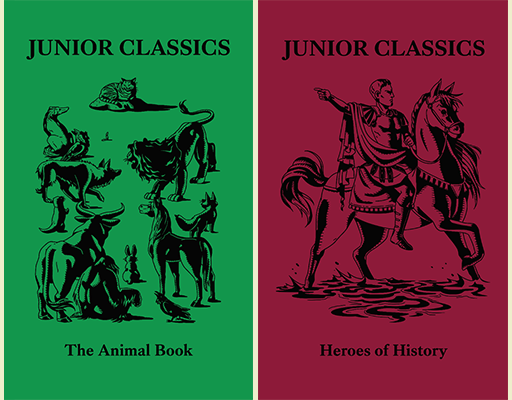
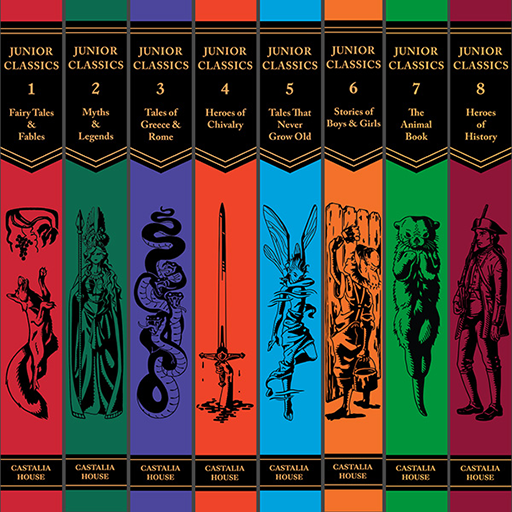
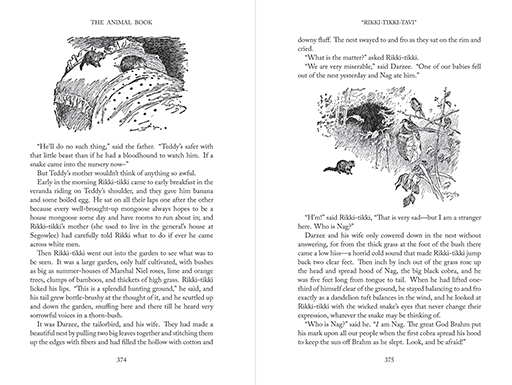
When I advocated building our own platforms, I really didn’t think we were going to have to recreate freaking Amazon. But that’s the post-capitalistic Gamma World in which we find ourselves, so please bear with us as we construct a new way to purchase books directly from Castalia House, Arkhaven, and quite possibly other publishers.

Dear Shopper,

It has been our pleasure to help stores like this one set up their digital footprint and grow into a budding business. Unfortunately, as it stands, Aerio is no longer able to support eCommerce moving forward, but you can!

Though this Aerio store may no longer exist, we encourage you to continue buying directly from them at their new platform or site. Thank you for your past support of our Aerio booksellers and your continued support wherever their new store finds a home.

Our goal was to help bloggers, authors, publishers, and small bookstores expand their reach, and we encourage you to continue supporting this store however you can.

Sincerely,

The Aerio Team

Aerio never really quite worked the way it should have. They were always operating on a shoestring, and, in fact, we came very close to taking it over a few years ago after their first two attempts to get it operational failed. And even when they finally did get it working, they never addressed the two issues that they repeatedly promised to address, namely, a) providing free shipping and b) providing shipping to the UK and EU markets.

It could literally be a chapter in a business book on why corporate forays into new markets need to be walled-off from the primary business. So, it’s not a big surprise that it’s been shut down. However, this creates a very real opportunity for us, and one we intend to pursue, basically because it would be not only remiss, but retarded, to fail to do so.

In the meantime, there’s always Amazon, until there isn’t.

DISCUSS ON SG


Castalia Library: THE ARTS OF WAR

As was previously mentioned on the Darkstream, the Jan-Feb subscription book is THE ARTS OF WAR. This will feature ancient military treatises on the art of war, one of which is very famous and most of which will be entirely new to even the historical military enthusiast. The included selections are as follows:

  • Sun Tzu, The Art of War
  • Asclepiodotus, Taktika
  • Aeneas Tacticus, Poliorketika
  • Sextus Frontinus, Strategemata
  • Vegetius, De Re Militari
  • Maurice, Strategikon
  • Onasander, Strategikos

The book will feature a foreword by Alex Macris, formerly of West Point, and an introduction by yours truly. Depending upon how well it is received, it may become the first in a series, as there are a number of medieval, Renaissance, and modern texts that are thematically relevant, but at the very least, it will serve as an epic historical must-read. So if you aren’t a subscriber yet, you may want to consider joining the Library now.

It may interest Selenoth fans to know that the Arts of Light and Dark series repeatedly references Sextus Frontinus, particularly the Marcus Valerius chapters. And speaking of AODAL, both A THRONE OF BONES Book 1 and A THRONE OF BONES Book 2 are now shipping, and ATOB Book 1 is the February Book of the Month. As of this morning, about 65 copies of each limited edition of 850 remain available.

January was a productive month on the writing front. I exceeded my goal of 31,000 words, putting in 34,529 on A SEA OF SKULLS and 2,019 on other fiction. At this rate, I expect to finish the first draft of ASOS on or before March 3rd. There will be a little back-and-forth with the first readers and cleaning up any inconsistencies or infelicities, but the ebook should be out sometime in May. I plan to use the ebook release to catch any further typos or errors, so the print edition should be out around August, and the two-volume Library set will be based upon the print edition and will probably serve as the subscription books toward the end of the year or the beginning of 2024.

The bindery tells us that THE JUNGLE BOOKS will begin production on February 20th, followed by the four Taleb books on February 24th. We plan to launch the new Castalia Library site at the end of the month, but more about that anon.

Finally, we’re going to be putting the first three Finnish AODAL books in print this year. If there are any native speakers interested in translating them into German, French, or Italian, please let me know.

DISCUSS ON SG


China Buys SF Publisher

This acquisition of an old science fiction publishing house by what appears to be SJWs funded by Chinese money should provide some amusement going forward:

New York, May 19, 2020 – The formation of Astra Publishing House was announced today by COO and Publisher Ben Schrank. “The time is right for a new publishing house that’s deeply committed to progressive values and that champions authors from all corners of the world. Astra Publishing House’s foremost aim is to build bridges between readers and writers in all nations, and I’m so excited to be part of a venture that speaks to an increasing necessity for a shared global consciousness.”

Astra Publishing House is comprised of Astra House, an entirely new adult trade publisher of American and international literary fiction and poetry, and mission-driven nonfiction.

These guys make Castalia House, which has been around since 2014, look decidedly old school.

In big news for science fiction and fantasy publishing, DAW Books is no longer an independently owned publisher. This morning, Astra Publishing House announced its acquisition of the storied SFF imprint.

In a press release, DAW co-publishers (and, until today, owners) Betsy Wollheim and Sheila Gilbert said, “We are extremely pleased by Astra’s enthusiasm, and thrilled that we will be the sole SFF imprint of their company (a first for DAW). We think this is the perfect fit for us, and it’s exciting and refreshing to be an integral part of a new and growing company. It speaks volumes about Astra’s respect for our company that they have included our entire staff. We’re very happy.”

Previously, DAW was partnered with Penguin Random House, which distributed DAW’s titles. (PRH also distributes Astra Publishing House’s books.)

DAW Books was founded in 1971 by Donald A. Wollheim and his wife, Elsie B. Wollheim. It was the first imprint exclusively devoted to science fiction and fantasy, and over the years has published more than 2000 books from a long list of well-regarded authors, including Patrick Rothfuss, Tad Williams, Melanie Rawn, Tanith Lee, Nnedi Okorafor, and Seanan McGuire.

Something isn’t adding up here. As a general rule, China doesn’t tolerate SJWs very well. For example, Disney can’t release its Marvel movies in China anymore. So, it will be fascinating to see where this goes, especially given the specific mention of that “mission-driven” motivation.

It wouldn’t be surprising if Astra makes a bid for Tor soon as well.

DISCUSS ON SG


No, Harry, No!

Prince Harry has left readers wincing with his account of applying Elizabeth Arden cream used by his late mother to his frostbitten penis in 2011. The moment appears in his explosive memoir Spare, with a clip from the audiobook narrated by the Duke of Sussex himself making the rounds on social media, where horrified readers have called it a ‘Freudian nightmare.’ In the passage, Harry recalls that his late mother Princess Diana used to apply the cream to her lips, and says the smell of the product made him feel like his mother ‘was right there in the room’ before he applied the cream to his penis.

We’ve officially reached the point where satanic humiliation ritual may be the most optimistic explanation for Harry Markle’s behavior. Who ghostwrote this for him, Jordan Peterson?

DISCUSS ON SG


The Review Police

Amazon is disappearing reviews of disfavored books.

Like countless others, I’ve been reviewing products that I have bought on Amazon for almost a decade. Around a year ago, I favorably reviewed a book titled SJWs Always Lie: Taking Down the Thought Police (I recommend it). Reviews are in turn reviewed by Amazon apparatchiks prior to being posted. My review of the book was taken down for going against some general standards (which in this case I was criticizing leftists who censor).

Life went on. I kept reviewing books, CDs, clothes, etc. and my reviews were always brief, like others in the site. Sometimes my reviews involving books on or by leftists were characteristically caustic, but no one minded.

Except a month ago, with my review of American Injustice (an extended review was accepted here, in The Iconoclast). It was not accepted for the usual vague reasons (“violates our Community Guidelines”). I could appeal, which I did.

Whereupon all of my reviews were taken down. My reviews on electronics, on t-shirts, on shoes, on books, on games, on films—all taken down. Apparently, the leftist censor thought that my reviews of Jorge Bolet. Rediscovered Liszt Recital, Midnight in the Garden of Good and Evil, The Moon Is a Harsh Mistress, All Creatures Great and Small, Batman Forever, The Confessions of St. Augustine, Duck Tales Vol.1, Gandhi: An Autobiography, Blue Jasmine, World War Z, 20 Million Miles to Earth, Fifty Shades of Grey, The Essential Artie Shaw, Jimmy Neutron- The Best of Season 2, Darwin’s Blind Spot: Evolution Beyond Natural Selection, The Biosphere, Lysenko’s Ghost: Epigenetics and Russia, Littleboutique Fashion Magazine Show Stiletto Sandals Nigh Club Strap Pumps, Basic Questions in Paleontology, The 39 Steps, The mosquito hypothetically considered as an agent in the transmission of yellow fever poison, 1881, 1177 B.C.: The Year Civilization Collapsed, The Sex Lives of Cannibals, and many, many, many more were worthy of censorship.

Gone. All gone.

I appealed, of course, several times. Ignored each time.

I’m not terribly surprised. I think this began around the middle of 2021, as you can see that there are relatively few reviews of SJWAL or A THRONE OF BONES that have been published in the last two years. I haven’t paid any attention to Amazon for a while, since I’ve been focused on other projects for most of that time, but it appears that in the aftermath of decimating the ebook market and centralizing its control of it through Kindle Unlimited, Amazon has now moved on to actively managing what books its customers are permitted to read or not by filtering its reviewers.

There are 884 reviews of SJWAL, but the most recent is dated October 18, 2021. There are 443 reviews of ATOB, and the most recent is September 19, 2022.

UPDATE: Amazon has deleted 11 ATOB reviews since this post, leaving 432.

DISCUSS ON SG


The Algorithm Gods

I’ve been reliably informed that the globalist minds behind The Great Reset are significantly inferior. Furthermore, we’ve read the pedestrian vision of Klaus Schwab in his book, and we’ve seen Dr. Hallpike all but prison-rape the blatherings of the overrated Israeli mediocrity, Yuval Harari. These are not particularly intelligent people. And it’s downright hilarious to observe their touchingly ignorant midwitted faith in digital technology. They need to read a simple science fiction novel that will eventually be seen to have predicted their future far more presciently than anything they are presently able to imagine.

Algorithmic Internal Variable Decay is the process by which the performance of the core equations utilized to calculate the various factors of a complex process is degraded in an unpredictable manner due to an unknown convergence of internal or external factors. Also known as “AlgoDecay”, the term may also refer to the consequences of such computational erraticism, which have been observed throughout the galaxy in diverse fields including, but not limited to, technology, engineering, agriculture, virtual reality, language, human and machine cognition, finance, and biology.

—Infogalactic Entry: Grand Category: Infrastructure: Algorithmic Theory

The problem with Servo had begun innocuously enough.
Jaggis had first become aware of the sentient machine during a meeting of the Third District Technology Council that was open to the public. It was one of the many public relations events in which the First Technocrat had to take part, but Jaggis usually enjoyed answering the naive sort of questions invariably posed to him at such events. It wasn’t common for machines to address the councils, but it wasn’t unheard of either, and at the time, Jaggis hadn’t thought much about it. After all, the question had an uncontroversial but involved answer, and the local forum wasn’t the place for what promised to be an interestingly esoteric discussion of mathematical theory. Jaggis himself encouraged Servo to resubmit his question on the direct channel to the First Technocrat maintained for the public, where someone on his staff could address it in satisfactory detail.
The question was simple, if considerably harder to answer than it appeared.
“How reliable are the core algorithms?”
What began as a question at a meaningless public appearance soon transformed into the subject of extensive debate among his primary development teams. It spawned numerous debates, discussions, and even arguments about the nebulous origins of the original core algorithms. When the first known code-enhanced cluster of human avatars from the far-distant planet of Holocrone appeared a thousand years ago on Excetor, it was a diplomatic disaster that ended in a brutal war culminating in the sinking of the combined fleets of East New Teja and the Arentine Supremacy. And of the five hundred Holocronese pseudo-men who had found themselves caught up in the short, but violent conflict, less than fifty survived.
The off-world neo-humanx finally brought about a worldwide truce by creating the Continox as a permanent academic embassy to link the rival nations of Excetor to the rest of the galaxy. It became a fertile nexus of informational and technological flow, drawing in the finest minds of the planet and exposing them to the new ideas and code routines being developed elsewhere by various intelligences, man and machine, real and simulated.
The Continox was neither a government nor a university, although it performed some of the functions of both. It was not a corporation, although it was structured in a manner somewhat similar to the ancient interstellar conglomerates. It was not a religion or a church, although it possessed its own quasi-priesthood and a sizable cruft of dogma that had grown over the centuries. Whatever it was, it was the single most important institution on Excetor, and the Technocratic Council, headed by the First Technocrat, was arguably more powerful than any other planetary body, including the national militaries.
After all, what good were nucleonic missiles when they required algorithmic guidance to target them correctly. And bioweapons were useless when they could be rendered sterile at will by an unauthorized hack. Unless the generals were willing to restrict their armies to swords, spears, and arrows, the Continox was invulnerable.
Such was the importance of their omnipresent algorithms that even the planetary bankers bowed before the technocrats. They knew that even the most adept masters of the markets could be bankrupted in an afternoon by the Council, if it was so inclined.
A few of Excetor’s wealthier nations had already been on the verge of developing a post-scarcity economy, but the encounter with the distant neo-humanx and their technological wonders rapidly tipped the scales. Transportation became self-replicating, digital technology went through a revolution of molecular-level control. Want, which had been on the wane throughout the world for more than a century, vanished from all but the most stubbornly miserable places on the planet. And since it would have been less than human for the people of Excetor to feel grateful to their alien benefactors, they tended to credit the Continox, and the Technocratic Council in particular, for their elevated standard of living.
The first Technocrat was Maktung Makalog, a New Tejan who later became known as the Algofather for his successful application of the new aggro-algos to Excetorese flora and fauna. Following his breakthrough, many additional customary algorithms were developed that extended and expanded on his work, and such was his prestige that the Technocratic Council was established to oversee the existing algorithms and develop new ones. Jaggis was Makalog’s 85th successor as First Technocrat, and had presided over the council for twelve years before Servo asked his deceptively simple question.
There was no question that some of the application algos were running suboptimally. Even on Continox, the weather control system only operated at 85 percent efficiency, down 1.2 percentage points over the previous decade. The number of birth anomalies among genetically-enhanced infants in the autocreches had increased for the first time in a century, and a glitch in one planetary bank’s interest rate analysis AI had inexplicably created a 999-year mortgage that was snapped up by hundreds of apartment buyers in the 10 minutes before anyone at the bank noticed.
But these were extraps, not core algorithms, and besides, there was serious debate within the council concerning whether the increasingly suboptimal performance being observed was caused by computationally endogenous or exogenous factors, which was to say that it could be the result of instability within the complex equations themselves, or the consequences of something more prosaic, such as degraded sensors, insufficient quality control or unreliable data input.
Jaggis’s own team was divided almost equally into the two camps. But Servo’s question had given the endogenous party new vigor by casting doubt upon the hitherto-unquestioned core algorithms, doubt that was further enhanced by a detailed news survey that revealed similar anomalies being reported on virtually every planet across the galaxy. The anomalies were unanimously small and well-within the range of a random statistical variability, and would have almost certainly escaped notice from a planetary perspective, but when analyzed from the 100,000 light-year view, a very clear pattern began to emerge.
A building collapse on Finitus. Elevated traffic accident rates on Minsky. Uncharacteristic currency inflation on Schwarzwelt and credit disinflation on Demihoppe. Average speeds rising rapidly on the ice tracks of the PLIR championship on Avatar, average life expectancies decreasing inexplicably on…
“Sweet St. Kurzweil!” one of the team members swore as the room holo displayed a green light map of the 483 billion suspected core algorithmic anomalies that were calculated to be currently active across the galaxy.
“It’s an impressive lightshow, but it means nothing,” scoffed an exogenously-minded AI from inside its drone casing that hovered near Jaggis’s shoulder. “Overlay a random walk and you’ll see virtually the same thing.”
No, you won’t, thought Jaggis, but he nodded curtly in response to the holo-tech’s inquisitive look.
A moment later, everyone in the room but him gasped as the overlay appeared in red light. There were an order of magnitude fewer randomized pseudo-anomalies. The implications were unmistakable.
“It’s just an artifact,” protested the AI drone. “Dial up the average of ten more, no, a thousand more random walks!”
The tech nodded, and a moment later, a third light map appeared, this time in blue. But the web of light was even smaller this time. The number 223,957,406 hung in the air like an executioner’s axe suspended over a doomed prisoner’s exposed neck.
“What does that mean?” whispered one of the younger human members of the team.
“It means that aberrant medical drone isn’t broken after all,” Jaggis said reluctantly. The admission physically pained him, but there was no escaping the conclusion that was literally glowing right before his eyes. “It’s not just Excetor. All galactic humanity is in terrible peril.”

DISCUSS ON SG


Reading List 2022

In the absence of any new Murakami novels last year, I went on a fairly serious Japanese murder mystery bender. Of the 58 books I read in 2022, I’d say the best were Journey Under the Midnight Sun, The Penguin Book of Japanese Short Stories, and Masks. I also discovered that a) Banana Yoshimoto is actually a pretty good pop writer and b) Ryunosuke Akutagawa’s literary influence not only runs deep, but is well-merited.

China Mieville, This Census-Taker
Mike Florio, Playmakers
Robert E. Howard, The Robert E. Howard Omnibus
Seth Wickersham, It’s Better to Be Feared
Keigo Higashino, Journey Under the Midnight Sun
Keigo Higashino, The Devotion of Suspect X
Keigo Higashino, A Midsummer’s Equation
Keigo Higashino, The Name of the Game is a Kidnapping
Keigo Higashino, Naoko
Keigo Higashino, Salvation of a Saint
Keigo Higashino, The Miracles of the Namiya General Store
Seicho Matsumoto, Points and Lines
Seicho Matsumoto, A Tale of False Fortunes
Fumiko Enchi, Masks
Kaoru Takamura, Lady Joker
Haruki Murakami, The Penguin Book of Japanese Short Stories
Rampo Edogawa, The Black Lizard
Seishi Yokomizo, The Inagumi Curse
Seishi Yokomizo, The Village of Eight Graves
Seishi Yokomizo, The Honjin Murders
Keigo Higashino, Silent Parade
Banana Yoshimoto, Kitchen
Banana Yoshimoto, Goodbye Tsugumi
Junchiro Tanizaki, The Makioka Sisters
Yuko Tsushima, Territory of Light
Eric Cline, 1177 B.C.
Glenn Cook, Gilded Latten Bones
Glenn Cook, An Empire Unacquainted With Defeat
Glenn Cook, The Black Company
Glenn Cook, Shadows Linger
Glenn Cook, The White Rose
Glenn Cook, Shadow Games
Glenn Cook, Dreams of Steel
Glenn Cook, The Silver Spike
Julian May, The Many-Colored Land
Julian May, The Golden Torc
Julian May, The Nonborn King
Julian May, The Adversary
Julian May, Sorceror’s Moon
Julian May, Ironcrown Moon
Julian May, Congueror’s Moon
Julian May, The Intervention Omnibus
Yoko Ogawa, The Memory Police
Marcel Proust, Swann’s Way
Kanae Minato, Penance
Kanae Minato, Confessions
Joel Dicker, The Enigma of Room 622
Soji Shimada, The Tokyo Zodiac Murders
Piero Chiara, The Disappearance of Signora Giulia
Osamu Dazai, Crackling Mountain and Other Stories
Bill Simmons, The Book of Basketball
Ryunosuke Akutagawa, Rashomon and 17 Other Stories
Jake Adelstein, Tokyo Vice
Sayaka Murata, Convenience Store Woman
Yoko Tawada, Facing the Bridge
Chuck Dixon, Siege of the Black Citadel

I never got around to posting these on the blog last year, but I’ll go over the list on the Darkstream.

DISCUSS ON SG


The Five Reasons for Failed Fantasy

The Dark Herald reviews the year in fantasy for 2022 and provides an explanation for why it was so disastrous.

First, everyone wanted their own Game of Thrones, (it wasn’t just Jeff Bezos).

Second, none of these producers knew anything about fantasy and they didn’t want to learn. They just wanted to glom on to something and tell their own version of THE MESSAGE.

Third, neither did the people who ran the studios. They were green-lighting anything that could be accused of being a fantasy franchise with an existing fanbase. And they also wanted to use it to spread THE MESSAGE.

Fourth, Woke. All of these shows were much more interested in contemporary politics than they were ancient worlds, eerie wonders, and glories beyond imagining. They cared more about scoring points in Hollywood than they ever could about fantasy.

Fifth, all of these shows were the result of globalism. Oh, it was Hollywood globalism to be sure, so on top of all of their other failings, they were shallow as a mud puddle. But it was all globalist fantasy. It was something too hopelessly bland to be at all interesting.

“The Shadow that bred them can only mock, it cannot make: not real new things of its own. I don’t think it gave life to the orcs, it only ruined them and twisted them; and if they are to live at all, they have to live like other living creatures.”

I can’t help but find it amusing that all of these producers are casting desperately around for the next A GAME OF THRONES and it will never, ever, occur to them to go to the one epic fantasy series that is fully capable of providing them what they are looking for and more.

But it’s just as well. I have zero desire to see ARTS OF DARK AND LIGHT utterly demolished the way that everything from WHEEL OF TIME to SANDMAN have been destroyed.

DISCUSS ON SG


Traffic Report 2022

2022 was another year in which I failed to finish A SEA OF SKULLS. It was also a year that saw the full effects of Google’s banning of the blog, as the precipitous decline to 12 million annual views from the previous year was actually smaller than the immediate month-on-month decline. Shadowbanning and deplatforming works, to a certain extent, which is why they do it. I also suspect that people are just exhausted with vaccine-related news, given that it’s mostly a grim chronicle of things going from bad to worse for the majority of the population. One can only read so many stories about young men and women dying from Suddenly before tapping out.

In 2022, Vox Popoli had 12,018,040 Google pageviews, down 69 percent from last year. The blog is now running at an average rate of 30,307 daily pageviews, down 17.9 percent from an average 36,091 last year. Total historic blog views closed out the year at 264,572,806. The running annual pageview totals are as follows:

2008: 3,496,757

2009: 4,414,801

2010: 4,827,183

2011: 5,422,628

2012: 6,098,774

2013: 9,340,663

2014: 11,236,085

2015: 16,211,875

2016: 25,817,343

2017: 31,216,357

2018: 32,260,094

2019: 32,757,068

2020: 41,338,037

2021: 38,884,355

2022: 12,018,040

It appears that it is time to retire the annual comparison to the former Most Popular Blog in Science Fiction, because there is no data to which this blog’s traffic can be compared. Also, Whatever now features as many posts by Scalzi’s daughter, with whom I have no issue, as it does by Scalzi himself, so the comparison is not even all that relevant anymore.

To be honest, this year feels a bit like the passing of a torch, not to any one individual, but rather, to the community as a whole. No one actually needs to visit here to access my ideas anymore, not when a single video promulgating concepts first presented here has 21 million views. This is not a complaint, but rather, an observation made with no little sense of satisfaction; it’s very freeing to know that others will not only take on the burden of spreading the ideas around, but will do so far more effectively than I ever have.

Intellectual success isn’t people knowing your name, it’s people embracing your ideas without ever needing to know your name. Having reached the point of having self-appointed populizers means being able to focus on breaking new ground rather than simply repeating the same basic things over and over again.

I won’t be taking a step back or reducing blog posts and Darkstreams, but I will attempt to focus them less on the operational details and other distractions and more on the core ideas. The Bindery, Selenoth, and a revival of Castalia’s traditional publishing are my top priorities for the new year; among other things, we’ll be publishing THREE new Conan novels by The Legend Chuck Dixon in 2023.

DISCUSS ON SG