Saturday AM Arktoons

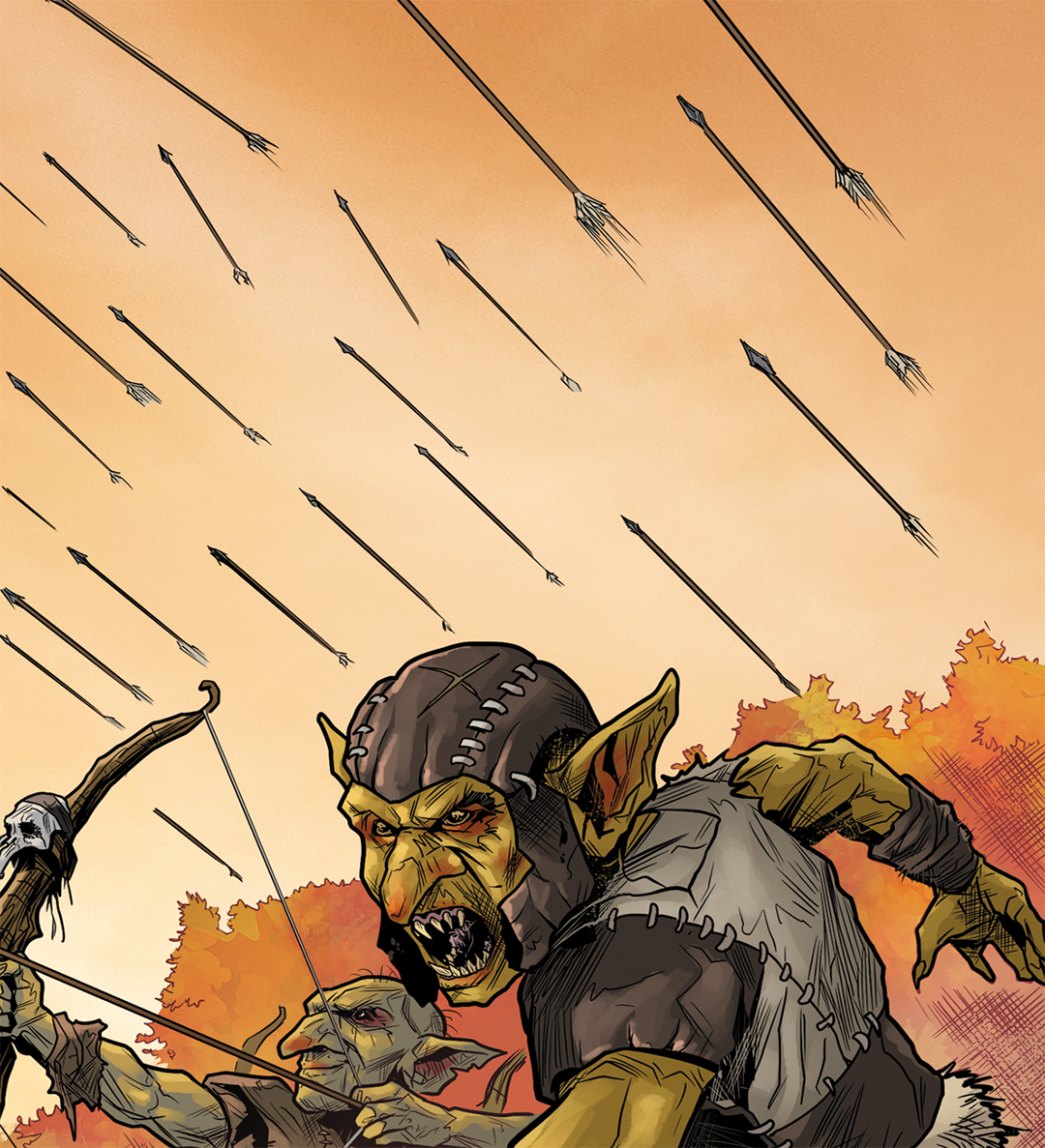
SEASONS Episode 4: Shadow

CHUCK DIXON PRESENTS: COMEDY Episode 4 A Century of Vengeance

I’ve been having some interesting conversations with creators who are just hearing about Arktoons now and are interested in getting their comics on the site. Also, a few of the comics with short runs are scheduled for replacement, so expect to see some changes in the weeks to come. And if you’re enjoying the site, don’t forget to subscribe! As you can see from the views, the traffic is solid and steadily growing, and we’re just over one-third of the perpetual production goal.


Scientistry exacerbates bad scientody

The reproducibility crisis in science, which is the fact that most peer-reviewed studies published in the most-reputable science journals cannot be replicated, is being significantly exacerbated by the fact that the nonreplicable studies are cited far more often than the replicable ones:

Papers in leading psychology, economic and science journals that fail to replicate and therefore are less likely to be true are often the most cited papers in academic research, according to a new study by the University of California San Diego’s Rady School of Management.

Published in Science Advances, the paper explores the ongoing “replication crisis” in which researchers have discovered that many findings in the fields of social sciences and medicine don’t hold up when other researchers try to repeat the experiments.

The paper reveals that findings from studies that cannot be verified when the experiments are repeated have a bigger influence over time. The unreliable research tends to be cited as if the results were true long after the publication failed to replicate.  

“We also know that experts can predict well which papers will be replicated,” write the authors Marta Serra-Garcia, assistant professor of economics and strategy at the Rady School and Uri Gneezy, professor of behavioral economics also at the Rady School. “Given this prediction, we ask ‘why are non-replicable papers accepted for publication in the first place?’”

The link between interesting findings and nonreplicable research also can explain why it is cited at a much higher rate—the authors found that papers that successfully replicate are cited 153 times less than those that failed.

“Interesting or appealing findings are also covered more by media or shared on platforms like Twitter, generating a lot of attention, but that does not make them true,” Gneezy said. 

Serra-Garcia and Gneezy analyzed data from three influential replication projects which tried to systematically replicate the findings in top psychology, economic and general science journals (Nature and Science). In psychology, only 39 percent of the 100 experiments successfully replicated. In economics, 61 percent of the 18 studies replicated as did 62 percent of the 21 studies published in Nature/Science.

With the findings from these three replication projects, the authors used Google Scholar to test whether papers that failed to replicate are cited significantly more often than those that were successfully replicated, both before and after the replication projects were published. The largest gap was in papers published in Nature/Science: non-replicable papers were cited 300 times more than replicable ones.

Apparently my prediction that science would be as reliably false as government press releases may have been an observation, not a prediction. Putting the reproducibility problem together with the non-replicable citation problem indicates that present scientage – the current scientific knowledge base – in Nature/Science is only 0.5 percent reliable.

Granted, that’s half-a-percent more reliable than government press releases, but still reliably wrong. In other words, almost everything that “studies show” has no support from an actual scientific perspective.


No tainted blood, onegaishimasu

The Japanese ban the vaxxed from donating blood:

The Japanese Red Cross now refuses to accept blood donations from people who have received the Wuhan coronavirus (COVID-19) vaccine.

The website of the Japanese Red Cross states that individuals who have been vaccinated against COVID-19 “are not allowed to donate blood for the time being.”

The same page warns potential blood donors that they will not be able to give their blood for a certain time after they have received different vaccinations.

Some deferrals prevent blood donations for 24 hours after vaccination, including after getting vaccinated for influenza, cholera and tetanus. Others prevent blood donations for two weeks after vaccination, such as after getting the hepatitis B vaccine.

But… but… but isn’t it perfectly safe? No, no, it isn’t.

This isn’t that hard. 


Discrimination in STEM

 Ironically, the discrimination is against men, not women:

The underrepresentation of women in academic science is typically attributed, both in scientific literature and in the media, to sexist hiring. Here we report five hiring experiments in which faculty evaluated hypothetical female and male applicants, using systematically varied profiles disguising identical scholarship, for assistant professorships in biology, engineering, economics, and psychology. Contrary to prevailing assumptions, men and women faculty members from all four fields preferred female applicants 2:1 over identically qualified males with matching lifestyles (single, married, divorced), with the exception of male economists, who showed no gender preference. Comparing different lifestyles revealed that women preferred divorced mothers to married fathers and that men preferred mothers who took parental leaves to mothers who did not. 

Science is already as unreliable as a coin toss. In another ten years, science will be as reliably false as government press releases. 


Junior Classics vols. I-III

The first three volumes of the JUNIOR CLASSICS 2020 Edition are now available in epub format. They can be purchased at the Arkhaven store, and emails with discount codes have been sent to all the backers to permit them to download the ebooks from the store for free. These are larger files than normal, as the ebook editions contain all of the illustrations featured in the print editions.

Volumes IV, V, and VI are currently nearing completion for both print and ebook editions. 

UPDATE: For the Nth time, this blog is neither tech nor sales support and your inability to manage your email filters is not my concern. All comments concerning “I didn’t get the email” will be spammed on sight. FFS, check your damned Spam and Social folders, and as usual, next week we’ll post instructions for those who still haven’t received the email. I understand that it’s frustrating when you are waiting for something, but one thing that we have regularly observed over the years is that when the process works just fine for 1,000 people and it doesn’t work for a small number, a) the problem is rarely on our side, and b) the solution isn’t. Furthermore, if the problem is that you aren’t receiving emails, how is sending you another email that you probably won’t receive going to resolve anything?


First Syria, now Gaza

This diplomatic gesture has the potential to mark a major turning point in the Middle East, if Russia is able to intervene and impose a resolution a second time after repeated US failures:

Russia has warned the Jewish State of engaging in further violence that costs civilians’ lives.
As reported by the Associated Press, as of Wednesday, about 219 Palestinians have been killed in the current fighting, while Israel has seen 12 casualties. The rising number of deaths and injuries have raised calls from around the world for Israel to mount a “proportionate” response to the attacks. Israeli Prime Minister Benjamin Netanyahu, however, has denied Israel has done anything beyond defending itself and vowed to continue until Hamas is deterred from future violence.
The escalating conflict is of “extreme concern” to the Kremlin, and Russian Deputy Foreign Minister Mikhail Bogdanov urged Israel to carefully consider the actions they take.
“In a frank exchange of opinion on the situation in the Israeli-Palestinian relations, including the one in the Gaza Strip, the Russian side expressed extreme concern over the escalation of tensions and stressed the impermissibility of steps fraught with more civilian casualties,” Bogdanov told Alexander Ben Zvi, Israel’s ambassador in Moscow, on Wednesday, according to state news agency TASS.

The USA couldn’t stop Islamic State in Syria either, but Russia did. If Russia can force Israel to stop attacking Palestinians in Gaza, that would be a remarkable demonstration of influence of a kind that hasn’t been seen since the 1950s. 

And just like that, a ceasefire is declared. It’s a timely coincidence, to say the least.

Palestinians were seen in jubilant celebration as a ceasefire deal with Tel Aviv came into force after 11 days of deadly fighting, with crowds taking to the streets across Gaza, the West Bank and East Jerusalem to cheer the truce. Street parades and impromptu fireworks displays erupted in Palestinian cities early on Friday morning, hours after a ceasefire agreement mediated by Egypt was accepted by Israel and armed groups in Gaza.

This diplomatic intervention may be an indication that Russia isn’t inclined to tolerate the neoclown shenanigans in Ukraine very much longer. The Russians appear to have figured out that it will be effective to hold Israel responsible for the war being waged against Russia by the diasporans in the USA. 


Stasi in the USA

AC has written volumes about the Promethean Panopticon he calls the Surveillance Society. This clandestine army controlled by the Pentagon would appear to be the branch of it that is embedded into the US military:

The US military operates a vast network of soldiers, civilians, and contractors that it uses for clandestine missions both at home and abroad, Newsweek has claimed, adding that the force also manipulates social media.

After a two-year investigation, the outlet reported that the undercover army consists of around 60,000 people, many of whom use fake identities to carry out their assignments. The Pentagon’s agents operate in real life and online, with some even embedded in private businesses and well-known companies. 

The massive program, unofficially known as “signature reduction,” is reportedly 10 times the size of the CIA’s clandestine service, making it the “largest undercover force the world has ever known,” Newsweek claimed. But the true scale and scope of the shadow army remains a closely guarded secret. No one knows the program’s total size, and Congress has never held a hearing on the military’s increasing reliance on signature reduction. There appears to be very little or no transparency regarding the massive clandestine military force, even as its continued development “challenges US laws, the Geneva Conventions, the code of military conduct, and basic accountability,” the outlet said. 

I expect this is somehow related to the “military-industrial complex” of which President Eisenhower warned Americans at the end of his term. It’s not the sort of thing that just springs up overnight, after all. I find this report to be particularly interesting in light of the way the current Alt-Hero episodes posit a much smaller and superhuman, but equally clandestine force operating inside the US military.