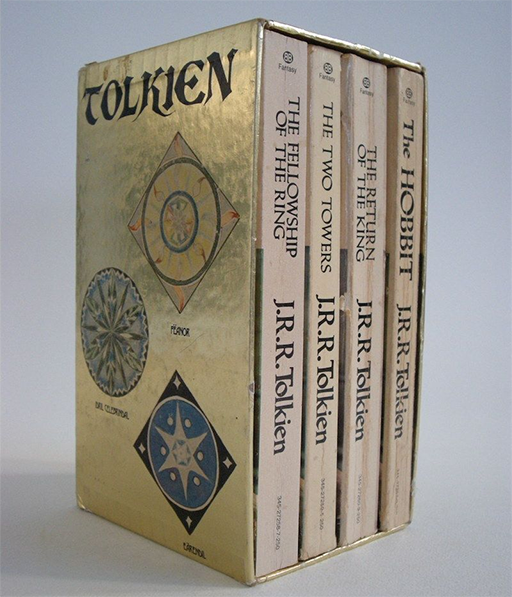
I’m genuinely sorry to see this format vanishing into the dustbin of history. We actually looked into doing some of our books this way a few years ago, but there just wasn’t any financial advantage to doing so, so we didn’t.
The decision made this winter by ReaderLink to stop distributing mass market paperback books at the end of 2025 was the latest blow to a format that has seen its popularity decline for years. According to Circana BookScan, mass market unit sales plunged from 131 million in 2004 to 21 million in 2024, a drop of about 84%, and sales this year through October were about 15 million units. But for many years, the mass market paperback was “the most popular reading format,” notes Stuart Applebaum, former Penguin Random House EVP of corporate communications. Applebaum was also once a publicist at Bantam Books, one of the publishers credited with turning mass market paperbacks into what he calls “a well-respected format.”
When the heyday of mass market paperbacks was has been debated by industry veterans, but it is generally acknowledged to have run from the late 1960s into the mid-’90s. According to Book Industry Study Group’s Book Industry Trends 1980, mass market paperback sales jumped from $656.5 million in 1975 to nearly $811 million in 1979, easily outselling hardcovers, which had sales of $676.5 million, and the new, upcoming format, trade paperback, which had sales of about $227 million. And with its much lower price points, mass market paperback unit sales easily dwarfed those of the other two formats, at 387 million in 1979, compared to 82 million for hardcover and about 59 million for trade paperback. Applebaum says mass market drew millions of new readers who were not interested in paying hardcover prices for books.
Esther Margolis, another former Bantam executive who later started Newmarket Press, cites three factors that led to the growth of mass market paperbacks. One was the adoption of production practices and manufacturing techniques used by magazine and newspaper publishers to print the standard 4.25” × 6.87” paperbacks in huge quantities quickly and cheaply. The second factor was distribution, with publishers employing a network of more than 600 independent distributor (ID) wholesalers to deliver inventory to the same 100,000 outlets where magazines and newspapers were being sold. These nonbookstore outlets included newsstands, variety stores, gas stations, supermarkets, and shopping malls. School book fairs, book clubs, and bookmobiles later emerged to bring paperbacks to elementary and high school teachers and students, Margolis says. In later years, mass merchandise outlets such as Walmart became important for the format.
The final piece of the mass market paperback puzzle was the creation of a reprint licensing agreement that granted mass market paperback publishers the rights to books released by hardcover publishers for a term that ranged from two to seven years, Margolis says.
Both Applebaum and Margolis can rattle off the huge number of copies mass market paperbacks sold compared to hardcover in decades past. Jacqueline Susann’s megahit Valley of the Dolls sold 300,000 hardcovers in 1966, while the Bantam paperback sold four million in its first week on sale in 1967, and more than eight million in its first year, Margolis notes. One of the biggest mass market bestsellers of all time was the 1975 tie-in edition to the movie Jaws. According to Applebaum, the edition, whose cover art closely resembled the movie poster, sold 11 million copies in its first six months.
While hardcover reprints were a staple for mass market paperback publishers, some also released mass market originals. One author who thrived using that strategy was the western writer Louis L’Amour. Applebaum, who served as L’Amour’s publicist, says that Bantam has more than 150 million copies of his books in mass market print, and all but four of his more than 130 titles were paperback originals.
I think it’s not just the mass market paperback that’s dying, but the paperback in general. Trade paperbacks were exciting when they came out, but now their price differential with hardcovers has shrunk due to increasing paper prices, so there really isn’t any reason to produce or to purchase a paperback of any kind. Hardcovers last longer, and given the vanishing differential, we don’t even bother to produce them anymore.
Ebooks and audiobooks cover the ephemeral need, and obviously, our primary focus is on the deluxe leatherbound editions, so there is neither need nor demand for paperback books. Which I find a little sad, as I still have row upon row of paperback books from Bantam, Del Rey, and the like, despite their dog-eared corners and increasingly yellowed pages. This was my prize possession back in the day: